Harper Lewis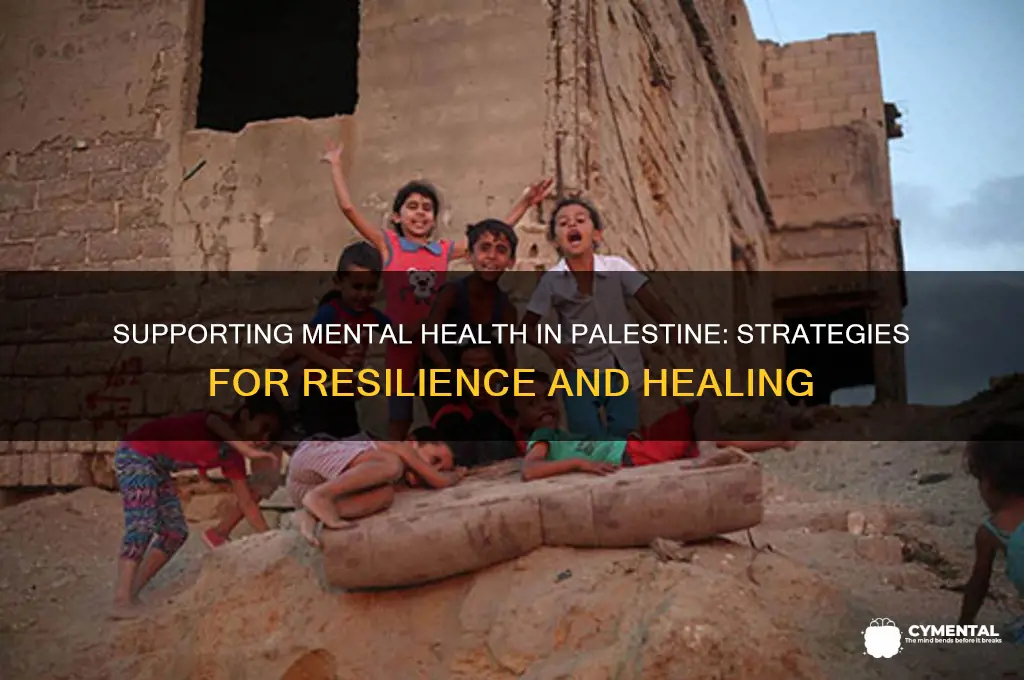
Mental health in Palestine is deeply intertwined with the ongoing socio-political challenges, including occupation, conflict, and economic instability, which exacerbate stress, trauma, and psychological distress among the population. Addressing mental health in this context requires culturally sensitive, community-based approaches that prioritize accessibility, resilience-building, and trauma-informed care. Initiatives such as integrating mental health services into primary healthcare, training local professionals in psychological first aid, and fostering community support networks are essential. Additionally, raising awareness to reduce stigma and promoting self-care practices can empower individuals and communities to cope with adversity. International collaboration and funding are also crucial to sustain and expand these efforts, ensuring that Palestinians receive the mental health support they urgently need.
Explore related products


$13.49


What You'll Learn
- Access to Mental Health Services: Improve availability, affordability, and cultural sensitivity of mental health care in Palestine
- Community Support Networks: Strengthen local support groups and peer-to-peer initiatives for emotional and psychological aid
- Trauma-Informed Education: Integrate trauma-informed practices into schools to support children’s mental well-being
- Awareness Campaigns: Promote mental health literacy and reduce stigma through public awareness programs
- Policy Advocacy: Advocate for policies prioritizing mental health funding and resources in Palestinian governance

Access to Mental Health Services: Improve availability, affordability, and cultural sensitivity of mental health care in Palestine
In Palestine, where political instability and socioeconomic challenges are pervasive, access to mental health services remains critically inadequate. Only 1% of the healthcare budget is allocated to mental health, leaving a vast gap in resources. To address this, increasing funding and integrating mental health services into primary care facilities is essential. Clinics in urban centers like Ramallah and Gaza City should be equipped with trained psychologists and psychiatrists, while mobile units can extend reach to rural areas such as Hebron and Nablus. Telehealth platforms, leveraging Palestine’s growing internet penetration (70% as of 2023), can further bridge the gap by offering remote consultations to those in isolated regions.
Affordability is another barrier, as out-of-pocket expenses deter many from seeking care. Implementing a tiered pricing system based on income levels could make services more accessible. For instance, individuals earning below the national poverty line (approximately 2,000 ILS monthly) could receive free or subsidized care, while middle-income earners might pay a reduced fee. Partnerships with NGOs like the Palestinian Counseling Center or international organizations such as WHO can provide additional funding and resources. Insurance providers should also be mandated to include mental health coverage in their policies, ensuring financial protection for all citizens.
Cultural sensitivity is paramount in a society where mental health stigma persists. Training mental health professionals to incorporate Islamic principles, such as *tawakkul* (reliance on God) and *sabir* (patience), can foster trust and acceptance. Community-based interventions, like peer support groups led by local leaders, can demystify mental health issues and encourage help-seeking behaviors. For example, a pilot program in Bethlehem successfully integrated religious leaders into mental health awareness campaigns, reducing stigma by 30% among participants. Such initiatives should be scaled up nationwide.
Finally, data-driven strategies are crucial for sustainable improvement. A national mental health registry, tracking prevalence rates and service utilization, can inform policy decisions. For instance, if data reveals higher anxiety rates among youth aged 15–24, targeted interventions like school-based counseling programs could be prioritized. Collaboration with universities like Al-Quds and Birzeit can facilitate research and train the next generation of mental health professionals. By combining increased availability, affordability, and cultural sensitivity, Palestine can build a resilient mental health system that meets the needs of its people.
Health Class and Mental Health: Effective Support or Missed Opportunity?
You may want to see also
Explore related products


Community Support Networks: Strengthen local support groups and peer-to-peer initiatives for emotional and psychological aid
In Palestine, where systemic stressors like occupation, displacement, and economic instability are pervasive, community support networks serve as lifelines for mental health. These networks, rooted in shared experiences and cultural understanding, offer a sense of belonging and immediate emotional relief. Unlike formal therapy, which may be stigmatized or inaccessible, peer-to-peer initiatives provide a safe space for individuals to express their struggles without fear of judgment. For example, women’s groups in refugee camps often double as mental health support circles, where members share coping strategies and provide mutual encouragement. Strengthening these networks requires intentional investment in their structure, resources, and reach to maximize their impact.
To build effective community support networks, start by identifying existing informal groups—such as youth clubs, religious gatherings, or neighborhood committees—that can be repurposed or expanded to include mental health components. Train facilitators within these groups using culturally sensitive curricula, such as the WHO’s Mental Health Gap Action Programme (mhGAP), adapted for Palestinian contexts. Equip them with tools like active listening techniques, stress management exercises, and referral pathways to professional services when needed. For instance, a weekly community meeting in Hebron could incorporate a 15-minute guided mindfulness session followed by open discussions, blending practical skills with emotional support. Ensure these initiatives are inclusive, catering to diverse demographics, including adolescents, the elderly, and individuals with disabilities.
One caution: while peer support is powerful, it is not a substitute for professional mental health care. Overburdening community members without proper training or support can lead to burnout or inadequate assistance. To mitigate this, establish clear boundaries for peer supporters, emphasizing their role as listeners rather than therapists. Provide them with regular supervision and self-care resources, such as monthly wellness workshops or access to counseling services. Additionally, avoid tokenistic interventions; ensure initiatives are sustainable by securing long-term funding, whether through local partnerships, international NGOs, or government allocations. For example, a community garden project in Nablus could generate income to fund ongoing mental health activities while fostering social cohesion.
The success of community support networks lies in their ability to adapt to local needs and leverage existing social structures. In Gaza, where movement restrictions limit access to external resources, WhatsApp groups have become vital platforms for sharing mental health tips and organizing virtual support sessions. Similarly, in rural areas, mobile clinics could partner with local leaders to host community forums that address both physical and psychological well-being. By embedding mental health into everyday community activities, these networks normalize seeking help and reduce stigma. The takeaway is clear: strengthening peer-to-peer initiatives requires a blend of grassroots empowerment, strategic resource allocation, and a deep respect for the resilience already present within Palestinian communities.
Seeking Mental Health Support: A Guide for Military Personnel
You may want to see also
Explore related products


Trauma-Informed Education: Integrate trauma-informed practices into schools to support children’s mental well-being
Children in Palestine are exposed to chronic stressors, from political instability to community violence, which can lead to complex trauma. Schools, as a primary environment for children, must evolve into sanctuaries that recognize and address these experiences. Trauma-informed education (TIE) shifts the paradigm from asking, "What’s wrong with you?" to "What happened to you?" By embedding this approach, educators can create a responsive system that fosters resilience rather than retraumatization.
Implementing TIE begins with training staff to recognize trauma’s signs, which in children may manifest as hypervigilance, emotional outbursts, or withdrawal. For instance, a child who flinches at loud noises might be responding to past exposure to explosions. Teachers should be equipped with de-escalation techniques, such as using calm, predictable language and offering sensory tools like stress balls or quiet corners. For younger children (ages 6–12), visual schedules and social stories can provide structure and predictability, while adolescents (ages 13–18) may benefit from peer support groups or journaling prompts to process emotions.
A critical component of TIE is the physical environment. Classrooms should be designed to minimize triggers and maximize safety. Soft lighting, flexible seating, and designated "cool-down" spaces can help regulate students’ nervous systems. Schools in Gaza, for example, have introduced "peace corners" with cushions, books, and soothing visuals, allowing children to self-regulate during moments of distress. Pairing these spaces with consistent routines, such as morning mindfulness exercises or closing circles, reinforces a sense of stability.
However, TIE is not without challenges. Educators may struggle to balance trauma-responsive practices with academic demands, particularly in under-resourced schools. To address this, schools should adopt a tiered support system: universal practices (e.g., trauma-informed classroom management) for all students, targeted interventions (e.g., small-group counseling) for at-risk groups, and individualized plans for those with severe needs. Collaboration with mental health professionals is essential, as is ongoing professional development to ensure educators feel supported in their roles.
Ultimately, trauma-informed education in Palestine is not just about managing behavior—it’s about rebuilding trust and hope. By validating children’s experiences and providing tools to cope, schools can become catalysts for healing. A study in East Jerusalem found that classrooms implementing TIE saw a 30% reduction in disciplinary incidents and a 25% increase in student engagement within six months. This approach doesn’t erase the trauma, but it offers a pathway to reclaiming childhood in the face of adversity.
Breaking the Silence: Men Seeking Mental Health Support
You may want to see also
Explore related products





Awareness Campaigns: Promote mental health literacy and reduce stigma through public awareness programs
In Palestine, where political instability and socioeconomic challenges exacerbate mental health issues, awareness campaigns serve as a critical tool for fostering understanding and reducing stigma. Public programs that educate communities about mental health symptoms, treatment options, and the importance of seeking help can dismantle harmful misconceptions. For instance, a campaign in the West Bank utilized local radio stations to broadcast testimonials from individuals who overcame mental health struggles, paired with expert commentary from psychologists. This approach not only humanized the issue but also provided actionable advice, such as recognizing signs of anxiety or depression and locating nearby mental health clinics.
Designing effective awareness campaigns requires cultural sensitivity and community involvement. In Gaza, where traditional gender roles often prevent women from discussing mental health openly, campaigns have incorporated female community leaders as spokespersons. These leaders conducted workshops in schools and mosques, using storytelling and role-playing to engage participants. Practical tips, like teaching deep-breathing exercises for stress relief or distributing pamphlets with helpline numbers, were integrated into these sessions. By tailoring content to local customs and involving trusted figures, the campaigns bridged the gap between awareness and action.
A comparative analysis of successful campaigns reveals the power of multimedia strategies. In East Jerusalem, a social media-driven initiative used short videos in Arabic to debunk myths about mental illness, such as equating depression with personal weakness. These videos were shared on platforms like Facebook and WhatsApp, reaching younger audiences who might avoid traditional media. Simultaneously, posters in public spaces reinforced key messages, ensuring broader demographic coverage. The dual approach increased engagement by 40% within six months, demonstrating the effectiveness of combining digital and physical outreach.
However, awareness campaigns must navigate challenges like limited resources and political sensitivities. In rural areas of Palestine, where internet access is sporadic, campaigns rely on door-to-door outreach and community gatherings. Volunteers trained in basic mental health first aid distribute informational kits containing stress management techniques, emergency contacts, and self-assessment tools. Caution must be exercised to avoid overloading participants with information; instead, focusing on one or two actionable steps, such as identifying a trusted confidant or practicing mindfulness, ensures retention and application.
Ultimately, the success of awareness campaigns lies in their ability to transform knowledge into behavior change. A pilot program in Hebron measured its impact by tracking the number of individuals seeking mental health services post-campaign. Results showed a 25% increase in clinic visits within three months, highlighting the tangible outcomes of sustained awareness efforts. To replicate such success, campaigns should prioritize follow-up activities, such as community check-ins or peer support groups, ensuring that awareness translates into long-term mental health improvement. By combining education, cultural relevance, and practical tools, these initiatives can foster a more compassionate and informed society in Palestine.
Quick Access to Mental Health Support: Fast, Effective, and Reliable Ways
You may want to see also
Explore related products



Policy Advocacy: Advocate for policies prioritizing mental health funding and resources in Palestinian governance
The Palestinian population faces unique mental health challenges due to prolonged political conflict, displacement, and socioeconomic stressors. Despite this, mental health remains underfunded and stigmatized within governance structures. Policy advocacy is a critical lever to shift this paradigm, ensuring that mental health is not just a peripheral concern but a prioritized, resourced, and integrated component of public health. By advocating for targeted policies, stakeholders can address systemic gaps and create sustainable frameworks for mental health support.
To begin, advocates must identify key policy entry points within Palestinian governance. This includes engaging with ministries of health, education, and social welfare to embed mental health provisions in their strategic plans. For instance, advocating for the inclusion of mental health services in primary healthcare systems can ensure accessibility at the community level. Additionally, pushing for mental health education in school curricula can foster early intervention and reduce stigma among younger generations. Specific policy proposals, such as allocating a minimum of 5% of the health budget to mental health services, provide tangible benchmarks for accountability.
A comparative analysis of successful mental health policies in conflict-affected regions, such as Rwanda or Bosnia, can offer valuable lessons. These regions implemented community-based mental health programs, trained non-specialist providers, and integrated mental health into existing healthcare systems. Palestinian advocates can adapt these models to the local context, emphasizing culturally sensitive approaches and leveraging existing community networks. For example, training imams, teachers, and community leaders in psychological first aid can bridge the gap between formal services and grassroots support.
Persuasive advocacy requires building coalitions and amplifying voices. Collaborating with local NGOs, international organizations, and grassroots movements strengthens the case for policy change. Advocates should also highlight the economic rationale for investing in mental health, such as reduced healthcare costs and increased productivity. Sharing personal stories and data on the mental health crisis in Palestine can humanize the issue and mobilize public support. Policymakers are more likely to act when faced with both compelling narratives and evidence-based arguments.
Finally, advocates must navigate political and cultural sensitivities with caution. Mental health discussions in Palestine are often intertwined with broader issues of occupation and resistance, requiring a nuanced approach. Framing mental health as a human right and a prerequisite for resilience can align advocacy efforts with national priorities. Additionally, ensuring that policies are developed and implemented in partnership with Palestinian communities fosters ownership and sustainability. By combining strategic advocacy, evidence-based proposals, and cultural sensitivity, policymakers can be compelled to prioritize mental health funding and resources, addressing a critical yet overlooked need in Palestinian society.
Empowering Recovery: How Mental Health Care Facilities Transform Lives
You may want to see also
Frequently asked questions
Providing access to culturally sensitive mental health services, training local professionals in trauma-informed care, and fostering community-based support networks are key. Additionally, raising awareness about mental health and reducing stigma can encourage individuals to seek help.
International organizations can fund mental health programs, provide training for local practitioners, and advocate for policies that address the root causes of trauma. They can also collaborate with Palestinian organizations to ensure initiatives are culturally relevant and sustainable.
Education can help normalize conversations about mental health, teach coping strategies, and empower individuals to support themselves and others. Integrating mental health education into schools and community programs can have a lasting impact.
Individuals can donate to reputable organizations working on mental health in Palestine, raise awareness through social media and advocacy, and support initiatives that address the political and social determinants of mental health challenges.
Culturally appropriate approaches include incorporating traditional healing practices, involving family and community in care, and using language and narratives that resonate with Palestinian experiences. Ensuring providers understand local customs and values is also essential.