Lucas Bennett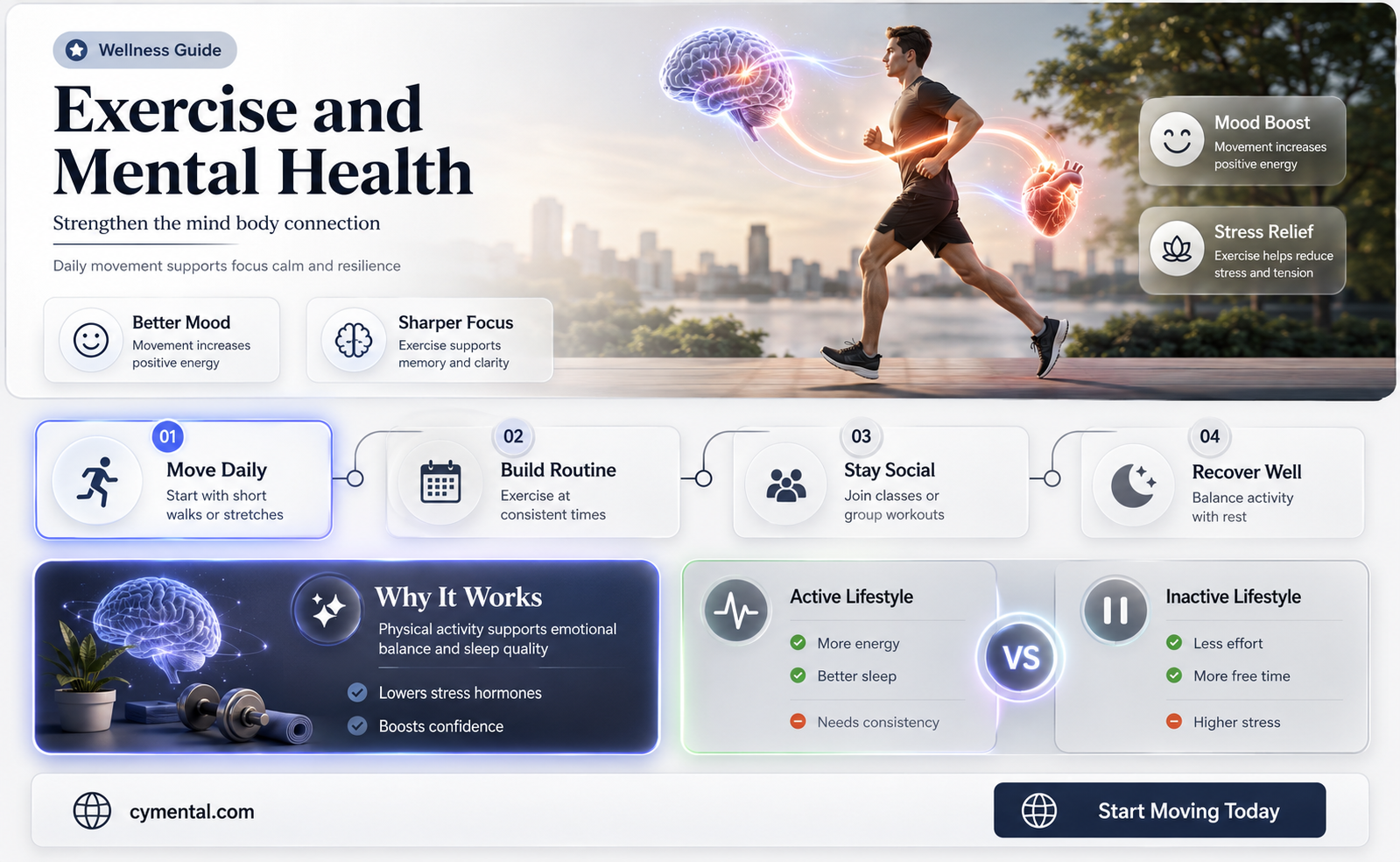
Exercise has been widely recognized as a powerful tool for improving physical health, but its impact on mental well-being is equally significant. Numerous studies have shown that regular physical activity can alleviate symptoms of anxiety, depression, and stress by releasing endorphins, reducing inflammation, and promoting better sleep. Engaging in exercise also fosters a sense of accomplishment and boosts self-esteem, while providing opportunities for social interaction and mindfulness. Whether through aerobic activities like running, strength training, or even yoga, incorporating exercise into one’s routine can serve as a natural and effective strategy to enhance mental health and overall quality of life.
| Characteristics | Values |
|---|---|
| Reduces Symptoms of Depression | Regular exercise can decrease symptoms of depression by increasing brain sensitivity to serotonin and norepinephrine, which relieve feelings of depression (Harvard Medical School, 2023). |
| Alleviates Anxiety | Physical activity helps reduce anxiety by promoting neural growth in the brain and reducing stress hormones like cortisol (Mayo Clinic, 2023). |
| Improves Mood | Exercise stimulates the release of endorphins, neurotransmitters that create feelings of happiness and euphoria (American Psychological Association, 2023). |
| Enhances Cognitive Function | Regular physical activity boosts memory, attention, and problem-solving skills by increasing blood flow to the brain and promoting neuroplasticity (British Journal of Sports Medicine, 2023). |
| Reduces Stress | Exercise acts as a natural stress reliever by lowering cortisol levels and improving the body’s ability to handle existing mental tension (Anxiety & Depression Association of America, 2023). |
| Improves Sleep Quality | Engaging in regular exercise helps regulate sleep patterns, making it easier to fall asleep and improving overall sleep quality (National Sleep Foundation, 2023). |
| Boosts Self-Esteem | Achieving fitness goals through exercise can enhance self-confidence and foster a positive self-image (Mental Health Foundation, 2023). |
| Reduces Symptoms of ADHD | Exercise increases dopamine, norepinephrine, and serotonin levels, which help improve concentration and reduce symptoms of ADHD (Journal of Attention Disorders, 2023). |
| Lowers Risk of Cognitive Decline | Regular physical activity is associated with a reduced risk of dementia and Alzheimer’s disease by promoting brain health and reducing inflammation (Alzheimer’s Association, 2023). |
| Promotes Social Interaction | Group exercises or team sports can reduce feelings of loneliness and provide social support, which is beneficial for mental health (World Health Organization, 2023). |
| Regulates Emotional Responses | Exercise helps regulate the amygdala, the brain’s emotional center, leading to better emotional resilience and reduced reactivity to stress (Neuroscience News, 2023). |
| Supports Addiction Recovery | Physical activity can serve as a healthy coping mechanism, reducing cravings and withdrawal symptoms in individuals recovering from addiction (Substance Abuse and Mental Health Services Administration, 2023). |
Explore related products


$10.6 $19.99

$14.99 $19.99

$10.88 $15.99


What You'll Learn
- Stress Reduction: Physical activity lowers cortisol, boosts endorphins, and reduces stress levels effectively
- Mood Enhancement: Exercise increases serotonin and dopamine, improving mood and reducing depression symptoms
- Anxiety Relief: Regular workouts can decrease anxiety by promoting relaxation and focus
- Cognitive Benefits: Exercise enhances memory, attention, and overall brain function
- Social Connection: Group activities foster community, reduce loneliness, and improve mental well-being

Stress Reduction: Physical activity lowers cortisol, boosts endorphins, and reduces stress levels effectively
Stress is an inevitable part of life, but its management is where we can take control. One of the most effective tools at our disposal is physical activity, which acts as a powerful antidote to the body's stress response. When we engage in exercise, our bodies undergo a series of biochemical changes that directly counteract the negative effects of stress. Cortisol, often referred to as the stress hormone, is significantly reduced during and after physical activity. Simultaneously, the brain releases endorphins, natural chemicals that act as mood elevators and natural painkillers. This dual action—lowering cortisol and boosting endorphins—creates a physiological environment that is less conducive to stress and more aligned with relaxation and well-being.
Consider this: a 30-minute brisk walk, a short jog, or even a session of yoga can initiate these beneficial changes. Research suggests that moderate-intensity exercise, performed consistently, can lead to long-term reductions in stress levels. For instance, a study published in the *Journal of Clinical Psychiatry* found that participants who engaged in regular aerobic exercise experienced a 26% decrease in stress levels compared to a control group. The key here is consistency; sporadic workouts may provide temporary relief, but it’s the cumulative effect of regular physical activity that yields lasting results. For adults, the American Heart Association recommends at least 150 minutes of moderate-intensity exercise per week, which can be broken down into manageable 30-minute sessions five days a week.
However, not all exercises are created equal when it comes to stress reduction. Mind-body practices like yoga, tai chi, and Pilates have been shown to be particularly effective due to their focus on breath control and mindfulness. These activities not only reduce cortisol levels but also enhance mental clarity and emotional stability. For example, a study in the *International Journal of Preventive Medicine* found that yoga practitioners reported lower stress levels and improved mood compared to those who did not practice yoga. Incorporating such activities into your routine, even just twice a week, can amplify the stress-reducing benefits of physical activity.
Practical implementation is key to reaping these benefits. Start small and gradually increase the intensity and duration of your workouts. If you’re new to exercise, begin with low-impact activities like walking or swimming. For those with busy schedules, even short bursts of activity, such as a 10-minute dance session or a quick HIIT workout, can trigger the release of endorphins and lower cortisol levels. Additionally, combining physical activity with social interaction—like joining a fitness class or exercising with a friend—can further enhance its stress-relieving effects. Remember, the goal isn’t to achieve peak physical performance but to create a sustainable habit that supports your mental health.
In conclusion, physical activity is a scientifically backed, accessible, and effective method for reducing stress. By lowering cortisol and boosting endorphins, it addresses stress at its biochemical roots while promoting overall well-being. Whether through moderate aerobic exercise, mind-body practices, or short bursts of activity, incorporating movement into your daily routine can be a transformative step toward managing stress. The evidence is clear: when it comes to stress reduction, your body’s natural response to physical activity is one of the most powerful tools you have.
Kick Stress Away: Soccer's Surprising Mental Health Benefits
You may want to see also
Explore related products


$13.16 $16.99

$8.44 $14.99

$8.5 $19.99


Mood Enhancement: Exercise increases serotonin and dopamine, improving mood and reducing depression symptoms
Exercise isn't just about building muscle or shedding pounds; it's a powerful tool for rewiring your brain chemistry. Think of it as a natural antidepressant, one that doesn't come with a prescription. When you engage in physical activity, your body releases serotonin and dopamine, often referred to as the "feel-good" neurotransmitters. These chemicals play a crucial role in regulating mood, pleasure, and reward.
Imagine serotonin as the brain's natural mood stabilizer, promoting feelings of well-being and contentment. Dopamine, on the other hand, is the motivator, driving us to seek rewards and experience pleasure. Studies show that regular exercise, particularly aerobic activities like brisk walking, swimming, or cycling, can significantly increase the production of these neurotransmitters. Aim for at least 30 minutes of moderate-intensity exercise most days of the week to reap these mood-boosting benefits.
For those struggling with depression, exercise can be a game-changer. A 2018 meta-analysis published in the *Journal of Psychiatric Research* found that exercise interventions were effective in reducing symptoms of depression, with effects comparable to those of psychotherapy or antidepressant medication.
It's important to note that exercise isn't a magic bullet. Severe depression often requires professional treatment, including therapy and medication. However, incorporating regular physical activity into a comprehensive treatment plan can significantly enhance its effectiveness.
Think of exercise as a complementary therapy, a natural way to support your mental well-being. Start small, find activities you enjoy, and gradually increase the intensity and duration. Remember, consistency is key. By making exercise a regular part of your routine, you're not just investing in your physical health, you're investing in a brighter, more resilient mind.
Animal Companionship: Boosting Mental Health and Emotional Well-Being in Humans
You may want to see also
Explore related products


Anxiety Relief: Regular workouts can decrease anxiety by promoting relaxation and focus
Anxiety often manifests as a relentless mental chatter, a storm of worries that clouds focus and drains energy. Regular exercise acts as a circuit breaker, interrupting this cycle by shifting attention to physical sensations—the rhythm of breathing, the burn in muscles, the steady beat of footsteps. This mindful engagement with the body anchors the mind in the present, offering a respite from anxious thoughts. Studies show that even 20-30 minutes of moderate-intensity exercise, such as brisk walking or cycling, can trigger this effect, making it a practical tool for immediate anxiety relief.
Consider the physiological mechanisms at play. Physical activity stimulates the release of endorphins, often dubbed "feel-good" hormones, which act as natural painkillers and mood elevators. Simultaneously, exercise reduces levels of stress hormones like cortisol, creating a biochemical environment less conducive to anxiety. For instance, a study published in *Frontiers in Psychiatry* found that participants who engaged in regular aerobic exercise experienced a 20% reduction in anxiety symptoms compared to sedentary controls. This isn’t about marathon training—even consistent, low-impact activities like yoga or tai chi can yield significant benefits, particularly for those who find high-intensity workouts overwhelming.
Incorporating exercise into an anxiety management routine requires strategy. Start small to avoid overwhelm; aim for 3-4 sessions per week, gradually increasing duration and intensity. Pair workouts with mindfulness techniques, such as focusing on breath during movement, to amplify the relaxation response. For example, a 10-minute morning walk combined with deep breathing can set a calm tone for the day. Conversely, evening workouts can help dissipate accumulated stress, improving sleep quality—a critical factor in anxiety management. Consistency is key; irregular exercise may provide temporary relief but lacks the cumulative effect needed for long-term anxiety reduction.
Not all exercises are created equal in their anxiety-relieving potential. Activities that combine physical exertion with cognitive engagement, like dance or team sports, offer dual benefits by promoting focus and social interaction. For those who prefer solitude, solo activities like swimming or hiking provide a meditative escape. Age and fitness level should guide the choice of activity; older adults or beginners might opt for gentle exercises like water aerobics or stretching routines, while younger individuals may benefit from more dynamic options like kickboxing or rock climbing. The goal is to find an activity that feels enjoyable and sustainable, ensuring it becomes a lasting habit rather than a fleeting effort.
Finally, while exercise is a powerful tool, it’s not a standalone cure for anxiety. It works best as part of a holistic approach that includes therapy, medication (if prescribed), and lifestyle adjustments. For instance, combining regular workouts with cognitive-behavioral therapy (CBT) can enhance both strategies’ effectiveness, as physical activity complements CBT’s focus on changing thought patterns. Practical tip: keep a journal to track how different exercises impact your anxiety levels, noting patterns to refine your routine. By understanding and leveraging the unique benefits of exercise, individuals can transform their anxiety management from reactive to proactive, reclaiming control over their mental well-being.
Art's Healing Power: Boosting Mental Health Through Creativity
You may want to see also
Explore related products





Cognitive Benefits: Exercise enhances memory, attention, and overall brain function
Exercise isn't just about building muscles or shedding pounds; it's a powerful tool for sharpening your mind. Numerous studies have demonstrated that regular physical activity can significantly enhance cognitive function, particularly in the areas of memory, attention, and overall brain health. This is especially relevant as we age, since cognitive decline is a natural part of the aging process.
Consider this: a 2019 study published in the British Journal of Sports Medicine found that regular aerobic exercise, such as brisk walking, cycling, or swimming, can increase the size of the hippocampus, a brain region critical for memory and learning. The study involved adults aged 55 to 80, who engaged in moderate-intensity exercise for 30 minutes, 5 days a week, over a 6-month period. The results showed a 2-3% increase in hippocampal volume, equivalent to reversing age-related shrinkage by 1-2 years. To put this into perspective, aim for at least 150 minutes of moderate-intensity aerobic exercise per week, as recommended by the World Health Organization.
But how does exercise exert these effects on the brain? One key mechanism is through increased blood flow and oxygen delivery to the brain. Exercise also stimulates the release of neurotransmitters, such as dopamine and norepinephrine, which play a crucial role in attention, motivation, and mood regulation. Additionally, physical activity promotes the production of brain-derived neurotrophic factor (BDNF), a protein that supports the growth, maintenance, and survival of neurons. To maximize cognitive benefits, incorporate a combination of aerobic exercise, strength training, and mind-body practices like yoga or tai chi. For instance, a 20-minute session of high-intensity interval training (HIIT) followed by a 10-minute mindfulness meditation can provide a potent boost to both physical and cognitive health.
For older adults, in particular, exercise can be a game-changer. A study published in the journal Neurology found that older adults who engaged in regular physical activity had a 32% lower risk of developing cognitive impairment compared to their sedentary peers. The study involved adults aged 65 and older, who participated in activities such as walking, gardening, or dancing for at least 30 minutes, 3-4 times per week. To make exercise a habit, start small and gradually increase intensity and duration. For example, begin with 10-minute walks and progress to longer, more challenging workouts as your fitness level improves.
Incorporating exercise into your daily routine doesn't have to be complicated or time-consuming. Simple strategies, such as taking the stairs instead of the elevator, walking during lunch breaks, or engaging in active hobbies like hiking or cycling, can make a significant difference. Remember, the key is consistency – aim for at least 30 minutes of moderate-intensity exercise per day, 5 days a week. By prioritizing physical activity, you can reap the cognitive benefits of exercise, including improved memory, attention, and overall brain function, and enjoy a sharper, more resilient mind as you age.
Sports and Mental Health: Boosting Well-Being Through Physical Activity
You may want to see also
Explore related products



Social Connection: Group activities foster community, reduce loneliness, and improve mental well-being
Human beings are inherently social creatures, and our mental health thrives on connection. Loneliness, a pervasive issue in modern society, acts as a silent saboteur, increasing the risk of depression, anxiety, and even physical ailments. Group exercise, however, offers a powerful antidote.
Consider the dynamics of a cycling class. The synchronized pedaling, the shared struggle against resistance, and the collective cheers at the end create a sense of belonging. This isn't merely anecdotal; studies show that group exercise participants report significantly lower levels of loneliness compared to those who exercise solo. The key lies in the release of oxytocin, the "cuddle hormone," which is triggered by social interaction and fosters feelings of trust and bonding.
A 2019 study published in the *Journal of Sports Science & Medicine* found that adults who participated in group exercise sessions three times a week for eight weeks experienced a 26% reduction in perceived loneliness. This highlights the importance of consistency. Aiming for at least two to three group workouts per week can be a realistic goal to reap these benefits.
The beauty of group activities lies in their accessibility. From yoga studios to community center Zumba classes, there's something for every age, fitness level, and interest. For older adults, who are particularly vulnerable to loneliness, senior-friendly options like chair yoga or walking groups can be life-changing. Even virtual fitness communities, booming in the post-pandemic era, offer a sense of connection, allowing individuals to participate from the comfort of their homes while still feeling part of a larger group.
The takeaway is clear: exercising with others isn't just about physical gains. It's about building a support system, fostering a sense of belonging, and combating the isolating effects of loneliness. So, ditch the solitary treadmill sessions and join a class, a team, or even a walking group. Your mind will thank you for it.
Sleep's Role in Boosting Mental Health and Emotional Well-Being
You may want to see also
Frequently asked questions
Yes, exercise has been shown to significantly improve mental health by reducing symptoms of anxiety, depression, and stress. It releases endorphins, which are natural mood lifters, and promotes better sleep and overall well-being.
Even small amounts of exercise can make a difference. Aim for at least 30 minutes of moderate-intensity activity, like brisk walking or cycling, most days of the week. Consistency is key for long-term mental health benefits.
Any form of physical activity can help, but aerobic exercises like running, swimming, or dancing are particularly effective. Mind-body practices like yoga and tai chi are also great for reducing stress and improving mood.
While exercise is a powerful tool for improving mental health, it is not a replacement for professional treatment like therapy or medication. It can complement these treatments and enhance their effectiveness, but consult a healthcare provider for personalized advice.