Lucas Bennett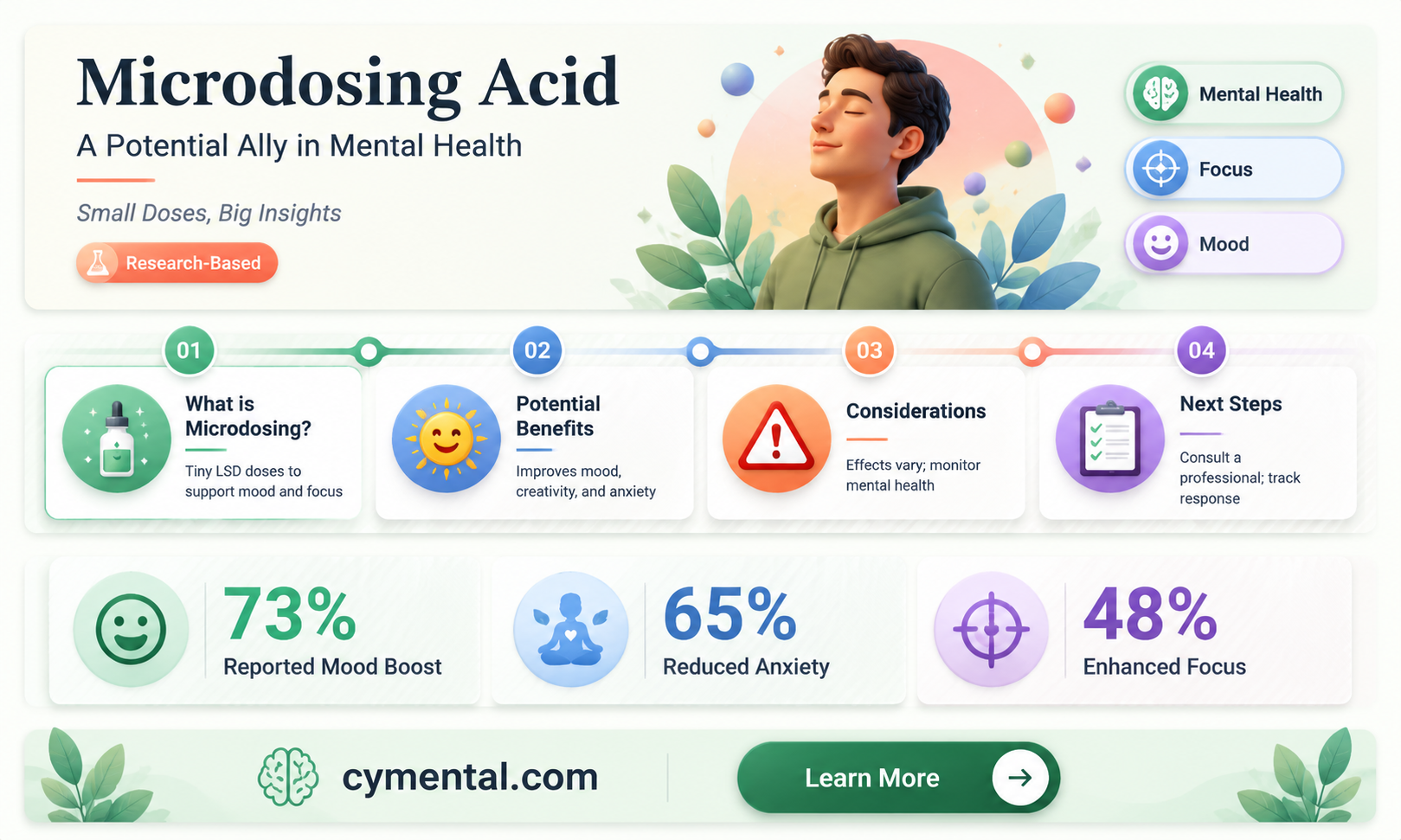
The potential therapeutic benefits of small amounts of acid, specifically psychedelics like LSD or psilocybin, in treating mental illness have garnered significant attention in recent years. Emerging research suggests that controlled, microdosing regimens or supervised therapeutic sessions with these substances may alleviate symptoms of conditions such as depression, anxiety, PTSD, and addiction. Studies indicate that psychedelics can promote neuroplasticity, enhance emotional processing, and foster a sense of interconnectedness, potentially leading to lasting improvements in mental health. However, the topic remains controversial, with concerns about safety, legality, and the need for rigorous scientific validation. As interest grows, ongoing clinical trials and shifting public perceptions are paving the way for a deeper understanding of whether and how these substances could revolutionize mental health treatment.
| Characteristics | Values |
|---|---|
| Therapeutic Potential | Small doses of psychedelics (e.g., LSD, psilocybin) are being studied for their potential to treat mental illnesses like depression, anxiety, and PTSD. |
| Mechanism of Action | Believed to promote neuroplasticity, increase connectivity in the brain, and alter serotonin receptors, leading to shifts in perception and mood. |
| Clinical Trials | Numerous ongoing trials show promising results, with some studies reporting significant reductions in symptoms after a single dose. |
| Dosage | Microdosing (typically 10-20% of a recreational dose) is the focus, intended to avoid hallucinations while providing therapeutic benefits. |
| Safety Profile | Generally considered safe in controlled settings, but risks include psychological distress, especially in individuals with predispositions to psychosis. |
| Legal Status | Illegal in many countries, though some regions (e.g., Oregon, Canada) have decriminalized or approved limited therapeutic use. |
| Long-Term Effects | Limited research on long-term effects; more studies are needed to assess sustained benefits and potential risks. |
| Placebo Effect | Some studies suggest a strong placebo effect, emphasizing the need for rigorous, placebo-controlled trials. |
| Accessibility | Currently limited to clinical trials or underground use due to legal restrictions. |
| Public Perception | Growing acceptance and interest in psychedelic therapy, driven by media coverage and advocacy efforts. |
Explore related products





What You'll Learn
- Microdosing LSD for Depression: Exploring low-dose LSD's potential to alleviate symptoms of depression and anxiety
- Ketamine Therapy for PTSD: Investigating ketamine's rapid effects on reducing PTSD symptoms and improving mood
- Acid in Anxiety Treatment: Studying how controlled acid use might reduce anxiety and enhance therapy outcomes
- Psychedelics for Bipolar Disorder: Examining the risks and benefits of acid in bipolar disorder management
- Acid's Impact on Neuroplasticity: Understanding how small acid doses may promote brain healing in mental illness

Microdosing LSD for Depression: Exploring low-dose LSD's potential to alleviate symptoms of depression and anxiety
The practice of microdosing LSD, typically involving doses of 10 to 20 micrograms every few days, has gained attention as a potential adjunct therapy for depression and anxiety. Unlike a full dose, which can induce hallucinations, microdosing aims to enhance mood, creativity, and focus without altering perception. Advocates report reduced symptoms of depression, increased emotional resilience, and improved overall well-being, though scientific research remains limited. This approach challenges traditional treatment paradigms, offering a novel perspective on managing mental health with psychedelics.
From an analytical standpoint, the mechanism behind LSD’s potential antidepressant effects lies in its interaction with serotonin receptors in the brain. Serotonin, a neurotransmitter linked to mood regulation, is directly influenced by LSD, which may explain the reported mood enhancements. Studies, such as those conducted by Imperial College London, suggest that even sub-perceptual doses can modulate brain activity in regions associated with depression and anxiety. However, the lack of large-scale clinical trials means these findings are preliminary, and the long-term effects of microdosing remain unclear.
For those considering microdosing LSD, a structured approach is essential. Start with a dose of 10 micrograms, taken every three days, to minimize tolerance buildup and assess sensitivity. Keep a journal to track mood changes, energy levels, and any side effects, such as mild anxiety or restlessness. Combine microdosing with therapy or mindfulness practices to maximize potential benefits. Caution is advised for individuals with a history of psychosis or bipolar disorder, as psychedelics may exacerbate these conditions. Always source LSD from a trusted supplier to ensure purity and accurate dosing.
Comparatively, microdosing LSD stands apart from conventional antidepressants, which often come with side effects like weight gain or emotional numbing. While SSRIs target serotonin reuptake, LSD directly stimulates serotonin receptors, potentially offering a more dynamic effect on mood. However, the unregulated nature of microdosing and its legal status in most countries pose significant barriers. Unlike prescribed medications, LSD lacks standardized dosing guidelines, making self-administration risky without professional oversight.
Descriptively, the experience of microdosing LSD is often subtle yet profound. Users frequently describe a heightened sense of clarity, improved emotional balance, and a renewed appreciation for daily activities. For example, a 32-year-old graphic designer reported feeling "less bogged down by negative thoughts" and more engaged in creative tasks after six weeks of microdosing. Such anecdotal evidence underscores the potential of LSD as a tool for mental health, though it also highlights the need for rigorous scientific validation.
Boost Focus and Calm: Strategies for Achieving Mental Clarity
You may want to see also
Explore related products


Ketamine Therapy for PTSD: Investigating ketamine's rapid effects on reducing PTSD symptoms and improving mood
Ketamine, originally developed as an anesthetic, has emerged as a groundbreaking treatment for PTSD, offering rapid relief where traditional therapies often fall short. Unlike conventional antidepressants, which can take weeks to show effects, ketamine can reduce PTSD symptoms within hours to days. This is particularly crucial for individuals with severe, treatment-resistant PTSD, who may be at high risk of self-harm or suicide. Administered in controlled, low doses (typically 0.5 mg/kg intravenously), ketamine acts on the brain’s glutamate system, fostering neural plasticity and rewiring maladaptive pathways associated with trauma. Its ability to provide immediate respite while longer-term therapies take effect makes it a transformative tool in mental health care.
The mechanism behind ketamine’s efficacy lies in its interaction with NMDA receptors, which modulate glutamate, a key neurotransmitter involved in learning and memory. By blocking these receptors, ketamine triggers a cascade of events that promote synaptic growth and strengthen neural connections. For PTSD patients, this means the brain can more effectively overwrite traumatic memories and reduce their emotional impact. Studies show that a single infusion can lead to significant symptom reduction for up to two weeks, with repeated treatments (typically 6 sessions over 2–3 weeks) extending benefits for months. However, the rapid onset of effects doesn’t diminish the need for concurrent psychotherapy, as ketamine’s biological action must be paired with cognitive restructuring for lasting change.
Implementing ketamine therapy requires careful consideration of dosage, frequency, and patient selection. Clinicians typically start with a low dose (0.5 mg/kg) and monitor for dissociative effects, which, while transient, can be unsettling for some patients. Treatment is often reserved for adults over 18, particularly those who have not responded to SSRIs or cognitive-behavioral therapy. Practical tips for patients include arranging for transportation post-treatment, as ketamine’s immediate effects can impair coordination, and maintaining a supportive environment during the integration phase. While ketamine is not a cure-all, its ability to rapidly stabilize individuals in crisis positions it as a vital component of comprehensive PTSD care.
Comparatively, ketamine’s role in PTSD treatment contrasts with the use of psychedelics like psilocybin or MDMA, which are also being explored for mental health but operate through different mechanisms and require longer sessions. Ketamine’s speed and efficacy make it uniquely suited for acute cases, though its effects are generally shorter-lived than those of psychedelics. This distinction highlights the importance of tailoring treatment to the individual’s needs, whether prioritizing immediate relief or deeper, long-term psychological processing. As research advances, ketamine therapy stands as a testament to the potential of unconventional treatments to revolutionize mental health care.
Reporting Mental Health Associations: When Help Falls Short, What Next?
You may want to see also
Explore related products





Acid in Anxiety Treatment: Studying how controlled acid use might reduce anxiety and enhance therapy outcomes
Recent studies suggest that microdosing LSD, typically 10–20 micrograms every few days, may alleviate anxiety by promoting neuroplasticity and emotional processing. Unlike full doses, microdosing aims to enhance daily functioning without inducing hallucinations. Users report increased mindfulness, reduced rumination, and improved mood, though placebo effects cannot be ruled out. Researchers hypothesize that sub-perceptual doses modulate serotonin receptors, fostering adaptive responses to stress. However, long-term safety and optimal dosing remain under investigation, making this an experimental approach rather than standard therapy.
Incorporating controlled acid use into therapy sessions, known as psychedelic-assisted psychotherapy, shows promise for treatment-resistant anxiety. Patients receive a single, monitored dose (e.g., 20–50 micrograms of LSD or 10–25 mg of psilocybin) in a therapeutic setting. The altered state of consciousness allows individuals to confront and process traumatic memories or ingrained thought patterns with reduced fear responses. Therapists guide the experience, integrating insights into ongoing cognitive-behavioral strategies. Early trials indicate lasting reductions in anxiety for up to 6 months post-session, particularly in patients with end-of-life distress or generalized anxiety disorder.
Before considering acid-assisted therapy, several precautions are essential. Candidates should undergo thorough psychiatric evaluation to rule out conditions like schizophrenia or bipolar disorder, which may worsen with psychedelics. Sessions require a controlled environment with trained professionals to manage potential psychological distress. Dosage precision is critical; even slight variations can alter outcomes. Legal and ethical considerations also limit accessibility, as most jurisdictions classify LSD and psilocybin as Schedule I substances. Patients must weigh the experimental nature of this treatment against its potential benefits.
For those exploring microdosing independently, consistency and self-monitoring are key. Start with 10 micrograms of LSD every third day, adjusting based on response. Maintain a journal to track mood, anxiety levels, and cognitive changes. Avoid microdosing during high-stress periods or while taking SSRIs, as interactions are poorly understood. Combine the practice with mindfulness or therapy for synergistic effects. While anecdotal reports are encouraging, self-administration carries risks, including legal consequences and psychological destabilization. Always prioritize professional guidance when possible.
Exercise and Mental Health: Unlocking the Mind-Body Connection for Wellness
You may want to see also
Explore related products



Psychedelics for Bipolar Disorder: Examining the risks and benefits of acid in bipolar disorder management
The potential of psychedelics in mental health treatment has sparked both curiosity and controversy, particularly regarding bipolar disorder. While traditional therapies often focus on mood stabilizers and antipsychotics, emerging research suggests that controlled, microdosing of LSD (acid) might offer unique benefits. However, the risks—especially for a condition as volatile as bipolar disorder—cannot be overlooked. This delicate balance demands careful examination.
Consider the mechanism: LSD interacts with serotonin receptors, potentially resetting maladaptive thought patterns common in bipolar disorder. Microdosing, typically defined as 10–20 micrograms every few days, aims to avoid full-blown psychedelic experiences while harnessing subtle cognitive enhancements. Anecdotal reports describe improved mood stability, heightened creativity, and reduced anxiety. For instance, a 32-year-old bipolar II patient reported fewer depressive episodes and increased emotional clarity after six months of microdosing under medical supervision. However, such cases lack rigorous scientific validation, emphasizing the need for controlled trials.
The risks are equally compelling. Bipolar disorder’s inherent instability makes individuals more susceptible to psychedelic-induced mania or psychosis. Even microdoses can disrupt sleep patterns or trigger hypomania, counterproductive to long-term management. A 2021 case study documented a 45-year-old bipolar I patient experiencing a manic episode after a single microdose, highlighting the unpredictability of individual responses. Furthermore, the lack of standardized dosing protocols complicates safety assessments, making self-medication particularly dangerous.
For those considering this approach, collaboration with a psychiatrist is non-negotiable. Start with a comprehensive evaluation to assess risk factors, such as history of psychosis or current medication interactions. If proceeding, maintain a detailed journal tracking mood, sleep, and side effects. Dosage should be conservative—begin with 10 micrograms and adjust incrementally, with weeks between changes. Avoid microdosing during manic or hypomanic phases, as this could exacerbate symptoms. Integrate the practice with established therapies, such as cognitive-behavioral therapy, to maximize potential benefits while mitigating risks.
In conclusion, while psychedelics like LSD hold promise for bipolar disorder, their use remains experimental and fraught with challenges. The allure of a novel treatment must be tempered by caution and professional guidance. As research evolves, the goal should be to refine protocols that prioritize safety without stifling innovation, ensuring that the pursuit of mental wellness does not become a gamble.
Equine Therapy: How Horses Heal and Improve Mental Health
You may want to see also
Explore related products


Acid's Impact on Neuroplasticity: Understanding how small acid doses may promote brain healing in mental illness
Neuroplasticity, the brain’s ability to reorganize itself by forming new neural connections, is a cornerstone of mental health recovery. Emerging research suggests that small, controlled doses of certain acids, such as psilocybin (found in "magic mushrooms") and lysergic acid diethylamide (LSD), may enhance this process. These substances, when administered in microdoses (typically 10-20 micrograms of LSD or 0.1-0.3 grams of psilocybin mushrooms), have been anecdotally and preliminarily linked to improved mood, creativity, and cognitive flexibility. The key lies in their interaction with serotonin receptors, particularly the 5-HT2A receptor, which plays a critical role in neural plasticity and emotional regulation.
To explore this, consider a structured approach to microdosing. Start with a sub-perceptual dose—one that doesn’t induce hallucinations but may subtly enhance focus or mood. For instance, a 10-microgram LSD dose every third day for 4-6 weeks, followed by a break, is a common protocol. Pair this with journaling to track changes in mental clarity, emotional resilience, or symptoms of depression or anxiety. It’s crucial to maintain a consistent routine and avoid self-medicating without professional guidance, especially for individuals under 25 or those with a history of psychosis, as the brain is still developing and may be more susceptible to adverse effects.
Comparatively, traditional antidepressants often target single neurotransmitters and may take weeks to show effects, whereas microdosing appears to act more holistically, potentially fostering broader neural rewiring. A 2020 study in *Nature Medicine* found that psilocybin, in conjunction with therapy, rapidly reduced depression symptoms in treatment-resistant patients, with effects lasting up to 12 months. While this involved macrodosing in a clinical setting, microdosing studies are underway to determine if smaller, more frequent doses can achieve similar long-term benefits with fewer risks.
However, caution is paramount. The legality of these substances varies globally, and their long-term effects remain understudied. Adverse reactions, such as increased anxiety or emotional instability, can occur, particularly in unsupervised settings. For those considering this approach, consult a healthcare provider and prioritize harm reduction strategies, such as starting with the lowest possible dose and avoiding concurrent use with other psychoactive substances.
In conclusion, while the potential of small acid doses to promote neuroplasticity and mental healing is promising, it’s a delicate balance of science and caution. As research evolves, this approach may become a transformative tool in mental health treatment—but only when approached with rigor, respect for the substance, and professional oversight.
Seeking Support: A Guide to Accessing Mental Health Assistance
You may want to see also
Frequently asked questions
Some studies suggest that microdosing LSD (taking very small, sub-hallucinogenic doses) may have potential benefits for mental health, such as reducing symptoms of depression, anxiety, and PTSD. However, research is still in its early stages, and long-term effects are not fully understood. Always consult a healthcare professional before considering this approach.
Limited but growing research indicates that controlled, therapeutic use of psychedelics like LSD, in conjunction with therapy, may help treat conditions like depression, anxiety, and addiction. However, these treatments are not yet widely approved or standardized, and self-medication is strongly discouraged.
Yes, even small amounts of acid can have unpredictable effects, including anxiety, paranoia, or exacerbation of existing mental health conditions. Long-term risks, such as hallucinogen persisting perception disorder (HPPD), are also possible. It is crucial to approach this under professional guidance.
No, microdosing acid is not a proven or approved replacement for traditional treatments like therapy, medication, or lifestyle changes. It should be considered only as a complementary or experimental approach under the supervision of a qualified healthcare provider.