Ava Ramirez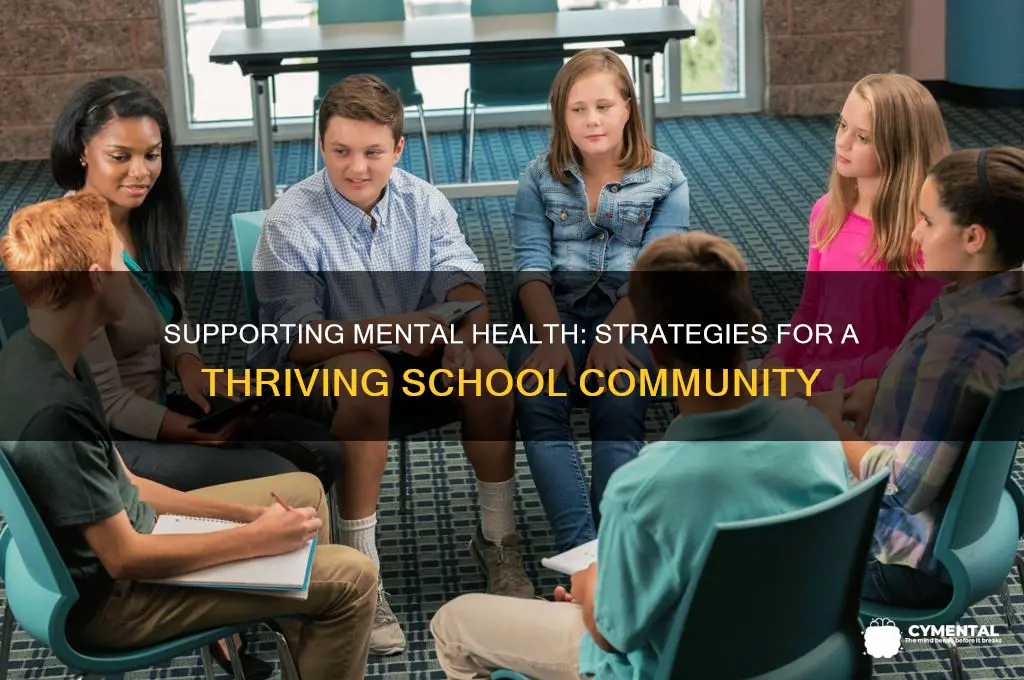
Supporting mental health within the school community is essential for creating a nurturing and inclusive environment where students, teachers, and staff can thrive. By fostering open conversations, providing accessible resources, and implementing proactive strategies, schools can address the emotional and psychological well-being of all members. Initiatives such as mental health awareness programs, peer support systems, and professional counseling services play a crucial role in reducing stigma and offering timely assistance. Additionally, educators and administrators can promote resilience and self-care by integrating mindfulness practices, encouraging healthy coping mechanisms, and ensuring a balanced academic workload. Together, these efforts can build a compassionate and supportive school culture that prioritizes mental health as a cornerstone of overall well-being.
Explore related products


What You'll Learn
- Promote Open Conversations: Encourage students, staff to discuss mental health without stigma, fostering a supportive environment
- Provide Accessible Resources: Offer counseling, hotlines, and mental health tools for easy access within the school
- Train Staff & Teachers: Equip educators with skills to recognize and address mental health issues effectively
- Create Safe Spaces: Designate quiet, inclusive areas where students can relax and seek support
- Organize Awareness Campaigns: Host events, workshops to educate the community on mental health importance

Promote Open Conversations: Encourage students, staff to discuss mental health without stigma, fostering a supportive environment
Mental health struggles often thrive in silence, yet schools buzz with whispers of anxiety, depression, and stress. Breaking this silence requires intentional action. Start by embedding mental health discussions into the fabric of school life. Host regular, structured forums like "Wellness Wednesdays" where students and staff share experiences, ask questions, and learn coping strategies. Normalize these conversations by integrating them into assemblies, homeroom periods, or even casual staffroom chats. When mental health becomes a routine topic, stigma loses its grip.
Consider the power of peer-led initiatives. Train student leaders to facilitate small-group discussions or mentor younger students. Programs like "Peer Helpers" or "Mental Health Ambassadors" empower students to support each other while fostering a culture of empathy. Pair these efforts with professional development for staff, equipping teachers and administrators with the language and skills to address mental health concerns sensitively. For instance, a simple training on active listening can transform how a teacher responds to a student in distress, turning a moment of vulnerability into an opportunity for connection.
Language matters. Replace dismissive phrases like "Just toughen up" with validating statements such as "It’s okay to feel this way" or "How can I support you?" Encourage staff to model vulnerability by sharing their own experiences when appropriate. A teacher admitting to feeling overwhelmed during exam season can humanize the struggle and invite students to do the same. Similarly, celebrate stories of resilience during school events to highlight that recovery is possible and help-seeking is a strength.
Practical barriers often hinder open conversations. Designate safe spaces—like a "Calm Corner" in the library or a counselor’s office with an open-door policy—where students and staff can seek support without fear of judgment. Implement a confidential reporting system for those uncomfortable speaking aloud, such as an anonymous suggestion box or digital platform. Pair these physical spaces with clear protocols: ensure every mental health conversation ends with actionable steps, whether it’s a referral to a counselor, a follow-up check-in, or a shared resource like a mindfulness app or helpline number.
Finally, measure progress and adapt. Conduct anonymous surveys to gauge comfort levels around mental health discussions and identify lingering stigmas. Celebrate successes—like increased help-seeking behaviors or reduced absenteeism—to reinforce the value of open conversations. Remember, fostering a stigma-free environment isn’t a one-time effort but an ongoing commitment. By weaving these strategies into the school’s DNA, you create a community where mental health is discussed as freely as academic achievements, ensuring no one suffers in silence.
Empowering Students: The Impact of Mental Health Resources in Schools
You may want to see also
Explore related products


$31.95 $26.99

$26.77 $40.95


Provide Accessible Resources: Offer counseling, hotlines, and mental health tools for easy access within the school
Schools are often the epicenter of adolescent stress, anxiety, and emotional turmoil, yet many students lack immediate access to mental health support. Providing accessible resources like counseling, hotlines, and mental health tools directly within the school environment can bridge this gap, ensuring students receive timely help. For instance, embedding a licensed counselor in every school, regardless of size, offers students a safe space to discuss their struggles without the stigma of seeking external help. Similarly, prominently displaying hotline numbers in restrooms, cafeterias, and classrooms ensures students know where to turn in moments of crisis. These resources must be integrated seamlessly into the school’s infrastructure, not treated as afterthoughts.
Consider the logistics of implementation: schools should allocate dedicated rooms for counseling sessions, ensuring privacy and confidentiality. Hotline numbers should be paired with QR codes linking to anonymous chat services, catering to students who prefer text-based communication. Mental health tools, such as mindfulness apps or stress-reduction kits, can be made available in libraries or student lounges. For younger students (ages 10–14), visual aids like emotion charts or calming fidget tools can be particularly effective. Older students (ages 15–18) may benefit from workshops on cognitive-behavioral techniques or access to digital platforms offering self-guided therapy modules. Tailoring resources to age groups maximizes their relevance and usability.
A common pitfall is assuming that simply providing resources guarantees their use. Schools must actively promote these services through assemblies, teacher training, and peer-led campaigns. For example, training teachers to recognize signs of distress and encouraging them to discreetly refer students to counselors can foster a culture of support. Peer mentors, selected and trained to guide classmates to available resources, can also reduce the intimidation factor of seeking help. However, schools must balance promotion with sensitivity, avoiding language that might inadvertently stigmatize mental health struggles.
The impact of accessible resources extends beyond individual students. When mental health support is normalized and readily available, the entire school community benefits. Teachers experience fewer disruptions in classrooms, parents feel reassured about their children’s well-being, and students develop healthier coping mechanisms. For instance, a school in California reported a 30% decrease in disciplinary incidents after implementing a comprehensive mental health resource program, underscoring the ripple effects of such initiatives. By investing in accessible resources, schools not only address immediate needs but also cultivate a generation better equipped to manage their mental health.
Do Mental Hospitals Truly Aid Recovery and Healing?
You may want to see also
Explore related products


Train Staff & Teachers: Equip educators with skills to recognize and address mental health issues effectively
Educators are often the first to notice when a student is struggling, yet many lack the training to respond effectively. A 2020 study by the National Association of School Psychologists found that only 30% of teachers felt "very prepared" to address student mental health concerns. This gap in preparedness can lead to missed opportunities for early intervention, potentially exacerbating issues like anxiety, depression, or self-harm. To bridge this gap, schools must prioritize comprehensive mental health training for all staff, not just counselors or administrators.
Effective training begins with equipping educators to recognize the subtle signs of mental health struggles. This goes beyond identifying overt behaviors like aggression or withdrawal. Teachers should learn to spot changes in academic performance, social interactions, or physical appearance that may signal underlying issues. For instance, a student who suddenly stops participating in class discussions or begins neglecting personal hygiene could be experiencing depression. Training should include case studies, role-playing scenarios, and real-world examples to help staff connect theoretical knowledge with practical application.
Once educators can identify potential issues, they need strategies to respond appropriately. This includes knowing when to refer a student to a mental health professional and how to provide immediate support in the classroom. For example, teachers can be trained in de-escalation techniques for students experiencing panic attacks or emotional outbursts. Simple interventions like offering a quiet space, using calm language, or redirecting focus can make a significant difference. Additionally, staff should learn how to communicate concerns to parents or guardians in a way that fosters collaboration rather than blame.
However, training must also address the emotional toll of supporting students with mental health challenges. Educators risk burnout if they lack self-care strategies or feel ill-equipped to handle difficult situations. Schools should incorporate modules on boundary-setting, stress management, and accessing their own support systems into training programs. For instance, a monthly peer support group for teachers can provide a safe space to share experiences and coping strategies. By prioritizing staff well-being, schools create a sustainable foundation for supporting student mental health.
Ultimately, investing in mental health training for educators is not just a professional development opportunity—it’s a necessity. Schools that commit to this training send a powerful message: mental health matters, and every member of the community plays a role in fostering a supportive environment. With the right skills and resources, educators can transform their classrooms into spaces where students feel seen, heard, and valued, setting the stage for both academic and emotional success.
Natural Ways to Support Mental Health and Well-being Effectively
You may want to see also
Explore related products





Create Safe Spaces: Designate quiet, inclusive areas where students can relax and seek support
Schools can significantly impact student mental health by creating safe spaces—designated areas where students feel secure, accepted, and free to unwind. These spaces serve as sanctuaries from academic pressures, social stressors, and personal challenges, offering a quiet retreat for reflection or connection. Research shows that environments fostering a sense of belonging and calmness reduce anxiety and improve emotional regulation, particularly in adolescents aged 12–18, who are most vulnerable to mental health struggles during these formative years.
Designing such spaces requires intentionality. Start by identifying underutilized areas like corners of libraries, unused classrooms, or outdoor nooks. Equip these zones with comfortable seating, soft lighting, and calming elements like plants, soothing colors, or white noise machines. Incorporate sensory tools such as stress balls, fidget toys, or weighted blankets to cater to diverse needs. Ensure accessibility by making the space inclusive for all students, including those with physical disabilities or neurodivergent conditions.
Staff involvement is critical to the success of these spaces. Train teachers, counselors, and administrators to respect the confidentiality and purpose of these areas, avoiding interruptions unless a student actively seeks help. Post clear guidelines—such as "no judgment," "quiet voices," and "respect personal space"—to establish boundaries. Encourage peer-to-peer support by training student volunteers to act as informal mentors, fostering a culture of empathy and understanding.
While physical design is essential, the emotional atmosphere matters equally. Rotate calming activities like mindfulness prompts, gratitude journals, or art supplies to encourage self-expression. Partner with mental health organizations to provide occasional workshops or drop-in sessions within these spaces, normalizing conversations around emotional well-being. Regularly seek student feedback to adapt the space to evolving needs, ensuring it remains relevant and welcoming.
Creating safe spaces is not a one-time effort but an ongoing commitment. Monitor usage patterns to gauge effectiveness and address any issues, such as overcrowding or misuse. Celebrate successes, like increased student engagement or positive testimonials, to reinforce the value of these areas. By prioritizing both physical and emotional safety, schools can transform these spaces into lifelines for students navigating the complexities of adolescence, fostering resilience and a healthier school community.
Supporting Your Brother: Compassionate Strategies for Mental Health Challenges
You may want to see also
Explore related products


Organize Awareness Campaigns: Host events, workshops to educate the community on mental health importance
Mental health awareness begins with visibility. Schools, as microcosms of society, often mirror the stigma surrounding mental health struggles. Organizing awareness campaigns through events and workshops directly challenges this stigma by normalizing conversations and providing actionable knowledge. Consider this: a single workshop can equip students, teachers, and parents with the language to discuss mental health openly, replacing whispers with understanding.
Step-by-Step Implementation:
- Identify Themes: Tailor events to age-appropriate topics. For elementary students, focus on emotional vocabulary and stress management through interactive activities like "Feelings Charades." Middle and high schoolers benefit from discussions on anxiety, depression, and resilience, using peer-led panels or expert talks. Staff workshops should cover recognizing signs of distress and referral pathways.
- Collaborate Broadly: Partner with local mental health organizations, counselors, and alumni who can share personal stories. For instance, a workshop titled "From Struggle to Strength" featuring recovered individuals fosters hope and reduces isolation.
- Use Creative Formats: Avoid dry lectures. Incorporate art therapy sessions, film screenings with Q&A, or mental health trivia games. A "Wellness Fair" with booths on mindfulness, nutrition, and sleep hygiene engages diverse learners.
- Leverage Timing: Align campaigns with Mental Health Awareness Month (May) or World Mental Health Day (October 10) to amplify impact. Post-exam periods are ideal for stress-relief workshops.
Cautions and Considerations:
While enthusiasm is key, avoid tokenism. Ensure events are inclusive, addressing cultural nuances and language barriers. For example, provide bilingual materials or translators for non-English-speaking families. Additionally, balance awareness with action—every event should end with a clear call-to-action, such as distributing crisis hotline numbers or signposting to school counseling services.
Measuring Success:
Quantify impact through pre/post-event surveys assessing stigma levels and knowledge retention. Anecdotal feedback, like a student feeling empowered to seek help after a workshop, is equally valuable. Sustained change requires follow-up: integrate campaign themes into ongoing school programs, such as mental health modules in health classes or peer support groups.
By treating awareness campaigns as dynamic, collaborative efforts, schools can transform passive sympathy into active empathy, fostering a community where mental health is prioritized, not stigmatized.
Family Involvement: A Key to Effective Mental Health Recovery
You may want to see also
Frequently asked questions
Schools can foster a supportive environment by promoting open conversations about mental health, providing access to counseling services, training staff to recognize signs of distress, and implementing policies that reduce stigma and encourage seeking help.
Teachers can support student mental health by being attentive to behavioral changes, creating a safe and inclusive classroom, avoiding judgment, and referring students to appropriate resources when needed.
Parents can contribute by staying informed about mental health issues, maintaining open communication with their children, collaborating with school staff, and advocating for mental health programs and resources within the school.
Schools can reduce stigma by incorporating mental health education into curricula, hosting awareness campaigns, sharing success stories of individuals who sought help, and ensuring all discussions are respectful and empathetic.
Students can support their peers by being kind and non-judgmental, actively listening without offering unsolicited advice, encouraging friends to seek help when needed, and participating in school initiatives that promote mental well-being.