Caleb Wright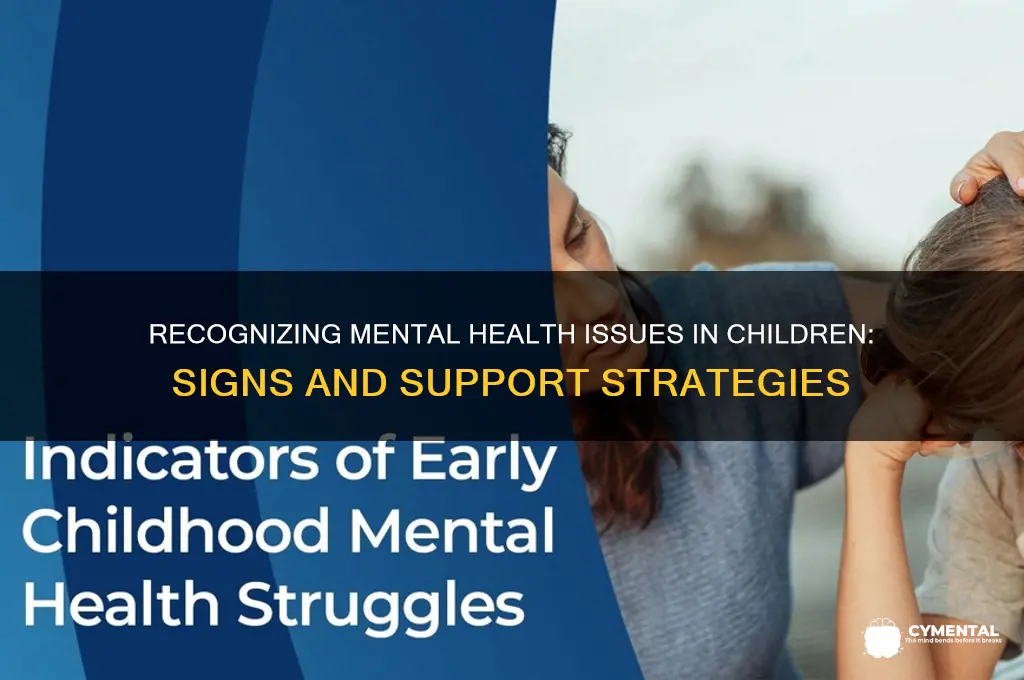
Recognizing mental health issues in children can be challenging, as symptoms often manifest differently than in adults and may be mistaken for typical developmental behaviors. Parents and caregivers should be vigilant for persistent changes in mood, behavior, or functioning, such as prolonged sadness, frequent outbursts, withdrawal from social activities, or a significant decline in academic performance. Physical signs like changes in sleep or appetite, unexplained aches, or frequent complaints of feeling unwell can also be indicators. Additionally, age-inappropriate behaviors, excessive worry, or difficulty coping with daily tasks may signal underlying issues. Early intervention is crucial, so consulting a pediatrician or mental health professional is recommended if concerns arise, as they can provide guidance and support tailored to the child’s needs.
Explore related products


What You'll Learn
- Behavioral Changes: Sudden mood swings, aggression, or withdrawal from social activities may indicate underlying issues
- Academic Struggles: Declining grades, lack of focus, or avoidance of school can signal mental distress
- Physical Symptoms: Frequent headaches, stomachaches, or sleep disturbances often accompany mental health problems
- Emotional Outbursts: Intense or prolonged sadness, anxiety, or irritability may suggest emotional difficulties
- Social Withdrawal: Losing interest in friends, hobbies, or isolating themselves could be a red flag

Behavioral Changes: Sudden mood swings, aggression, or withdrawal from social activities may indicate underlying issues
Children’s emotions can be a rollercoaster, but sudden, extreme mood swings—like shifting from euphoria to deep sadness within hours—often signal more than typical volatility. For instance, a 10-year-old who laughs uncontrollably during a calm family dinner, then bursts into tears over a minor correction, may be struggling with emotional regulation tied to anxiety or depression. Track these shifts over 2–3 weeks; if they occur daily and disrupt routines (e.g., refusing school or isolating in their room), consult a pediatrician. Mood diaries, where you log triggers and durations, can provide concrete data for professionals.
Aggression—whether verbal outbursts, physical lashing out, or destructive behavior—is a red flag, especially if uncharacteristic. A previously gentle 7-year-old suddenly hitting peers or a teenager slamming doors and cursing at authority figures could be expressing internal distress. Differentiate between age-appropriate boundary testing (common in toddlers and teens) and persistent hostility. If aggression escalates after specific events (e.g., parental conflict or academic pressure), address those stressors. However, if it’s unprovoked and frequent, consider an evaluation for conditions like oppositional defiant disorder or trauma-related anger.
Withdrawal from social activities—skipping playdates, quitting sports, or ghosting friends—warrants attention, particularly in extroverted children. A 14-year-old who stops attending club meetings or a 9-year-old avoiding birthday parties might be battling anxiety, bullying, or low self-esteem. Investigate gently: Ask open-ended questions like, *"What’s been on your mind lately?"* rather than accusatory *"Why are you ignoring your friends?"* If withdrawal persists for over a month, pair encouragement with professional support; cognitive-behavioral therapy can help rebuild social confidence.
Comparing these behaviors across contexts is crucial. A child acting aggressively only at school might face peer conflicts, while aggression at home could stem from family dynamics. Similarly, mood swings triggered by screen time limits suggest frustration tolerance issues, whereas those tied to academic deadlines may indicate performance anxiety. Tailor interventions accordingly: For school-related issues, collaborate with teachers; for home triggers, establish consistent routines. Remember, behavioral changes are symptoms, not definitions—addressing the root cause requires patience, observation, and often, expert guidance.
Empowering Teens: Strategies for Supporting Mental Health Challenges
You may want to see also
Explore related products




Academic Struggles: Declining grades, lack of focus, or avoidance of school can signal mental distress
A sudden drop in your child's academic performance can be a red flag, especially if they were previously doing well. Declining grades, particularly in subjects they once enjoyed, may indicate underlying mental health challenges. For instance, a teenager who consistently scored A's in math but now struggles to pass could be experiencing anxiety, depression, or overwhelming stress. These issues can impair concentration, memory, and motivation, making it difficult for them to keep up with schoolwork. If you notice this pattern, it’s crucial to investigate further rather than assuming laziness or lack of effort.
Lack of focus in the classroom or during homework is another telltale sign. Children with mental health issues often find it hard to sustain attention, even on tasks they used to complete effortlessly. A 10-year-old who constantly fidgets, stares into space, or needs frequent reminders to stay on task might be grappling with ADHD, anxiety, or even early signs of depression. Teachers may report daydreaming or disengagement, which can be misinterpreted as behavioral problems. Observing these changes at home, such as difficulty completing chores or following conversations, can provide additional context for their struggles.
Avoidance of school—whether through feigned illnesses, tantrums, or outright refusal—is a more overt indicator of distress. Children as young as 6 may express anxiety about attending school, often linked to social pressures, bullying, or separation anxiety. Older children might skip classes or isolate themselves during breaks to avoid triggers. For example, a 14-year-old who suddenly dreads going to school might be experiencing cyberbullying or overwhelming academic pressure. Tracking the frequency and reasons for their reluctance can help identify the root cause.
To address these issues, start by creating a safe, non-judgmental space for open conversations. Ask specific questions like, “What’s making school feel hard right now?” or “Is there something you’re worried about?” Collaborate with teachers to gather insights into their behavior at school. Practical steps include establishing a structured routine for homework, limiting screen time before bed, and ensuring adequate sleep—7–9 hours for school-aged children and 8–10 hours for teenagers. If concerns persist, consult a pediatrician or mental health professional for a thorough evaluation. Early intervention can prevent minor issues from escalating into long-term challenges.
Spirituality and Mental Health: Healing the Mind, Body, and Soul
You may want to see also
Explore related products


Physical Symptoms: Frequent headaches, stomachaches, or sleep disturbances often accompany mental health problems
Children often express emotional distress through physical symptoms, a phenomenon particularly evident in frequent headaches, stomachaches, or sleep disturbances. These complaints, while seemingly unrelated to mental health, can be the body’s way of signaling underlying anxiety, depression, or stress. For instance, a child experiencing chronic worry might develop tension headaches, while persistent stomachaches could stem from the gut-brain connection, where stress disrupts digestive processes. Sleep disturbances, such as insomnia or nightmares, often accompany conditions like PTSD or generalized anxiety disorder. Recognizing these patterns requires vigilance, as children may lack the vocabulary to articulate their emotional struggles directly.
To assess whether these symptoms are linked to mental health, consider their frequency, intensity, and context. Occasional headaches or stomachaches are common in childhood, but when they occur multiple times a week, interfere with daily activities, or coincide with stressful situations (e.g., school mornings or social events), they warrant closer examination. Sleep disturbances, too, should raise concern if they persist beyond typical developmental phases, such as bedtime resistance in toddlers. Keep a symptom journal to track patterns, noting when and under what circumstances these issues arise. This data can provide valuable insights for healthcare providers and help differentiate between physical ailments and mental health concerns.
Practical steps can mitigate these symptoms while addressing their root causes. For headaches, ensure your child stays hydrated, maintains a consistent sleep schedule, and takes regular breaks from screens. Stomachaches may improve with a balanced diet, probiotics, and stress-reduction techniques like deep breathing or mindfulness exercises. Sleep hygiene practices, such as establishing a calming bedtime routine and limiting screen time before bed, can alleviate sleep disturbances. However, these measures should complement, not replace, professional evaluation. If symptoms persist despite lifestyle adjustments, consult a pediatrician or mental health specialist to explore underlying emotional or psychological factors.
Comparatively, physical symptoms in children are often overlooked as mere complaints, but they can serve as critical indicators of mental health issues when viewed through the right lens. Adults typically verbalize stress or anxiety, but children may internalize these emotions, manifesting them physically. For example, a teenager with social anxiety might experience recurrent stomachaches before school, while a younger child facing bullying may develop frequent headaches. Understanding this mind-body connection empowers parents to respond with empathy and seek appropriate support, rather than dismissing these symptoms as trivial or attention-seeking.
In conclusion, frequent headaches, stomachaches, or sleep disturbances in children should not be ignored as isolated physical issues. They often intertwine with mental health challenges, serving as tangible expressions of emotional turmoil. By observing patterns, implementing practical strategies, and seeking professional guidance, parents can address both the symptoms and their underlying causes. This proactive approach fosters a healthier, more resilient child, equipped to navigate both physical and emotional well-being.
Recognizing Mental Health Issues: Essential Signs and Early Detection Tips
You may want to see also
Explore related products


Emotional Outbursts: Intense or prolonged sadness, anxiety, or irritability may suggest emotional difficulties
Children experiencing emotional outbursts that manifest as intense or prolonged sadness, anxiety, or irritability may be signaling deeper emotional difficulties. These behaviors often go beyond typical mood swings or developmental phases, reflecting a struggle to manage emotions effectively. For instance, a child who cries inconsolably for hours over minor setbacks or exhibits persistent worry about everyday activities might be grappling with underlying mental health challenges. Recognizing these patterns early is crucial, as they can interfere with a child’s ability to function in school, at home, or socially.
To assess whether these outbursts are cause for concern, observe their frequency, duration, and impact. Emotional reactions that occur daily, last for extended periods, or disrupt normal routines warrant attention. For example, a 10-year-old who becomes irritable every morning before school, refusing to get dressed or eat breakfast, may be experiencing anxiety about the school environment. Similarly, a teenager who withdraws from friends and family while displaying persistent sadness could be struggling with depression. Tracking these behaviors in a journal can help identify trends and provide valuable information for healthcare professionals.
Practical steps can be taken to support a child exhibiting these signs. First, create a safe space for open communication, encouraging them to express their feelings without fear of judgment. Phrases like, “I’ve noticed you seem really upset lately—can you tell me what’s going on?” can invite dialogue. Second, establish consistent routines to provide structure and predictability, which can reduce anxiety. For younger children, incorporating calming activities like deep breathing exercises or sensory play can help regulate emotions. For older children, teaching problem-solving skills or mindfulness techniques may empower them to manage stress independently.
However, it’s essential to avoid dismissing these behaviors as “just a phase” or punishing the child for their emotional reactions. Such responses can exacerbate feelings of shame or isolation, making it harder for them to seek help. Instead, consult a pediatrician or mental health professional if the outbursts persist or worsen. Early intervention, such as therapy or counseling, can provide children with tools to cope and prevent long-term emotional difficulties. Remember, acknowledging and addressing these signs is an act of care, not an overreaction.
Navigating Mental Health Diagnosis: A Guide for Families in Need
You may want to see also
Explore related products




Social Withdrawal: Losing interest in friends, hobbies, or isolating themselves could be a red flag
Children who suddenly stop participating in activities they once enjoyed—whether it’s a soccer team, art class, or weekend hangouts with friends—may be signaling distress. This shift isn’t merely about outgrowing interests; it’s often a withdrawal from social connections and passions that previously brought joy. For instance, a 12-year-old who stops attending their weekly gaming club or a teenager who avoids family gatherings might be struggling internally. Such changes can be subtle, like declining invitations without explanation, or overt, like spending hours alone in their room. Recognizing these patterns early is crucial, as prolonged isolation can exacerbate underlying mental health issues.
Analyzing the root causes of social withdrawal requires observation and empathy. Is your child avoiding peers due to bullying, anxiety, or low self-esteem? Are they overwhelmed by academic pressure or familial expectations? For younger children (ages 6–10), withdrawal might manifest as clinging to parents or refusing playdates. In adolescents (ages 13–18), it could appear as irritability when asked about social plans or a sudden preference for solitary activities. Keep a mental note of how long these behaviors persist; occasional solitude is normal, but consistent avoidance warrants attention.
To address social withdrawal effectively, start by creating a safe space for conversation. Instead of asking accusatory questions like, “Why are you always in your room?” try, “I’ve noticed you haven’t been hanging out with your friends lately. Is everything okay?” Encourage open dialogue without judgment. If your child struggles to express themselves, consider using creative outlets like drawing or journaling to explore their feelings. For persistent cases, consult a mental health professional who can provide tailored strategies, such as cognitive-behavioral therapy to rebuild social confidence.
Comparing social withdrawal to other developmental phases can help differentiate between typical behavior and cause for concern. For example, teenagers often seek more independence, but this usually involves forming new friendships or exploring interests, not complete disengagement. Similarly, introverted children may naturally prefer smaller social circles, but they typically remain engaged in hobbies or family interactions. Withdrawal becomes a red flag when it’s accompanied by other symptoms, such as changes in sleep, appetite, or academic performance, indicating a potential mental health issue like depression or anxiety.
In conclusion, social withdrawal is more than a phase—it’s a cry for help that parents shouldn’t ignore. By staying attuned to your child’s behavior, fostering open communication, and seeking professional guidance when needed, you can help them navigate their struggles and re-engage with the world around them. Remember, early intervention is key to preventing long-term mental health challenges.
Rising Mental Health Challenges: Analyzing the Surge Since 2000
You may want to see also
Frequently asked questions
Look for persistent changes in behavior, mood, or functioning, such as prolonged sadness, irritability, withdrawal from social activities, difficulty concentrating, or changes in sleep or eating habits.
Mental health issues can appear at any age, even in early childhood. Toddlers, school-aged children, and adolescents can all experience mental health challenges, though symptoms may manifest differently depending on developmental stages.
Common signs include excessive worry, fear of separation from parents, frequent tantrums or outbursts, persistent sadness, loss of interest in favorite activities, changes in appetite, or difficulty sleeping.
Frequent acting out or misbehavior can sometimes be a sign of underlying stress, anxiety, or other mental health issues, especially if it’s uncharacteristic or severe. It’s important to explore the root cause with a professional.
Seek professional help if your child’s symptoms persist for more than a few weeks, interfere with daily functioning, or if you’re concerned about their safety or well-being. Early intervention can make a significant difference.