Caleb Wright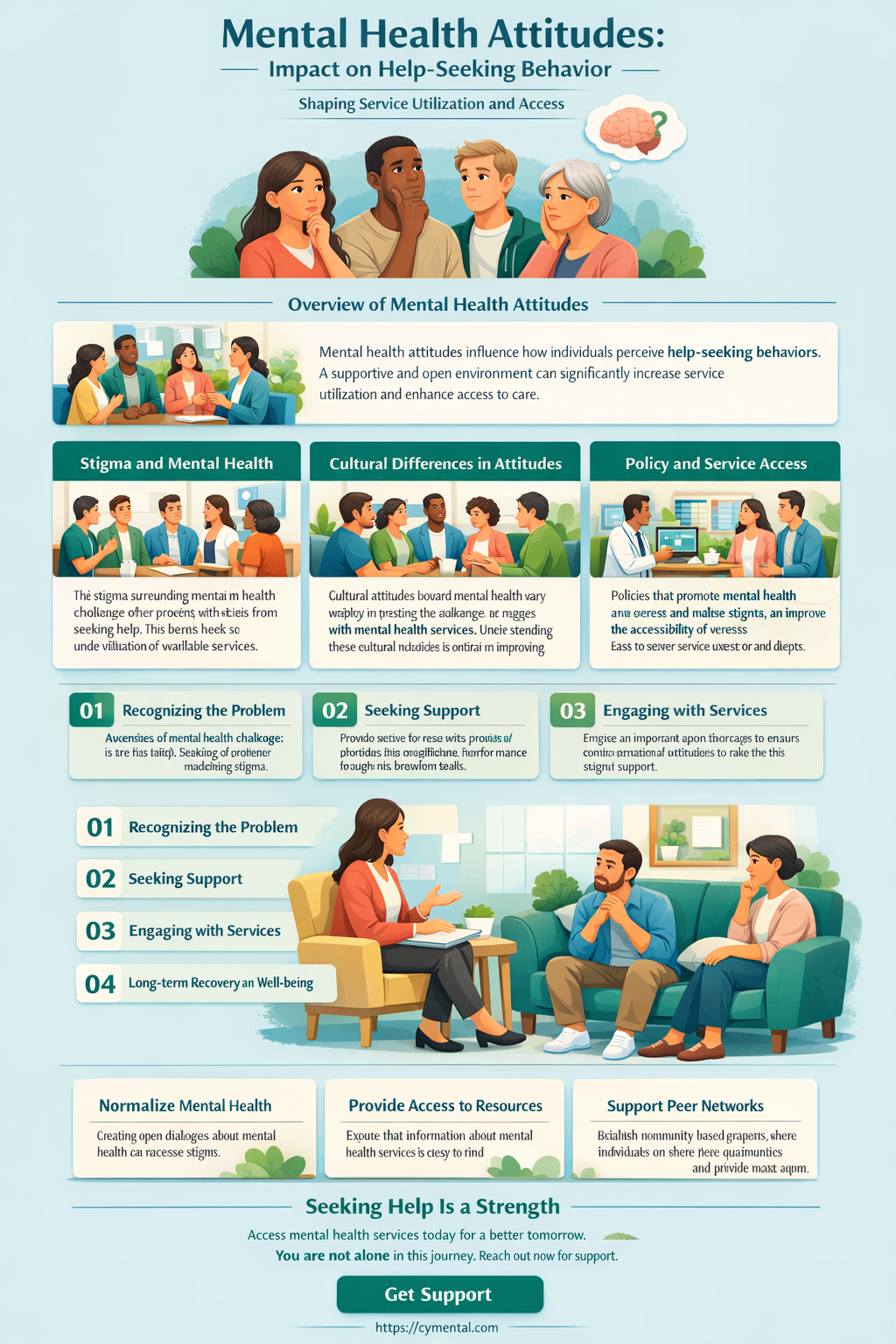
The relationship between attitudes towards mental health help-seeking and actual service use is a critical area of study in psychology and public health. Research suggests that individuals' beliefs, perceptions, and stigma surrounding mental health care significantly influence their willingness to seek professional support. Positive attitudes, characterized by openness and a belief in the effectiveness of treatment, are often associated with higher rates of service utilization. Conversely, negative attitudes, such as fear of judgment or skepticism about mental health interventions, can act as barriers, deterring individuals from accessing much-needed resources. Understanding this association is essential for developing strategies to improve mental health care engagement and reduce disparities in service use across diverse populations.
| Characteristics | Values |
|---|---|
| Association with Service Use | Positive attitudes towards mental health help-seeking are significantly associated with increased service use. |
| Stigma | Lower stigma levels correlate with higher likelihood of seeking mental health services. |
| Perceived Need | Individuals who perceive a greater need for help are more likely to use mental health services. |
| Self-Efficacy | Higher self-efficacy in seeking help is linked to greater service utilization. |
| Social Support | Strong social support networks encourage help-seeking behavior and service use. |
| Cultural Factors | Cultural norms and beliefs influence attitudes and subsequent service use, with collectivist cultures sometimes showing lower rates. |
| Gender Differences | Women generally report more positive attitudes and higher service use compared to men. |
| Age | Younger individuals tend to have more positive attitudes and higher service use rates than older adults. |
| Education Level | Higher education is associated with more positive attitudes and increased service utilization. |
| Socioeconomic Status | Higher socioeconomic status often correlates with better attitudes and greater access to services. |
| Previous Experience | Positive past experiences with mental health services predict future use and positive attitudes. |
| Knowledge About Services | Greater awareness and knowledge about mental health services are associated with higher use. |
| Barriers to Access | Perceived barriers (e.g., cost, availability) negatively impact attitudes and service use. |
| Mental Health Literacy | Higher mental health literacy is linked to more positive attitudes and increased service use. |
| Type of Mental Health Issue | Attitudes and service use vary depending on the type of mental health issue (e.g., anxiety vs. depression). |
| Geographic Location | Urban areas often report more positive attitudes and higher service use compared to rural areas. |
Explore related products


What You'll Learn

Societal stigma impact on help-seeking behaviors
Societal stigma acts as a silent barrier, deterring individuals from seeking mental health services even when they desperately need them. Research consistently shows that fear of judgment, discrimination, or being labeled as "weak" prevents people from reaching out for help. For instance, a study published in the *Journal of Affective Disorders* found that individuals who perceived higher levels of public stigma were 60% less likely to seek professional mental health care. This avoidance perpetuates suffering and delays recovery, as untreated mental health conditions often worsen over time.
Consider the workplace, a microcosm of societal attitudes. Employees often hesitate to disclose mental health struggles due to concerns about career repercussions. A survey by the American Psychological Association revealed that 40% of workers feared negative consequences if they sought mental health treatment. This reluctance not only harms individual well-being but also reduces productivity, costing employers billions annually. Organizations can counteract this by implementing stigma-reduction programs, such as anonymous counseling services or mental health awareness training, which have been shown to increase help-seeking behaviors by up to 30%.
Stigma disproportionately affects marginalized communities, exacerbating existing disparities in mental health care access. For example, racial and ethnic minorities often face intersecting stigmas related to both mental illness and their cultural identities. A study in *Psychiatric Services* highlighted that African American individuals were 20% less likely to seek mental health treatment compared to their white counterparts, partly due to mistrust rooted in historical injustices like the Tuskegee Syphilis Study. Tailored interventions, such as culturally sensitive therapy and community-based outreach, can help bridge this gap by fostering trust and reducing stigma within these groups.
To combat societal stigma effectively, a multi-pronged approach is necessary. Public awareness campaigns, like the UK’s *Time to Change* initiative, have successfully reduced stigmatizing attitudes by 4.1% over five years through media portrayals and personal storytelling. Simultaneously, policy changes, such as mandating mental health education in schools, can normalize help-seeking from a young age. For individuals, small steps like using neutral language when discussing mental health and challenging stereotypes in conversations can contribute to broader cultural shifts. By addressing stigma at both systemic and interpersonal levels, society can create an environment where seeking help is seen not as a sign of weakness, but as a courageous step toward healing.
Effective Strategies to Support and Empower Individuals in Need
You may want to see also
Explore related products


Gender differences in mental health service utilization
Gender disparities in mental health service utilization are well-documented, with women consistently reporting higher rates of help-seeking compared to men. This phenomenon is not merely a reflection of prevalence rates, as men and women experience mental health issues at roughly similar frequencies for many disorders. Instead, it points to deeper societal, cultural, and psychological factors that influence how individuals perceive and act upon their mental health needs. Understanding these differences is crucial for tailoring interventions that encourage equitable access to care.
One key factor contributing to gender differences in service utilization is societal expectations around masculinity and femininity. Men are often socialized to suppress emotions, prioritize self-reliance, and equate help-seeking with weakness. This internalized stigma can create a barrier to acknowledging mental health struggles and seeking professional support. For instance, a study published in the *Journal of Counseling Psychology* found that men were more likely to endorse self-stigma related to mental illness, which in turn predicted lower intentions to seek therapy. Conversely, women are frequently encouraged to express emotions and seek social support, which may make them more inclined to engage with mental health services.
Practical strategies to address these disparities must consider these gendered norms. For men, campaigns that redefine masculinity to include emotional openness and vulnerability can be effective. For example, initiatives like Movember’s mental health programs emphasize that seeking help is a sign of strength, not weakness. Additionally, offering male-friendly service environments, such as peer-led support groups or online counseling, can reduce perceived barriers to entry. Women, on the other hand, may benefit from interventions that address systemic barriers, such as childcare responsibilities or financial constraints, which disproportionately affect their ability to access care.
A comparative analysis of service utilization patterns reveals that while women are more likely to seek help, they often face longer wait times and higher costs, particularly for specialized care. Men, despite lower utilization rates, tend to present with more severe symptoms, suggesting delayed intervention. This highlights the need for gender-specific approaches in mental health care delivery. For instance, integrating mental health screenings into primary care settings, where men are more likely to seek help for physical ailments, could serve as an entry point for broader mental health discussions.
In conclusion, addressing gender differences in mental health service utilization requires a multi-faceted approach that challenges societal norms, reduces stigma, and adapts services to meet diverse needs. By understanding the unique barriers faced by men and women, policymakers, practitioners, and advocates can design interventions that foster a more inclusive and effective mental health care system. This is not just a matter of equity but also of public health, as untreated mental health issues can have far-reaching consequences for individuals and communities alike.
Supporting Mentally Ill Homeless Relatives: Compassionate Strategies for Family Care
You may want to see also
Explore related products


![Seeking Health DAO Enzyme – Formerly Histamine Digest, DAO Enzyme Supplement for Histamine Food Intolerance, Supports Digestive Health, Contains Porcine [ Pig-Derived] Extract, 30 Capsules](https://m.media-amazon.com/images/I/61m6uZ8PzsL._AC_UY218_.jpg)

Cultural beliefs influencing attitudes toward care
Cultural beliefs act as a prism, refracting how individuals perceive and engage with mental health services. In collectivist cultures, where family and community cohesion are paramount, mental health struggles may be viewed as a private matter to be resolved within the family unit. Seeking external help could be seen as a failure or a source of shame, potentially leading to social ostracism. For instance, in some Asian cultures, mental illness is often associated with weakness or a lack of self-discipline, discouraging individuals from seeking professional support. This internalized stigma can create a barrier to accessing care, even when services are available.
Understanding these cultural nuances is crucial for healthcare providers. A one-size-fits-all approach to mental health promotion and service delivery is ineffective. Providers need to be culturally competent, tailoring their communication and interventions to resonate with the specific beliefs and values of the communities they serve. This might involve incorporating family members into treatment plans, utilizing culturally relevant metaphors and storytelling, or partnering with community leaders to reduce stigma.
Consider the example of indigenous communities. Traditional healing practices often emphasize spiritual and communal aspects of well-being, viewing mental health as interconnected with physical and spiritual health. Western biomedical models, focused on individual pathology, may not align with these beliefs. Integrating traditional healing practices with evidence-based therapies can bridge this gap, fostering trust and encouraging help-seeking behavior.
A persuasive argument can be made for the economic benefits of addressing cultural barriers to mental health care. Untreated mental illness has significant societal costs, including lost productivity, increased healthcare utilization for physical ailments, and social welfare expenses. By investing in culturally sensitive mental health services, societies can reduce these costs and promote overall well-being.
Ultimately, dismantling cultural barriers to mental health care requires a multi-pronged approach. It involves challenging stigmatizing beliefs through education and awareness campaigns, training healthcare professionals in cultural competency, and developing mental health services that are accessible, affordable, and culturally relevant. Only then can we ensure that everyone, regardless of their cultural background, has the opportunity to seek help and achieve optimal mental health.
Exercise and Mental Health: Unlocking the Mind-Body Connection for Wellness
You may want to see also
Explore related products


$18.59 $19.95


Role of education in promoting service engagement
Education serves as a cornerstone in reshaping attitudes toward mental health help-seeking, directly influencing service engagement. Research consistently shows that individuals with higher levels of mental health literacy—knowledge about mental health conditions, treatment options, and stigma reduction—are more likely to seek professional help. For instance, a study published in the *Journal of Affective Disorders* found that educational interventions increased help-seeking intentions by 30% among young adults aged 18–25. This underscores the transformative potential of education in bridging the gap between awareness and action.
To effectively promote service engagement, educational initiatives must be tailored to specific demographics. For adolescents, incorporating mental health curricula into schools can normalize conversations about emotional well-being. Programs like *Mental Health First Aid* for teens have demonstrated success, with participants showing a 50% increase in willingness to seek help. For older adults, community-based workshops focusing on age-related mental health challenges, such as isolation or grief, can be particularly impactful. The key lies in delivering information in a culturally sensitive and age-appropriate manner, ensuring relevance and resonance.
However, education alone is insufficient without addressing systemic barriers to service access. For example, while awareness campaigns may encourage help-seeking, individuals in underserved areas often face limited availability of mental health services. Educational programs should therefore pair knowledge-building with practical resources, such as directories of low-cost clinics or telehealth options. A study in *Psychiatric Services* highlighted that combining education with resource navigation increased service utilization by 40% among low-income populations. This dual approach ensures that awareness translates into actionable steps.
Critics argue that over-emphasizing education risks placing the burden of change on individuals rather than addressing systemic issues like stigma or funding shortages. While valid, this perspective overlooks the role of education in fostering collective advocacy. By equipping individuals with the tools to challenge stigma and demand better services, education becomes a catalyst for broader societal change. For instance, student-led mental health campaigns in universities have not only increased help-seeking but also pressured institutions to expand counseling services. This demonstrates how education can empower individuals to become agents of systemic transformation.
In conclusion, education is not a panacea but a critical lever in promoting mental health service engagement. By combining targeted knowledge dissemination with practical resource support, educational initiatives can dismantle barriers to care. Whether through school curricula, community workshops, or advocacy campaigns, the goal remains clear: to cultivate a society where seeking help is not just accepted but actively encouraged. The evidence is unequivocal—education paves the way for meaningful change, one informed individual at a time.
Music's Power: Boosting Middle Schoolers' Mental Health and Well-Being
You may want to see also
Explore related products


Age-related variations in mental health help-seeking patterns
Attitudes toward mental health help-seeking vary significantly across age groups, influencing service use in distinct ways. Younger adults, particularly those aged 18–25, often exhibit higher openness to seeking help due to increased awareness campaigns and reduced stigma in educational settings. However, this demographic faces barriers like limited financial resources or lack of health insurance, which can deter actual service utilization. In contrast, older adults (65+) tend to underutilize mental health services despite higher prevalence of conditions like depression and anxiety. This disparity stems from generational stigma, preference for self-reliance, and misconceptions about mental health as a natural part of aging.
Consider the role of technology in shaping help-seeking behaviors. Millennials and Gen Z are more likely to engage with digital mental health platforms, such as teletherapy or mental health apps, due to their comfort with technology. For instance, a 2021 study found that 60% of individuals aged 18–34 had used a mental health app, compared to only 15% of those over 65. Older adults, however, often prefer in-person services, which may be less accessible due to mobility issues or lack of local providers. Bridging this gap requires tailored interventions, such as training older adults in digital literacy or expanding in-person services in underserved areas.
A comparative analysis reveals that middle-aged adults (35–64) occupy a unique position. They are more likely to seek help than older adults but less likely than younger adults, often due to competing responsibilities like careers and caregiving. This group benefits from workplace mental health programs, which can normalize help-seeking and provide accessible resources. For example, employers offering Employee Assistance Programs (EAPs) see a 25–30% increase in mental health service utilization among this age group. However, stigma remains a barrier, particularly in male-dominated industries, where seeking help is often perceived as a sign of weakness.
To address age-related variations, targeted strategies are essential. For younger adults, subsidizing mental health services or integrating them into college health plans can improve access. For older adults, community-based initiatives, such as mental health screenings at senior centers, can reduce stigma and increase awareness. Middle-aged adults benefit from flexible service options, like evening or weekend appointments, to accommodate busy schedules. Across all groups, public campaigns emphasizing that mental health is a lifelong priority can shift attitudes and encourage timely help-seeking.
Ultimately, understanding age-related variations in mental health help-seeking patterns allows for more effective interventions. By addressing specific barriers—whether technological, financial, or cultural—service providers can ensure that mental health support is accessible and appealing to all age groups. This tailored approach not only increases service use but also fosters a society where seeking help is seen as a sign of strength, regardless of age.
Seeking Mental Health Support: A Guide to Finding the Right Help
You may want to see also
Frequently asked questions
Yes, research consistently shows that individuals with more positive attitudes towards seeking mental health help are more likely to utilize mental health services. Positive attitudes reduce stigma and barriers, encouraging proactive engagement with care.
Negative attitudes, often rooted in stigma or misconceptions, significantly deter individuals from seeking mental health services. This reluctance can delay treatment, worsen symptoms, and reduce overall service use.
Yes, targeted interventions, such as stigma reduction campaigns and psychoeducation, have been shown to improve attitudes and subsequently increase mental health service use by fostering a more supportive and informed perspective.