Caleb Wright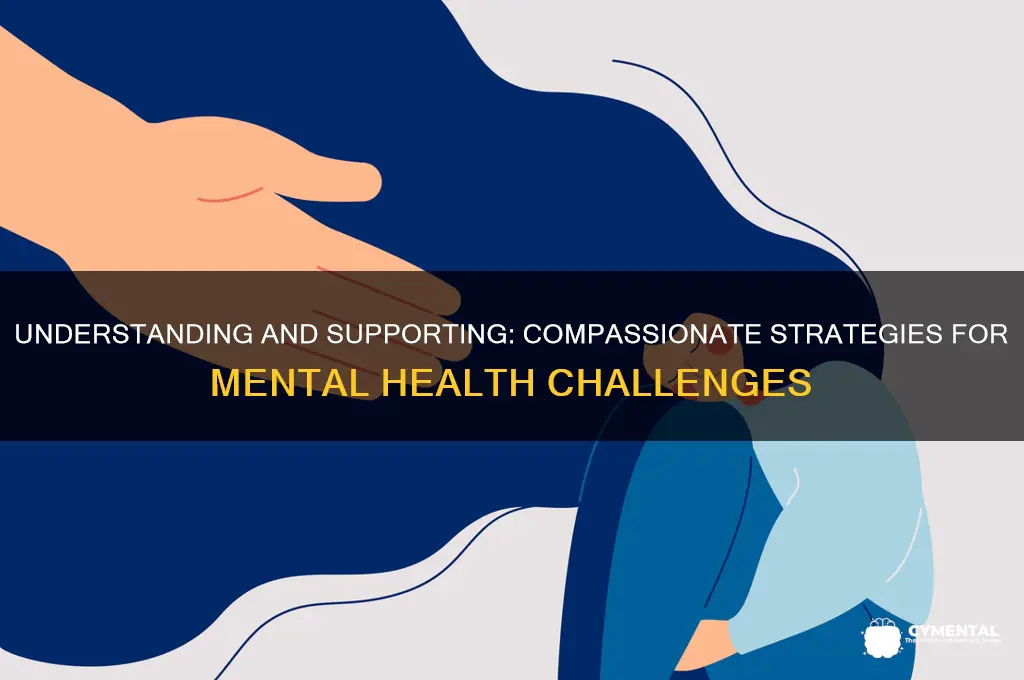
Dealing with individuals experiencing mental health issues requires empathy, patience, and understanding. It’s essential to approach them with compassion, avoiding judgment or stigma, while actively listening to their concerns without trying to fix or minimize their feelings. Educating oneself about their specific condition can foster better communication and support, but it’s equally important to respect their boundaries and not push for details they aren’t ready to share. Encouraging professional help, such as therapy or counseling, can be beneficial, while also offering consistent emotional support and reassurance. Above all, maintaining a non-confrontational and supportive presence can make a significant difference in their journey toward healing and recovery.
Explore related products


What You'll Learn
- Active Listening: Show empathy, focus fully, avoid interrupting, validate feelings, and reflect understanding
- Setting Boundaries: Protect your mental health, communicate limits clearly, and enforce them consistently
- Encouraging Professional Help: Gently suggest therapy, provide resources, and support their decision-making process
- Avoiding Stigma: Use respectful language, challenge stereotypes, and treat them with dignity and equality
- Crisis Management: Stay calm, offer immediate support, and know emergency contacts or protocols

Active Listening: Show empathy, focus fully, avoid interrupting, validate feelings, and reflect understanding
Effective communication is a cornerstone of supporting individuals with mental health issues, and active listening stands as a powerful tool in this process. It involves a conscious effort to engage with the speaker, demonstrating genuine interest and concern. When someone is sharing their struggles, the simple act of listening can be therapeutic, making them feel heard and understood. This is especially crucial in mental health conversations, where individuals often battle feelings of isolation and self-doubt.
The Art of Empathic Listening:
Imagine a friend confiding in you about their anxiety disorder. As they speak, your role is not just to hear the words but to immerse yourself in their experience. Empathy is the bridge that connects you to their reality. It requires you to set aside your own perspectives and judgments, allowing you to truly comprehend their emotions. For instance, instead of offering quick solutions like, "Just stay positive," an empathic response might be, "It sounds like this anxiety is overwhelming. I can't begin to understand the depth of it, but I'm here to support you." This approach validates their feelings and fosters a safe space for further dialogue.
Practical Steps to Active Listening:
- Maintain Eye Contact: Non-verbal cues are essential. Eye contact conveys engagement and encourages the speaker to continue.
- Ask Open-Ended Questions: Encourage elaboration with questions like, "How did that make you feel?" or "What do you think might help in this situation?"
- Paraphrase and Reflect: Summarize their thoughts to show understanding. For instance, "So, you're feeling trapped by these panic attacks, and it's affecting your daily life."
- Avoid Quick Fixes: Refrain from offering advice unless asked. Sometimes, people just need to be heard without feeling pressured to 'fix' their issues.
The Impact of Uninterrupted Focus:
In a world filled with distractions, giving someone your undivided attention is a rare gift. When you avoid interruptions, you create a safe and respectful environment. This is particularly vital when discussing mental health, as it allows individuals to express themselves without fear of judgment or dismissal. For instance, if a colleague is sharing their depression struggles, actively listening without checking your phone or glancing at the clock can make a significant difference in how they perceive your support.
Validating Feelings: A Powerful Act:
Validation is a key aspect of active listening. It involves acknowledging and accepting the other person's emotions without trying to minimize or change them. For someone battling mental health issues, having their feelings validated can be immensely comforting. For example, if a family member expresses their fear of leaving the house due to agoraphobia, a validating response could be, "It's completely understandable to feel this way. Facing such fears is incredibly challenging." This simple act can help build trust and encourage further openness.
In the context of mental health support, active listening is a skill that can be cultivated and refined. It requires practice and a genuine desire to connect with others. By showing empathy, focusing fully, and validating feelings, you become a source of comfort and understanding, which can be a significant step towards helping someone navigate their mental health journey. Remember, sometimes, the best way to support someone is by simply being present and truly listening.
Mastering Mental Health Advocacy: A Guide to Public Speaking
You may want to see also
Explore related products


Setting Boundaries: Protect your mental health, communicate limits clearly, and enforce them consistently
Boundaries are not just lines in the sand; they are essential structures that safeguard your mental well-being when interacting with individuals facing mental health challenges. Without them, you risk emotional exhaustion, resentment, or even burnout. Think of boundaries as the framework of a house—they provide stability, define spaces, and ensure safety. For instance, if a friend with anxiety repeatedly calls you late at night, a boundary might involve setting specific hours for communication, such as "I’m available to talk between 9 AM and 8 PM." This protects your sleep and peace while still offering support.
Communicating limits clearly is the bridge between intention and action. Vague or passive statements often lead to misunderstandings or guilt-tripping. Use "I" statements to express your needs without assigning blame. For example, instead of saying, "You’re too demanding," try, "I feel overwhelmed when I receive multiple messages in a short time. Can we discuss one issue at a time?" Be specific about what you can and cannot do. If you’re supporting a family member with depression, clearly state, "I can help with grocery shopping once a week, but I’m unable to provide daily transportation." Clarity reduces frustration for both parties.
Enforcement is where many falter, often out of fear of appearing unsympathetic or causing conflict. Consistency, however, is key to making boundaries effective. If you’ve set a limit, such as not discussing a triggering topic after 9 PM, stick to it. If the other person pushes back, calmly reiterate the boundary: "I understand this is important, but we agreed not to discuss this late at night. Let’s talk tomorrow." Over time, consistency teaches the other person to respect your limits and fosters healthier interactions. Think of it as training—both for them and for you.
Practical tips can make boundary-setting less daunting. Start small and be realistic. If you’re new to setting boundaries, begin with one specific area, like time management or emotional availability. Use tools like scheduling apps to enforce limits objectively—for example, set "Do Not Disturb" hours on your phone. For caregivers, allocate specific time slots for support and stick to them. Remember, boundaries are not selfish; they are acts of self-preservation that allow you to provide sustainable, meaningful help. Without them, even the most compassionate efforts can crumble under the weight of unmet expectations.
Supporting Your Spouse: Navigating Mental Health Challenges Together with Compassion
You may want to see also
Explore related products





Encouraging Professional Help: Gently suggest therapy, provide resources, and support their decision-making process
Recognizing when someone might benefit from professional mental health support is a delicate balance of observation and empathy. Signs such as persistent sadness, withdrawal from social activities, or changes in behavior often signal deeper struggles. However, broaching the topic of therapy requires sensitivity. Start by expressing concern in a non-judgmental way, using "I" statements to avoid sounding accusatory. For example, "I’ve noticed you’ve been feeling overwhelmed lately, and I’m wondering if talking to someone professionally might help." This approach opens the door without imposing your perspective.
Once the conversation is initiated, providing resources can make the idea of therapy feel less daunting. Compile a list of local therapists, online counseling platforms, or mental health hotlines tailored to their needs. Include practical details like cost, insurance coverage, and specialties (e.g., anxiety, trauma, or relationship issues). For instance, platforms like BetterHelp or Talkspace offer flexible scheduling and anonymity, which might appeal to someone hesitant about traditional therapy. Pairing this information with a personal offer to help—such as researching providers together or accompanying them to the first appointment—can further reduce barriers.
Supporting their decision-making process is just as crucial as suggesting therapy. Avoid pressuring them into a choice they’re not ready for, as this can create resistance. Instead, validate their feelings and emphasize that seeking help is a sign of strength, not weakness. Use analogies if helpful: "Just like we’d see a doctor for a physical injury, mental health professionals are there to help us heal emotionally." Encourage small steps, like scheduling an initial consultation or trying a single session, to make the process feel less overwhelming.
Finally, maintain a posture of patience and understanding throughout. The journey to accepting professional help is deeply personal and varies widely from person to person. Some may embrace the idea immediately, while others might need weeks or months to consider it. Continuously check in without being intrusive, and remind them that your support is unconditional. By gently suggesting therapy, providing actionable resources, and respecting their autonomy, you can play a pivotal role in helping them take the first steps toward healing.
Supporting Family Mental Health: Strategies for Understanding and Healing Together
You may want to see also
Explore related products

$19.56 $20.99


Avoiding Stigma: Use respectful language, challenge stereotypes, and treat them with dignity and equality
Language is a powerful tool that can either build bridges or erect walls. When interacting with individuals facing mental health challenges, the words we choose matter immensely. Phrases like "committed suicide" carry a criminal connotation, while "died by suicide" acknowledges the tragedy without assigning blame. Similarly, saying someone "suffers from schizophrenia" implies a constant state of agony, whereas "lives with schizophrenia" recognizes their resilience and humanity. These subtle shifts in language demonstrate respect and challenge the stigmatizing narratives often perpetuated by media and casual conversation.
Stereotypes about mental health are pervasive, painting those affected as dangerous, unpredictable, or incapable. To dismantle these harmful myths, actively seek out and amplify counter-narratives. For instance, highlight stories of individuals with bipolar disorder who excel in creative fields or those with anxiety who thrive in leadership roles. Engage in conversations that humanize mental health experiences, emphasizing that these conditions do not define a person’s worth or potential. By doing so, you contribute to a culture that values diversity and rejects oversimplified assumptions.
Treating someone with mental health issues with dignity and equality begins with recognizing their autonomy. Avoid making decisions for them or speaking on their behalf unless explicitly asked. Instead, offer support in ways that empower, such as asking, "How can I help?" rather than assuming their needs. Ensure they have equal opportunities in social, professional, and personal settings, advocating for accommodations when necessary. For example, if a colleague with depression needs a flexible schedule, support their request without drawing unnecessary attention to their condition.
Practical steps to avoid stigma include educating yourself and others about mental health realities. Attend workshops, read books by authors with lived experiences, and share credible resources within your community. When someone uses stigmatizing language, gently correct them with facts and empathy. For instance, if someone says, "She’s so OCD about cleaning," respond with, "OCD is a serious condition, not a quirky personality trait. Let’s avoid trivializing it." Small, consistent actions like these create a ripple effect, fostering environments where stigma cannot thrive.
Ultimately, avoiding stigma is about shifting from passive tolerance to active allyship. It requires intentionality in how we speak, think, and act. By using respectful language, challenging stereotypes, and treating individuals with dignity and equality, we not only support those with mental health issues but also contribute to a more compassionate and informed society. Remember, every interaction is an opportunity to break down barriers and build understanding.
Navigating Mental Health: Strategies for Resilience and Emotional Well-Being
You may want to see also
Explore related products


Crisis Management: Stay calm, offer immediate support, and know emergency contacts or protocols
In moments of crisis, your ability to remain calm can be the anchor that stabilizes the situation. Panic is contagious, and if you mirror the distress of someone experiencing a mental health emergency, it can escalate their anxiety or despair. Take a deep breath, slow your speech, and maintain a steady tone. This physiological shift not only grounds you but also communicates safety to the person in crisis. Research shows that a calm presence reduces cortisol levels in both parties, fostering a more manageable environment. Practically, this means avoiding abrupt movements, speaking in measured sentences, and acknowledging their emotions without amplifying them. For instance, instead of saying, “Don’t worry, it’s not that bad,” try, “I see you’re really struggling right now, and I’m here to help.”
Immediate support doesn’t mean solving the problem—it means being present. Active listening is your most powerful tool. Reflect their feelings, ask open-ended questions, and avoid interrupting. If they’re dissociating or spiraling, gently guide them back to the present using grounding techniques. For example, ask them to name five things they can see, four they can touch, three they can hear, two they can smell, and one they can taste. This 5-4-3-2-1 method is clinically proven to reduce acute anxiety. If they’re expressing suicidal thoughts, stay with them physically if possible, or keep them on the line while contacting emergency services. Never leave them alone until professional help arrives.
Knowing emergency contacts and protocols is non-negotiable. Memorize local crisis hotlines, such as the 988 Suicide & Crisis Lifeline in the U.S., and keep a written list in your phone or wallet. Familiarize yourself with the steps to take in different scenarios: for instance, if someone is self-harming, apply pressure to wounds, call 911, and remove any sharp objects from their vicinity. In non-emergency situations, such as a panic attack, guide them to a quiet space, encourage slow breathing, and stay until symptoms subside. Training in Mental Health First Aid can equip you with more advanced skills, but even basic knowledge can make a critical difference.
The balance between offering support and knowing when to escalate is delicate. Overstepping can erode trust, while underreacting can be dangerous. If someone’s safety is at risk, prioritize professional intervention, even if it feels intrusive. Use phrases like, “I care about you, and I’m worried about your safety. I’m going to call for help to make sure you’re okay.” This approach validates their experience while asserting the necessity of action. Remember, your role isn’t to fix their mental health—it’s to provide a bridge to the resources they need.
Crisis management is as much about preparation as it is about response. Regularly review emergency protocols, keep a list of local mental health resources, and practice de-escalation techniques. If you’re supporting someone long-term, establish a safety plan together, outlining warning signs, coping strategies, and emergency contacts. This collaborative approach empowers them while ensuring you’re both equipped for future crises. Ultimately, staying calm, offering immediate support, and knowing emergency protocols transforms you from a bystander into a lifeline.
Snapchat's Dark Side: Uncovering Its Impact on Mental Well-Being
You may want to see also
Frequently asked questions
Approach them with empathy and non-judgmental language. Start by expressing concern and asking open-ended questions like, "How are you feeling lately?" Let them know you’re there to listen without pushing for details.
Avoid dismissive phrases like "Just stay positive," "It’s all in your head," or "Others have it worse." These can minimize their experience and make them feel invalidated. Instead, acknowledge their feelings and offer support.
Respect their autonomy and ask how they’d like to be supported. Offer specific help, such as accompanying them to appointments or simply being available to talk. Avoid pressuring them to open up or giving unsolicited advice.
Look for persistent changes in behavior, mood, or functioning, such as withdrawal, severe anxiety, or difficulty managing daily tasks. If they express thoughts of self-harm or suicide, encourage professional intervention immediately.
Set boundaries to avoid burnout, seek your own support system, and practice self-care. Remember, you can’t fix their issues alone—focus on being a compassionate presence rather than a therapist.