Madison Cole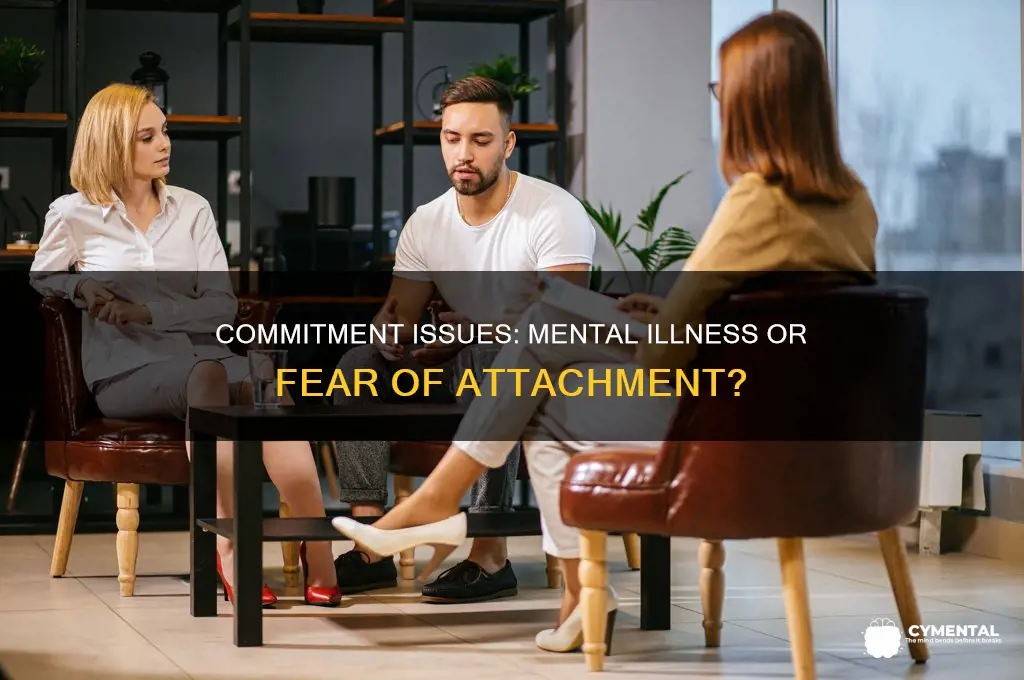
Commitment issues, often characterized by a persistent difficulty in forming or maintaining long-term relationships, are a complex phenomenon that raises questions about their classification as a mental illness. While not officially recognized as a standalone diagnosis in diagnostic manuals like the DSM-5 or ICD-11, commitment issues can be linked to underlying mental health conditions such as attachment disorders, anxiety, or fear of intimacy. These issues often stem from past traumas, unresolved emotional conflicts, or learned behaviors, and they can significantly impact an individual’s personal and social life. Whether commitment issues qualify as a mental illness depends on their severity, duration, and the extent to which they impair functioning, prompting a need for further exploration and understanding in psychological research and clinical practice.
Explore related products

$15.18 $21.95


What You'll Learn
- Symptoms and Diagnosis: Identifying signs of commitment issues and criteria for mental illness classification
- Underlying Causes: Exploring psychological, environmental, and relational factors contributing to commitment fears
- Treatment Options: Therapies, counseling, and strategies to address commitment-related challenges effectively
- Impact on Relationships: How commitment issues affect personal and romantic connections over time
- Distinction from Mental Illness: Differentiating commitment issues from recognized mental health disorders

Symptoms and Diagnosis: Identifying signs of commitment issues and criteria for mental illness classification
Commitment issues manifest in a variety of behaviors that signal avoidance of long-term emotional or relational ties. Key symptoms include consistent reluctance to make plans beyond the immediate future, frequent withdrawal from deepening relationships, and a history of short-term or sabotaged partnerships. Individuals may also exhibit excessive independence, prioritizing personal freedom over shared commitments, or express persistent anxiety about being "trapped" in relationships. These behaviors often stem from fear of vulnerability, past trauma, or unresolved attachment issues. While not all avoidance of commitment indicates a problem, patterns that disrupt personal or social functioning warrant closer examination.
Diagnosing commitment issues as a mental illness requires aligning symptoms with established psychiatric criteria. The *Diagnostic and Statistical Manual of Mental Disorders* (DSM-5) does not classify commitment issues as a standalone disorder, but they may overlap with conditions like Avoidant Personality Disorder, Attachment Disorders, or generalized anxiety. Clinicians assess whether the behavior is pervasive, distressing, and impairs daily life. For example, a 30-year-old avoiding all romantic relationships due to fear of abandonment might meet criteria for Avoidant Personality Disorder if their avoidance extends to friendships and professional commitments. Diagnosis involves ruling out situational factors (e.g., recent breakup) and identifying consistent, maladaptive patterns.
Practical steps for identifying commitment issues include tracking relationship patterns over time. Note if the individual consistently ends relationships at the 3-month mark, avoids discussions about the future, or withdraws when intimacy increases. Self-assessment tools, such as the *Experiential Avoidance in Relationships Scale*, can quantify avoidance tendencies. For professionals, structured interviews like the *Structured Clinical Interview for DSM-5* (SCID) help differentiate between normal hesitancy and pathological avoidance. It’s critical to consider cultural context—some societies prioritize individualism, which may normalize commitment avoidance without indicating illness.
A comparative analysis reveals that commitment issues share traits with anxiety and attachment disorders but lack their severity thresholds for diagnosis. For instance, while someone with generalized anxiety may fear commitment due to uncertainty, their anxiety generalizes to multiple life areas. In contrast, commitment-specific avoidance may not meet the DSM-5’s "clinically significant distress" criterion unless it severely limits life opportunities. This distinction highlights why commitment issues often remain unclassified as a mental illness—they exist on a spectrum, with only extreme cases warranting clinical intervention.
In conclusion, identifying commitment issues as a mental illness hinges on their severity, persistence, and impact on functioning. While symptoms like avoidance and anxiety are common, they become clinically relevant when they disrupt personal growth or relationships. Practical tools and professional assessments can clarify whether these issues stem from situational factors or deeper psychological patterns. Understanding this distinction empowers individuals to seek appropriate support, whether through self-reflection, therapy, or medical intervention.
Supporting Students' Mental Health: Practical Strategies for Educators and Parents
You may want to see also
Explore related products


$10.99 $15.55


$18.03 $21.95


Underlying Causes: Exploring psychological, environmental, and relational factors contributing to commitment fears
Commitment issues, while not classified as a mental illness in diagnostic manuals like the DSM-5, often stem from a complex interplay of psychological, environmental, and relational factors. Understanding these underlying causes is crucial for addressing the fear of commitment effectively. Psychologically, individuals may develop commitment fears due to unresolved trauma, such as abandonment or betrayal, which creates a deep-seated belief that relationships are inherently unsafe. For example, a person who experienced parental divorce at a young age might internalize the idea that long-term commitments are doomed to fail, leading to avoidance behaviors in adulthood. This psychological imprinting can be particularly potent during formative years, such as adolescence, when attachment styles are solidified.
Environmental factors also play a significant role in shaping commitment fears. Societal pressures, cultural norms, and media portrayals of relationships can influence perceptions of commitment. For instance, in cultures that emphasize individualism, the fear of losing personal freedom or autonomy in a committed relationship may be more pronounced. Additionally, exposure to unstable or unhealthy relationships in one’s social circle can reinforce the belief that commitment is risky. Practical steps to mitigate these environmental influences include diversifying one’s social network to include positive relationship models and critically examining media consumption to avoid internalizing unrealistic or negative narratives.
Relational dynamics, particularly early attachment experiences, are another critical factor. According to attachment theory, individuals who experienced inconsistent or unresponsive caregiving in childhood are more likely to develop anxious or avoidant attachment styles, which can manifest as commitment fears in adulthood. For example, a person with an avoidant attachment style may unconsciously sabotage relationships to maintain emotional distance. To address this, therapeutic interventions like cognitive-behavioral therapy (CBT) or attachment-based therapy can help individuals identify and reframe maladaptive patterns. A practical tip for those in relationships is to practice open communication about fears and boundaries, fostering a sense of security and trust.
Comparatively, while psychological and relational factors often focus on internal experiences, environmental factors highlight external influences that can be modified. For instance, someone living in a fast-paced urban environment might feel pressured to prioritize career advancement over long-term relationships, contributing to commitment fears. In contrast, individuals in supportive, relationship-oriented communities may find it easier to embrace commitment. A persuasive argument here is that creating a balanced environment—one that values both personal growth and meaningful connections—can reduce the perceived risks of commitment. This might involve setting boundaries at work, cultivating hobbies that foster social connections, or seeking out relationship-positive role models.
In conclusion, commitment fears are not a standalone mental illness but a multifaceted issue rooted in psychological, environmental, and relational factors. By examining these underlying causes, individuals can take targeted steps to address their fears. For example, someone with a history of trauma might benefit from trauma-focused therapy, while another person influenced by societal pressures could focus on redefining their relationship goals. The key takeaway is that understanding the specific contributors to commitment fears allows for more effective and personalized strategies to overcome them. This approach not only fosters healthier relationships but also promotes overall emotional well-being.
Empowering Connections: Strategies to Engage and Support Mental Health Struggles
You may want to see also
Explore related products


Treatment Options: Therapies, counseling, and strategies to address commitment-related challenges effectively
Commitment issues, while not classified as a standalone mental illness in diagnostic manuals like the DSM-5, often stem from underlying conditions such as anxiety, fear of abandonment, or attachment disorders. Addressing these challenges requires targeted treatment options that combine therapeutic interventions, counseling, and practical strategies. Cognitive Behavioral Therapy (CBT) is a cornerstone in this process, helping individuals identify and reframe negative thought patterns that fuel avoidance of commitment. For instance, a therapist might work with a client to challenge beliefs like, "If I commit, I’ll lose my independence," replacing them with more balanced perspectives. Sessions typically last 45–60 minutes, with a recommended frequency of once or twice weekly for 12–16 weeks, depending on the severity of the issues.
Beyond CBT, attachment-based therapy offers a deeper exploration of early relational patterns that shape commitment fears. This approach examines how childhood experiences, such as inconsistent caregiving, contribute to adult avoidance behaviors. Therapists use techniques like emotional reenactment to help clients process unresolved feelings and develop healthier attachment styles. For example, a person who avoids intimacy due to fear of rejection might practice expressing vulnerability in a safe therapeutic environment. This therapy is particularly effective for individuals with a history of trauma or insecure attachment, often requiring longer-term treatment (6–12 months) to achieve lasting change.
Couples counseling can also be a powerful tool for those whose commitment issues manifest in romantic relationships. Therapists employ strategies like the Gottman Method, which focuses on building trust, improving communication, and fostering emotional connection. Exercises such as "emotional bidding," where partners practice responding to each other’s needs, can strengthen relational bonds. For couples, weekly 90-minute sessions for 3–6 months are common, though progress depends on both partners’ willingness to engage. It’s crucial to note that this approach works best when both individuals are committed to the process, even if one partner struggles with commitment more overtly.
Practical strategies outside therapy can complement professional interventions. Mindfulness practices, such as meditation or journaling, help individuals stay present and manage anxiety triggered by thoughts of commitment. For instance, a daily 10-minute mindfulness exercise can reduce the urge to withdraw during stressful moments. Additionally, setting small, manageable goals—like committing to a weekly date night or a shared hobby—can build confidence in sustaining long-term relationships. These strategies are most effective when paired with therapy, as they provide tools to apply insights gained in sessions to real-life situations.
Ultimately, addressing commitment issues requires a multifaceted approach tailored to the individual’s needs. While therapy and counseling form the backbone of treatment, self-directed strategies and consistent effort are equally vital. By combining evidence-based therapies with practical techniques, individuals can navigate their fears and build healthier, more fulfilling relationships. The key is patience and persistence, recognizing that overcoming commitment challenges is a gradual process, not an overnight transformation.
Are Mental Health Issues Hereditary? Unraveling the Genetic Link
You may want to see also
Explore related products



Impact on Relationships: How commitment issues affect personal and romantic connections over time
Commitment issues can erode trust, the cornerstone of any relationship. When one partner consistently avoids deepening emotional or physical intimacy, the other may begin to question their reliability or sincerity. Over time, this dynamic fosters resentment and insecurity. For instance, a person with commitment issues might repeatedly postpone discussions about future plans or hesitate to introduce their partner to family and friends. Such behaviors signal ambivalence, leaving the other person feeling undervalued or uncertain about the relationship’s stability. This cycle of doubt can lead to emotional distance, even if both parties care deeply for each other.
In romantic relationships, commitment issues often manifest as a fear of losing independence or being "trapped." This fear may drive individuals to sabotage connections by picking fights, withdrawing emotionally, or maintaining multiple casual relationships to avoid exclusivity. For example, someone might ghost a partner after a few months, claiming they "need space," only to repeat the pattern in subsequent relationships. Over time, this behavior not only harms the individuals involved but also reinforces the person’s belief that long-term relationships are unattainable, creating a self-fulfilling prophecy.
Personal connections suffer similarly, though often in subtler ways. Friends or family members may perceive someone with commitment issues as unreliable or emotionally distant. For instance, a person might consistently cancel plans at the last minute or avoid sharing personal struggles, fearing vulnerability. These actions can strain even the strongest friendships, as others may interpret them as a lack of interest or care. Over time, the individual may find themselves isolated, surrounded by acquaintances rather than deep, meaningful relationships.
To mitigate these effects, practical steps can be taken. For those struggling with commitment issues, therapy—particularly cognitive-behavioral therapy (CBT)—can help identify and challenge underlying fears. Couples counseling can also provide a structured environment to address trust issues and improve communication. For partners or friends, setting clear boundaries and expressing needs openly can prevent resentment from building. For example, stating, "I feel hurt when plans are canceled last minute," is more effective than silently withdrawing.
Ultimately, the impact of commitment issues on relationships is not irreversible. With self-awareness, effort, and support, individuals can learn to navigate intimacy more healthily. Recognizing that commitment issues often stem from past traumas or fears allows for empathy and patience, both for oneself and others. Over time, this understanding can transform strained connections into resilient, fulfilling bonds.
Is Burnout a Mental Health Issue? Understanding the Impact and Solutions
You may want to see also
Explore related products

$14.15 $20


Distinction from Mental Illness: Differentiating commitment issues from recognized mental health disorders
Commitment issues, often characterized by difficulty forming or maintaining long-term relationships, are not formally classified as a mental illness in diagnostic manuals like the DSM-5 or ICD-11. While they can significantly impact personal and social functioning, they lack the specific criteria, severity, and clinical validation required for a mental health disorder diagnosis. This distinction is crucial for accurate understanding and intervention, as conflating the two can lead to misdiagnosis or inappropriate treatment.
To differentiate commitment issues from mental health disorders, consider their origins and manifestations. Commitment issues often stem from past experiences, such as trauma, abandonment, or unhealthy relationship modeling, rather than a neurobiological or psychological pathology. For instance, someone who avoids commitment due to fear of betrayal after a painful divorce is exhibiting a learned behavior, not a disorder. In contrast, conditions like borderline personality disorder (BPD) or attachment disorders involve pervasive patterns of instability or dysfunction rooted in psychological or developmental factors, meeting specific diagnostic thresholds.
A practical approach to distinguishing the two involves examining the scope and intensity of symptoms. Commitment issues typically manifest in relationship contexts, such as hesitancy to define a partnership or reluctance to make future plans. While distressing, these behaviors are often situational and do not impair overall functioning in other areas of life, such as work or friendships. Conversely, mental health disorders like anxiety or depression can permeate multiple life domains, causing persistent distress or functional impairment that extends beyond interpersonal relationships.
Clinicians and individuals alike should approach commitment issues with targeted strategies rather than medicalized treatments. Cognitive-behavioral techniques, such as reframing negative beliefs about relationships or gradual exposure to commitment scenarios, can be effective. For example, a person might start with small steps, like planning a weekend trip with a partner, to build confidence in long-term engagement. In contrast, mental health disorders often require evidence-based interventions, such as medication for depression or dialectical behavior therapy for BPD, tailored to address underlying pathology.
Ultimately, recognizing the difference between commitment issues and mental health disorders fosters a more nuanced approach to addressing relationship challenges. While commitment issues warrant attention and intervention, they do not equate to a clinical diagnosis. By focusing on their distinct causes, manifestations, and treatment pathways, individuals and professionals can navigate these complexities with clarity and precision, promoting healthier relationships without pathologizing normal human experiences.
Alzheimer's: Mental Health Concern or Medical Condition?
You may want to see also
Frequently asked questions
Commitment issues alone are not classified as a mental illness, but they can be a symptom of underlying conditions such as anxiety, fear of abandonment, or attachment disorders.
No, commitment issues are not a diagnosable mental health disorder. However, they may be linked to conditions like avoidant personality disorder or relationship anxiety.
Not necessarily. Commitment issues can stem from past experiences, trauma, or personal values rather than a mental health condition.
Yes, therapy can be highly effective in addressing commitment issues by exploring their root causes, improving communication, and developing healthier relationship patterns.
While commitment issues themselves won’t evolve into a mental illness, untreated underlying causes (e.g., anxiety or depression) could worsen if left unaddressed.