Caleb Wright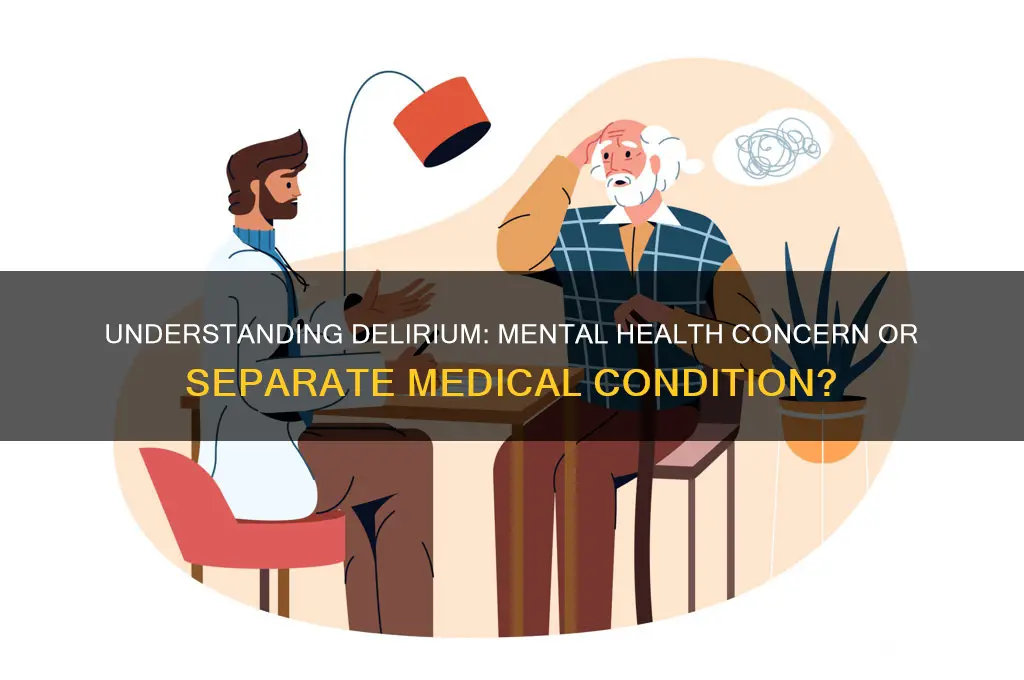
Delirium is a complex and often misunderstood condition that raises questions about its classification as a mental health issue. Characterized by an acute onset of confusion, disorientation, and altered consciousness, delirium is typically triggered by underlying medical conditions, medications, or environmental factors. While it shares some symptoms with mental health disorders, such as hallucinations or agitation, delirium is primarily considered a neurocognitive disorder rather than a primary psychiatric condition. Its transient nature and strong association with physical health distinguish it from chronic mental illnesses, yet its impact on cognitive function and emotional well-being underscores the need for a nuanced understanding of its place within the broader spectrum of mental and neurological health.
| Characteristics | Values |
|---|---|
| Definition | Delirium is an acute, fluctuating disturbance of attention, awareness, and cognition. |
| Classification | Considered a neurocognitive disorder, not a primary mental health issue. |
| Cause | Often triggered by medical conditions, medications, or environmental factors. |
| Duration | Short-term, typically hours to days, but can last weeks. |
| Symptoms | Confusion, disorientation, hallucinations, agitation, and altered sleep-wake cycle. |
| Mental Health Overlap | Can coexist with mental health disorders but is distinct in origin and treatment. |
| Diagnosis | Diagnosed through medical assessment, ruling out underlying causes. |
| Treatment | Focuses on addressing the underlying cause, not psychiatric intervention alone. |
| Prevalence | Common in hospitalized elderly patients, especially post-surgery or with infections. |
| Prognosis | Often reversible with prompt treatment of the underlying cause. |
| Relationship to Dementia | Distinct from dementia; delirium is acute and reversible, dementia is chronic. |
Explore related products


What You'll Learn

Delirium vs. Dementia: Key Differences
Delirium and dementia, though both affecting cognitive function, manifest in distinctly different ways. Delirium is an acute, sudden onset condition characterized by confusion, disorientation, and fluctuating mental status. It often occurs in hospitalized patients, particularly the elderly, and can be triggered by infections, medications, or surgery. For instance, a 75-year-old patient recovering from hip surgery may develop delirium due to a combination of anesthesia, pain medications, and sleep deprivation. In contrast, dementia is a chronic, progressive decline in cognitive abilities, typically developing over years. Alzheimer’s disease, the most common form of dementia, affects memory, reasoning, and behavior, often starting subtly and worsening gradually. Recognizing the temporal and causal differences between these conditions is crucial for accurate diagnosis and treatment.
To differentiate delirium from dementia, clinicians rely on specific clinical features. Delirium presents with rapid onset, usually within hours to days, and symptoms fluctuate throughout the day. Patients may experience hallucinations, agitation, or lethargy, and their attention span is markedly impaired. For example, a patient with delirium might struggle to follow a simple conversation or repeatedly ask the same question. Dementia, however, progresses slowly, with symptoms such as memory loss, difficulty with problem-solving, and personality changes becoming more pronounced over months or years. A key diagnostic tool is the Confusion Assessment Method (CAM), which assesses four features: acute onset and fluctuating course, inattention, disorganized thinking, and altered level of consciousness. Applying this tool helps distinguish delirium from dementia, ensuring appropriate management.
Treatment strategies for delirium and dementia diverge significantly due to their underlying causes. Delirium is often reversible if the underlying trigger is identified and addressed promptly. For instance, discontinuing a medication like an anticholinergic or treating an infection with antibiotics can resolve delirium. Non-pharmacological interventions, such as maintaining a consistent sleep-wake cycle, providing orientation cues, and minimizing sensory overload, are also effective. In contrast, dementia management focuses on slowing progression and improving quality of life. Medications like cholinesterase inhibitors (e.g., donepezil) may be prescribed for Alzheimer’s disease, but their effects are modest. Caregiver education, cognitive stimulation, and creating a safe environment are essential components of dementia care. Understanding these treatment differences ensures that patients receive targeted interventions tailored to their condition.
A critical takeaway is that while delirium and dementia share some symptomatic overlap, their distinct characteristics require different clinical approaches. Delirium demands urgent attention to identify and treat reversible causes, whereas dementia necessitates long-term management strategies. For caregivers and healthcare providers, being vigilant for signs of delirium in at-risk populations, such as hospitalized older adults, can prevent complications and improve outcomes. Conversely, recognizing the gradual onset of dementia allows for early intervention and support systems to be put in place. By mastering these key differences, clinicians can enhance patient care and reduce the burden of these cognitive disorders.
Spotting Early Mental Health Signs: A Guide to Awareness and Action
You may want to see also
Explore related products


Causes of Delirium: Medical and Environmental Factors
Delirium, often misunderstood as a mere mental health issue, is in fact a complex condition with roots in both medical and environmental factors. Unlike chronic mental health disorders, delirium is acute, fluctuating, and often reversible if its underlying causes are addressed promptly. Recognizing these causes is crucial for prevention, diagnosis, and treatment, especially in vulnerable populations such as the elderly or critically ill.
Medical factors play a significant role in the onset of delirium, often acting as triggers or exacerbators. For instance, infections like urinary tract infections or pneumonia can precipitate delirium, particularly in older adults. Medications are another common culprit; benzodiazepines, opioids, and anticholinergic drugs (e.g., certain antihistamines or bladder medications) can disrupt brain function, especially when prescribed in high doses or to individuals over 65. Dosage adjustments are critical here—for example, reducing the daily opioid dose by 30–50% in elderly patients can lower delirium risk. Chronic conditions such as kidney or liver disease also contribute by impairing the body’s ability to clear toxins, leading to metabolic imbalances that affect brain function. Even electrolyte disturbances, like hyponatremia (low sodium levels), can trigger delirium if sodium levels drop below 130 mmol/L.
Environmental factors, though less obvious, are equally influential in the development of delirium. Hospital settings, for instance, are notorious for their disorienting nature—bright lights, noise, and disrupted sleep-wake cycles can overwhelm patients, particularly those already medically compromised. Sleep deprivation alone, defined as less than 4 hours of uninterrupted sleep per night, significantly increases delirium risk. Social isolation is another environmental trigger; patients without visitors or support systems are more susceptible, as human interaction helps maintain cognitive grounding. Even sensory impairments, such as poor lighting or uncorrected hearing loss, can contribute by limiting a patient’s ability to orient themselves to their surroundings.
The interplay between medical and environmental factors often creates a vicious cycle. For example, a patient admitted to the hospital with a severe infection (medical factor) may experience sleep disruption due to frequent vitals checks (environmental factor), further worsening their delirium. Breaking this cycle requires a dual approach: addressing the medical issue (e.g., treating the infection) while optimizing the environment (e.g., using earplugs or eye masks to improve sleep). Practical tips include maintaining a consistent daily routine, ensuring adequate hydration, and minimizing polypharmacy, especially in older adults.
Understanding these causes shifts the narrative from viewing delirium as solely a mental health issue to recognizing it as a multifaceted condition demanding holistic intervention. By targeting both medical and environmental factors, healthcare providers and caregivers can significantly reduce delirium’s incidence and severity. For instance, the Hospital Elder Life Program (HELP) uses strategies like orientation aids, therapeutic activities, and early mobility to mitigate environmental risks, demonstrating that prevention is not only possible but effective. This approach underscores the importance of addressing the root causes rather than treating delirium as an isolated symptom of mental decline.
Reporting Mental Health Concerns and Gun Ownership: A Critical Guide
You may want to see also
Explore related products


$86.4 $108


Symptoms and Diagnosis Criteria
Delirium presents a unique challenge in mental health due to its acute onset and fluctuating course. Unlike chronic conditions, its symptoms emerge rapidly, often within hours to days, and vary widely in severity. This distinct temporal pattern is a cornerstone of diagnosis, setting delirium apart from other cognitive disorders.
Recognizing the symptoms requires a keen eye for detail. Core features include impaired attention, disorganized thinking, and altered level of consciousness. Patients may struggle to focus, exhibit incoherent speech, or appear excessively drowsy or agitated. Hallucinations and delusions, though common, are not universal. Crucially, these symptoms represent a change from baseline functioning, highlighting the importance of understanding the patient's typical cognitive state.
Diagnosis relies on a multi-faceted approach. The Confusion Assessment Method (CAM), a widely used tool, outlines four key criteria: acute onset and fluctuating course, inattention, disorganized thinking, and altered consciousness. Meeting these criteria, alongside ruling out other causes like dementia or substance intoxication, confirms the diagnosis. Importantly, delirium often coexists with other medical conditions, making a thorough medical workup essential.
Blood tests, imaging, and medication reviews are crucial steps in identifying underlying triggers. Dehydration, infections, medication side effects, and metabolic imbalances are common culprits. Addressing these root causes is paramount for effective management and preventing complications.
Early recognition is vital. Delirium, though often reversible, can have serious consequences if left untreated. Increased risk of falls, prolonged hospital stays, and cognitive decline are potential complications. Prompt diagnosis and intervention, focusing on addressing the underlying cause and managing symptoms, significantly improve outcomes.
Compulsive Lying: A Mental Health Disorder or Habit?
You may want to see also
Explore related products


Treatment Approaches: Medication and Support
Delirium, though often misunderstood as a mental health issue, is primarily an acute neurocognitive disorder triggered by underlying medical conditions. Its treatment hinges on a dual approach: addressing the root cause and managing symptoms through medication and support. Unlike chronic mental health disorders, delirium is typically reversible, making timely intervention critical.
Step 1: Identify and Treat the Underlying Cause
Begin by pinpointing the medical trigger—dehydration, infection, medication side effects, or metabolic imbalances. For instance, a urinary tract infection in an elderly patient often precipitates delirium. Antibiotics, such as nitrofurantoin (100 mg twice daily for 5 days), are prescribed to resolve the infection, which in turn alleviates delirium. Hydration correction with intravenous fluids (e.g., 1 liter of normal saline over 1–2 hours) is equally vital for dehydration-induced cases. Without addressing these root causes, symptom management remains ineffective.
Step 2: Medication for Symptom Control
When agitation or hallucinations pose risks, antipsychotics like haloperidol (0.5–2 mg orally or intravenously, titrated every 30–60 minutes) or quetiapine (25–50 mg orally twice daily) are used cautiously. However, these are short-term solutions for severe cases, as they carry risks in older adults, including prolonged QT intervals. Non-pharmacological alternatives, such as reorientation strategies, are preferred first-line measures. Benzodiazepines are avoided unless delirium is due to alcohol or sedative withdrawal, where a tapered regimen (e.g., diazepam 5–10 mg every 6–8 hours) prevents seizures.
Cautions in Medication Use
Medications must be dosed carefully, especially in older adults or those with renal/hepatic impairment. Anticholinergics (e.g., diphenhydramine) and opioids exacerbate delirium and should be discontinued. Always review polypharmacy—reducing unnecessary medications can significantly improve outcomes. For example, replacing multiple sedatives with a single, low-dose antipsychotic minimizes cognitive burden.
Supportive Measures: The Cornerstone of Care
Environmental and behavioral interventions are as crucial as medication. Ensure a well-lit, quiet room with familiar objects and a consistent caregiver presence. Reorient the patient frequently using clocks, calendars, and family photos. Sleep-wake cycle regulation—such as daytime activities and dimmed nighttime lighting—reduces sundowning. Hydration and nutrition (e.g., small, frequent meals) stabilize physiological imbalances. For agitated patients, validate their emotions rather than correcting delusions; for instance, saying, "I understand you’re scared," fosters trust.
Treating delirium requires a balance of medical precision and compassionate care. While medications address acute symptoms, they are secondary to resolving underlying causes and implementing supportive strategies. This dual focus not only accelerates recovery but also prevents recurrence, ensuring delirium remains a transient episode rather than a prolonged crisis.
Empowering Youth: Strategies to Prevent Mental Health Challenges
You may want to see also
Explore related products

![Delirium: Photo of Gioia [4K Ultra HD + Blu-ray Set]](https://m.media-amazon.com/images/I/712-8+HrBCL._AC_UL320_.jpg)


Prevention Strategies in Healthcare Settings
Delirium, often misunderstood as a mere side effect of aging or hospitalization, is a serious and preventable mental health issue that demands targeted interventions in healthcare settings. Its acute onset and fluctuating course distinguish it from dementia, yet its impact on patient outcomes—including prolonged hospital stays, increased mortality, and accelerated cognitive decline—underscore the urgency of prevention. By implementing evidence-based strategies, healthcare providers can significantly reduce delirium incidence, particularly among high-risk populations such as the elderly, post-surgical patients, and those with pre-existing cognitive impairment.
One of the most effective prevention strategies is the ABCDE bundle, a structured approach designed to address the multifaceted nature of delirium risk. The A stands for Assess and manage pain, ensuring patients receive timely analgesia to minimize discomfort and agitation. B emphasizes Both spontaneous awakening and breathing trials, particularly in intensive care units, to reduce sedation-induced confusion. C focuses on Choice of sedatives, advocating for the use of dexmedetomidine (a short-acting alpha-2 agonist) over benzodiazepines, as the latter are strongly associated with delirium. D involves Delirium assessment using validated tools like the Confusion Assessment Method (CAM), enabling early detection and intervention. Finally, E promotes Early mobility, encouraging patients to sit, stand, or walk as soon as medically feasible to maintain cognitive and physical function.
Another critical strategy is medication management, as polypharmacy and certain drug classes (e.g., anticholinergics, opioids, and benzodiazepines) are significant delirium risk factors. Healthcare providers should conduct regular medication reviews, particularly for older adults, to identify and deprescribe unnecessary or high-risk medications. For example, substituting acetaminophen for opioids in mild-to-moderate pain management can reduce delirium risk without compromising analgesia. Additionally, avoiding anticholinergic medications (e.g., diphenhydramine) in favor of alternatives with lower cognitive side effects is essential.
Environmental modifications also play a pivotal role in delirium prevention. Reorientation strategies, such as maintaining a consistent circadian rhythm with adequate daylight exposure and minimizing nighttime disruptions, can stabilize patients’ sleep-wake cycles. Providing clear visual and auditory cues, such as clocks, calendars, and hearing aids, helps patients remain grounded in reality. For instance, a study in post-surgical wards found that patients in rooms with natural light experienced 30% fewer delirium episodes compared to those in windowless rooms. Similarly, reducing noise levels to below 50 decibels during nighttime hours has been shown to improve sleep quality and decrease delirium incidence.
Finally, family and caregiver engagement is an underutilized yet powerful prevention tool. Educating families about delirium symptoms and involving them in care plans can enhance early detection and mitigate risk factors. For example, caregivers can assist with reorientation, encourage mobility, and advocate for pain management. Hospitals can formalize this approach by implementing HELP (Hospital Elder Life Program) protocols, which train volunteers to provide cognitive stimulation, hydration assistance, and non-pharmacological interventions to at-risk patients. Studies have demonstrated that HELP programs reduce delirium rates by up to 40% in older adults.
In conclusion, preventing delirium in healthcare settings requires a multifaceted approach that addresses medication, environment, and patient engagement. By adopting evidence-based strategies like the ABCDE bundle, deprescribing high-risk medications, optimizing hospital environments, and involving caregivers, healthcare providers can significantly reduce delirium incidence and improve patient outcomes. These interventions not only enhance quality of care but also underscore the importance of recognizing delirium as a preventable mental health issue.
Empowering Educators: A Guide to Discussing Mental Health Issues
You may want to see also
Frequently asked questions
Yes, delirium is classified as a mental health issue because it involves acute changes in cognition, attention, and awareness, often accompanied by disturbances in perception and mood.
Delirium is typically caused by underlying medical conditions, infections, medications, or substance withdrawal. While it is not a primary mental health disorder, it can coexist with or mimic symptoms of mental health issues like dementia or depression.
Delirium itself is not a symptom of mental health conditions, but it can occur in individuals with pre-existing mental health disorders. It is primarily a response to acute physiological or environmental stressors.
No, delirium is usually temporary and reversible if the underlying cause is identified and treated promptly. However, prolonged or untreated delirium can lead to long-term cognitive impairment.
Delirium is an acute, sudden condition with fluctuating symptoms, while dementia is a chronic, progressive disorder. Delirium often resolves with treatment, whereas dementia is irreversible and worsens over time.