Harper Lewis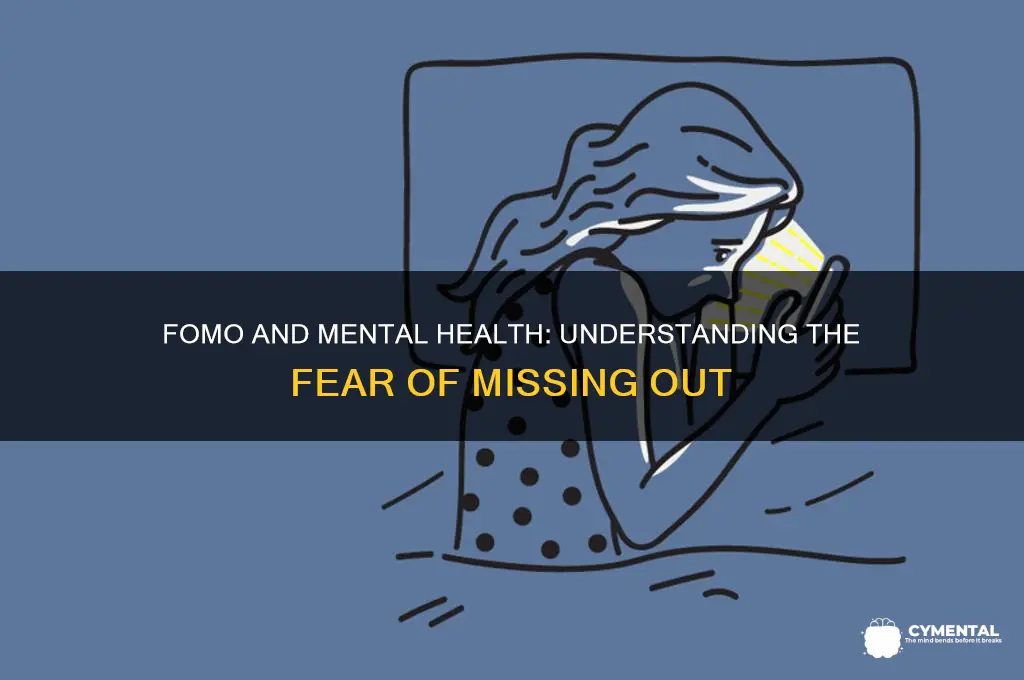
FOMO, or the Fear of Missing Out, has become a pervasive phenomenon in today’s hyper-connected digital age, where social media constantly highlights the experiences of others. While often dismissed as a trivial concern, growing research suggests that FOMO may have deeper psychological implications, potentially contributing to anxiety, depression, and decreased life satisfaction. As individuals increasingly compare their lives to curated online highlights, the pressure to stay connected and participate in every event can lead to chronic stress and a distorted sense of reality. This raises the question: Is FOMO merely a byproduct of modern culture, or does it signify a legitimate mental health issue that warrants attention and intervention?
| Characteristics | Values |
|---|---|
| Definition | Fear of Missing Out (FOMO) is a pervasive feeling of anxiety that one is missing out on rewarding experiences, exciting events, or important interactions that others are having. |
| Mental Health Classification | Not officially recognized as a distinct mental health disorder in diagnostic manuals like DSM-5 or ICD-11. However, it is increasingly studied as a psychological phenomenon linked to anxiety, depression, and low self-esteem. |
| Psychological Impact | Associated with increased stress, decreased life satisfaction, and heightened social media use. Can exacerbate symptoms of anxiety and depression. |
| Triggers | Social media usage, peer comparisons, and a lack of fulfillment in personal life. |
| Demographics | More prevalent among younger adults (e.g., millennials and Gen Z) due to higher social media engagement. |
| Coping Strategies | Mindfulness, setting boundaries with social media, and focusing on personal values and goals. |
| Research Findings | Studies show a correlation between FOMO and negative mental health outcomes, particularly in heavy social media users. |
| Treatment Approaches | Cognitive-behavioral therapy (CBT) and mindfulness-based interventions are recommended to address underlying anxiety and improve well-being. |
| Cultural Relevance | FOMO is a modern phenomenon amplified by digital culture and the constant connectivity of social media platforms. |
| Prevention | Encouraging a healthy relationship with technology and fostering real-life connections can reduce FOMO. |
Explore related products


What You'll Learn

FOMO's Impact on Anxiety
FOMO, or the Fear of Missing Out, has become a pervasive psychological phenomenon in the digital age, particularly among adolescents and young adults. Studies indicate that individuals aged 18-34 are the most susceptible, with 69% reporting they experience FOMO regularly. This constant anxiety stems from the fear of being excluded from rewarding experiences, often amplified by social media platforms that highlight others’ curated highlights. The relentless stream of posts, stories, and updates creates a distorted reality, making it seem like everyone else is living a more fulfilling life. This perception fuels a cycle of comparison and self-doubt, laying the groundwork for heightened anxiety.
Consider the neurological impact of FOMO. When individuals scroll through social media, their brains release dopamine, a neurotransmitter associated with reward and pleasure. However, the fleeting nature of these dopamine spikes can lead to a craving for more, creating a feedback loop. For those prone to anxiety, this cycle exacerbates symptoms, as the brain becomes hyper-focused on potential threats—in this case, the threat of missing out. Over time, this can lead to generalized anxiety disorder (GAD), characterized by persistent worry and restlessness. Practical steps to mitigate this include setting strict time limits for social media use, such as 30 minutes per day, and engaging in mindfulness practices like deep breathing exercises to recalibrate the nervous system.
From a comparative perspective, FOMO-induced anxiety differs from traditional anxiety disorders in its triggers and manifestations. While generalized anxiety often stems from internalized fears, FOMO is externally driven, rooted in societal and digital pressures. For instance, a study published in the *Journal of Social and Clinical Psychology* found that participants who reduced their social media usage by 30 minutes daily reported a 25% decrease in FOMO-related anxiety. This highlights the tangible impact of external changes on mental health. Unlike other anxiety disorders, FOMO can be directly addressed by altering one’s relationship with technology, making it a unique yet manageable issue.
To combat FOMO’s impact on anxiety, actionable strategies are essential. Start by curating your social media feed to include content that inspires rather than intimidates. Unfollow accounts that trigger feelings of inadequacy and replace them with those promoting positivity or education. Additionally, designate tech-free zones in your home, such as the bedroom or dining area, to create boundaries between digital and real-life experiences. For those struggling with severe anxiety, cognitive-behavioral therapy (CBT) can be effective, as it helps reframe negative thought patterns associated with FOMO. Remember, the goal isn’t to eliminate social media entirely but to use it mindfully, ensuring it enhances rather than detracts from your mental well-being.
Effective Strategies to Prevent and Manage Mental Health Challenges
You may want to see also
Explore related products


Social Media and FOMO Triggers
Social media platforms are designed to keep users engaged, often by leveraging the fear of missing out (FOMO). Algorithms prioritize content that sparks curiosity or envy, such as highlight reels of vacations, parties, or achievements. These posts create an illusion of constant excitement, making users feel their lives are less fulfilling in comparison. For instance, a study published in the *Journal of Social and Clinical Psychology* found that limiting social media use to 30 minutes per day significantly reduced feelings of loneliness and FOMO in participants aged 18 to 22. This suggests that the more time spent scrolling, the greater the risk of experiencing FOMO-related anxiety.
To mitigate FOMO triggers, start by curating your feed intentionally. Unfollow accounts that make you feel inadequate and prioritize those that inspire or educate. For example, if travel posts leave you feeling left out, replace them with accounts focused on local activities or hobbies you enjoy. Additionally, set boundaries by designating "no-scroll" zones, such as during meals or before bed. Apps like *Screen Time* or *Digital Wellbeing* can help monitor usage and enforce limits. Reducing exposure to triggering content doesn’t eliminate FOMO entirely, but it creates space for more mindful engagement.
A persuasive argument against unchecked social media use is its role in distorting reality. Platforms often showcase curated, idealized versions of life, omitting the mundane or challenging moments. This creates an unrealistic benchmark for comparison, fueling FOMO. For instance, a 2021 survey by the *American Psychological Association* revealed that 45% of young adults reported feeling FOMO due to social media. To counteract this, practice media literacy by questioning the authenticity of what you see. Remind yourself that what’s shared online is rarely the full story, and everyone experiences moments of boredom or struggle.
Comparatively, FOMO on social media differs from real-life FOMO because of its constant availability. In the past, missing an event meant hearing about it later, but now, live updates and stories provide instant access to what others are doing. This real-time exposure intensifies the fear of exclusion. To address this, adopt a "digital detox" periodically—a day or weekend without social media. Research shows that even short breaks can reduce stress and improve mood. For example, a study in *Computers in Human Behavior* found that participants who took a five-day break from Facebook reported higher life satisfaction.
Finally, reframe your relationship with social media by focusing on connection rather than comparison. Use platforms to engage meaningfully with others, such as joining groups related to your interests or participating in discussions. For instance, if you love photography, share your work and seek feedback instead of passively consuming others’ content. This shifts the focus from what you’re missing to what you’re contributing. By redefining your purpose for using social media, you can reduce FOMO triggers and foster a healthier digital experience.
Supporting Your Partner Through Mental Health Challenges: A Compassionate Guide
You may want to see also
Explore related products

$35.39 $54.99
$16.16 $20



FOMO vs. Healthy Ambition
Fear of Missing Out (FOMO) often masquerades as ambition, blurring the line between what drives us forward and what holds us back. At its core, FOMO is an anxiety rooted in the belief that others are experiencing something better, leading to compulsive behaviors like over-scrolling social media or overcommitting to events. Healthy ambition, on the other hand, is goal-oriented and internally driven, fueled by a desire to grow, achieve, or contribute. The distinction lies in the source of motivation: FOMO reacts to external pressures, while ambition responds to personal values and aspirations. Recognizing this difference is the first step in transforming restless anxiety into purposeful action.
To differentiate FOMO from healthy ambition, examine the *why* behind your actions. For instance, if you’re attending a networking event solely because you saw others posting about it, FOMO might be at play. Conversely, if you’re attending to build specific skills or connections aligned with your career goals, that’s ambition. A practical exercise is to journal your motivations for a week, categorizing decisions as FOMO-driven or ambition-driven. Over time, this awareness can help you recalibrate your priorities, reducing anxiety and increasing fulfillment.
FOMO thrives in environments of excess—too much screen time, too many commitments, too little reflection. To combat this, set boundaries. Limit social media to 30 minutes daily, using apps like Screen Time or Digital Wellbeing to enforce this. Allocate "decision-free" periods in your schedule, such as weekends, where you avoid making plans based on others’ activities. Instead, use this time to engage in activities that align with your long-term goals, whether it’s learning a new skill or working on a passion project. These small adjustments create space for ambition to flourish.
Finally, reframe your relationship with comparison. FOMO often stems from viewing others’ highlight reels as your baseline, but healthy ambition thrives on self-awareness and self-improvement. Celebrate progress, not perfection. For example, if you’re learning a language, focus on mastering one new phrase daily rather than measuring yourself against fluent speakers. By shifting your focus inward, you can channel the energy once spent on FOMO into sustained, meaningful growth.
Supporting Your Spouse: Navigating Mental Health Challenges Together with Compassion
You may want to see also
Explore related products

$14.15 $18.95


Psychological Roots of FOMO
Fear of Missing Out (FOMO) is deeply rooted in the human psyche, stemming from evolutionary mechanisms that once ensured survival. Our ancestors thrived by staying connected to their social groups, as isolation often meant danger. Today, this primal need manifests in the digital age as an incessant urge to monitor social media, ensuring we remain part of the collective experience. Studies show that the brain’s reward system, particularly the dopamine pathways, is activated when we anticipate social inclusion or novel information, reinforcing the behavior of constant checking. This biological wiring explains why FOMO feels so compelling, even when the stakes are as low as missing a viral meme.
Psychologically, FOMO is often tied to self-esteem and identity formation, especially in adolescents and young adults. For individuals whose sense of self is heavily influenced by peer validation, the fear of being excluded from events or conversations can trigger anxiety and inadequacy. Research indicates that those with lower self-esteem are more susceptible to FOMO, as they rely on external cues to affirm their worth. For example, a teenager constantly refreshing Instagram to see if they were invited to a party may be seeking reassurance that they belong. Addressing FOMO in this context requires fostering internalized self-worth, perhaps through mindfulness practices or therapy, to reduce dependency on external validation.
Another psychological root of FOMO lies in the scarcity mindset, a cognitive bias that amplifies the perceived value of limited opportunities. Social media platforms exploit this by creating a sense of urgency through ephemeral content like Instagram Stories or Snapchat streaks. The brain interprets these fleeting moments as high-value experiences, intensifying the fear of missing out. To counteract this, experts recommend setting boundaries, such as limiting social media use to 30 minutes a day or designating tech-free hours. By reframing abundance—recognizing that opportunities are plentiful—individuals can reduce the grip of FOMO.
Comparatively, FOMO shares similarities with other psychological phenomena like social comparison and envy, but it is distinct in its focus on anticipation rather than reaction. While envy arises from desiring what others have, FOMO is the anxiety of potentially losing access to an experience. This distinction is crucial for intervention strategies. For instance, encouraging gratitude practices can mitigate envy, but FOMO may require proactive planning, such as scheduling meaningful activities to reduce the fear of missing hypothetical events. Understanding these nuances allows for targeted approaches to managing FOMO effectively.
Finally, the psychological roots of FOMO highlight its intersection with mental health, particularly anxiety and depression. Chronic FOMO can lead to a cycle of stress and dissatisfaction, as individuals exhaust themselves trying to keep up with an unattainable ideal. A 2021 study found that high FOMO scores correlated with increased symptoms of anxiety and depression, particularly in heavy social media users. To break this cycle, mental health professionals suggest cognitive-behavioral techniques, such as identifying irrational fears and challenging them with evidence. For example, someone worried about missing a social event can reflect on past occasions they couldn’t attend and acknowledge that life continued unaffected. By addressing the underlying psychological drivers, FOMO can be transformed from a debilitating fear into a manageable emotion.
Introversion vs. Mental Health: Debunking Myths and Understanding Differences
You may want to see also
Explore related products

$39.95 $51.99


Managing FOMO for Well-being
FOMO, or the Fear of Missing Out, thrives on the illusion of constant connection. Social media platforms, with their carefully curated highlights, amplify this feeling, leaving individuals anxious about experiences they're not part of. This chronic state of comparison can lead to increased stress, decreased life satisfaction, and even symptoms of depression, particularly in younger demographics. A 2018 study published in the Journal of Social and Clinical Psychology found a significant positive correlation between social media usage and feelings of FOMO, highlighting its impact on mental well-being.
Recognizing this, managing FOMO becomes crucial for maintaining a healthy relationship with technology and oneself.
One effective strategy involves mindful social media consumption. Limit daily usage by setting specific time slots for checking platforms. Utilize features like "screen time" trackers to monitor usage and set realistic goals for reduction. Consider a digital detox, a period of complete abstinence from social media, to break the cycle of constant comparison. During this time, engage in activities that foster real-world connections and experiences, such as meeting friends in person, pursuing hobbies, or volunteering.
Active participation in meaningful activities not only distracts from the fear of missing out but also cultivates a sense of fulfillment and belonging.
Another powerful tool is cultivating gratitude. Actively acknowledging the positive aspects of your own life, rather than focusing on what others seem to have, shifts your perspective. Keep a gratitude journal, listing three things you're thankful for each day. This practice trains your brain to focus on abundance rather than scarcity, reducing the grip of FOMO. Additionally, practicing mindfulness through meditation or deep breathing exercises can help individuals stay present and appreciate the moment, rather than anxiously anticipating what they might be missing.
By grounding yourself in the present, you diminish the power of FOMO's future-oriented anxieties.
Finally, remember that social media often presents a distorted reality. People tend to share highlights, not the mundane or challenging aspects of their lives. Remind yourself that what you see online is a curated version of reality, not a complete picture. Engage critically with the content you consume, questioning its authenticity and its impact on your emotions. By developing a healthier relationship with social media and prioritizing real-world experiences, individuals can effectively manage FOMO and cultivate a sense of well-being rooted in authenticity and gratitude.
Daddy Issues: A Mental Disorder or Cultural Stereotype?
You may want to see also
Frequently asked questions
FOMO itself is not officially classified as a mental health disorder, but it can contribute to anxiety, stress, and other mental health challenges when experienced chronically or intensely.
Yes, persistent FOMO can exacerbate issues like anxiety, depression, and low self-esteem, especially when it drives excessive social media use or unhealthy comparisons with others.
Managing FOMO involves setting boundaries with social media, practicing mindfulness, focusing on the present moment, and cultivating gratitude for one’s own experiences and achievements.