Caleb Wright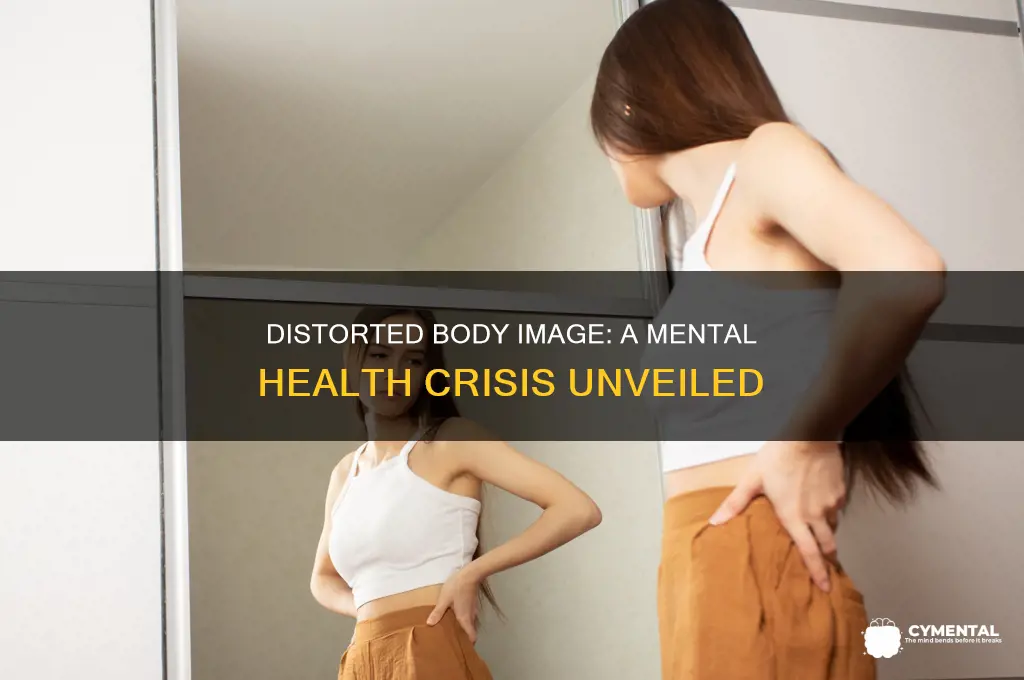
Disturbed body image, characterized by a distorted perception of one's physical appearance, is increasingly recognized as a significant mental health issue with far-reaching consequences. Often linked to conditions such as eating disorders, anxiety, and depression, it can stem from societal pressures, trauma, or internalized ideals of beauty. This distorted self-perception not only affects emotional well-being but can also lead to harmful behaviors, such as excessive dieting, overexercising, or even self-harm. Addressing disturbed body image requires a multifaceted approach, including therapy, education, and societal shifts to promote body positivity and acceptance, underscoring its importance as a critical component of mental health care.
| Characteristics | Values |
|---|---|
| Definition | Disturbed body image refers to a significant misperception of one's physical appearance, often involving excessive preoccupation with perceived flaws. |
| Classification | Recognized as a symptom of various mental health disorders, including Body Dysmorphic Disorder (BDD), eating disorders (e.g., anorexia nervosa, bulimia nervosa), and depression. |
| Prevalence | Affects approximately 1-2% of the general population, with higher rates among adolescents and young adults. |
| Risk Factors | Low self-esteem, societal beauty standards, trauma, bullying, and genetic predisposition. |
| Symptoms | Excessive grooming, avoidance of mirrors, social withdrawal, compulsive behaviors (e.g., skin picking), and severe anxiety related to appearance. |
| Impact | Can lead to social isolation, impaired functioning, suicidal ideation, and comorbid mental health conditions. |
| Diagnosis | Assessed through clinical interviews, psychological questionnaires (e.g., Body Dysmorphic Disorder Examination), and exclusion of other medical conditions. |
| Treatment | Cognitive Behavioral Therapy (CBT), medication (e.g., SSRIs), and support groups are effective interventions. |
| Prognosis | Early intervention improves outcomes, but chronic cases may require long-term management. |
| Cultural Factors | Societal emphasis on appearance, media influence, and cultural beauty ideals exacerbate body image disturbances. |
Explore related products


What You'll Learn

Impact on self-esteem and identity
Disturbed body image often erodes self-esteem by tying self-worth exclusively to physical appearance. This narrow focus creates a fragile sense of value, where any perceived flaw becomes a personal failure. For instance, a teenager fixated on acne may internalize it as proof of unattractiveness, ignoring other qualities like kindness or intelligence. Over time, this distortion amplifies self-criticism, making individuals susceptible to mood disorders such as depression or anxiety. A 2020 study in the *Journal of Adolescent Health* found that 72% of participants with body image concerns reported clinically low self-esteem, highlighting the direct correlation.
Identity, too, becomes fragmented when body image dominates self-perception. People may adopt roles or behaviors they believe align with societal beauty standards, sacrificing authenticity. For example, a professional might dress in a way they dislike to appear thinner, or an athlete might restrict their diet to achieve a certain physique, even if it harms performance. This misalignment between true self and projected self fosters internal conflict, weakening one’s sense of identity. Therapists often use cognitive-behavioral techniques to help clients disentangle identity from appearance, encouraging exploration of values, passions, and strengths.
Practical steps can mitigate these effects. First, limit exposure to idealized images on social media by setting a 30-minute daily cap and following body-positive accounts. Second, practice self-compassion through affirmations or journaling, focusing on non-physical achievements. For instance, instead of “I look good today,” try “I handled that challenge well.” Third, engage in activities that emphasize function over form, like hiking or dancing, to reconnect with the body’s capabilities. For adolescents, parents can model these behaviors by avoiding appearance-based compliments and praising effort or character.
Comparatively, cultures with broader beauty ideals report lower rates of body image disturbance. In Fiji, for example, traditional values prioritize health and community roles over thinness. However, globalization has introduced Western standards, leading to a rise in eating disorders. This underscores the importance of cultural context in shaping self-esteem and identity. By fostering diversity in media representation and challenging narrow ideals, societies can reduce the pressure on individuals to conform, thereby protecting mental health.
Ultimately, rebuilding self-esteem and identity requires a shift from external validation to internal acceptance. This is not about ignoring appearance but redefining its role in self-worth. A holistic approach—combining mindfulness, social support, and professional guidance—can help individuals reclaim their identity as multifaceted beings, not just bodies to be judged. For those struggling, starting with small, consistent actions, like daily gratitude practices or joining support groups, can pave the way for lasting change.
Understanding Delirium: Mental Health Concern or Separate Medical Condition?
You may want to see also
Explore related products


Link to eating disorders and depression
Disturbed body image often serves as a critical precursor to eating disorders, creating a toxic cycle of self-criticism and harmful behaviors. Research indicates that individuals with negative body image are three times more likely to develop conditions like anorexia nervosa, bulimia, or binge eating disorder. This link is particularly pronounced in adolescents and young adults, where societal pressures and social media exposure exacerbate the issue. For instance, a study published in the *International Journal of Eating Disorders* found that 60% of teenage girls with body dissatisfaction engaged in disordered eating patterns within two years. The brain’s reward system becomes hijacked, associating weight loss or control over food with self-worth, making intervention increasingly difficult as the behavior progresses.
Depression frequently coexists with disturbed body image, forming a bidirectional relationship that deepens both conditions. Negative body image can trigger depressive symptoms by fostering feelings of inadequacy, isolation, and hopelessness. Conversely, individuals with depression often experience changes in appetite, weight, and self-perception, which can intensify body dissatisfaction. A meta-analysis in *Psychological Bulletin* revealed that 50% of individuals with eating disorders also meet the criteria for major depressive disorder. This overlap complicates treatment, as both conditions reinforce each other, creating a psychological feedback loop. Addressing one without the other often leads to incomplete recovery, underscoring the need for integrated therapeutic approaches.
Practical strategies to mitigate the link between disturbed body image, eating disorders, and depression include cognitive-behavioral therapy (CBT) and mindfulness-based interventions. CBT helps challenge distorted body perceptions and replace harmful thought patterns with constructive ones. For example, therapists might guide patients to identify and reframe statements like, "I’m worthless because of my weight," into, "My value isn’t determined by my appearance." Mindfulness practices, such as body scans or guided meditations, encourage individuals to cultivate self-compassion and acceptance. Incorporating these techniques into daily routines—even 10 minutes of mindfulness per day—can significantly reduce symptoms over time.
A comparative analysis of treatment outcomes highlights the importance of early intervention. Programs targeting body image issues in schools or community settings have shown a 30% reduction in eating disorder risk among participants. Similarly, depression screening tools that include body image assessments can identify at-risk individuals before symptoms escalate. However, caution must be exercised when addressing these issues in group settings, as comparisons among peers can inadvertently worsen body dissatisfaction. Tailoring interventions to individual needs and providing ongoing support are essential for long-term success.
Ultimately, recognizing the intricate link between disturbed body image, eating disorders, and depression is crucial for effective prevention and treatment. By addressing these conditions holistically—combining psychological therapy, mindfulness, and early intervention—individuals can break free from the cycle of self-destruction. The takeaway is clear: body image is not merely a cosmetic concern but a vital component of mental health that demands attention, empathy, and proactive care.
Breathing Trouble: Uncovering Air Pollution's Impact on Mental Well-Being
You may want to see also
Explore related products


Role of social media influence
Social media platforms, with their curated feeds and algorithmic biases, have become powerful architects of body image ideals. A 2021 study published in the *Journal of Adolescent Health* found that adolescents who spent more than 3 hours daily on social media were 26% more likely to report body image dissatisfaction compared to those who spent less than 1 hour. This correlation isn’t coincidental; it’s a product of constant exposure to manipulated images, influencer aesthetics, and the performative nature of online self-presentation. The sheer volume of these interactions—often exceeding 200 social media engagements per day for the average teenager—creates a distorted reality where unrealistic standards are normalized.
Consider the mechanics of this influence: platforms like Instagram and TikTok prioritize content that aligns with prevailing beauty norms, often amplifying images of thinness, muscularity, or surgically enhanced features. Filters and editing tools further blur the line between reality and fantasy, making even the most unattainable physiques appear commonplace. For instance, a 2020 survey by the Royal Society for Public Health revealed that 70% of young people felt worse about their bodies after using Instagram, citing the platform’s emphasis on "perfect" bodies as a primary trigger. This isn’t merely about vanity; it’s about the psychological toll of internalizing these ideals, which can manifest as anxiety, depression, or disordered eating behaviors.
To mitigate this, practical steps can be taken. First, limit daily social media use to under 2 hours, particularly for individuals under 25, as this demographic is most vulnerable to its effects. Second, diversify your feed by unfollowing accounts that promote narrow beauty standards and instead follow body-positive advocates or diverse role models. Third, engage critically with content—question the authenticity of images and remind yourself that what you see is often a constructed narrative. For parents and educators, initiating conversations about media literacy and the realities of image manipulation can empower young people to resist harmful influences.
A comparative analysis highlights the stark difference between pre-social media eras and today. In the 1990s, body image concerns were largely driven by magazines and television, which, while influential, offered limited exposure compared to the 24/7 accessibility of social media. Now, the average person encounters over 5,000 advertisements and influencer posts monthly, many of which subtly reinforce harmful ideals. This constant bombardment makes it harder to maintain a healthy self-perception, particularly for those already predisposed to body image issues.
Ultimately, the role of social media in shaping body image is undeniable, but it’s also modifiable. By understanding its mechanisms and adopting proactive strategies, individuals can reclaim their self-worth from the grip of digital distortion. The takeaway? Social media isn’t inherently toxic, but its unchecked influence can be. Awareness, moderation, and critical engagement are the antidotes to its most harmful effects.
Police Response to Mental Health Crises: Frequency and Challenges
You may want to see also
Explore related products


Psychological effects of body dysmorphia
Body dysmorphic disorder (BDD) is a mental health condition where individuals become obsessed with perceived flaws in their appearance, often leading to severe psychological distress. These flaws are typically minor or imagined, yet they dominate the person’s thoughts, causing them to spend hours examining themselves in mirrors, seeking reassurance, or avoiding social situations. The psychological effects of BDD extend far beyond vanity; they infiltrate every aspect of a person’s life, distorting their self-perception and impairing their ability to function. For instance, a teenager with BDD might drop out of school due to the overwhelming anxiety caused by their perceived skin imperfections, illustrating how this disorder can derail normal developmental milestones.
One of the most profound psychological effects of BDD is the development of obsessive-compulsive behaviors. Individuals may engage in repetitive rituals, such as excessive grooming, skin picking, or seeking constant validation from others. These behaviors provide temporary relief but reinforce the cycle of obsession, leading to increased distress over time. Research shows that up to 39% of people with BDD also meet the criteria for obsessive-compulsive disorder (OCD), highlighting the overlap between these conditions. For those struggling with these rituals, cognitive-behavioral therapy (CBT) is a proven intervention, often involving exposure and response prevention techniques to break the cycle of compulsions.
BDD also significantly impacts self-esteem and mood, frequently leading to depression and anxiety disorders. The constant preoccupation with appearance erodes self-worth, making individuals feel unlovable or inadequate. A study published in the *Journal of Psychiatric Research* found that 80% of people with BDD experience major depressive disorder at some point in their lives. This comorbidity underscores the importance of addressing both BDD and its associated mood disorders in treatment. Antidepressant medications, particularly selective serotonin reuptake inhibitors (SSRIs), are often prescribed at doses of 20–60 mg daily for adults, depending on the severity of symptoms and individual tolerance.
Social isolation is another devastating psychological effect of BDD. The fear of being judged or ridiculed for their perceived flaws causes many individuals to withdraw from relationships, work, or school. This isolation can exacerbate feelings of loneliness and hopelessness, creating a vicious cycle. For example, a young adult with BDD might avoid job interviews due to their belief that their appearance disqualifies them, limiting their career opportunities and financial independence. Encouraging gradual social reintegration through therapy and support groups can help rebuild confidence and reduce isolation.
Finally, BDD carries a heightened risk of suicidal ideation and attempts. The intense emotional pain and hopelessness associated with the disorder make individuals with BDD 45 times more likely to attempt suicide than the general population, according to a study in *Psychiatry Research*. This alarming statistic emphasizes the critical need for early intervention and comprehensive treatment. If you or someone you know is experiencing suicidal thoughts, immediate help should be sought through crisis hotlines, such as the National Suicide Prevention Lifeline at 988 in the United States. Addressing BDD requires a multifaceted approach, combining therapy, medication, and support to mitigate its psychological effects and restore quality of life.
Mastering Mental Health: Effective Strategies to Manage and Thrive
You may want to see also
Explore related products

$6.79 $14.99


Treatment options and therapeutic approaches
Disturbed body image is a recognized mental health issue, often intertwined with conditions like eating disorders, anxiety, and depression. Addressing it requires targeted treatment options and therapeutic approaches that tackle both psychological and behavioral aspects. Cognitive Behavioral Therapy (CBT) stands out as a cornerstone in this domain. It focuses on identifying and challenging negative thought patterns related to body image, replacing them with healthier, more realistic perceptions. For instance, a therapist might work with a client to reframe the belief “I am worthless because of my appearance” into “My worth is not defined by my body shape.” Typically, CBT sessions occur weekly for 12 to 20 weeks, with homework assignments to reinforce skills outside of therapy.
Another effective approach is Acceptance and Commitment Therapy (ACT), which emphasizes mindfulness and acceptance of one’s body without judgment. Unlike CBT, ACT doesn’t aim to change thoughts but rather to reduce their impact on behavior. Clients learn to observe their critical thoughts as passing mental events rather than truths. For example, instead of fighting the thought “My thighs are too big,” they practice acknowledging it and refocusing on values-driven actions, like engaging in hobbies or social activities. ACT is particularly useful for individuals who feel overwhelmed by constant self-criticism. Group therapy sessions, often lasting 90 minutes, can complement individual ACT work, fostering peer support and shared experiences.
For adolescents and young adults, Family-Based Treatment (FBT) has shown promise, especially in cases where disturbed body image coexists with eating disorders. FBT involves parents or caregivers in the recovery process, empowering them to support their child’s healthy eating and body image. This approach typically spans 10 to 20 sessions, with parents gradually handing control back to the individual as they progress. A key caution is ensuring that parental involvement doesn’t become overbearing, as this can hinder autonomy. FBT is most effective when tailored to the family’s dynamics and the individual’s developmental stage.
Pharmacotherapy can also play a role, particularly when disturbed body image is accompanied by severe anxiety or depression. Selective Serotonin Reuptake Inhibitors (SSRIs), such as fluoxetine (20–60 mg/day), are commonly prescribed to reduce obsessive thoughts and improve mood. However, medication should never be the sole treatment; it must be paired with psychotherapy for lasting change. A critical takeaway is that medication addresses symptoms, not the root cause, making it a supplementary tool rather than a standalone solution.
Finally, emerging approaches like art therapy and body-focused mindfulness practices offer creative avenues for healing. Art therapy allows individuals to express their emotions nonverbally, often revealing insights that words cannot capture. Meanwhile, mindfulness exercises, such as body scans or yoga, help individuals reconnect with their bodies in a nonjudgmental way. These methods are particularly beneficial for those who struggle with traditional talk therapy. Incorporating these practices into a broader treatment plan can enhance self-awareness and foster a more compassionate relationship with one’s body.
Trans Perspectives on Mental Health: Challenges, Resilience, and Support
You may want to see also
Frequently asked questions
Yes, disturbed body image is recognized as a mental health issue, often associated with conditions like body dysmorphic disorder (BDD), eating disorders (e.g., anorexia nervosa or bulimia nervosa), or depression. It involves a distorted perception of one’s physical appearance, leading to significant emotional distress and impaired functioning.
Signs include excessive preoccupation with perceived flaws in appearance, frequent mirror checking, avoidance of social situations due to body-related anxiety, extreme dieting or exercise, and persistent negative self-talk about one’s body. These behaviors can indicate an unhealthy relationship with one’s body.
Yes, disturbed body image can be effectively treated through therapies like cognitive-behavioral therapy (CBT), mindfulness-based interventions, and support from mental health professionals. Medications may also be prescribed in cases linked to underlying disorders like depression or anxiety. Early intervention is key to recovery.