Caleb Wright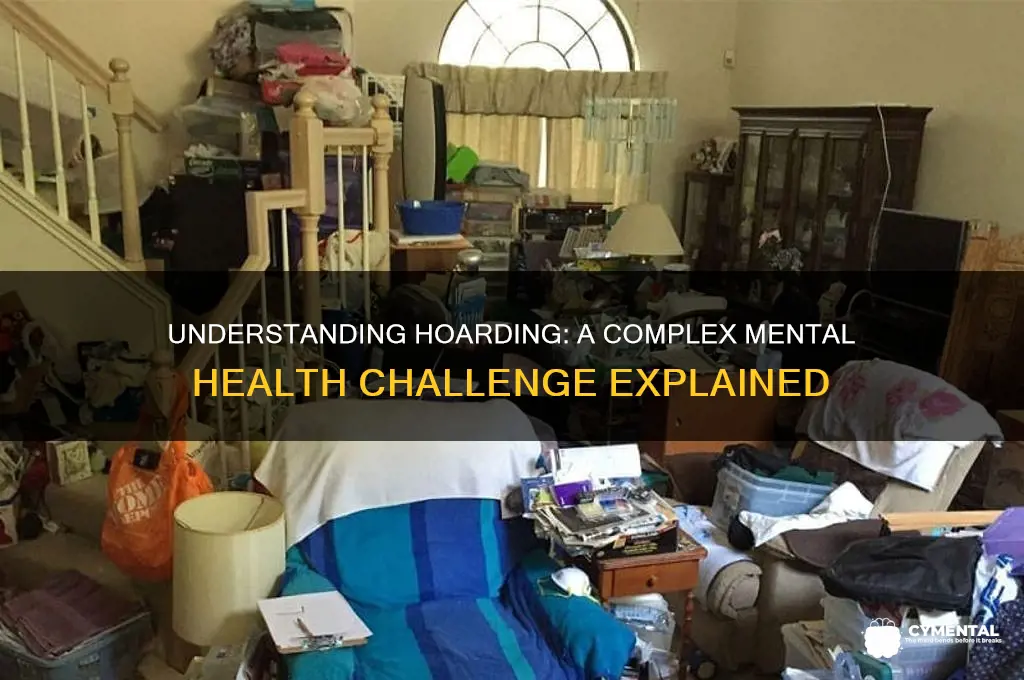
Hoarding, characterized by the excessive accumulation of items and the inability to discard them, is increasingly recognized as a complex mental health issue rather than merely a lifestyle choice. Often linked to underlying psychological conditions such as anxiety, depression, or obsessive-compulsive disorder (OCD), hoarding can significantly impair daily functioning, strain relationships, and pose health and safety risks. While it was once viewed as a symptom of OCD, it is now classified as a distinct disorder in the Diagnostic and Statistical Manual of Mental Disorders (DSM-5), highlighting its unique challenges. Understanding hoarding as a mental health issue is crucial for developing effective interventions, fostering empathy, and reducing the stigma surrounding those who struggle with this behavior.
Explore related products

$18.97 $29.99


What You'll Learn
- Symptoms and Diagnosis: Identifying hoarding disorder through excessive clutter, distress, and functional impairment
- Causes and Risk Factors: Genetic, environmental, and psychological factors contributing to hoarding behavior
- Treatment Options: Cognitive-behavioral therapy, medication, and support groups for managing hoarding disorder
- Impact on Daily Life: Effects on relationships, safety, and overall quality of life
- Stigma and Awareness: Reducing misconceptions and promoting understanding of hoarding as a mental health issue

Symptoms and Diagnosis: Identifying hoarding disorder through excessive clutter, distress, and functional impairment
Hoarding disorder is characterized by a persistent difficulty discarding possessions, regardless of their actual value, leading to excessive accumulation that clutters living spaces and compromises their intended use. This isn't merely a penchant for collecting; it's a clinically recognized mental health condition with distinct symptoms and diagnostic criteria.
Recognizing these symptoms is crucial for early intervention. The Diagnostic and Statistical Manual of Mental Disorders (DSM-5) outlines key indicators: a person experiences significant distress at the thought of discarding items, leading to a buildup of possessions that congest living areas, rendering them unusable for their intended purpose. This isn't about having a messy room; it's about a kitchen table buried under piles of newspapers, a bedroom floor inaccessible due to stacked boxes, or a bathroom sink unusable because of accumulated toiletries.
Diagnosis involves a thorough assessment by a qualified mental health professional. They will evaluate the extent of clutter, the individual's emotional attachment to possessions, and the degree of functional impairment. It's important to note that hoarding disorder often co-occurs with other mental health conditions like depression, anxiety, and obsessive-compulsive disorder (OCD). A comprehensive evaluation helps identify these comorbidities and tailor treatment accordingly.
While there's no single test for hoarding disorder, clinicians may use standardized questionnaires and interviews to gather information about the individual's history, behaviors, and emotional experiences related to their possessions.
Treatment typically involves cognitive-behavioral therapy (CBT), specifically tailored for hoarding disorder. This therapy helps individuals challenge distorted beliefs about possessions, develop decision-making skills regarding discarding items, and learn organizational strategies. In some cases, medication may be prescribed to address co-occurring conditions like anxiety or depression.
Early identification and intervention are crucial. If you or someone you know exhibits signs of hoarding disorder, seeking professional help is essential. Remember, hoarding disorder is a treatable condition, and with the right support, individuals can learn to manage their symptoms and reclaim their living spaces.
Empowering Workplaces: Strategies to Support Staff Mental Health Effectively
You may want to see also
Explore related products


Causes and Risk Factors: Genetic, environmental, and psychological factors contributing to hoarding behavior
Hoarding behavior, characterized by the excessive accumulation of items and the inability to discard them, is a complex phenomenon rooted in a interplay of genetic, environmental, and psychological factors. Understanding these contributors is crucial for developing effective interventions and fostering empathy for those affected.
Genetic Predisposition:
Research suggests a genetic component to hoarding behavior. Studies of twins and families reveal a higher prevalence of hoarding among relatives of individuals with the condition. Specific genes associated with impulsivity, decision-making, and emotional regulation may contribute to this predisposition. While genetics don't guarantee hoarding, they can increase vulnerability, particularly when combined with other risk factors.
Environmental Triggers:
Environmental factors play a significant role in triggering and exacerbating hoarding tendencies. Traumatic events like loss, displacement, or financial hardship can lead to an increased attachment to possessions as a means of security and control. Cluttered living environments during childhood, often associated with neglect or poverty, can normalize hoarding behaviors and hinder the development of organizational skills.
Psychological Underpinnings:
Psychological factors are intricately linked to hoarding. Anxiety disorders, depression, and obsessive-compulsive disorder (OCD) frequently co-occur with hoarding. Individuals with hoarding tendencies often experience intense emotional attachment to possessions, viewing them as extensions of themselves or as holding sentimental value. Difficulty with decision-making, perfectionism, and a fear of making mistakes can further contribute to the inability to discard items.
A Multifaceted Approach:
Addressing hoarding behavior requires a comprehensive approach that considers the interplay of these factors. Cognitive-behavioral therapy (CBT) has shown promise in helping individuals challenge distorted beliefs about possessions, develop decision-making skills, and learn organizational strategies. Medication may be beneficial in managing co-occurring conditions like anxiety or depression. Support groups and community resources can provide valuable social support and practical assistance in decluttering efforts.
Reporting Mental Health Concerns and Gun Ownership: A Critical Guide
You may want to see also
Explore related products


Treatment Options: Cognitive-behavioral therapy, medication, and support groups for managing hoarding disorder
Hoarding disorder, recognized as a distinct mental health condition in the DSM-5, often requires a multifaceted treatment approach to address its complex psychological and behavioral roots. Among the most effective strategies are cognitive-behavioral therapy (CBT), medication, and support groups, each offering unique benefits and mechanisms for managing symptoms. These interventions, when tailored to individual needs, can significantly improve quality of life and reduce the compulsive urge to hoard.
Cognitive-behavioral therapy (CBT) stands as the gold standard for treating hoarding disorder, targeting the distorted beliefs and decision-making processes that underpin the behavior. During CBT sessions, individuals work with therapists to identify and challenge irrational thoughts, such as the perceived value of possessions or the fear of losing important items. Practical exercises, like sorting and discarding items in a controlled manner, are integrated to reinforce new cognitive patterns. For instance, a therapist might guide a client through categorizing items into "keep," "donate," and "discard" piles, gradually increasing the difficulty as progress is made. Studies show that CBT can lead to significant reductions in hoarding symptoms, with improvements often sustained over time. However, success depends on consistent attendance and active participation, making it crucial for individuals to commit to the process.
Medication, while not a standalone solution, can complement therapy by addressing co-occurring conditions like anxiety, depression, or obsessive-compulsive disorder (OCD). Selective serotonin reuptake inhibitors (SSRIs), such as fluoxetine or sertraline, are commonly prescribed, with dosages typically starting at 20 mg daily and adjusted based on response and tolerance. These medications can help reduce the anxiety associated with discarding items, making it easier for individuals to engage in CBT exercises. It’s important to note that medication alone rarely resolves hoarding behaviors, and its effectiveness is maximized when paired with therapy. Patients should also be monitored for side effects, such as nausea or insomnia, which can often be mitigated with dosage adjustments or additional medications.
Support groups provide a vital layer of social reinforcement, offering a sense of community and understanding that can be lacking in the lives of those with hoarding disorder. Groups like Clutterers Anonymous or those facilitated by mental health organizations allow individuals to share experiences, strategies, and encouragement in a nonjudgmental environment. For example, a participant might learn how another member successfully tackled a cluttered room by breaking the task into smaller, manageable steps. These groups also foster accountability, as members often commit to specific goals and report back on their progress. While not a replacement for professional treatment, support groups can enhance motivation and provide ongoing support during and after formal therapy.
Incorporating these treatment options requires careful consideration of the individual’s needs, preferences, and severity of symptoms. For instance, someone with mild hoarding tendencies might benefit primarily from CBT and a support group, while another with severe symptoms and comorbid depression may require medication as well. Practical tips, such as starting with small, low-stress areas of the home during decluttering or setting a timer for 15-minute sorting sessions, can make the process less overwhelming. Ultimately, the goal is not just to clear physical space but to foster lasting behavioral and cognitive changes that improve overall well-being. By combining these approaches, individuals with hoarding disorder can regain control over their lives and environments.
Compulsive Lying: A Mental Health Disorder or Habit?
You may want to see also
Explore related products


Impact on Daily Life: Effects on relationships, safety, and overall quality of life
Hoarding disorder significantly disrupts relationships by creating physical and emotional barriers. Imagine a living room stacked floor-to-ceiling with newspapers, clothing, and miscellaneous items, leaving no space for conversation or shared activities. Partners, family members, or roommates often feel frustrated, embarrassed, or neglected, leading to strained communication and frequent conflicts. For instance, a spouse might resent the inability to invite guests over, while a child could feel ashamed to bring friends home. Over time, these tensions erode trust and intimacy, sometimes resulting in isolation or even separation. Addressing hoarding behaviors early through therapy, such as cognitive-behavioral therapy (CBT), can help rebuild connections by fostering understanding and setting mutual goals.
Safety hazards in hoarded environments pose immediate risks to both the individual and others. Piles of items can block exits, increasing the danger during emergencies like fires or medical crises. For example, a study found that 25% of hoarding cases involved fire hazards due to blocked stoves or overloaded electrical outlets. Cluttered floors also heighten the risk of trips and falls, particularly for older adults, who are more prone to fractures. In multi-unit dwellings, hoarding can affect neighbors by attracting pests, causing structural damage, or violating building codes. Practical steps to mitigate these risks include creating clear pathways, removing flammable materials, and involving professional organizers or cleanup services to restore a safe living space.
The overall quality of life for individuals with hoarding disorder is profoundly diminished, often leading to physical health issues, financial strain, and social withdrawal. Excessive clutter can prevent basic self-care routines, such as cooking or bathing, resulting in poor hygiene and malnutrition. For instance, a kitchen buried under piles of items might force someone to rely on fast food, contributing to health problems like obesity or diabetes. Financially, hoarding can lead to unnecessary purchases, unpaid bills, or eviction, further exacerbating stress. Socially, the stigma associated with hoarding often leads to avoidance of social interactions, deepening feelings of loneliness. Implementing small, manageable tasks—like decluttering one shelf per day—can gradually improve daily functioning and mental well-being.
Comparing hoarding disorder to other mental health issues highlights its unique challenges and the need for tailored interventions. Unlike depression, where symptoms are primarily internal, hoarding manifests externally, making it more visible and subject to judgment. Unlike OCD, where compulsions often provide temporary relief, hoarding behaviors typically lead to increased distress over time. This distinction underscores the importance of specialized treatment approaches, such as the Buried in Treasures workbook, which combines education, skills training, and peer support. By recognizing hoarding as a distinct mental health issue, individuals and their loved ones can access resources that address its specific impact on daily life, fostering meaningful improvement.
Addiction and Mental Health: Understanding the Frequent Co-Occurrence
You may want to see also
Explore related products


$14.15 $20


Stigma and Awareness: Reducing misconceptions and promoting understanding of hoarding as a mental health issue
Hoarding disorder, recognized in the DSM-5 as a distinct mental health condition, is often misunderstood as mere laziness or a lack of willpower. This misconception perpetuates stigma, isolating individuals who struggle with the compulsive need to acquire and retain possessions, regardless of their value. The reality is that hoarding is a complex interplay of emotional, cognitive, and behavioral factors, often rooted in trauma, anxiety, or depression. Addressing this stigma requires a shift from judgment to empathy, recognizing hoarding as a symptom of deeper psychological distress rather than a lifestyle choice.
To combat stigma, education is paramount. Misconceptions thrive in the absence of accurate information. For instance, many believe hoarders are simply disorganized or unwilling to declutter. In truth, the act of discarding items can trigger intense anxiety or distress, often linked to fears of losing control or memories. Public awareness campaigns, like those led by organizations such as the International OCD Foundation, can play a pivotal role in disseminating factual information. These campaigns should emphasize that hoarding is treatable through therapies like Cognitive Behavioral Therapy (CBT) and medication, particularly when co-occurring with conditions like OCD or depression.
A practical approach to reducing stigma involves fostering community support systems. Local workshops or support groups can provide a safe space for individuals to share their experiences without fear of judgment. For example, the Clutterers Anonymous program offers peer support, helping participants develop coping strategies and reduce isolation. Additionally, training professionals such as social workers, firefighters, and healthcare providers to approach hoarding cases with sensitivity can prevent further harm. Simple steps, like using non-stigmatizing language (e.g., "saved items" instead of "junk"), can make a significant difference in how individuals are perceived and treated.
Comparing hoarding stigma to the historical misconceptions surrounding depression or anxiety highlights the importance of societal evolution in understanding mental health. Just as depression was once dismissed as "feeling blue," hoarding is often trivialized as "collecting gone wrong." By drawing parallels to these now widely accepted conditions, advocates can encourage a more compassionate perspective. Media portrayals also play a critical role; shows like *Hoarders* often sensationalize the issue, but balanced representations that highlight the human experience behind the clutter can foster empathy and reduce stereotypes.
Ultimately, reducing stigma and promoting awareness of hoarding as a mental health issue requires a multi-faceted approach. Education, community support, and empathetic media representation are essential tools in this effort. By reframing hoarding as a treatable condition rather than a personal failing, society can create an environment where individuals feel empowered to seek help. This shift not only improves outcomes for those affected but also fosters a more inclusive understanding of mental health as a whole.
Supporting Mental Health in Individuals with Developmental Disabilities: Strategies and Insights
You may want to see also
Frequently asked questions
Yes, hoarding is recognized as a mental health issue. It is classified as a disorder in the Diagnostic and Statistical Manual of Mental Disorders (DSM-5) under the name "Hoarding Disorder." It is characterized by persistent difficulty discarding possessions, regardless of their actual value, leading to cluttered living spaces and significant distress or impairment.
Hoarding is often associated with other mental health conditions, such as obsessive-compulsive disorder (OCD), depression, anxiety, and attention-deficit/hyperactivity disorder (ADHD). It can also be linked to trauma, grief, or loneliness, as individuals may attach emotional significance to their possessions.
Yes, hoarding can be treated through therapeutic interventions, such as cognitive-behavioral therapy (CBT) specifically tailored for hoarding disorder. Medications, support groups, and professional organizing assistance may also be part of a comprehensive treatment plan to address the underlying psychological factors contributing to the behavior.