Lucas Bennett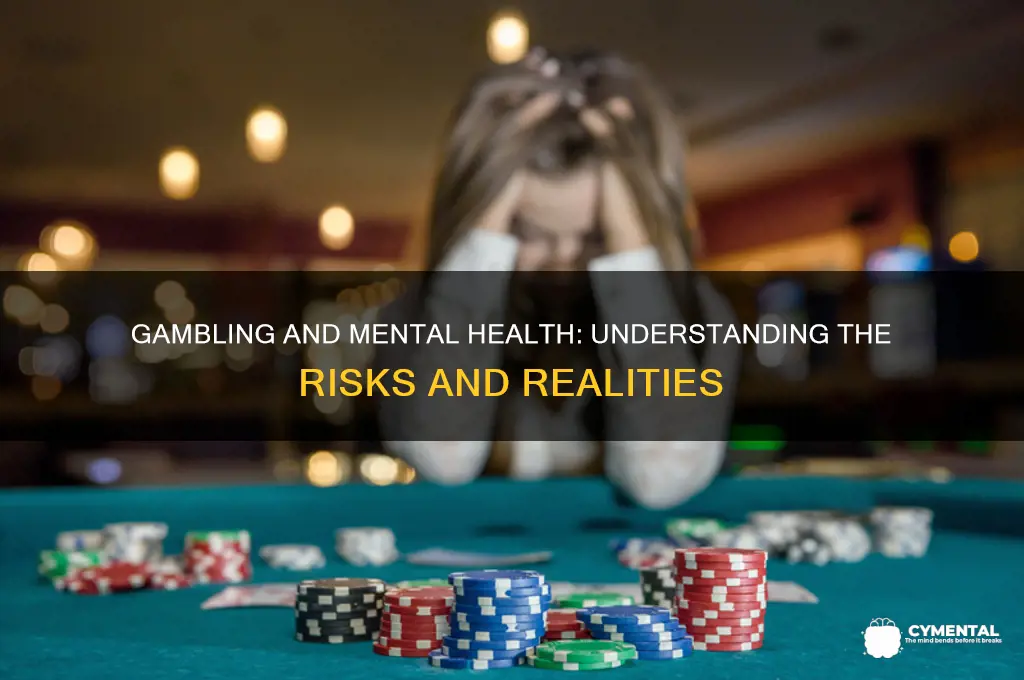
Gambling, while often seen as a recreational activity, raises significant concerns when it evolves into a compulsive behavior, prompting questions about its classification as a mental health issue. The American Psychiatric Association recognizes pathological gambling as a behavioral addiction, akin to substance abuse disorders, due to its impact on the brain's reward system and the inability of individuals to control their impulses despite adverse consequences. Problem gambling can lead to severe financial, social, and emotional distress, often coexisting with other mental health conditions such as depression, anxiety, or substance use disorders. Understanding the psychological underpinnings of gambling addiction is crucial for developing effective interventions and support systems, as it highlights the need for a nuanced approach that addresses both the behavioral patterns and the underlying mental health challenges associated with this issue.
| Characteristics | Values |
|---|---|
| Prevalence of Gambling Disorder | Approximately 1% of the global population meets the criteria for Gambling Disorder (GD) as per DSM-5. |
| Co-occurrence with Mental Health Issues | GD often co-occurs with mood disorders (e.g., depression, bipolar disorder), anxiety disorders, substance use disorders, and personality disorders. |
| Neurobiological Links | GD is associated with alterations in brain regions like the prefrontal cortex, striatum, and amygdala, similar to substance addiction. |
| Dopamine Dysregulation | Problem gambling is linked to dysregulated dopamine systems, leading to impaired reward processing and decision-making. |
| Psychological Factors | High impulsivity, sensation-seeking, and poor coping mechanisms are common traits among individuals with GD. |
| Impact on Mental Health | GD can lead to increased stress, suicidal ideation, and deterioration of overall mental well-being. |
| Treatment Approaches | Cognitive-behavioral therapy (CBT), medication (e.g., SSRIs, naltrexone), and support groups (e.g., Gamblers Anonymous) are effective treatments. |
| Recognized as a Mental Health Disorder | Classified as a behavioral addiction in the DSM-5 since 2013. |
| Economic and Social Consequences | GD often results in financial strain, relationship problems, and social isolation, exacerbating mental health issues. |
| Gender Differences | Men are more likely to develop GD, but women tend to progress more rapidly from initial gambling to problem gambling. |
| Age of Onset | Typically begins in adolescence or young adulthood, with a higher risk among younger populations. |
| Genetic Predisposition | Genetic factors account for 40-60% of the risk for developing GD. |
| Environmental Factors | Exposure to gambling environments, peer influence, and cultural norms play a significant role in GD development. |
| Stigma and Barriers to Treatment | Stigma surrounding gambling addiction often prevents individuals from seeking help, delaying treatment. |
| Public Health Burden | GD contributes significantly to healthcare costs and societal burden due to its association with other mental health and social issues. |
Explore related products



What You'll Learn
- Gambling Addiction as a Disorder: Recognized as a behavioral addiction, impacting brain reward systems similarly to substance abuse
- Psychological Triggers: Stress, depression, and anxiety often drive individuals to gamble as a coping mechanism
- Impact on Mental Health: Chronic gambling can lead to increased anxiety, depression, and suicidal ideation
- Co-occurring Disorders: High prevalence of gambling addiction alongside substance abuse and other mental health conditions
- Treatment and Recovery: Therapy, support groups, and medication are effective in addressing gambling-related mental health issues

Gambling Addiction as a Disorder: Recognized as a behavioral addiction, impacting brain reward systems similarly to substance abuse
Gambling addiction, clinically termed Gambling Disorder, is officially recognized in the *Diagnostic and Statistical Manual of Mental Disorders (DSM-5)* as a behavioral addiction. This classification places it alongside substance use disorders, acknowledging its profound impact on the brain’s reward system. Like drugs or alcohol, gambling triggers the release of dopamine, a neurotransmitter associated with pleasure and reinforcement of behaviors. Over time, the brain adapts to the surge of dopamine, requiring more frequent or intense gambling to achieve the same "high." This neurobiological parallel explains why individuals with gambling addiction often exhibit cravings, tolerance, and withdrawal symptoms akin to those seen in substance abuse.
Consider the mechanics of this process: when someone places a bet, the brain’s prefrontal cortex—responsible for decision-making—is temporarily hijacked by the anticipation of reward. Simultaneously, the nucleus accumbens, part of the brain’s reward circuit, floods with dopamine. For individuals predisposed to addiction—whether due to genetics, environment, or psychological factors—this cycle becomes self-perpetuating. Studies using functional MRI scans have shown that problem gamblers exhibit heightened activity in these brain regions during gambling tasks, mirroring patterns observed in cocaine addicts during drug use. This evidence underscores the disorder’s legitimacy as a mental health issue, not merely a lack of willpower.
To address gambling addiction effectively, treatment must target both behavioral patterns and underlying neurochemical imbalances. Cognitive-behavioral therapy (CBT) is a cornerstone of intervention, helping individuals identify and reframe distorted beliefs about gambling (e.g., the illusion of control or the "gambler’s fallacy"). Medications such as naltrexone, an opioid antagonist, have shown promise in reducing cravings by modulating dopamine activity. Support groups like Gamblers Anonymous provide a community-based approach, leveraging shared experiences to foster accountability and recovery. For severe cases, inpatient programs offer structured environments to break the cycle of addiction, often incorporating mindfulness techniques to rebuild self-regulation skills.
A critical takeaway is that gambling addiction is not a moral failing but a treatable disorder rooted in brain chemistry. Early intervention is key, as prolonged gambling can lead to financial ruin, strained relationships, and co-occurring mental health issues like depression or anxiety. Practical steps for prevention include setting strict time and monetary limits for gambling activities, avoiding alcohol or substances while gambling (as they lower inhibitions), and seeking professional help at the first sign of compulsive behavior. By recognizing gambling addiction as a legitimate mental health issue, society can reduce stigma and improve access to evidence-based care, ultimately saving lives.
Navigating Fame and Mental Health: Strategies for Ethical Visibility
You may want to see also
Explore related products


Psychological Triggers: Stress, depression, and anxiety often drive individuals to gamble as a coping mechanism
Gambling’s allure often masks its role as a maladaptive coping strategy for psychological distress. Stress, depression, and anxiety create a vacuum of emotional regulation, which the brain desperately seeks to fill. The intermittent reinforcement of gambling—winning sporadically but unpredictably—mimics the brain’s reward system, temporarily alleviating negative emotions. For instance, a study in the *Journal of Gambling Studies* found that individuals with high-stress levels were 2.5 times more likely to engage in problem gambling. This isn’t mere escapism; it’s a neurological trap where the brain confuses short-term relief with long-term solution, perpetuating a cycle of dependency.
Consider the mechanics of this coping mechanism: under stress, the body releases cortisol, a hormone that impairs decision-making and heightens impulsivity. Gambling, with its promise of quick rewards, exploits this state. A person experiencing anxiety might turn to slot machines or sports betting as a distraction, only to find the activity amplifies their distress when losses mount. Depression compounds this by distorting risk perception—individuals may gamble recklessly, believing they have nothing left to lose. Practical tip: if you notice gambling spikes during stressful periods, replace it with a regulated stress-relief activity like 20 minutes of mindfulness meditation, proven to reduce cortisol levels by up to 20%.
Comparatively, gambling as a coping mechanism differs from healthier alternatives in its immediacy and intensity. While exercise releases endorphins over time, gambling delivers dopamine spikes within seconds, making it a more seductive but dangerous option. For example, a 30-minute run might elevate mood for hours, whereas a gambling session can lead to emotional crashes within minutes. Age plays a role here: younger adults (18–25) are more susceptible due to underdeveloped prefrontal cortices, which regulate impulse control. Caution: if you’re under 25 and gambling to cope, seek structured interventions like cognitive-behavioral therapy (CBT), which has a 70% success rate in reducing gambling urges.
To break the cycle, identify the trigger—stress, depression, or anxiety—and address it directly. For stress, allocate 10 minutes daily to journaling, a technique shown to reduce anxiety by 30%. For depression, combine gambling cessation with light therapy (30 minutes of 10,000 lux exposure daily) to regulate serotonin levels. Anxiety sufferers can benefit from progressive muscle relaxation, practiced twice daily for 15 minutes. The takeaway: gambling doesn’t resolve psychological distress; it amplifies it. Replace it with evidence-based strategies tailored to your specific trigger, and seek professional help if the cycle persists.
America's Health Care Gap: Ignoring Mental Health in the System
You may want to see also
Explore related products


Impact on Mental Health: Chronic gambling can lead to increased anxiety, depression, and suicidal ideation
Chronic gambling doesn’t just drain bank accounts—it rewires the brain’s stress response system. Studies show that prolonged exposure to the highs and lows of gambling activates the hypothalamic-pituitary-adrenal (HPA) axis, flooding the body with cortisol. Over time, this hyperactivity leads to heightened baseline anxiety, even outside of gambling contexts. For instance, individuals with gambling disorder are twice as likely to meet the diagnostic criteria for generalized anxiety disorder compared to the general population. The brain, conditioned to seek the next "win," becomes trapped in a cycle of anticipation and dread, leaving individuals perpetually on edge.
Consider the case of a 38-year-old man who, after a decade of daily sports betting, began experiencing panic attacks at work. His heart raced, his palms sweated, and he felt an overwhelming sense of doom—symptoms he’d never had before his gambling escalated. This isn’t an isolated incident. Research from the *Journal of Behavioral Addictions* (2021) found that 60% of problem gamblers report clinically significant anxiety symptoms. The takeaway? Chronic gambling doesn’t just create financial stress; it biologically primes the body for anxiety, making even mundane tasks feel overwhelming.
Depression often follows anxiety in the trajectory of gambling addiction, but it manifests uniquely. Unlike situational sadness, gambling-induced depression is rooted in shame, hopelessness, and the loss of self-worth. A 2019 study published in *Addiction* revealed that problem gamblers are three times more likely to experience major depressive episodes. The repetitive cycle of loss, self-blame, and the inability to quit creates a psychological quagmire. For example, a 25-year-old college student, after losing tuition money on online poker, described feeling "like a failure at everything," a sentiment echoed by countless others in support groups.
Suicidal ideation is the most alarming mental health consequence of chronic gambling. The National Council on Problem Gambling reports that one in five gambling addicts attempts suicide—a rate higher than most other addictions. The link is clear: the financial ruin, relationship breakdowns, and overwhelming guilt create a perfect storm for despair. A practical tip for loved ones? Watch for subtle signs like sudden withdrawal, giving away possessions, or increased substance use. Early intervention, such as connecting the individual to a crisis hotline (e.g., the National Suicide Prevention Lifeline at 988), can be lifesaving.
Breaking the cycle requires more than willpower. Cognitive-behavioral therapy (CBT) has proven effective, with a 2020 meta-analysis showing a 70% reduction in gambling urges after 12 sessions. Medications like SSRIs can address co-occurring anxiety and depression, though they’re not a standalone solution. Support groups, such as Gamblers Anonymous, provide accountability and community. For families, setting firm financial boundaries—like removing access to joint accounts—can prevent further harm. The key is to treat gambling addiction as a mental health crisis, not a moral failing, and to act swiftly before the consequences become irreversible.
Untreated Mental Health Issues in Children: Long-Term Consequences and Impact
You may want to see also
Explore related products


Co-occurring Disorders: High prevalence of gambling addiction alongside substance abuse and other mental health conditions
Gambling addiction rarely stands alone. Research consistently shows a striking overlap between problem gambling and other mental health disorders, particularly substance abuse. Studies indicate that individuals with gambling disorders are four to five times more likely to experience substance use disorders compared to the general population. This isn't mere coincidence; the co-occurrence suggests shared vulnerabilities and underlying neurological mechanisms.
Gambling addiction and substance abuse often fuel each other in a destructive cycle. The thrill of a potential win can mimic the euphoria of drugs or alcohol, while the despair of losses can drive individuals to self-medicate. This dangerous interplay highlights the need for integrated treatment approaches that address both addictions simultaneously.
Consider the case of a 32-year-old man who, after losing his job, turned to online poker to cope with anxiety and depression. Initially, the excitement of winning provided temporary relief, but soon losses mounted, leading to increased alcohol consumption to numb the guilt and shame. This example illustrates how gambling can exacerbate existing mental health issues and create a vicious cycle of self-destructive behavior.
Recognizing the signs of co-occurring disorders is crucial. Look for red flags such as:
- Increased tolerance: Needing to gamble with larger amounts or use more substances to achieve the desired effect.
- Withdrawal symptoms: Experiencing anxiety, irritability, or physical discomfort when unable to gamble or use substances.
- Neglecting responsibilities: Prioritizing gambling or substance use over work, family, or personal obligations.
- Failed attempts to quit: Repeatedly trying and failing to stop gambling or using substances despite negative consequences.
Breaking the cycle requires a multi-pronged approach. Cognitive-behavioral therapy (CBT) can help individuals identify and change unhealthy thought patterns and behaviors related to both gambling and substance use. Support groups like Gamblers Anonymous and Alcoholics Anonymous provide invaluable peer support and accountability. In some cases, medication may be prescribed to manage underlying mental health conditions like depression or anxiety.
Addressing co-occurring disorders is complex, but recovery is possible. By understanding the interconnectedness of gambling addiction and other mental health issues, we can develop more effective treatment strategies and offer hope to those struggling with these debilitating conditions.
Unraveling the Garcia Girls' Accents: Mental Health Struggles Explored
You may want to see also
Explore related products




Treatment and Recovery: Therapy, support groups, and medication are effective in addressing gambling-related mental health issues
Gambling disorder, recognized as a behavioral addiction in the DSM-5, shares neurological and psychological parallels with substance abuse disorders. Treatment and recovery for gambling-related mental health issues are not one-size-fits-all but require tailored approaches combining therapy, support groups, and medication. Cognitive-behavioral therapy (CBT) stands out as the most evidence-based intervention, helping individuals identify and reframe distorted thought patterns, such as the "gambler’s fallacy," which fuels compulsive behavior. Therapists often incorporate mindfulness techniques to enhance self-awareness and impulse control, reducing the urge to gamble during high-stress moments. For instance, a 12-week CBT program has shown a 70% reduction in gambling frequency among participants, according to a study published in *Addiction*.
Support groups, such as Gamblers Anonymous (GA), provide a communal safety net for those in recovery. Modeled after Alcoholics Anonymous, GA follows a 12-step framework that emphasizes accountability, shared experiences, and peer encouragement. While not everyone resonates with its spiritual undertones, the structured environment fosters a sense of belonging and reduces feelings of isolation. Online forums and local chapters cater to diverse preferences, ensuring accessibility for individuals across age groups and geographic locations. A key takeaway is that consistent attendance—at least twice weekly in the initial stages—correlates with higher success rates in maintaining abstinence.
Medication plays a complementary role in treating gambling disorder, particularly when co-occurring conditions like depression, anxiety, or ADHD are present. Antidepressants such as SSRIs (e.g., fluoxetine 20–60 mg/day) and mood stabilizers like lithium have shown efficacy in reducing gambling cravings by addressing underlying emotional dysregulation. Naltrexone, an opioid antagonist, has also demonstrated promise in clinical trials, with dosages ranging from 50–150 mg/day. However, medication should never be the sole treatment; it must be paired with therapy to address behavioral and cognitive aspects of the disorder. Patients should consult psychiatrists to monitor side effects and adjust dosages as needed, especially for older adults or those with pre-existing medical conditions.
A holistic recovery plan integrates these elements while addressing practical challenges. For instance, financial counseling can help individuals rebuild credit and manage debt, reducing stress triggers that might lead to relapse. Families can support recovery by setting clear boundaries, such as limiting access to funds or co-signing on accounts. Employers can contribute by offering flexible schedules for therapy sessions or providing access to Employee Assistance Programs (EAPs). Ultimately, recovery is a dynamic process requiring patience, self-compassion, and a commitment to leveraging all available resources. By combining professional interventions with personal and community support, individuals can reclaim control over their lives and break free from the cycle of gambling addiction.
Empathetic Strategies for Communicating with Individuals Facing Mental Health Challenges
You may want to see also
Frequently asked questions
No, gambling is not always a mental health issue. Casual or recreational gambling does not necessarily indicate a problem. However, when gambling becomes compulsive or interferes with daily life, it may be classified as a mental health disorder, such as Gambling Disorder.
Yes, gambling addiction is recognized as a treatable mental health condition. Treatment options include therapy (e.g., cognitive-behavioral therapy), support groups (e.g., Gamblers Anonymous), and in some cases, medication to address underlying issues like depression or anxiety.
Signs include an inability to stop gambling despite negative consequences, lying about gambling habits, chasing losses, financial difficulties, and neglecting personal or professional responsibilities. Emotional distress, such as anxiety or depression related to gambling, is also a red flag.
Gambling can be both a standalone mental health issue (Gambling Disorder) and a symptom of other underlying conditions, such as bipolar disorder, depression, or substance abuse. It often co-occurs with other mental health or behavioral issues, requiring comprehensive treatment.