Ava Ramirez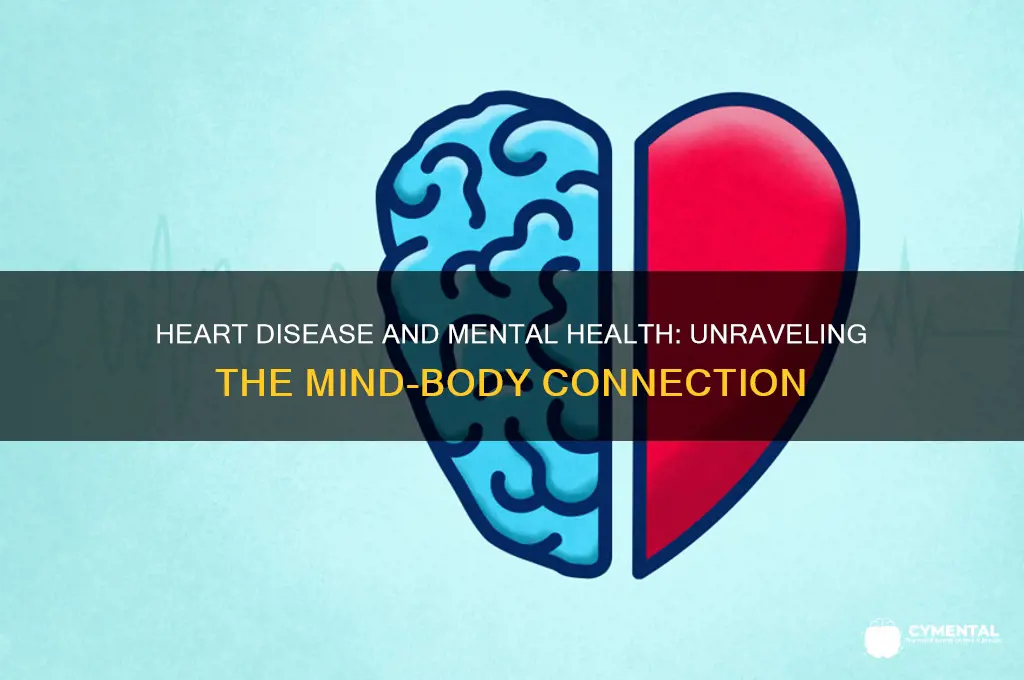
Heart disease, traditionally viewed as a physical condition stemming from factors like high blood pressure, cholesterol, and lifestyle choices, is increasingly being examined through the lens of mental health. Emerging research suggests a bidirectional relationship between heart disease and mental health issues such as depression, anxiety, and chronic stress. These psychological conditions can exacerbate cardiovascular risks by influencing behaviors like poor diet, physical inactivity, and smoking, while heart disease itself can lead to emotional distress and reduced quality of life. This interplay raises the question: Is heart disease not just a physical ailment but also a manifestation of underlying mental health challenges? Understanding this connection is crucial for developing holistic treatment approaches that address both the heart and the mind.
| Characteristics | Values |
|---|---|
| Direct Causation | Heart disease is primarily a physical condition caused by factors like atherosclerosis, hypertension, and lifestyle choices (e.g., smoking, poor diet). It is not classified as a mental health issue. |
| Psychological Impact | Heart disease can lead to mental health issues such as anxiety, depression, and stress due to the emotional burden of diagnosis and treatment. |
| Bidirectional Relationship | Mental health conditions (e.g., depression, chronic stress) can increase the risk of heart disease through mechanisms like inflammation, unhealthy behaviors, and reduced self-care. |
| Prevalence of Comorbidity | Studies show a high comorbidity rate between heart disease and mental health disorders. For example, approximately 20-30% of heart disease patients experience depression. |
| Shared Risk Factors | Both heart disease and mental health issues share common risk factors such as obesity, physical inactivity, and substance abuse. |
| Treatment Considerations | Integrated care approaches addressing both physical and mental health are recommended for better outcomes in heart disease patients. |
| Biological Link | Chronic stress and depression can lead to physiological changes (e.g., increased cortisol, inflammation) that contribute to heart disease development. |
| Public Perception | Heart disease is often perceived as purely physical, while mental health issues are seen as separate. However, the interplay between the two is increasingly recognized in medical research. |
| Preventive Measures | Addressing mental health as part of cardiovascular care can reduce the risk of heart disease progression and improve overall well-being. |
| Research Focus | Recent studies emphasize the importance of understanding the psychosocial aspects of heart disease to develop comprehensive treatment strategies. |
Explore related products

$11.68 $22


What You'll Learn
- Stress and Heart Health: Chronic stress impacts cardiovascular health, increasing heart disease risk significantly
- Depression and Heart Disease: Depression is linked to higher heart disease rates and worse outcomes
- Anxiety’s Role: Anxiety disorders may contribute to heart disease through physiological stress responses
- Psychological Trauma: Childhood trauma and PTSD are associated with increased heart disease risk
- Mind-Body Connection: Emotional well-being directly influences heart health, highlighting mental health’s role in prevention

Stress and Heart Health: Chronic stress impacts cardiovascular health, increasing heart disease risk significantly
Chronic stress doesn’t just fray your nerves—it systematically undermines your cardiovascular health. When the body perceives stress, it triggers the release of adrenaline and cortisol, hormones that prepare you for "fight or flight." In small doses, this response is protective, but chronic activation leads to sustained high blood pressure, inflammation, and arterial damage. Over time, these factors significantly elevate the risk of heart disease, making stress a silent but potent adversary to heart health.
Consider this: a 2017 study published in *The Lancet* found that individuals with high-stress levels were 27% more likely to develop coronary heart disease compared to those with lower stress. The mechanism? Chronic stress promotes unhealthy behaviors—overeating, smoking, and physical inactivity—while directly harming the endothelium, the lining of blood vessels. This dual assault accelerates atherosclerosis, the buildup of plaque in arteries, which restricts blood flow and increases the likelihood of heart attacks and strokes.
To mitigate these risks, practical stress management is essential. Start with daily physical activity, even 30 minutes of moderate exercise like brisk walking or cycling. Incorporate mindfulness practices such as meditation or deep breathing exercises for 10–15 minutes daily to lower cortisol levels. Prioritize sleep—aim for 7–9 hours per night—as poor sleep exacerbates stress and cardiovascular strain. Additionally, limit caffeine intake, especially after midday, as it can amplify stress responses.
For those in high-stress environments, structural changes are critical. Set boundaries at work, delegate tasks, and schedule regular breaks to prevent burnout. Social support is equally vital; maintain connections with friends and family, as isolation compounds stress. If self-management falls short, seek professional help—cognitive-behavioral therapy (CBT) has proven effective in reducing stress-related cardiovascular risks.
The takeaway is clear: chronic stress is not merely a mental burden but a tangible threat to heart health. By addressing it proactively through lifestyle adjustments and targeted interventions, you can protect your cardiovascular system and reduce the risk of heart disease. Ignoring stress is not an option—your heart depends on your actions.
Supporting Your Adult Daughter Through Undiagnosed Mental Health Challenges
You may want to see also
Explore related products



Depression and Heart Disease: Depression is linked to higher heart disease rates and worse outcomes
Depression doesn't just weigh on the mind; it casts a long shadow over the heart. Extensive research reveals a striking correlation: individuals with depression face a 40% higher risk of developing heart disease compared to those without. This isn't merely a coincidence. The link is bidirectional, meaning heart disease can also trigger depression, creating a vicious cycle. Understanding this connection is crucial for anyone concerned about their cardiovascular health.
Consider the biological mechanisms at play. Depression often leads to chronic inflammation, a key driver of atherosclerosis, the narrowing of arteries that precedes heart attacks. Additionally, depressed individuals are more likely to engage in behaviors detrimental to heart health, such as smoking, poor diet, and physical inactivity. Even when controlling for lifestyle factors, depression remains an independent risk factor. For instance, a 2014 study in *JAMA Psychiatry* found that depressed patients had a 64% increased risk of coronary artery disease, regardless of smoking or obesity status. This underscores the need for holistic treatment approaches that address both mental and physical health.
Practical steps can mitigate this risk. For adults over 40, combining antidepressant therapy with regular cardiovascular screenings is essential. Selective serotonin reuptake inhibitors (SSRIs), commonly prescribed for depression, have been shown to improve mood while also reducing inflammation markers like C-reactive protein. However, caution is warranted: some antidepressants may elevate blood pressure or interact with heart medications. Patients should consult their healthcare provider to tailor treatment plans. Incorporating 150 minutes of moderate exercise weekly, such as brisk walking or swimming, can alleviate depressive symptoms while strengthening the heart.
The societal implications are profound. Depression affects over 280 million people globally, yet its cardiovascular consequences remain underrecognized. Healthcare systems must integrate mental health screenings into routine cardiac care. For example, the American Heart Association now recommends depression assessments for patients with acute coronary syndrome. Employers can also play a role by offering wellness programs that address stress and mental health, potentially reducing absenteeism and healthcare costs.
In conclusion, the link between depression and heart disease demands urgent attention. It’s not just about treating symptoms but addressing root causes. By acknowledging this connection, individuals and healthcare providers can adopt proactive strategies to safeguard both mental and cardiac well-being. After all, a healthy heart begins with a healthy mind.
Supporting Employees: Effective Performance Management for Mental Health Challenges
You may want to see also
Explore related products


$11.34 $23.99


Anxiety’s Role: Anxiety disorders may contribute to heart disease through physiological stress responses
Anxiety disorders affect over 40 million adults in the United States alone, making them the most common mental health issue. While often viewed as purely psychological, anxiety’s physiological effects are profound. Chronic anxiety triggers the body’s stress response, flooding the system with stress hormones like cortisol and adrenaline. Over time, this persistent activation can lead to inflammation, high blood pressure, and irregular heart rhythms—all risk factors for heart disease. For instance, studies show that individuals with generalized anxiety disorder (GAD) are 20% more likely to develop coronary artery disease compared to those without anxiety.
Consider the mechanism: when anxiety spikes, the heart rate accelerates, and blood vessels constrict to prepare the body for a perceived threat. This "fight or flight" response is adaptive in the short term but becomes harmful when chronic. Prolonged vasoconstriction increases blood pressure, straining the heart muscle. Similarly, elevated cortisol levels can lead to plaque buildup in arteries, a key driver of atherosclerosis. Even subclinical anxiety—levels not severe enough for a diagnosis—has been linked to a 10% increase in cardiovascular events, according to a 2020 study in the *Journal of the American Heart Association*.
Practical steps can mitigate these risks. For those with anxiety, incorporating stress-reduction techniques is essential. Mindfulness meditation, practiced for 20 minutes daily, has been shown to lower cortisol levels by 15%. Regular aerobic exercise, such as 30 minutes of brisk walking five times a week, reduces both anxiety symptoms and blood pressure. Cognitive-behavioral therapy (CBT) is another evidence-based tool, with studies demonstrating a 50% reduction in anxiety symptoms after 12–16 sessions. Pairing these strategies with heart-healthy habits—like a Mediterranean diet and adequate sleep—creates a synergistic effect, addressing both mental and cardiovascular health.
However, caution is warranted. While lifestyle changes are powerful, they may not suffice for severe anxiety disorders. In such cases, medication like selective serotonin reuptake inhibitors (SSRIs) can be necessary, though their cardiovascular side effects (e.g., slight blood pressure elevation) should be monitored. Additionally, over-reliance on self-management without professional guidance can delay critical treatment. For example, untreated panic disorder increases the risk of arrhythmias, emphasizing the need for integrated care that addresses both mental and physical health.
In conclusion, anxiety’s role in heart disease is not merely theoretical—it’s a tangible, measurable link. By understanding the physiological pathways and implementing targeted interventions, individuals can disrupt this cycle. The takeaway is clear: treating anxiety is not just about mental well-being; it’s a vital component of cardiovascular prevention. Whether through mindfulness, therapy, or medication, addressing anxiety is a proactive step toward a healthier heart.
Supporting Employee Mental Health: Strategies for Compassionate Workplace Management
You may want to see also
Explore related products


Psychological Trauma: Childhood trauma and PTSD are associated with increased heart disease risk
Childhood trauma casts a long shadow, its effects rippling far beyond the initial experience. Research increasingly reveals a startling connection: individuals who endured trauma during their formative years face a significantly higher risk of developing heart disease later in life. This isn't merely a correlation; studies suggest a causal link, with trauma's impact on the body's stress response system playing a key role.
Imagine a child constantly living in "fight or flight" mode due to abuse, neglect, or witnessing violence. Their bodies, flooded with stress hormones like cortisol, experience chronic inflammation and wear and tear on vital organs, including the heart. This prolonged stress response can lead to high blood pressure, unhealthy cholesterol levels, and even changes in heart rhythm, all contributing to a heightened vulnerability to cardiovascular problems.
Post-Traumatic Stress Disorder (PTSD), a common consequence of childhood trauma, further exacerbates this risk. The intrusive memories, flashbacks, and hypervigilance characteristic of PTSD keep the body in a constant state of alarm, perpetuating the damaging effects of chronic stress. Studies show that individuals with PTSD are more likely to smoke, engage in unhealthy eating habits, and lead sedentary lifestyles, all of which are independent risk factors for heart disease. This creates a vicious cycle, where the psychological scars of trauma manifest as physical ailments, further compounding the individual's suffering.
Recognizing this connection is crucial for both prevention and treatment. Healthcare professionals need to be aware of the potential cardiovascular risks associated with childhood trauma and PTSD, incorporating trauma-informed care into their practice. This may involve screening for trauma history, providing access to mental health services, and encouraging lifestyle modifications that promote heart health, such as regular exercise, healthy eating, and stress management techniques like mindfulness or yoga.
Breaking the cycle of trauma and its impact on heart health requires a multi-faceted approach. Addressing the root causes of trauma through prevention programs and early intervention is essential. For those already affected, a combination of evidence-based therapies for PTSD, such as cognitive-behavioral therapy and eye movement desensitization and reprocessing (EMDR), alongside cardiovascular risk management strategies, offers the best hope for healing both the mind and the heart. By acknowledging the profound connection between psychological trauma and heart disease, we can move towards a more holistic approach to healthcare, one that recognizes the intricate interplay between our emotional and physical well-being.
Recognizing Mental Health Issues: Essential Employee Training Strategies
You may want to see also
Explore related products


Mind-Body Connection: Emotional well-being directly influences heart health, highlighting mental health’s role in prevention
The intricate dance between our minds and bodies is nowhere more evident than in the relationship between emotional well-being and heart health. Research consistently shows that chronic stress, anxiety, and depression can significantly increase the risk of cardiovascular diseases. For instance, prolonged stress triggers the release of cortisol, a hormone that, in excess, can lead to high blood pressure, inflammation, and arterial damage—all precursors to heart disease. This biological link underscores the importance of addressing mental health as a critical component of heart disease prevention.
Consider this: individuals with untreated depression are 64% more likely to develop coronary artery disease. Similarly, those with high levels of anxiety face a 48% increased risk of heart attacks. These statistics are not mere correlations but reflect the tangible impact of emotional distress on physical health. Practical steps to mitigate this risk include incorporating stress-reduction techniques such as mindfulness meditation, which has been shown to lower blood pressure by an average of 5 mmHg—a reduction comparable to the effects of some medications. Even 10 minutes of daily meditation can yield measurable benefits, making it an accessible tool for improving both mental and cardiac health.
From a comparative perspective, societies that prioritize emotional well-being often report lower rates of heart disease. For example, cultures emphasizing social connection and emotional expression, such as those in the Mediterranean, tend to have fewer cardiovascular issues. This contrasts sharply with high-stress, individualistic societies where heart disease remains a leading cause of death. The takeaway? Cultivating emotional resilience isn’t just a luxury—it’s a necessity for heart health. Start by building a support network, whether through friendships, therapy, or community groups, as social isolation can be as harmful to the heart as smoking.
For actionable prevention, integrate lifestyle changes that target both mental and physical health. Regular physical activity, such as 150 minutes of moderate exercise weekly, not only strengthens the heart but also reduces symptoms of anxiety and depression by up to 26%. Diet plays a role too; foods rich in omega-3 fatty acids, like salmon and walnuts, combat inflammation and support brain health. Additionally, prioritize sleep—adults under 65 should aim for 7–9 hours nightly, as poor sleep is linked to both mental health disorders and hypertension. These steps, when combined, create a holistic approach to safeguarding the heart through the mind.
Finally, awareness and early intervention are key. If you notice persistent feelings of sadness, overwhelming stress, or physical symptoms like chest pain or palpitations, consult a healthcare provider. Mental health screenings should be as routine as cholesterol checks, especially for individuals with a family history of heart disease. By acknowledging the mind-body connection, we shift from reactive treatment to proactive prevention, ensuring that emotional well-being becomes a cornerstone of cardiovascular care.
Empathetic Strategies for Communicating with Individuals Facing Mental Health Challenges
You may want to see also
Frequently asked questions
Heart disease is primarily a physical condition affecting the heart and blood vessels, but it has significant connections to mental health. Stress, anxiety, and depression can increase the risk of heart disease and worsen its outcomes.
While mental health disorders like depression and anxiety do not directly cause heart disease, they can contribute to behaviors (e.g., poor diet, lack of exercise, smoking) and physiological changes (e.g., increased inflammation, elevated stress hormones) that raise the risk of heart disease.
Yes, living with heart disease can lead to mental health challenges such as anxiety, depression, and stress due to the physical limitations, fear of recurrence, and lifestyle changes associated with the condition.
Yes, addressing mental health issues through therapy, medication, or lifestyle changes can improve heart disease outcomes by reducing stress, promoting healthier behaviors, and enhancing overall well-being.