Lucas Bennett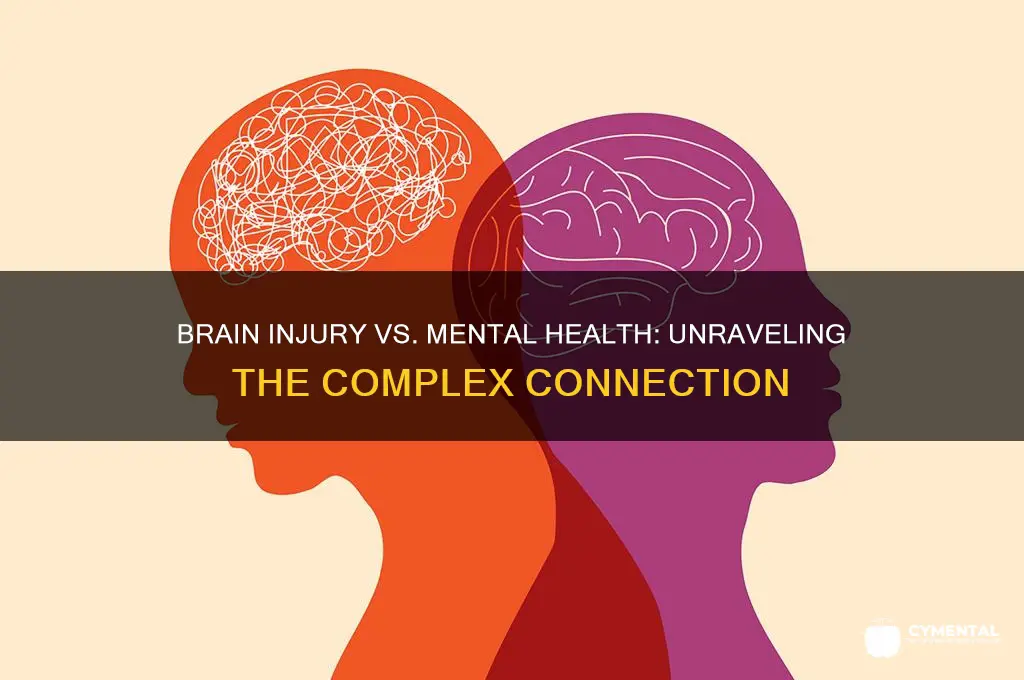
Traumatic brain injury (TBI) and mental health issues are often intertwined, yet they represent distinct yet overlapping challenges. While TBI refers to physical damage to the brain caused by external forces, such as a blow or jolt to the head, mental health issues encompass a broad range of emotional, psychological, and behavioral disorders. The relationship between the two is complex: TBI can lead to or exacerbate mental health problems, including depression, anxiety, and post-traumatic stress disorder (PTSD), due to the brain's altered structure and function. Conversely, pre-existing mental health conditions may influence an individual's recovery from TBI. Understanding this interplay is crucial for accurate diagnosis, effective treatment, and improved outcomes for those affected by both conditions.
Explore related products

$11.59 $16.95


What You'll Learn

Traumatic Brain Injury (TBI) vs. Mental Health Disorders
Traumatic Brain Injury (TBI) and mental health disorders often share overlapping symptoms, making diagnosis and treatment complex. For instance, both conditions can manifest as mood swings, memory issues, and difficulty concentrating. However, their origins and treatment approaches differ significantly. TBI results from external physical trauma, such as a blow to the head, while mental health disorders arise from a combination of genetic, environmental, and psychological factors. Recognizing these distinctions is crucial for effective intervention.
Consider a 35-year-old athlete who experiences persistent headaches, irritability, and memory lapses after a concussion. These symptoms might mimic depression or anxiety, but their sudden onset post-injury suggests TBI. In contrast, a teenager with a family history of bipolar disorder exhibiting similar symptoms would likely require a mental health evaluation. Key differentiators include the presence of a precipitating event (e.g., a fall or accident) and the timeline of symptom onset. For TBI, symptoms typically emerge immediately or within days of the injury, whereas mental health disorders often develop gradually or episodically.
Diagnosing TBI involves neuroimaging (CT or MRI scans) and cognitive assessments to evaluate brain function. Mental health disorders, however, rely on psychological evaluations, patient history, and sometimes genetic testing. Treatment for TBI may include physical therapy, speech therapy, and medications like stimulants (e.g., methylphenidate, 10–60 mg/day) to improve focus. Mental health disorders often require psychotherapy, pharmacotherapy (e.g., SSRIs for depression), or lifestyle modifications. Misdiagnosis can lead to inappropriate treatment, such as prescribing antidepressants for TBI-related mood changes, which may offer limited benefit.
A practical tip for caregivers: maintain a detailed symptom journal noting triggers, duration, and severity. For suspected TBI, include information about the injury (e.g., date, mechanism). For mental health concerns, track mood patterns over weeks or months. This documentation aids healthcare providers in distinguishing between the two conditions. Additionally, collaboration between neurologists and psychiatrists can ensure a comprehensive approach, especially in cases where TBI and mental health issues coexist.
In conclusion, while TBI and mental health disorders may present similarly, their underlying causes and management strategies differ. Accurate diagnosis hinges on understanding the context of symptoms and employing appropriate diagnostic tools. By addressing these conditions with specificity, individuals can receive tailored treatments that improve outcomes and quality of life.
Resigning with Compassion: Addressing Mental Health in Your Resignation Letter
You may want to see also
Explore related products


Symptoms Overlap: Anxiety, Depression, and Brain Injury
Brain injuries, whether traumatic (TBI) or acquired, often blur the lines between physical and mental health. Symptoms like irritability, sleep disturbances, and difficulty concentrating mirror those of anxiety and depression so closely that even seasoned clinicians can misdiagnose. This overlap complicates treatment, as addressing only the mental health aspect may neglect the underlying neurological cause, while focusing solely on the injury might overlook emotional distress.
Consider a 32-year-old athlete who sustains a concussion during a game. Weeks later, they report persistent headaches, fatigue, and mood swings. A primary care physician, unaware of the concussion history, might prescribe an SSRI for suspected depression. While the medication could alleviate some symptoms, it wouldn’t address the post-concussion syndrome driving their issues. Conversely, a neurologist might recommend cognitive rest and physical therapy, failing to recognize the emerging anxiety disorder triggered by the injury. This scenario underscores the need for an integrated approach that considers both neurological and psychological factors.
The overlap becomes even more pronounced in chronic cases. For instance, individuals with moderate to severe TBI often experience long-term cognitive deficits, such as memory loss and executive dysfunction, which can lead to frustration and feelings of inadequacy. These emotional responses frequently evolve into clinical depression or generalized anxiety disorder. A study published in *JAMA Neurology* found that 50% of TBI patients develop depressive symptoms within the first year post-injury, compared to 10% in the general population. Similarly, anxiety disorders are three times more prevalent in TBI survivors.
To navigate this complexity, healthcare providers should adopt a biopsychosocial model. Start with a thorough history, including details of the injury, pre-existing mental health conditions, and current symptoms. Neuropsychological testing can differentiate between injury-related deficits and mental health issues. For example, while both depression and TBI can cause concentration problems, the latter often involves specific cognitive impairments, such as slowed processing speed or difficulty multitasking, which can be quantified through tests like the Trail Making Test or Digit Span.
Practical tips for patients and caregivers include maintaining a symptom journal to track patterns, ensuring consistent sleep hygiene, and engaging in mild aerobic exercise, which has been shown to improve mood and cognitive function post-TBI. For mental health, mindfulness-based stress reduction (MBSR) programs tailored for brain injury survivors can be particularly effective. Medication management requires caution; for instance, benzodiazepines, commonly used for anxiety, may exacerbate cognitive impairments in TBI patients. Instead, selective serotonin reuptake inhibitors (SSRIs) like sertraline (25–50 mg/day) are often better tolerated and have neuroprotective properties.
Ultimately, recognizing the symptom overlap between brain injury and mental health issues demands a nuanced, interdisciplinary approach. Misdiagnosis can delay recovery, while accurate assessment and targeted interventions can significantly improve outcomes. By bridging the gap between neurology and psychiatry, clinicians can provide holistic care that addresses both the brain’s physical trauma and its emotional aftermath.
Mastering Mental Health: Effective Strategies to Manage and Thrive
You may want to see also
Explore related products


Neuropsychological Impact of Brain Injuries
Brain injuries, whether traumatic (TBI) or acquired (ABI), disrupt the intricate network of the brain, leading to profound neuropsychological consequences. These injuries can alter cognitive functions, emotional regulation, and behavioral patterns, often in ways that are subtle yet deeply impactful. For instance, a mild TBI, commonly known as a concussion, can impair attention and memory, while severe injuries may result in long-term deficits in executive functioning, such as decision-making and problem-solving. Understanding these impacts is crucial for tailoring effective rehabilitation strategies and improving quality of life for survivors.
Consider the case of a 35-year-old athlete who sustains a concussion during a game. Initially, they may experience headaches and dizziness, but weeks later, they struggle with concentration at work and become irritable with family members. This scenario illustrates how brain injuries can manifest as both immediate and delayed neuropsychological symptoms. Research shows that even mild TBIs can lead to structural changes in the brain, such as axonal injury or microhemorrhages, which correlate with cognitive and emotional difficulties. Early intervention, including cognitive rest and gradual return to activity, is essential to mitigate these effects.
From a comparative perspective, the neuropsychological impact of brain injuries differs significantly across age groups. Children and adolescents, whose brains are still developing, may face challenges in learning and social adaptation post-injury. For example, a child with a TBI might struggle with math or reading comprehension, requiring specialized educational support. In contrast, older adults are more likely to experience exacerbated cognitive decline, particularly in memory and processing speed, which can complicate existing conditions like dementia. Tailoring rehabilitation to age-specific needs is vital for optimal recovery.
Persuasively, it’s critical to recognize that neuropsychological assessments are not one-size-fits-all. Standardized tests like the Wechsler Adult Intelligence Scale (WAIS) or the Trail Making Test can identify deficits, but they must be complemented by personalized evaluations. For instance, a patient with frontal lobe damage may perform well on memory tests but struggle with real-world tasks like managing finances. Clinicians should incorporate functional assessments and patient-reported outcomes to capture the full spectrum of challenges. This holistic approach ensures that interventions address both measurable deficits and subjective experiences.
Practically, caregivers and survivors can implement strategies to manage neuropsychological symptoms. For memory impairments, using external aids like calendars or smartphone reminders can be effective. Emotional regulation can be supported through mindfulness techniques or therapy, such as cognitive-behavioral therapy (CBT). Physical exercise, particularly aerobic activities, has been shown to enhance cognitive function post-injury, with studies recommending at least 150 minutes of moderate exercise weekly. Additionally, creating a structured daily routine can reduce cognitive load and improve focus. These actionable steps empower individuals to navigate the complexities of brain injury recovery.
Compassionate Care: Supporting Seniors with Mental Health Challenges
You may want to see also
Explore related products


Post-Concussion Syndrome and Mental Health
Post-Concussion Syndrome (PCS) often blurs the line between brain injury and mental health, as its symptoms—headaches, fatigue, irritability, and cognitive difficulties—mimic those of anxiety, depression, and PTSD. This overlap complicates diagnosis and treatment, leaving patients and clinicians grappling with whether the root cause is neurological damage or psychological distress. For instance, a 35-year-old athlete with persistent mood swings after a concussion might be misdiagnosed with bipolar disorder, when in fact, their symptoms stem from disrupted brain function. Recognizing this interplay is crucial for targeted intervention.
Consider the case of a high school student who, after a sports-related concussion, develops insomnia and difficulty concentrating. Their pediatrician prescribes cognitive-behavioral therapy (CBT) for anxiety, but symptoms persist. A neurologist later identifies PCS and recommends a combination of rest, gradual cognitive activity, and physical therapy. This example highlights the need for a multidisciplinary approach, integrating mental health strategies with neurological care. Practical tips include maintaining a consistent sleep schedule, avoiding screens before bed, and using mindfulness techniques to manage stress.
Analytically, PCS shares neurobiological pathways with mental health disorders. Research shows that concussions can alter brain structures like the prefrontal cortex and amygdala, regions also implicated in depression and anxiety. A 2021 study in *JAMA Neurology* found that 30% of PCS patients exhibited elevated cortisol levels, a marker of chronic stress. This suggests that PCS may exacerbate or unmask underlying mental health vulnerabilities. Clinicians should screen for both conditions, using tools like the Patient Health Questionnaire-9 (PHQ-9) alongside neurological assessments.
Persuasively, addressing PCS without considering mental health is akin to treating a wound without cleaning it first—ineffective and potentially harmful. For adults over 40, PCS symptoms often worsen due to age-related brain changes, making early intervention critical. A tailored treatment plan might include low-dose antidepressants (e.g., 20 mg of fluoxetine daily) for mood regulation, paired with vestibular therapy to address dizziness. Employers and educators should also accommodate PCS patients by reducing cognitive load and allowing flexible schedules, fostering recovery without added stress.
Comparatively, while PCS and mental health issues share symptoms, their trajectories differ. Mental health disorders often have chronic, relapsing courses, whereas PCS symptoms typically resolve within 6–12 months with proper management. However, untreated PCS can lead to long-term mental health complications, such as chronic depression or anxiety. A 2019 longitudinal study in *Brain Injury* found that 20% of PCS patients developed persistent mental health issues if not treated within the first three months post-injury. This underscores the importance of early, holistic care.
In conclusion, PCS is not merely a brain injury or a mental health issue—it’s a complex interplay of both. Effective management requires recognizing this duality, employing evidence-based treatments, and fostering collaboration between neurologists, psychologists, and primary care providers. For patients, understanding this connection empowers them to advocate for comprehensive care, ensuring both their brain and mind heal in tandem.
Generation Z's Mental Health Crisis: Rising Reports and Root Causes
You may want to see also
Explore related products


Treatment Approaches: Integrated Care for Dual Diagnosis
Individuals with brain injuries often face a complex web of challenges, particularly when co-occurring mental health issues are present. This dual diagnosis demands a nuanced approach, moving beyond siloed treatments to integrated care models.
Integrated care recognizes the interconnectedness of brain injury and mental health, addressing both simultaneously for optimal outcomes.
Imagine a person with a traumatic brain injury experiencing persistent headaches, memory lapses, and newfound anxiety. Traditional treatment might address the physical symptoms separately from the anxiety, potentially overlooking the interplay between the two. Integrated care, however, would view these as interconnected manifestations of the injury, tailoring interventions to address both the neurological and psychological aspects.
This approach involves a multidisciplinary team, including neurologists, psychiatrists, psychologists, occupational therapists, and social workers. Collaboration is key, with regular communication and shared treatment plans ensuring a cohesive approach. For instance, a psychiatrist might prescribe medication to manage anxiety while working closely with an occupational therapist to develop coping strategies that account for cognitive limitations resulting from the brain injury.
Evidence-based practices form the cornerstone of integrated care. Cognitive-behavioral therapy (CBT), adapted for individuals with brain injuries, can help manage anxiety, depression, and adjust to cognitive changes. Mindfulness-based interventions can improve emotional regulation and reduce stress, while vocational rehabilitation programs address employment challenges often faced by this population.
Implementing integrated care requires careful consideration. Assessment tools specifically designed for individuals with brain injuries are crucial for accurate diagnosis and treatment planning. Dosage and medication management require close monitoring, as individuals with brain injuries may metabolize medications differently. Family involvement is vital, providing support and ensuring continuity of care outside clinical settings.
Technology can play a significant role, offering accessible tools for symptom tracking, cognitive exercises, and virtual therapy sessions. Mobile apps, for example, can help individuals monitor mood changes, practice relaxation techniques, and connect with support groups.
While integrated care presents a promising approach, challenges remain. Access to specialized services can be limited, particularly in rural areas. Insurance coverage for multidisciplinary care may be inadequate. Stigma surrounding both brain injury and mental health can deter individuals from seeking help. Addressing these barriers requires systemic changes, increased funding, and public awareness campaigns.
Ultimately, integrated care for dual diagnosis offers a more holistic and effective approach to supporting individuals with brain injuries and co-occurring mental health issues. By recognizing the intricate relationship between these conditions and providing coordinated, evidence-based interventions, we can improve quality of life, enhance functional abilities, and foster long-term recovery.
Gambling and Mental Health: Understanding the Risks and Realities
You may want to see also
Frequently asked questions
A brain injury is a physical condition caused by trauma to the brain, but it can lead to mental health issues such as depression, anxiety, or mood disorders due to changes in brain function.
Yes, depending on the severity and location of the injury, a brain injury can result in long-term or permanent mental health challenges, including personality changes, cognitive deficits, and emotional instability.
Brain injuries often require medical interventions like surgery, rehabilitation, and physical therapy, while mental health issues are typically addressed through therapy, medication, and lifestyle changes. However, both may overlap in treatment plans.
Yes, symptoms like memory problems, mood swings, or cognitive difficulties can resemble those of a brain injury, making it important to undergo a thorough medical evaluation to determine the underlying cause.