Ava Ramirez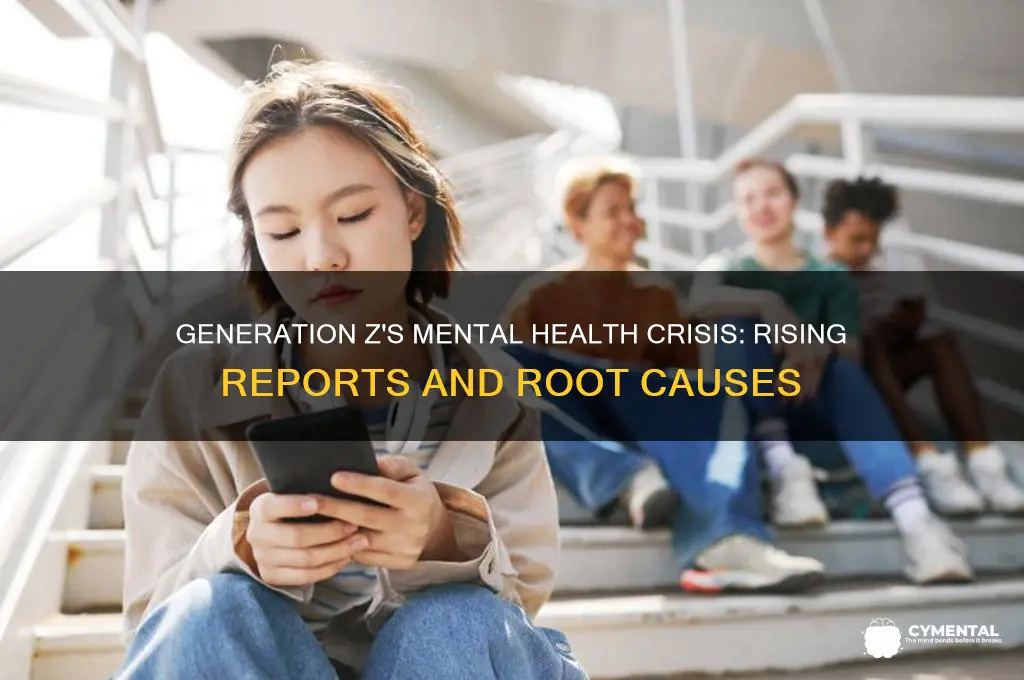
Generation Z, typically defined as those born between the mid-1990s and early 2010s, has emerged as a cohort increasingly vocal about mental health challenges. Studies and surveys consistently indicate that this generation is more likely to report mental health issues compared to previous generations, such as Millennials or Gen X. Factors contributing to this trend include heightened exposure to social media, economic instability, academic pressures, and the global impact of events like the COVID-19 pandemic. Additionally, Generation Z’s greater awareness and willingness to discuss mental health, coupled with reduced stigma, likely play a role in their higher reporting rates. This shift raises important questions about the unique stressors facing this generation and the need for tailored support systems to address their mental well-being.
| Characteristics | Values |
|---|---|
| Likelihood of Reporting Mental Health Issues | Generation Z (born 1997-2012) is more likely to report mental health issues compared to older generations. |
| Prevalence of Mental Health Disorders | Studies show higher rates of anxiety, depression, and loneliness among Gen Z. |
| Factors Contributing to Mental Health Issues | Increased academic pressure, social media usage, economic uncertainty, and global crises (e.g., COVID-19, climate change). |
| Access to Mental Health Resources | Gen Z is more open to seeking help and utilizing mental health services, but barriers like cost and stigma persist. |
| Impact of Technology | Social media and digital communication contribute to both mental health challenges (e.g., cyberbullying) and support (e.g., online communities). |
| Comparative Data with Millennials | Gen Z reports higher levels of psychological distress than Millennials (born 1981-1996). |
| Global Trends | Similar trends of increased mental health issues among Gen Z are observed across multiple countries. |
| Awareness and Stigma | Gen Z demonstrates greater awareness of mental health issues and reduced stigma compared to previous generations. |
| Self-Reporting Behavior | Gen Z is more likely to self-report mental health struggles, possibly due to increased awareness and reduced stigma. |
| Long-Term Implications | The mental health challenges faced by Gen Z may have significant long-term impacts on their overall well-being and societal contributions. |
Explore related products


What You'll Learn
- Social Media Impact: Excessive usage linked to anxiety, depression, and low self-esteem among Gen Z
- Academic Pressure: High expectations and competition contribute to stress and burnout in youth
- Economic Insecurity: Financial instability and job uncertainty exacerbate mental health challenges for Gen Z
- Pandemic Effects: COVID-19 lockdowns and isolation increased loneliness and mental health issues
- Stigma Reduction: Greater awareness and openness encourage Gen Z to seek help and report issues

Social Media Impact: Excessive usage linked to anxiety, depression, and low self-esteem among Gen Z
Excessive social media use among Gen Z, defined as those born between 1997 and 2012, has been consistently linked to heightened levels of anxiety, depression, and low self-esteem. Studies show that individuals spending more than three hours daily on platforms like Instagram, TikTok, and Snapchat are 60% more likely to report mental health issues compared to those with limited usage. This correlation isn’t coincidental; the constant exposure to curated, idealized versions of others’ lives fosters unhealthy comparisons, while the addictive nature of scrolling disrupts sleep patterns and reduces face-to-face interactions, both critical for emotional well-being.
Consider the mechanism at play: social media algorithms prioritize content that triggers emotional reactions, often amplifying negative sentiments. For instance, a teenager scrolling through fitness influencers might feel inadequate about their own body, while another bombarded with viral academic achievements could internalize feelings of failure. Over time, these micro-moments of self-doubt accumulate, eroding self-esteem. A 2021 study published in *JAMA Pediatrics* found that adolescents who reduced their social media use to 30 minutes per day saw significant improvements in mood and self-perception within just three weeks, underscoring the direct impact of usage habits on mental health.
To mitigate these risks, practical steps can be taken. First, implement a "digital sunset" by turning off social media notifications after 8 PM to improve sleep quality. Second, use app trackers to monitor daily screen time, aiming to stay under two hours. Third, curate feeds intentionally by unfollowing accounts that trigger negative emotions and replacing them with content that inspires or educates. For parents, setting family rules around device-free meals and encouraging offline hobbies can create healthier boundaries. These strategies aren’t about eliminating social media but recalibrating its role in daily life.
Comparatively, while older generations also experience social media’s downsides, Gen Z’s vulnerability is heightened due to their developmental stage. Adolescence is a period of identity formation and peer validation, making them more susceptible to external influences. Unlike Millennials, who adopted social media in adulthood, Gen Z has never known a world without it, making their usage more habitual and less mindful. This generational difference highlights the need for age-specific interventions, such as integrating digital literacy into school curricula to teach critical thinking about online content.
Ultimately, the link between excessive social media use and mental health issues in Gen Z is a call to action, not a verdict. By understanding the mechanisms, adopting practical strategies, and acknowledging generational differences, individuals and communities can reclaim social media as a tool for connection rather than comparison. The goal isn’t to demonize technology but to foster a healthier relationship with it—one that prioritizes well-being over endless scrolling.
Breaking the Silence: Overcoming Isolation in Mental Health Struggles
You may want to see also
Explore related products

$13.45 $21.99


Academic Pressure: High expectations and competition contribute to stress and burnout in youth
Academic pressure has become an inescapable force shaping the lives of Generation Z, with high expectations and intense competition emerging as key drivers of stress and burnout among youth. A 2020 survey by the American Psychological Association revealed that nearly 60% of teenagers reported feeling overwhelmed by academic demands, a statistic that underscores the weight of this issue. Unlike previous generations, today’s youth face a hyper-competitive educational landscape, where college admissions, standardized testing, and extracurricular achievements are often seen as make-or-break factors for future success. This relentless pursuit of perfection leaves little room for mental respite, contributing to a rise in anxiety, depression, and other mental health challenges.
Consider the typical schedule of a high school junior: waking up at 6 a.m., attending seven hours of classes, followed by three hours of sports practice, and then dedicating another two to three hours to homework and studying for exams. This leaves minimal time for sleep, let alone relaxation or social interaction. Over time, such a routine becomes unsustainable, leading to physical and emotional exhaustion. Research from the Journal of Adolescent Health indicates that students who spend more than three hours on homework nightly are at a significantly higher risk of experiencing stress-related health problems. The message is clear: academic pressure is not just a mental burden but a tangible threat to overall well-being.
To mitigate the impact of academic pressure, practical strategies can be implemented. First, educators and parents must encourage a balanced approach to learning, emphasizing the value of effort over perfection. Schools could adopt policies limiting homework assignments to no more than two hours per night, as recommended by the National Education Association. Second, mindfulness practices, such as guided meditation or deep-breathing exercises, can be integrated into daily routines to help students manage stress. Apps like Headspace or Calm offer accessible tools tailored for young users. Finally, fostering open conversations about mental health can reduce stigma and encourage students to seek support when needed.
Comparatively, while academic pressure is a global phenomenon, its effects are amplified in cultures that prioritize academic success above all else. In countries like South Korea and Singapore, where education systems are notoriously rigorous, rates of youth suicide and mental health disorders are among the highest in the world. This highlights the need for systemic change, not just individual coping mechanisms. By reevaluating the metrics of success and prioritizing holistic development, societies can create an environment where young people thrive rather than merely survive.
In conclusion, academic pressure is a critical factor contributing to the mental health challenges faced by Generation Z. By addressing its root causes and implementing practical solutions, we can alleviate the burden on today’s youth and pave the way for a healthier, more resilient future. The question is not whether change is needed, but how quickly and effectively we can bring it about.
Navigating Interactions: Staying Safe Around Individuals Experiencing Delusions
You may want to see also
Explore related products





Economic Insecurity: Financial instability and job uncertainty exacerbate mental health challenges for Gen Z
Economic insecurity casts a long shadow over Generation Z, amplifying their vulnerability to mental health struggles. Unlike previous generations, Gen Z entered adulthood during a global pandemic, inheriting a volatile job market, skyrocketing living costs, and a precarious gig economy. This financial instability fosters a constant state of anxiety, making it difficult to plan for the future, let's alone achieve a sense of security.
A 2021 survey by the American Psychological Association revealed that 81% of Gen Z adults reported feeling stressed about their financial situation, significantly higher than any other age group. This chronic stress, fueled by worries about student loan debt, rising rent, and job insecurity, directly contributes to increased rates of anxiety, depression, and even suicidal ideation.
Consider the plight of a 23-year-old college graduate burdened by $30,000 in student loans, working multiple part-time jobs just to make ends meet. The lack of stable employment, coupled with the pressure to repay debt, creates a relentless cycle of worry and exhaustion. This scenario isn't uncommon; it's the reality for many Gen Zers navigating a landscape where traditional career paths seem increasingly elusive.
The gig economy, while offering flexibility, often lacks the security of benefits like health insurance and paid leave, further exacerbating financial stress. This precariousness translates into a constant fear of the future, hindering Gen Z's ability to invest in their well-being, seek therapy, or even envision a stable, fulfilling life.
Addressing this crisis requires a multi-pronged approach. Firstly, policymakers must prioritize affordable education, student debt relief, and the creation of stable, well-paying jobs. Secondly, employers need to embrace flexible work arrangements and provide mental health resources tailored to the unique challenges faced by Gen Z. Finally, individuals can benefit from financial literacy programs and access to affordable mental health services, empowering them to manage their finances and prioritize their mental well-being in the face of economic uncertainty.
Addressing America's Mental Health Crisis: Strategies for Support and Change
You may want to see also
Explore related products




Pandemic Effects: COVID-19 lockdowns and isolation increased loneliness and mental health issues
The COVID-19 pandemic forced an unprecedented global experiment in isolation, with lockdowns and social distancing measures upending daily life for billions. For Generation Z, already grappling with rising mental health concerns pre-pandemic, this abrupt disruption proved particularly damaging. Studies show a sharp increase in anxiety, depression, and loneliness among young adults during this period, with prolonged isolation exacerbating existing vulnerabilities.
A 2021 survey by the American Psychological Association found that 75% of Gen Z respondents reported experiencing at least one symptom of mental health struggle during the pandemic, compared to 63% of millennials and 59% of Gen X. This disparity highlights the unique susceptibility of this generation, shaped by their developmental stage and reliance on social connection.
The pandemic's impact wasn't merely emotional; it manifested physically. Sleep disturbances, changes in appetite, and even somatic symptoms like headaches and stomachaches became common complaints among isolated youth. The lack of structure, limited access to support systems, and constant exposure to distressing news created a perfect storm for mental health deterioration. Online learning, while necessary, often lacked the social interaction crucial for adolescent development, leaving many feeling disconnected and adrift.
Imagine a teenager confined to their room for months, their only interaction through screens. Their once vibrant social life reduced to pixelated faces on Zoom calls. This stark reality paints a picture of the profound loneliness experienced by many Gen Zers during lockdowns.
However, amidst the challenges, resilience emerged. Many young people turned to online communities, virtual support groups, and creative outlets to combat isolation. The pandemic also sparked conversations about mental health, breaking down stigma and encouraging help-seeking behaviors. While the scars of this period may linger, the experience has underscored the importance of prioritizing mental well-being, particularly for a generation already facing unique pressures.
Supporting Student Mental Health: Strategies for Navigating COVID-19 Challenges
You may want to see also
Explore related products


$14.99


Stigma Reduction: Greater awareness and openness encourage Gen Z to seek help and report issues
Generation Z, born between the mid-1990s and early 2010s, has grown up in an era of unprecedented mental health awareness. Social media campaigns, celebrity advocacy, and school-based programs have normalized conversations around anxiety, depression, and other challenges. This shift has directly contributed to stigma reduction, making it more acceptable for young people to acknowledge their struggles and seek support. For instance, platforms like TikTok and Instagram are flooded with personal stories and resources, creating a sense of community and validation for those experiencing mental health issues.
Consider the practical steps that have made this openness possible. Schools now integrate mental health education into curricula, teaching students to recognize symptoms and access resources. Employers are increasingly offering mental health days and counseling services, signaling that seeking help is not a sign of weakness but a proactive step toward well-being. Even language has evolved; phrases like "self-care" and "mental health days" are now commonplace, reflecting a cultural shift toward prioritizing emotional health. These changes have empowered Gen Z to view mental health as a fundamental aspect of overall wellness, rather than a taboo topic.
However, stigma reduction isn’t just about awareness—it’s about actionable change. For example, telehealth services have made therapy more accessible, particularly for younger individuals who may feel more comfortable speaking to a counselor online rather than in person. Apps like Calm and Headspace offer guided meditations and mindfulness exercises, providing low-stakes entry points for those hesitant to seek professional help. Even peer support groups, both online and offline, have become vital spaces for Gen Z to share experiences and strategies without fear of judgment. These tools and platforms demonstrate how openness translates into tangible support systems.
Despite progress, challenges remain. While Gen Z may be more likely to report mental health issues, disparities persist in access to care, particularly for marginalized communities. Stigma, though reduced, is not eradicated. Cultural and familial attitudes can still deter young people from seeking help, and systemic barriers like cost and availability of services continue to limit progress. Addressing these gaps requires sustained effort, from policy changes to community-based initiatives that ensure mental health resources are equitable and inclusive.
In conclusion, stigma reduction has been a game-changer for Gen Z’s willingness to report mental health issues. By fostering a culture of openness and providing accessible tools, society has empowered this generation to prioritize their emotional well-being. Yet, the work is far from over. Continued investment in awareness, resources, and systemic change is essential to ensure that every young person feels safe and supported in seeking help. For Gen Z, the conversation around mental health is not just about survival—it’s about thriving.
Healing Minds: Practical Strategies to Address and Overcome Mental Illness
You may want to see also
Frequently asked questions
Yes, studies indicate that Generation Z (born mid-1990s to early 2010s) is more likely to report mental health issues, such as anxiety, depression, and stress, compared to Millennials, Gen X, and Baby Boomers. This trend is often attributed to factors like increased academic pressure, social media use, economic instability, and global events like the COVID-19 pandemic.
Generation Z faces unique challenges, including the rise of social media, which can contribute to feelings of inadequacy and cyberbullying. Additionally, they have grown up during a time of economic uncertainty, climate change concerns, and global crises, all of which can impact mental well-being. Greater awareness and openness about mental health may also lead to higher reporting rates.
Yes, social media is often cited as a significant factor in Generation Z's mental health issues. Excessive use can lead to comparison, FOMO (fear of missing out), and disrupted sleep patterns. However, it can also provide a platform for support and connection, depending on how it is used.
Despite higher reporting rates, Generation Z is more likely to seek help and openly discuss mental health compared to older generations. They are also driving conversations about mental health stigma and advocating for better resources, which could lead to improved mental health outcomes in the long term.