Harper Lewis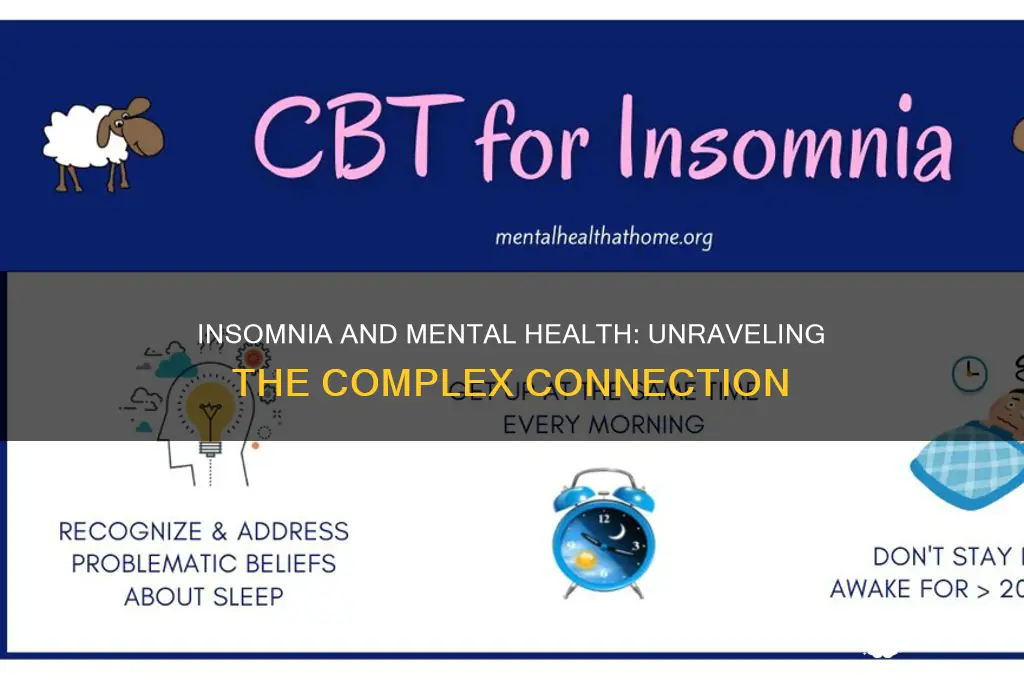
Insomnia, characterized by difficulty falling asleep, staying asleep, or experiencing non-restorative sleep, is often viewed as a sleep disorder, but its intricate relationship with mental health raises questions about whether it should be classified as a mental health issue. While insomnia can be a standalone condition, it frequently coexists with mental health disorders such as anxiety, depression, and bipolar disorder, suggesting a bidirectional link where one can exacerbate the other. Chronic insomnia may contribute to the development or worsening of mental health issues by impairing cognitive function, emotional regulation, and overall well-being, while mental health struggles can equally disrupt sleep patterns. This complex interplay highlights the need to address insomnia not just as a physical ailment but as a potential indicator or component of broader mental health concerns, emphasizing the importance of integrated treatment approaches.
| Characteristics | Values |
|---|---|
| Definition | Insomnia is a sleep disorder characterized by difficulty falling asleep, staying asleep, or experiencing non-restorative sleep despite adequate opportunity for sleep. |
| Classification | Insomnia is increasingly recognized as a mental health issue due to its strong associations with psychiatric disorders and its impact on mental well-being. |
| Comorbidity | High comorbidity with anxiety disorders (e.g., generalized anxiety disorder), depression, bipolar disorder, and post-traumatic stress disorder (PTSD). |
| Prevalence | Affects approximately 10-30% of the global population, with chronic insomnia (lasting >3 months) impacting 6-10% of adults. |
| Risk Factors | Stress, trauma, chronic pain, substance use, and certain medications. Mental health conditions significantly increase the risk. |
| Impact on Mental Health | Exacerbates symptoms of depression, anxiety, and irritability. Linked to cognitive impairments, reduced quality of life, and increased risk of suicidal ideation. |
| Neurobiological Links | Overactivity in brain regions associated with hyperarousal and dysregulation of the hypothalamic-pituitary-adrenal (HPA) axis, common in mental health disorders. |
| Treatment | Cognitive Behavioral Therapy for Insomnia (CBT-I) is first-line treatment. Addressing underlying mental health issues is crucial for effective management. |
| Prevention | Stress management, sleep hygiene practices, and early intervention for mental health symptoms can reduce insomnia risk. |
| Research Trends | Growing evidence supports insomnia as a transdiagnostic symptom across mental health disorders, emphasizing its role in psychopathology. |
Explore related products

$24.32 $25.95

$19.99 $9.99

$8.99 $14.99


What You'll Learn

Insomnia and Anxiety Disorders
Consider the physiological mechanisms at play. Anxiety disorders, such as generalized anxiety disorder (GAD) or panic disorder, heighten the body’s stress response, increasing cortisol levels and activating the sympathetic nervous system. These changes make it difficult to achieve the relaxation necessary for sleep onset. Conversely, insomnia perpetuates anxiety by impairing cognitive function, reducing emotional resilience, and altering brain regions like the amygdala, which regulates fear responses. For instance, a study published in *Sleep Medicine Reviews* found that individuals with insomnia are 2.5 times more likely to develop an anxiety disorder within a year.
Practical strategies can help break this cycle. Cognitive-behavioral therapy for insomnia (CBT-I) is a first-line treatment, focusing on sleep hygiene, stimulus control, and cognitive restructuring. For example, limiting exposure to screens before bed, maintaining a consistent sleep schedule, and avoiding naps can recalibrate the body’s circadian rhythm. Pairing CBT-I with mindfulness-based interventions, such as progressive muscle relaxation or guided imagery, can further reduce anxiety-related hyperarousal. For severe cases, medications like eszopiclone (1–3 mg) or low-dose doxepin (3–6 mg) may be prescribed, but these should be used cautiously to avoid dependency.
A comparative analysis highlights the importance of tailored approaches. While benzodiazepines like lorazepam can provide short-term relief for both anxiety and insomnia, their side effects, including tolerance and withdrawal, limit long-term use. In contrast, selective serotonin reuptake inhibitors (SSRIs) address anxiety at its root but may initially disrupt sleep. Combining pharmacotherapy with behavioral interventions offers a more sustainable solution, particularly for older adults (aged 65+), who are more susceptible to sleep disturbances and medication side effects.
In conclusion, the link between insomnia and anxiety disorders underscores the need for integrated treatment plans. By targeting both conditions simultaneously, individuals can achieve better sleep and reduced anxiety, improving overall quality of life. Whether through therapy, medication, or lifestyle adjustments, addressing this dual challenge requires patience, consistency, and a personalized approach.
HIV-Positive Orphans: Exploring Mental Health Challenges and Support Needs
You may want to see also
Explore related products





Depression’s Link to Sleep Disturbances
Insomnia and depression often coexist in a complex, bidirectional relationship. Research indicates that 75% of depressed patients experience insomnia symptoms, while chronic insomnia increases the risk of developing depression by 5 to 10 times. This interplay suggests a shared neurobiological pathway, particularly involving dysregulation of the hypothalamic-pituitary-adrenal (HPA) axis and elevated cortisol levels, which disrupt both sleep and mood stability.
Consider the case of a 32-year-old woman with treatment-resistant depression. Despite adequate antidepressant therapy (20 mg/day of escitalopram), her symptoms persisted until a sleep specialist identified and treated her underlying insomnia with cognitive-behavioral therapy for insomnia (CBT-I). Within 8 weeks, her depressive symptoms improved significantly, illustrating the critical role of addressing sleep disturbances in depression management. This example underscores the importance of screening for insomnia in depressed patients and integrating sleep-focused interventions into treatment plans.
From a practical standpoint, clinicians should prioritize sleep hygiene education for depressed patients. Recommendations include maintaining a consistent sleep schedule, limiting caffeine intake after 2 PM, and creating a restful sleep environment. For those with persistent insomnia, CBT-I is the first-line treatment, offering a structured 6–8 session program that addresses maladaptive sleep behaviors and cognitive distortions. Pharmacotherapy, such as short-term use of zolpidem (5–10 mg/night) or eszopiclone (2–3 mg/night), may be considered for acute relief, but caution is advised to avoid dependency.
Comparatively, while antidepressants like trazodone (50–100 mg/night) or mirtazapine (15–30 mg/night) can improve both mood and sleep, their efficacy varies, and side effects like daytime sedation must be monitored. A holistic approach, combining medication with behavioral interventions, often yields the best outcomes. For instance, a 45-year-old man with recurrent depression found sustained relief through a combination of sertraline (100 mg/day), CBT-I, and regular morning light exposure to regulate his circadian rhythm.
In conclusion, the link between depression and sleep disturbances is undeniable, with insomnia serving as both a symptom and a risk factor. Effective management requires a tailored, multifaceted strategy that addresses sleep as a cornerstone of mental health. By integrating evidence-based sleep interventions into depression treatment, clinicians can enhance patient outcomes and reduce the likelihood of symptom recurrence.
Supporting Foster Teens: Strategies for Navigating Mental Health Challenges
You may want to see also
Explore related products


PTSD’s Impact on Sleep Patterns
Insomnia is not merely a standalone sleep disorder but often a symptom of underlying mental health issues, including post-traumatic stress disorder (PTSD). PTSD profoundly disrupts sleep patterns, creating a vicious cycle where poor sleep exacerbates symptoms, and heightened anxiety or hypervigilance further impairs rest. Understanding this relationship is crucial for effective treatment, as addressing sleep disturbances can significantly alleviate PTSD’s broader impact.
Consider the mechanics of PTSD’s interference with sleep. Individuals with PTSD frequently experience nightmares, often vivid replays of traumatic events, which fragment their sleep architecture. Stage 3 non-REM sleep, essential for restorative rest, is particularly compromised, leading to chronic fatigue and cognitive impairment. Hyperarousal, a hallmark of PTSD, keeps the nervous system on high alert, making it difficult to fall or stay asleep. For example, veterans with combat-related PTSD report an average of 4–5 awakenings per night, compared to 1–2 in the general population. This disruption not only affects physical health but also diminishes emotional resilience, making therapy and recovery more challenging.
Practical strategies can mitigate PTSD-induced insomnia. Cognitive Behavioral Therapy for Insomnia (CBT-I) is a first-line treatment, proven to improve sleep in 70–80% of cases. This involves restructuring sleep habits, such as maintaining a consistent bedtime routine and limiting exposure to screens before sleep. For nightmares, Imagery Rehearsal Therapy (IRT) encourages patients to rewrite the endings of distressing dreams, reducing their frequency and intensity. Medications like prazosin, a blood pressure drug, have shown efficacy in reducing nightmares at doses of 1–10 mg nightly, though consultation with a psychiatrist is essential to monitor side effects.
Comparatively, untreated sleep disturbances in PTSD can lead to comorbid conditions like depression and substance abuse, underscoring the need for integrated care. Sleep hygiene alone is often insufficient; combining behavioral interventions with trauma-focused therapies, such as Eye Movement Desensitization and Reprocessing (EMDR), yields better outcomes. For instance, a study in *JAMA Psychiatry* found that patients receiving both CBT-I and EMDR experienced a 50% reduction in PTSD symptoms compared to those receiving EMDR alone. This highlights the interconnectedness of sleep and mental health, emphasizing that treating insomnia in PTSD is not just about better sleep but about fostering overall recovery.
Finally, self-care plays a pivotal role in managing PTSD-related insomnia. Mindfulness practices, such as progressive muscle relaxation or guided meditation, can reduce hyperarousal before bed. Limiting caffeine after noon and creating a sleep-conducive environment—cool, dark, and quiet—are simple yet effective steps. For those over 65, who may experience age-related sleep changes, combining these strategies with gentle evening exercises can improve sleep quality. While PTSD’s impact on sleep is profound, targeted interventions offer hope, transforming restless nights into a pathway toward healing.
Addressing America's Mental Health Crisis: Strategies for Support and Change
You may want to see also
Explore related products


Bipolar Disorder and Insomnia Connection
Insomnia and bipolar disorder often coexist in a complex, bidirectional relationship that exacerbates both conditions. Research indicates that up to 69% of individuals with bipolar disorder experience insomnia, significantly higher than the general population’s 10-20%. This connection isn’t coincidental; sleep disturbances can both trigger and worsen bipolar episodes. For instance, sleep deprivation may precipitate manic episodes, while hypersomnia often accompanies depressive phases. Understanding this interplay is crucial for effective management, as untreated insomnia can undermine the stability of bipolar disorder treatment.
Consider the role of circadian rhythm disruptions in this dynamic. Bipolar disorder is increasingly viewed as a disorder of circadian regulation, with insomnia acting as both symptom and catalyst. Studies show that irregular sleep patterns can destabilize mood, making it harder to maintain remission. For example, a 2018 study in *The American Journal of Psychiatry* found that bipolar patients with insomnia had a 50% higher risk of relapse compared to those without sleep issues. Practical interventions, such as maintaining a strict sleep schedule and limiting exposure to blue light before bed, can help recalibrate circadian rhythms and reduce episode frequency.
Pharmacological management of this connection requires careful consideration. While sedative medications like quetiapine or benzodiazepines may alleviate insomnia, they carry risks. Quetiapine, often prescribed off-label for sleep, can cause metabolic side effects, particularly in long-term use. Benzodiazepines, though effective, pose risks of dependence and cognitive impairment, especially in older adults. Non-pharmacological approaches, such as cognitive-behavioral therapy for insomnia (CBT-I), are often recommended as first-line treatment. CBT-I has shown efficacy in improving sleep and mood stability in bipolar patients, with studies reporting a 50-70% success rate in reducing insomnia symptoms.
A comparative analysis highlights the importance of tailored treatment. Unlike unipolar depression, where insomnia often resolves with mood improvement, bipolar disorder requires a dual-focused approach. Sleep hygiene alone is insufficient; interventions must address both mood regulation and sleep architecture. For instance, light therapy, which has shown promise in seasonal affective disorder, may also benefit bipolar patients by synchronizing circadian rhythms. However, its use must be monitored, as excessive light exposure can trigger mania in susceptible individuals.
In conclusion, the bipolar disorder and insomnia connection demands a nuanced, integrated treatment strategy. Clinicians should assess sleep patterns as part of routine bipolar management, recognizing insomnia as a potential early warning sign of mood destabilization. Patients can benefit from education on sleep’s role in their condition, coupled with evidence-based interventions like CBT-I and circadian-focused therapies. By addressing insomnia proactively, individuals with bipolar disorder can improve not only their sleep but also their overall mood stability and quality of life.
Is IBS a Mental Health Issue? Unraveling the Gut-Brain Connection
You may want to see also
Explore related products


Stress-Induced Sleep Deprivation Effects
Stress-induced sleep deprivation is a vicious cycle where the mind’s inability to shut off at night exacerbates the very stress that caused it. Cortisol, the body’s primary stress hormone, spikes during periods of anxiety, disrupting the natural sleep-wake cycle. Studies show that even a single night of poor sleep can elevate cortisol levels by up to 37%, making it harder to manage stress the following day. This hormonal imbalance not only deepens insomnia but also primes the brain for heightened reactivity to stressors, creating a feedback loop that traps individuals in a state of chronic sleep deprivation.
Consider the cognitive toll: sleep deprivation impairs prefrontal cortex function, the brain region responsible for decision-making and emotional regulation. Adults who sleep less than 6 hours a night exhibit a 70% reduction in cognitive performance compared to those getting 8 hours. This deficit manifests as irritability, difficulty concentrating, and poor memory—symptoms often mistaken for anxiety or depression. For instance, a 35-year-old professional experiencing work-related stress might misinterpret their foggy thinking and mood swings as burnout, unaware that their insomnia is the root cause.
Breaking this cycle requires targeted interventions. Cognitive Behavioral Therapy for Insomnia (CBT-I) has a 70–80% success rate in improving sleep quality within 8 weeks. This therapy focuses on restructuring sleep habits, such as maintaining a consistent bedtime and limiting exposure to screens before sleep. Pairing CBT-I with stress-reduction techniques like mindfulness meditation or progressive muscle relaxation can further enhance outcomes. For example, a 10-minute guided meditation before bed has been shown to reduce cortisol levels by 15%, improving both sleep onset and duration.
However, not all solutions are one-size-fits-all. While melatonin supplements (1–5 mg taken 30 minutes before bed) can aid sleep initiation for some, they may disrupt natural hormone production in others. Similarly, while exercise alleviates stress, vigorous workouts within 3 hours of bedtime can delay sleep. Tailoring strategies to individual needs—such as adjusting caffeine intake (limit to before 2 PM) or creating a sleep-conducive environment (60–67°F room temperature, blackout curtains)—is crucial. The goal is not just to sleep more but to restore the body’s ability to recover from stress, thereby addressing insomnia at its core.
Understanding Mental Health Challenges in Tennessee: Prevalence and Insights
You may want to see also
Frequently asked questions
Insomnia is often classified as a sleep disorder, but it can be closely linked to mental health issues such as anxiety, depression, and stress. It may exist as a standalone condition or as a symptom of an underlying mental health disorder.
Chronic insomnia can contribute to the development or worsening of mental health issues. Sleep deprivation affects mood, cognitive function, and emotional regulation, increasing the risk of conditions like depression, anxiety, and irritability.
Treatment often involves addressing both the insomnia and the associated mental health issue. Approaches may include cognitive-behavioral therapy for insomnia (CBT-I), medication, stress management techniques, and therapy to treat underlying mental health conditions.