Ava Ramirez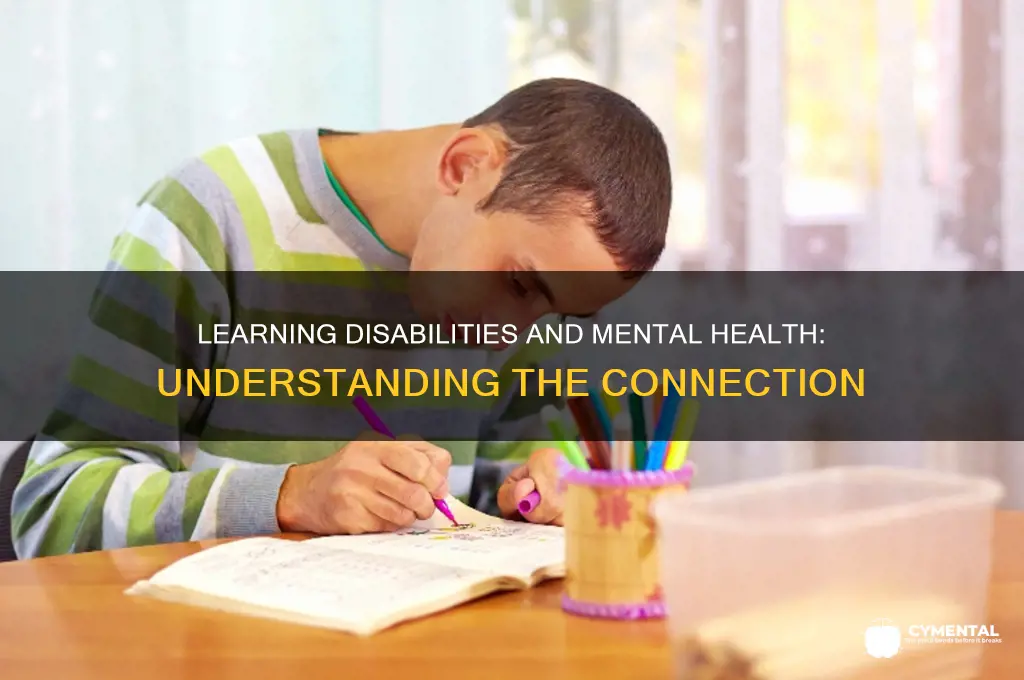
Learning disabilities and mental health issues are distinct but often interconnected challenges. While a learning disability refers to difficulties in acquiring and processing information, such as dyslexia or ADHD, it is not inherently a mental health issue. However, individuals with learning disabilities may experience higher rates of mental health concerns, such as anxiety or depression, due to the stress and frustration associated with their struggles. Understanding this relationship is crucial for providing comprehensive support and addressing the unique needs of those affected.
| Characteristics | Values |
|---|---|
| Definition | Learning disabilities (LDs) are neurological disorders that affect the brain's ability to receive, process, store, and respond to information. They are not a form of mental illness or emotional disturbance. |
| Co-occurrence | Individuals with learning disabilities may experience higher rates of mental health issues such as anxiety, depression, and ADHD, but the LD itself is not a mental health disorder. |
| Causes | LDs are typically caused by differences in brain structure and function, often present from birth or early childhood, whereas mental health issues can arise from various factors including genetics, environment, and life experiences. |
| Symptoms | LDs manifest as difficulties in reading, writing, math, or other specific learning areas, while mental health issues present as emotional, behavioral, or psychological symptoms. |
| Treatment | LDs are addressed through educational interventions, accommodations, and specialized instruction, whereas mental health issues are treated with therapy, medication, and support services. |
| Diagnosis | LDs are diagnosed through psychoeducational assessments, while mental health issues are diagnosed by mental health professionals using criteria from diagnostic manuals like the DSM-5. |
| Impact | LDs primarily affect academic and functional performance, whereas mental health issues impact overall emotional well-being and daily functioning. |
| Stigma | Both LDs and mental health issues can face stigma, but they are distinct conditions requiring different approaches to support and understanding. |
| Prevalence | Approximately 5-10% of the population has a learning disability, while mental health disorders affect around 20% of adults globally. |
| Legal Protection | Individuals with LDs are protected under laws like the Individuals with Disabilities Education Act (IDEA) in the U.S., while mental health issues are covered under the Americans with Disabilities Act (ADA) if they substantially limit major life activities. |
Explore related products


What You'll Learn
- Definition and Distinction: Differentiating learning disabilities from mental health disorders based on symptoms and causes
- Co-occurrence Rates: Exploring how often learning disabilities coexist with mental health conditions
- Impact on Self-esteem: Examining how learning disabilities affect mental well-being and self-perception
- Diagnostic Challenges: Addressing difficulties in distinguishing between learning disabilities and mental health issues
- Support Strategies: Discussing interventions that address both learning disabilities and mental health needs

Definition and Distinction: Differentiating learning disabilities from mental health disorders based on symptoms and causes
Learning disabilities and mental health disorders are often conflated, yet they stem from distinct origins and manifest through different symptoms. Learning disabilities, such as dyslexia or dyscalculia, are neurodevelopmental conditions that affect specific cognitive processes, like reading or math skills. They are rooted in structural or functional differences in the brain and are typically lifelong. Mental health disorders, on the other hand, encompass conditions like anxiety, depression, or ADHD, which primarily impact emotional regulation, mood, or behavior. While both can affect academic performance, their causes and treatment approaches differ significantly.
Consider a child struggling with reading comprehension. If the issue arises from dyslexia, it’s due to difficulties processing language, not a lack of effort or intelligence. In contrast, a child with anxiety might struggle with reading due to overwhelming worry or distractibility. The dyslexic child benefits from structured literacy interventions, while the anxious child may need cognitive-behavioral therapy or mindfulness techniques. This example highlights the importance of distinguishing between the two: misidentification can lead to ineffective interventions and prolonged frustration.
To differentiate them, examine the symptoms’ specificity and context. Learning disabilities often present as consistent difficulties in particular academic areas, unaffected by emotional state or environment. For instance, a student with dysgraphia will struggle with writing regardless of their mood. Mental health disorders, however, tend to manifest more broadly, influencing multiple areas of life and fluctuating with emotional or situational factors. A child with depression might show declining performance across all subjects, accompanied by changes in sleep, appetite, or social withdrawal.
Practical steps for distinction include observing patterns over time and consulting professionals. Educators and parents should document specific challenges (e.g., reversing letters vs. avoiding schoolwork altogether) and seek evaluations from psychologists or learning specialists. Tools like IQ tests, achievement assessments, and behavioral checklists can clarify the underlying issue. Early and accurate identification is crucial, as learning disabilities require targeted educational strategies, while mental health disorders often necessitate therapeutic or medical interventions.
In conclusion, while learning disabilities and mental health disorders can coexist and overlap in their impact, they are distinct in their nature and treatment. Understanding this difference empowers educators, parents, and clinicians to provide tailored support, ensuring individuals receive the right resources to thrive academically and emotionally. Misdiagnosis or confusion between the two can hinder progress, making clear differentiation a critical step in effective intervention.
Is It Rude to Ask About Mental Health Issues?
You may want to see also
Explore related products


$49 $49

$30.95 $30.95


Co-occurrence Rates: Exploring how often learning disabilities coexist with mental health conditions
Learning disabilities and mental health conditions often intersect, creating a complex landscape for individuals and caregivers alike. Research indicates that the co-occurrence rates between these two areas are significantly higher than in the general population. For instance, studies show that approximately 40-50% of individuals with learning disabilities also experience mental health challenges such as anxiety, depression, or ADHD. This overlap underscores the need for a nuanced understanding of how these conditions interact and influence one another.
Consider the developmental stages where these co-occurrences become more pronounced. Children aged 6-12 with learning disabilities, such as dyslexia or dyscalculia, are twice as likely to exhibit symptoms of anxiety or depression compared to their peers without learning difficulties. This vulnerability often stems from the frustration and low self-esteem that can accompany academic struggles. Early intervention is critical; integrating mental health screenings into educational assessments can help identify these issues before they escalate. For example, schools can implement structured programs like cognitive-behavioral therapy (CBT) tailored for students with learning disabilities to address both academic and emotional challenges simultaneously.
From a comparative perspective, the co-occurrence rates vary depending on the type of learning disability. Individuals with dyslexia, for instance, are more likely to experience anxiety, while those with ADHD often face higher rates of mood disorders. This specificity highlights the importance of personalized support strategies. Caregivers and educators should adopt a dual-focus approach: addressing the learning disability through targeted interventions like multisensory teaching methods, while also providing mental health resources such as mindfulness exercises or peer support groups.
Persuasively, it’s essential to challenge the stigma surrounding this co-occurrence. Many assume that mental health struggles are a direct result of learning difficulties, but this oversimplifies the relationship. Genetic, environmental, and neurological factors often play overlapping roles. Advocacy for integrated care models, where mental health professionals collaborate with special educators, can lead to more holistic outcomes. For adults, workplace accommodations that address both learning disabilities and mental health needs—such as flexible scheduling or assistive technologies—can significantly improve quality of life.
Practically, caregivers can take specific steps to navigate this co-occurrence effectively. First, maintain open communication with educators and healthcare providers to ensure a cohesive support plan. Second, encourage self-advocacy in individuals with learning disabilities by teaching them to articulate their needs and access available resources. Finally, prioritize self-care for both the individual and their support network; caregiver burnout is a real risk when managing dual challenges. By adopting these strategies, families and professionals can foster resilience and reduce the impact of co-occurring learning disabilities and mental health conditions.
Navigating Mental Health Conversations: A Guide to Discussing Issues at Work
You may want to see also
Explore related products


Impact on Self-esteem: Examining how learning disabilities affect mental well-being and self-perception
Learning disabilities often carry a silent burden that extends beyond academic challenges, deeply influencing self-esteem and mental well-being. For individuals navigating dyslexia, ADHD, or dyscalculia, repeated struggles with tasks that peers find effortless can foster a pervasive sense of inadequacy. A 2021 study published in the *Journal of Learning Disabilities* found that 60% of students with learning disabilities report lower self-esteem compared to their neurotypical counterparts. This erosion of self-worth is not merely a byproduct of academic frustration but a complex interplay of societal expectations, self-perception, and emotional resilience.
Consider the case of a 12-year-old with dyslexia who, despite hours of effort, consistently underperforms in reading assessments. Over time, internalized messages like "I’m not smart enough" or "I’ll never catch up" can become ingrained, shaping their identity. This negative self-perception is compounded by external factors: teachers who misinterpret slow progress as laziness, peers who tease, or parents who express frustration. Such experiences create a feedback loop where the individual begins to equate their worth with their academic performance, neglecting other strengths and abilities.
To mitigate this impact, proactive strategies are essential. For children and adolescents, incorporating strengths-based feedback into daily routines can be transformative. For instance, a teacher might highlight a student’s creativity in writing rather than focusing solely on spelling errors. Parents can foster resilience by reframing challenges as opportunities for growth, using phrases like "Let’s figure this out together" instead of "Why can’t you get this right?" For adults, cognitive-behavioral techniques, such as journaling positive affirmations or setting small, achievable goals, can help recalibrate self-perception. Research suggests that consistent reinforcement of self-worth over 8–12 weeks can lead to measurable improvements in self-esteem.
Comparatively, individuals with learning disabilities who receive early psychological support show a 40% reduction in anxiety and depression symptoms, according to a 2019 study in *Psychology in Schools*. This underscores the importance of integrating mental health interventions into educational frameworks. Schools and workplaces can play a pivotal role by offering counseling services, peer support groups, and accommodations that reduce stigma and promote inclusivity. For example, allowing extra time on tests or providing assistive technologies not only levels the playing field but also communicates that the individual’s efforts are valued.
Ultimately, the impact of learning disabilities on self-esteem is not inevitable. By fostering environments that celebrate diverse abilities and provide targeted support, we can help individuals reframe their struggles as part of a unique journey rather than a defining limitation. This shift in perspective is not just beneficial—it’s essential for nurturing mental well-being and unlocking potential.
Supporting Employees: Compassionate Conversations About Mental Health at Work
You may want to see also
Explore related products



Diagnostic Challenges: Addressing difficulties in distinguishing between learning disabilities and mental health issues
Distinguishing between learning disabilities and mental health issues is a complex task, often leading to misdiagnosis and delayed interventions. The overlap in symptoms—such as difficulty concentrating, low self-esteem, and social withdrawal—blurs the lines between conditions like dyslexia, ADHD, and anxiety or depression. For instance, a child struggling to read may exhibit frustration and avoidance behaviors, which could be misinterpreted as a mood disorder rather than dyslexia. This diagnostic ambiguity underscores the need for a nuanced approach that considers both cognitive and emotional factors.
To address these challenges, clinicians must adopt a multi-faceted assessment process. Step one involves a thorough developmental history, including milestones, academic performance, and family background. Step two requires standardized testing to evaluate cognitive abilities, processing speed, and memory. Caution must be taken to avoid relying solely on behavioral observations, as these can be influenced by external stressors or coping mechanisms. For example, a teenager with undiagnosed dyscalculia might develop test anxiety, complicating the diagnostic picture. Incorporating input from educators and caregivers can provide a more holistic view, ensuring that the root cause—whether cognitive or emotional—is accurately identified.
A comparative analysis of tools and frameworks reveals the limitations of traditional diagnostic methods. While instruments like the Wechsler Intelligence Scale for Children (WISC) assess cognitive functioning, they may not capture the emotional impact of learning difficulties. Conversely, mental health assessments like the Beck Depression Inventory (BDI) focus on emotional symptoms but overlook cognitive deficits. Integrating tools such as the Woodcock-Johnson Tests of Cognitive Abilities with mental health screenings can bridge this gap. However, practitioners must remain vigilant to avoid overpathologizing; a child’s struggles with reading comprehension might stem from a learning disability rather than a lack of effort or motivation.
Persuasively, early and accurate diagnosis is critical for tailored interventions. Misdiagnosis can lead to inappropriate treatments, such as prescribing antidepressants for a child with ADHD instead of providing behavioral strategies and accommodations. Practical tips include using a dual-track approach: addressing cognitive challenges through specialized education plans while offering emotional support via counseling or therapy. For instance, a student with dysgraphia paired with anxiety might benefit from both occupational therapy for handwriting and cognitive-behavioral therapy to manage stress. This dual focus ensures that neither the learning disability nor the mental health issue is overlooked.
In conclusion, distinguishing between learning disabilities and mental health issues requires a meticulous, interdisciplinary approach. By combining cognitive assessments, behavioral observations, and collaborative input, clinicians can navigate the diagnostic complexities. The ultimate takeaway is clear: accurate identification of the underlying issue is the cornerstone of effective intervention, ensuring that individuals receive the support they need to thrive academically and emotionally.
Supporting Your Child’s Mental Health: Practical Strategies for Parents
You may want to see also
Explore related products


Support Strategies: Discussing interventions that address both learning disabilities and mental health needs
Learning disabilities and mental health issues often coexist, creating a complex web of challenges for individuals. While they are distinct conditions, the overlap in symptoms and impacts necessitates integrated support strategies. For instance, a student with dyslexia may experience anxiety due to repeated academic struggles, while a child with ADHD might develop low self-esteem from constant reminders about their inattention. Addressing these intertwined needs requires interventions that are both holistic and tailored.
One effective strategy is multidisciplinary collaboration, where educators, psychologists, and healthcare providers work together to create a unified support plan. For example, a child with dyscalculia and depression might benefit from a math tutor who incorporates positive reinforcement techniques, while a school counselor provides cognitive-behavioral therapy (CBT) sessions to address negative thought patterns. This approach ensures that interventions are consistent across settings and that progress in one area reinforces the other. For younger children (ages 6–12), visual aids and structured routines can be particularly helpful, while teenagers (ages 13–18) may respond better to goal-setting exercises and peer support groups.
Another critical intervention is personalized learning plans that integrate mental health support. For a student with dysgraphia and anxiety, this might include extended time on written assignments, access to speech-to-text software, and regular check-ins with a mental health professional to monitor stress levels. Dosage is key here: for instance, 30-minute CBT sessions twice weekly have been shown to reduce anxiety symptoms in students with learning disabilities. Additionally, incorporating mindfulness practices—such as 5-minute breathing exercises at the start of each school day—can help students manage emotional responses to academic challenges.
Technology-based tools also play a pivotal role in addressing both learning disabilities and mental health needs. Apps like Calm or Headspace can teach students relaxation techniques, while platforms like Khan Academy or Quill provide adaptive learning experiences tailored to individual needs. For older students, digital planners or task-management apps can reduce overwhelm by breaking assignments into manageable steps. However, it’s essential to balance screen time with offline activities to prevent additional stress or sensory overload.
Finally, family involvement is crucial for sustaining progress. Parents and caregivers can be trained in strategies like positive behavior support (PBS) to reinforce skills at home and provide emotional reassurance. For example, a parent of a child with dyslexia and low self-esteem might use specific praise ("I noticed how hard you worked on that paragraph") rather than generic encouragement. Schools can facilitate this by offering workshops or resource guides tailored to families, ensuring everyone is aligned in supporting the child’s dual needs.
In conclusion, addressing the intersection of learning disabilities and mental health requires a multifaceted approach that combines professional collaboration, personalized interventions, technology, and family engagement. By treating these challenges as interconnected, rather than isolated, we can create a more supportive environment where individuals thrive academically and emotionally.
Understanding Anger: Mental Health Implications and Effective Coping Strategies
You may want to see also
Frequently asked questions
A learning disability is not a mental health issue. It is a neurological difference that affects how a person processes information, such as reading, writing, or math. While it is distinct from mental health conditions, individuals with learning disabilities may experience related challenges like anxiety or low self-esteem.
Yes, individuals with learning disabilities can also experience mental health issues. The challenges they face, such as academic struggles or social difficulties, may increase the risk of conditions like depression, anxiety, or ADHD. However, the two are separate and require different approaches to support.
Learning disabilities are typically addressed through educational interventions, such as specialized teaching strategies, accommodations, or tutoring. Mental health issues, on the other hand, are treated with therapies like counseling, medication, or behavioral interventions. Both may require a multidisciplinary approach for comprehensive support.