Caleb Wright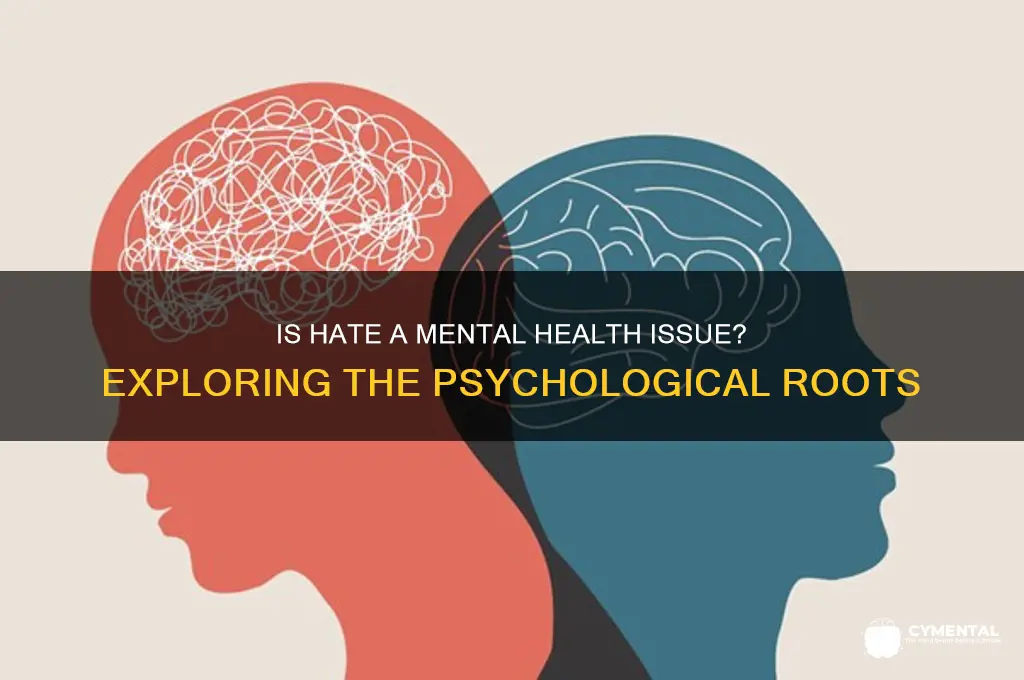
Hate, often viewed as an intense emotional response, raises questions about its roots and implications for mental health. While it is a complex and multifaceted phenomenon, some experts argue that persistent feelings of hate can be symptomatic of underlying mental health issues, such as unresolved trauma, anxiety, or personality disorders. Prolonged exposure to hateful thoughts and behaviors may also contribute to the development of conditions like depression or chronic stress. Conversely, others contend that hate is primarily a social and cultural construct, shaped by environmental factors rather than inherent psychological disorders. Exploring the intersection of hate and mental health is crucial for understanding its origins, impact, and potential interventions, shedding light on whether addressing mental well-being can mitigate hateful tendencies.
| Characteristics | Values |
|---|---|
| Definition of Hate | Intense hostility or aversion towards someone or something, often rooted in prejudice, fear, or anger. |
| Mental Health Connection | Hate can be a symptom or manifestation of underlying mental health issues such as anxiety, depression, or personality disorders. |
| Neurological Factors | Studies suggest that hate may involve hyperactivity in the amygdala and reduced activity in the prefrontal cortex, areas linked to emotion and decision-making. |
| Psychological Triggers | Trauma, social isolation, and exposure to hateful ideologies can contribute to the development of hateful attitudes. |
| Behavioral Manifestations | Hate can lead to aggression, discrimination, and violence, which are often maladaptive coping mechanisms. |
| Treatment Approaches | Cognitive-behavioral therapy (CBT), empathy training, and addressing underlying mental health conditions can help mitigate hateful behaviors. |
| Societal Impact | Hate can perpetuate cycles of violence, discrimination, and social division, affecting both individuals and communities. |
| Prevention Strategies | Education, fostering empathy, and promoting mental health awareness can help prevent the development of hateful attitudes. |
| Research Gaps | Limited longitudinal studies on the direct link between hate and specific mental health disorders; more research is needed. |
| Cultural Considerations | Expressions and perceptions of hate vary across cultures, influencing how it is addressed in mental health contexts. |
Explore related products



What You'll Learn

Hate's link to anxiety and depression symptoms
Hate, as an emotion, often intertwines with mental health conditions like anxiety and depression, creating a cycle that can be difficult to break. Research suggests that individuals who frequently experience hate—whether directed inward or outward—are more likely to exhibit symptoms of these disorders. For instance, chronic anger and resentment, which are close cousins of hate, have been linked to increased cortisol levels, the body's primary stress hormone. Prolonged elevation of cortisol can lead to anxiety symptoms such as hypervigilance, restlessness, and panic attacks. Similarly, the isolating nature of hate often fosters feelings of hopelessness and worthlessness, hallmark symptoms of depression. Understanding this connection is the first step in addressing the emotional and psychological toll hate can exact.
Consider the practical implications of this link. If you notice persistent feelings of hate or bitterness, monitor your mental health symptoms closely. Keep a journal to track patterns between hateful thoughts and physical or emotional responses, such as insomnia, fatigue, or persistent sadness. For example, individuals aged 18–30 are particularly vulnerable to these effects due to developmental stages involving identity formation and social comparison. To mitigate risks, incorporate stress-reduction techniques like mindfulness meditation or progressive muscle relaxation. Studies show that practicing mindfulness for 20 minutes daily can reduce anxiety symptoms by up to 30% over six weeks. Pairing these practices with cognitive reframing—challenging hateful thoughts with more balanced perspectives—can further disrupt the hate-anxiety-depression cycle.
From a comparative standpoint, hate differs from emotions like anger or frustration in its intensity and persistence. While anger often serves as a temporary response to a perceived threat, hate lingers, embedding itself into one’s worldview. This distinction is critical because prolonged hate more closely correlates with depressive rumination, where individuals fixate on negative thoughts and experiences. For instance, a study published in the *Journal of Personality and Social Psychology* found that individuals who scored high on hate scales were twice as likely to meet diagnostic criteria for major depressive disorder. Unlike anger, which can sometimes be constructive when channeled into problem-solving, hate tends to be self-perpetuating, reinforcing feelings of helplessness and despair.
To break this cycle, adopt a multi-faceted approach. First, limit exposure to triggers that fuel hateful emotions, such as toxic relationships or polarizing media. Second, engage in activities that foster empathy and connection, like volunteering or joining support groups. For those aged 35–50, who may struggle with long-standing resentments, therapy modalities like Cognitive Behavioral Therapy (CBT) can be particularly effective. CBT helps individuals identify and reframe hateful thought patterns, reducing their grip on emotional well-being. Finally, prioritize self-care through regular exercise, adequate sleep, and a balanced diet. Physical health plays a pivotal role in mental resilience, making it harder for hate to take root and exacerbate anxiety or depression.
In conclusion, hate’s link to anxiety and depression is both profound and actionable. By recognizing the emotional and physiological mechanisms at play, individuals can take targeted steps to disrupt this harmful cycle. Whether through mindfulness practices, therapeutic interventions, or lifestyle adjustments, addressing hate as a mental health issue offers a pathway to greater emotional freedom and well-being. The key lies in treating hate not as an immutable trait, but as a symptom of deeper imbalances that can be healed with awareness and effort.
Police Response to Mental Health Crises: Frequency and Challenges
You may want to see also
Explore related products


Role of trauma in fostering hateful behaviors
Trauma rewires the brain’s threat detection system, often turning perceived danger into a constant companion. When individuals experience severe or prolonged trauma—whether from abuse, war, or systemic oppression—the amygdala, responsible for fear responses, becomes hyperactive. This heightened state of vigilance can misidentify neutral or benign situations as threats, triggering aggressive or defensive behaviors. For instance, a child who grows up in a violent household may interpret a raised voice in adulthood as an immediate danger, reacting with hostility before rational thought kicks in. This neurological shift doesn’t justify hateful behavior, but it explains how trauma can lay the groundwork for it.
Consider the cycle of trauma as a blueprint for hateful ideologies. When trauma goes unaddressed, it often manifests as anger or resentment, which can be channeled into scapegoating others. For example, individuals who have experienced economic hardship or social marginalization might adopt extremist beliefs that promise a sense of control or belonging by targeting a perceived "other." This isn’t a conscious choice but a maladaptive coping mechanism. Research shows that individuals with a history of trauma are more likely to endorse prejudiced views, not because of inherent malice, but because trauma distorts their ability to empathize and process complex emotions.
Breaking this cycle requires targeted interventions that address both the trauma and its behavioral outcomes. Trauma-informed therapy, such as Cognitive Behavioral Therapy (CBT) or Eye Movement Desensitization and Reprocessing (EMDR), can help individuals reframe their responses to triggers. For adolescents, school-based programs that teach emotional regulation and conflict resolution can prevent hateful behaviors from taking root. Adults might benefit from group therapy or community-based initiatives that foster empathy and shared understanding. The key is to treat trauma not as a personal failing but as a public health issue that demands systemic solutions.
Finally, society must recognize that hateful behaviors are often symptoms of deeper wounds. Punitive measures alone—such as legal consequences or social ostracization—rarely address the root cause. Instead, they can exacerbate feelings of alienation, reinforcing the very behaviors they aim to correct. By prioritizing trauma-informed approaches, we can shift the narrative from blame to healing, offering individuals a path out of the cycle of hate. This isn’t about excusing harmful actions but about creating a framework where prevention and rehabilitation take precedence over punishment.
Navigating a Compassionate Breakup with a Partner Facing Mental Health Challenges
You may want to see also
Explore related products


Hate as a coping mechanism for stress
Hate, when channeled as a coping mechanism for stress, often manifests as a distorted form of emotional regulation. Individuals under chronic stress may redirect their overwhelming anxiety or frustration toward a perceived external threat, such as a person, group, or ideology. This displacement of negative emotions provides temporary relief by externalizing internal turmoil, but it comes at the cost of fostering hostility and eroding empathy. For example, someone overwhelmed by workplace stress might project their anger onto a colleague, blaming them for systemic issues beyond their control. This pattern, while psychologically understandable, perpetuates a cycle of resentment and avoids addressing the root causes of stress.
Analyzing this behavior reveals its ineffectiveness as a long-term coping strategy. Hate, in this context, acts as a maladaptive shortcut, bypassing healthier mechanisms like problem-solving, emotional processing, or seeking support. Research in psychology suggests that such displacement can lead to increased cortisol levels, exacerbating stress rather than alleviating it. Moreover, the cognitive load of maintaining hateful attitudes diverts mental resources from constructive tasks, further impairing productivity and well-being. A 2018 study published in the *Journal of Personality and Social Psychology* found that individuals who frequently engage in hostile thinking exhibit higher rates of burnout and lower resilience to stress.
To break this cycle, practical interventions can be employed. First, mindfulness techniques, such as deep breathing or meditation, help individuals recognize when stress is triggering hateful thoughts. Second, cognitive reframing encourages replacing hostile narratives with neutral or empathetic perspectives. For instance, instead of thinking, "My coworker is incompetent," one might reframe it as, "My coworker is under pressure, just like me." Third, setting boundaries and prioritizing self-care reduces the stress that fuels hate. Adults aged 25–40, who often face high workplace and familial demands, may particularly benefit from allocating 30 minutes daily to stress-reducing activities like exercise or journaling.
Comparatively, hate as a coping mechanism contrasts with adaptive strategies like humor or gratitude, which foster resilience without harming others. While hate provides immediate emotional release, its consequences—strained relationships, social isolation, and moral erosion—far outweigh its transient benefits. For instance, a person who uses humor to cope with stress might laugh off a minor mistake, whereas someone relying on hate might escalate it into a personal attack. This comparison underscores the importance of cultivating healthier emotional outlets.
In conclusion, hate as a coping mechanism for stress is a psychologically intuitive but ultimately self-defeating strategy. By understanding its origins and implementing targeted interventions, individuals can replace this maladaptive pattern with behaviors that promote both personal and interpersonal well-being. Recognizing hate as a symptom of unaddressed stress, rather than a solution, is the first step toward breaking free from its grip.
Supporting Loved Ones: Strategies for Navigating Mental Health Challenges
You may want to see also
Explore related products


Impact of personality disorders on hateful attitudes
Personality disorders, a group of mental health conditions marked by entrenched patterns of thought and behavior, can significantly contribute to the development and expression of hateful attitudes. These disorders often distort an individual’s perception of self and others, fostering mistrust, hostility, and aggression. For instance, individuals with Borderline Personality Disorder (BPD) may exhibit intense fear of abandonment, leading to explosive anger or resentment toward perceived threats. Similarly, those with Narcissistic Personality Disorder (NPD) may display contempt or disdain for others they view as inferior, often justifying their hateful behavior as self-preservation. Such patterns highlight how personality disorders can act as catalysts for hate, rooted in maladaptive coping mechanisms rather than inherent malice.
To address the impact of personality disorders on hateful attitudes, it’s essential to adopt a multi-step approach. Step 1: Early diagnosis and intervention can prevent the escalation of harmful behaviors. Therapies like Dialectical Behavior Therapy (DBT) for BPD or Cognitive Behavioral Therapy (CBT) for NPD have shown efficacy in modifying destructive thought patterns. Step 2: Foster emotional regulation skills through mindfulness and distress tolerance techniques, which can reduce the intensity of hateful outbursts. Caution: Avoid confrontational approaches, as they may trigger defensiveness or further hostility. Instead, encourage self-reflection and empathy-building exercises. Conclusion: While personality disorders can fuel hateful attitudes, targeted interventions can mitigate their impact, promoting healthier interpersonal dynamics.
A comparative analysis reveals that not all personality disorders contribute to hate equally. Antisocial Personality Disorder (ASPD), characterized by disregard for others’ rights, often manifests as overt aggression or manipulation. In contrast, Avoidant Personality Disorder (AvPD), marked by extreme social inhibition, may lead to passive-aggressive resentment rather than direct hostility. This distinction underscores the importance of tailoring treatment to the specific disorder. For ASPD, behavioral therapy combined with moral reasoning exercises can be effective, while AvPD may benefit from gradual exposure therapy to reduce fear-driven animosity. Understanding these nuances is crucial for clinicians and caregivers aiming to dismantle hateful attitudes at their root.
Finally, consider the societal implications of untreated personality disorders. Hateful attitudes fueled by these conditions can perpetuate cycles of conflict, both in personal relationships and broader communities. For example, a person with untreated NPD may foster toxic work environments, while someone with BPD might strain familial bonds through recurrent outbursts. Practical tip: Encourage individuals exhibiting hateful behaviors to seek professional assessment, emphasizing that such attitudes may stem from treatable conditions rather than personal failings. By destigmatizing mental health issues and promoting access to care, society can address hate not as a moral failing but as a symptom of deeper psychological struggles.
Supporting Mental Health: Compassionate Ways to Encourage and Uplift Others
You may want to see also
Explore related products


Neurological factors contributing to aggressive, hateful thoughts
Hate, as an emotion, is not merely a product of societal influences or personal experiences; it is deeply rooted in the intricate workings of the brain. Neurological factors play a significant role in the development and expression of aggressive, hateful thoughts. One key area of interest is the amygdala, a small almond-shaped structure in the brain responsible for processing emotions, particularly fear and aggression. Research has shown that hyperactivity in the amygdala can lead to an exaggerated response to perceived threats, often resulting in hostile behavior. For instance, individuals with post-traumatic stress disorder (PTSD) frequently exhibit amygdala hyperactivity, which may contribute to their heightened aggression and irritability.
Consider the impact of neurotransmitters, the brain’s chemical messengers, on hateful thoughts. Serotonin, often referred to as the “feel-good” neurotransmitter, plays a crucial role in mood regulation and impulse control. Low serotonin levels have been linked to increased aggression and hostility. Studies have demonstrated that selective serotonin reuptake inhibitors (SSRIs), commonly prescribed for depression and anxiety, can reduce aggressive behavior by increasing serotonin availability in the brain. For example, a 2015 study published in the *Journal of Clinical Psychiatry* found that fluoxetine (Prozac), an SSRI, significantly decreased aggression in individuals with intermittent explosive disorder. Practical tip: If you or someone you know struggles with uncontrollable anger, consult a healthcare professional to discuss the potential benefits of SSRIs, starting with a low dose (e.g., 10–20 mg/day for fluoxetine) and adjusting as needed under medical supervision.
Another neurological factor is the role of the prefrontal cortex (PFC), the brain’s executive control center, in modulating aggressive impulses. The PFC is responsible for decision-making, emotional regulation, and social behavior. Damage or dysfunction in this area, often seen in conditions like frontal lobe injuries or antisocial personality disorder, can lead to disinhibited and hateful behavior. Comparative analysis reveals that individuals with a well-functioning PFC are better equipped to suppress aggressive urges, while those with impaired PFC function may act on hateful thoughts more readily. For instance, a 2018 study in *Neuroscience and Biobehavioral Reviews* highlighted that cognitive-behavioral therapy (CBT) can strengthen PFC activity, thereby improving emotional regulation and reducing aggression.
Environmental factors, such as chronic stress, can also exacerbate neurological contributors to hate. Prolonged exposure to stress activates the hypothalamic-pituitary-adrenal (HPA) axis, leading to elevated cortisol levels. Over time, this can impair PFC function and enhance amygdala reactivity, creating a neurological environment conducive to aggression. Descriptive evidence shows that individuals in high-stress environments, such as war zones or abusive households, are more likely to exhibit hateful behavior due to these neurological changes. Practical advice: Incorporate stress-reduction techniques like mindfulness meditation, regular exercise, or deep breathing exercises into daily routines to mitigate the neurological impact of stress and reduce the likelihood of aggressive thoughts.
In conclusion, understanding the neurological underpinnings of hate provides valuable insights into its treatment and prevention. By targeting specific brain regions and chemical imbalances, interventions such as medication, therapy, and lifestyle changes can effectively address aggressive, hateful thoughts. For example, combining SSRIs with CBT has shown promise in reducing hostility by addressing both the chemical and cognitive aspects of aggression. Caution: While neurological factors are significant, they do not absolve individuals of responsibility for their actions. A holistic approach, considering both biological and environmental influences, is essential for managing hate as a mental health issue.
Supporting Friends with Mental Health: Compassionate Strategies for Effective Care
You may want to see also
Frequently asked questions
Hate itself is not classified as a mental health issue, but extreme or persistent hatred can be a symptom of underlying mental health conditions such as personality disorders, paranoia, or unresolved trauma.
Yes, chronic hate can contribute to mental health issues like anxiety, depression, and increased stress levels, as it often fosters negative thought patterns and social isolation.
Hate often stems from fear, insecurity, or past trauma, and can be reinforced by cognitive biases or learned behaviors. It may also be linked to conditions like narcissism or borderline personality disorder.
Yes, therapy, particularly cognitive-behavioral therapy (CBT) or trauma-focused approaches, can help individuals address the root causes of hate, develop empathy, and adopt healthier coping mechanisms.