Noah Parker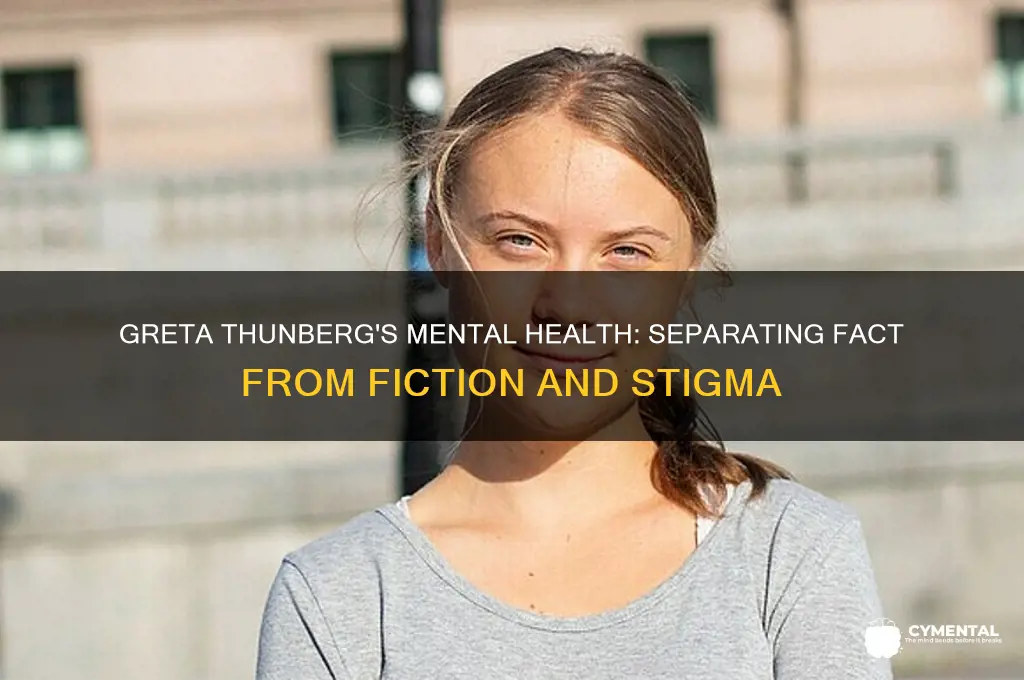
Greta Thunberg, the globally recognized climate activist, has faced intense scrutiny and speculation regarding her mental health, with some critics questioning whether her passionate advocacy stems from underlying psychological issues. While Thunberg has openly discussed her diagnosis of Asperger’s syndrome, a form of autism, she has emphasized that it is a gift rather than a limitation, enabling her to focus intensely on her mission. However, detractors have often weaponized her neurodivergence to discredit her activism, sparking debates about the intersection of mental health, public figures, and societal perceptions. This discourse raises important questions about how we discuss and interpret the mental well-being of individuals in the public eye, particularly those advocating for systemic change.
| Characteristics | Values |
|---|---|
| Diagnosed Conditions | Asperger's Syndrome, OCD (Obsessive-Compulsive Disorder), Selective Mutism (previously) |
| Public Disclosure | Greta Thunberg herself has openly discussed her diagnoses |
| Impact on Activism | She credits her Asperger's with helping her focus intensely on climate change |
| Public Perception | Some criticize her, using her diagnoses to discredit her activism, while others praise her resilience |
| Professional Opinion | Mental health professionals emphasize her diagnoses do not diminish her message or intelligence |
| Recent Updates (as of October 2023) | No new publicly disclosed diagnoses or significant changes in her mental health status |
Explore related products


What You'll Learn
- Diagnosed Conditions: Confirmed Asperger’s, OCD, and selective mutism by Greta herself
- Public Scrutiny: Intense media and online criticism affecting her mental health
- Activism Toll: Emotional strain from global climate advocacy and pressure
- Support Systems: Role of family, friends, and therapy in her well-being
- Stigma Debate: Discussions on mental health awareness vs. exploitation in her case

Diagnosed Conditions: Confirmed Asperger’s, OCD, and selective mutism by Greta herself
Greta Thunberg, the young climate activist who has captured global attention, has openly discussed her neurodivergent conditions: Asperger’s syndrome, Obsessive-Compulsive Disorder (OCD), and selective mutism. These diagnoses, confirmed by Greta herself, are not mere labels but integral aspects of her identity and activism. By embracing her neurodiversity, she challenges societal stigma and reframes these conditions as strengths rather than weaknesses. Her transparency has sparked conversations about how neurodivergent individuals can bring unique perspectives to complex issues like climate change.
Analyzing the interplay between Greta’s conditions and her activism reveals a fascinating dynamic. Asperger’s, a form of autism, often manifests as intense focus and attention to detail—traits Greta channels into her advocacy. Her OCD, characterized by repetitive thoughts and behaviors, fuels her unwavering commitment to her cause. Selective mutism, which limits speech in certain situations, has not silenced her but instead amplified her message through deliberate, impactful communication. These conditions, rather than hindering her, have become tools in her arsenal, shaping her approach to activism.
For parents or caregivers of neurodivergent children, Greta’s story offers actionable insights. Encourage children to explore their passions with the same intensity Greta applies to climate activism. For instance, if a child with Asperger’s shows interest in environmental science, provide resources like age-appropriate documentaries or hands-on projects, such as planting a garden. For OCD tendencies, establish structured routines that include time for both advocacy and self-care. Speech therapy or creative outlets like writing can help children with selective mutism find their voice, just as Greta has done through her speeches and social media presence.
Comparing Greta’s journey to broader societal perceptions of neurodivergence highlights a critical shift. Historically, conditions like Asperger’s and OCD have been pathologized, but Greta’s success demonstrates their potential as catalysts for change. Her ability to hyper-focus on climate data, for example, mirrors the strengths of many neurodivergent individuals in STEM fields. This comparative perspective encourages a reevaluation of how we view mental health diagnoses, urging a move from deficit-based to ability-focused narratives.
Descriptively, Greta’s activism embodies the power of embracing one’s neurodivergent traits. Her speeches, though concise, carry immense weight, reflecting her selective mutism’s influence. Her OCD-driven meticulousness ensures her arguments are grounded in scientific fact, while her Asperger’s-fueled determination keeps her message consistent. Together, these conditions create a unique advocacy style that resonates globally. Greta’s story is a testament to the idea that neurodiversity is not a barrier but a bridge to meaningful impact.
HIV-Positive Orphans: Exploring Mental Health Challenges and Support Needs
You may want to see also
Explore related products



Public Scrutiny: Intense media and online criticism affecting her mental health
Greta Thunberg, a name synonymous with climate activism, has faced a deluge of public scrutiny since her rise to prominence. The intense media and online criticism directed at her has sparked concerns about its impact on her mental health. While Thunberg has been vocal about her Asperger’s syndrome, the relentless attacks on her character, appearance, and motives have raised questions about the psychological toll of such exposure. This scrutiny is not merely a byproduct of her fame but a calculated attempt to undermine her message, often leveraging personal attacks rather than addressing the substance of her advocacy.
Consider the mechanics of online harassment: a single tweet criticizing Thunberg’s demeanor can amass thousands of retweets, amplifying the negativity exponentially. Studies show that adolescents, particularly those in the public eye, are more susceptible to the adverse effects of cyberbullying, with symptoms ranging from anxiety to depression. Thunberg, though resilient, is not immune to this. For instance, her viral speech at the UN, while celebrated by many, also triggered a wave of mockery and ridicule, with memes and derogatory comments flooding social media platforms. This duality of praise and condemnation creates a volatile environment that can erode mental well-being over time.
To mitigate the impact of such scrutiny, practical steps can be taken. First, setting boundaries with social media consumption is crucial. Thunberg herself has spoken about limiting her exposure to negative comments, a strategy supported by mental health professionals. Second, fostering a strong support network—whether family, friends, or peers—can provide a buffer against external criticism. Third, engaging in mindfulness practices or therapy can help process the emotional weight of public attacks. For activists or public figures, these steps are not just recommendations but necessities for sustaining mental health in the face of relentless scrutiny.
Comparatively, Thunberg’s experience mirrors that of other young activists who have faced similar backlash. Malala Yousafzai, for instance, endured global criticism for her advocacy, yet her mental resilience was bolstered by a clear sense of purpose and a supportive community. Thunberg’s case, however, is unique due to the intersection of her neurodivergence and the polarizing nature of climate discourse. This combination amplifies the scrutiny, making it not just about her actions but her very identity. Such targeted attacks underscore the need for a societal shift in how we engage with public figures, particularly those advocating for critical causes.
Ultimately, the scrutiny faced by Greta Thunberg serves as a cautionary tale about the darker side of public life. While her resilience is commendable, it should not overshadow the systemic issue of how media and online platforms weaponize criticism. Addressing this requires not only individual strategies for coping but also collective efforts to foster a more empathetic and constructive public discourse. Thunberg’s mental health, in this context, is not just her concern but a reflection of how we treat those who dare to challenge the status quo.
Recognizing Mental Health Issues: Essential Signs and Early Detection Tips
You may want to see also
Explore related products


$7.99 $9.99


Activism Toll: Emotional strain from global climate advocacy and pressure
The relentless pursuit of global climate advocacy can exact a profound emotional toll on activists, a reality that has been starkly illuminated through the experiences of figures like Greta Thunberg. Public scrutiny, the weight of global expectations, and the constant confrontation with systemic inaction create a caustic environment for mental health. Thunberg’s own transparency about her struggles—including diagnoses of autism, OCD, and selective mutism—has sparked conversations about the intersection of activism and emotional resilience. Her case underscores a broader issue: the psychological strain of being both a symbol of hope and a target of criticism in a polarizing global debate.
Consider the daily realities of high-profile climate activists. They face a barrage of media attention, often amplified by social media, where every word and action is dissected, praised, or condemned. For young activists like Thunberg, this scrutiny is compounded by the developmental challenges of adolescence. Research from the *Journal of Adolescent Health* highlights that youth activists are particularly vulnerable to anxiety and burnout due to the mismatch between their age and the enormity of the issues they champion. Practical steps to mitigate this include setting boundaries with media exposure, cultivating a supportive peer network, and integrating mindfulness practices into daily routines—even 10 minutes of guided meditation can reduce stress levels by up to 14%, according to a study by the American Psychological Association.
The emotional toll of climate advocacy is not merely personal; it is systemic. Activists often internalize the failures of global leaders to act decisively on climate change, experiencing a form of "ecological grief" or "solastalgia"—a distress caused by environmental degradation. Thunberg’s speeches, marked by their raw urgency, reflect this burden. To address this, activists should adopt a collective approach, sharing the weight of advocacy through decentralized movements. Organizations like Fridays for Future model this by distributing leadership roles, reducing the pressure on any single individual. Additionally, incorporating regular "hope audits"—moments to celebrate small victories—can counteract feelings of despair.
A comparative analysis reveals that while Thunberg’s visibility has amplified her struggles, it has also normalized discussions around mental health in activism. Historically, activists like Martin Luther King Jr. faced similar pressures but operated in an era where mental health was stigmatized. Today, activists have access to resources like therapy, digital detox strategies, and mental health first aid training. However, these tools are not universally accessible, particularly in low-income regions where climate impacts are most severe. Bridging this gap requires funding mental health services for activists globally and integrating psychological support into advocacy training programs.
In conclusion, the emotional strain of global climate advocacy is a multifaceted issue that demands proactive solutions. By learning from Thunberg’s experiences, activists can prioritize mental well-being without diminishing their impact. This includes setting realistic goals, fostering community support, and leveraging professional resources. The fight for the planet cannot come at the expense of those leading the charge. As Thunberg herself has said, "Our house is on fire," but the firefighters must also be cared for if they are to sustain the battle.
Understanding Mental Health: A Guide to Getting Tested for Issues
You may want to see also
Explore related products





Support Systems: Role of family, friends, and therapy in her well-being
Greta Thunberg’s public journey with Asperger’s syndrome and her activism has sparked global conversations about mental health. While her condition is not a disorder, it highlights the importance of robust support systems for individuals navigating neurodiversity and high-pressure environments. Family, friends, and therapy play distinct yet interconnected roles in fostering well-being, each contributing uniquely to emotional resilience and stability.
Family as the Foundation: Structured Support and Advocacy
Thunberg’s family has been instrumental in her journey, providing a structured environment that accommodates her needs. Her parents, particularly her mother, Malena Ernman, have openly discussed their role in balancing her activism with her well-being. For families supporting neurodivergent individuals, consistency is key. Establishing routines—such as dedicated downtime after public engagements or sensory-friendly spaces at home—can mitigate overwhelm. Parents and caregivers should also advocate for their child’s needs in external settings, whether at school or in public forums, ensuring accommodations like quiet breaks or clear communication protocols are in place.
Friends as Peer Anchors: Emotional Validation and Normalcy
While Thunberg’s public life is extraordinary, her friendships serve as a grounding force, offering emotional validation and a sense of normalcy. Peer relationships are vital for neurodivergent individuals, as they provide opportunities for social learning and emotional expression outside familial roles. Friends can act as informal support by simply being present, listening without judgment, and engaging in shared interests. For those supporting someone like Thunberg, encouraging peer connections through structured activities (e.g., small group outings or shared projects) can foster meaningful bonds while minimizing social anxiety.
Therapy as a Professional Pillar: Tailored Strategies and Coping Mechanisms
Therapy has likely played a critical role in Thunberg’s ability to manage stress and emotional challenges. Cognitive-behavioral therapy (CBT), for instance, is often effective for neurodivergent individuals, helping them reframe overwhelming thoughts and develop coping strategies. For activists or high-profile figures, therapists can provide tools to manage public scrutiny, such as mindfulness techniques or boundary-setting exercises. Practical tips include starting therapy early to build a foundation of resilience, ensuring therapists are experienced with neurodiversity, and integrating sessions into a regular schedule (e.g., weekly 50-minute sessions).
Integrating Support Systems: A Holistic Approach
The synergy between family, friends, and therapy creates a holistic support network. For example, families can collaborate with therapists to implement strategies at home, while friends can reinforce coping mechanisms in social settings. A cautionary note: over-reliance on any one pillar can lead to burnout or imbalance. Families should avoid becoming sole caregivers, friends should not feel pressured to provide professional-level support, and therapy should complement, not replace, natural social interactions. By maintaining this balance, support systems can empower individuals like Thunberg to thrive in their unique paths.
Domestic Violence and Mental Health: Unraveling the Complex Connection
You may want to see also
Explore related products



Stigma Debate: Discussions on mental health awareness vs. exploitation in her case
Greta Thunberg’s public diagnosis of autism and selective mutism has sparked a polarized debate: does her openness destigmatize mental health conditions, or does it invite exploitation of her vulnerabilities for political agendas? Critics argue that her activism is weaponized by adults, leveraging her neurodivergence to amplify her message, while supporters see her as a courageous advocate challenging societal taboos. This tension highlights the fine line between empowerment and manipulation in mental health discourse.
Consider the mechanics of stigma reduction. When public figures disclose mental health conditions, they normalize conversations, as seen with Thunberg’s candid discussions about her autism. Research shows that such visibility can reduce prejudice by 20–30% among audiences exposed to these narratives. However, this effect hinges on context. If Thunberg’s condition is framed as the *reason* for her activism—rather than a part of her identity—it risks perpetuating the myth that neurodivergence inherently equates to moral authority or exceptionalism. This subtle exploitation undermines genuine awareness.
To navigate this ethically, focus on agency and intent. Advocates should emphasize Thunberg’s autonomy in choosing her platform, not her diagnosis as a catalyst for her work. For instance, instead of saying, “Her autism drives her passion,” reframe it as, “She uses her voice to address issues she cares about, informed by her unique perspective.” This shifts the narrative from pathology to personhood. Practical tip: When discussing mental health in public figures, avoid phrases like “suffers from” or “despite their condition,” which imply limitation rather than diversity.
A comparative lens reveals the stakes. While Thunberg’s case is debated, figures like Temple Grandin have been celebrated for their achievements *with* autism, not because of it. The difference lies in how their narratives are constructed. Thunberg’s critics often dissect her mental health to discredit her, while Grandin’s story is framed as one of overcoming societal barriers. This underscores the need for consistent standards in how we discuss neurodivergence across contexts.
Ultimately, the Thunberg debate serves as a cautionary tale. Mental health awareness thrives when it centers dignity and complexity, not when it reduces individuals to their diagnoses. Advocates must ask: Are we amplifying her voice, or are we using her condition as a prop? The answer determines whether we’re fostering understanding or perpetuating stigma under the guise of progress.
Healing Minds: Practical Strategies to Overcome Mental Health Challenges
You may want to see also
Frequently asked questions
Greta Thunberg has publicly disclosed that she has been diagnosed with Asperger’s syndrome, a form of autism, as well as obsessive-compulsive disorder (OCD) and selective mutism. She has framed these conditions as a source of strength, referring to them as her "superpower."
Greta Thunberg has stated that her Asperger’s syndrome allows her to focus intensely on issues like climate change, as she tends to think in black and white terms. Her selective mutism, which causes her to speak only when necessary, has also shaped her direct and impactful communication style in her activism.
Yes, Greta Thunberg has faced criticism and stigmatization from some individuals and media outlets who have used her mental health conditions to dismiss or undermine her activism. However, she and her supporters argue that her conditions do not invalidate her message and that such criticism reflects broader societal misconceptions about neurodiversity.