Harper Lewis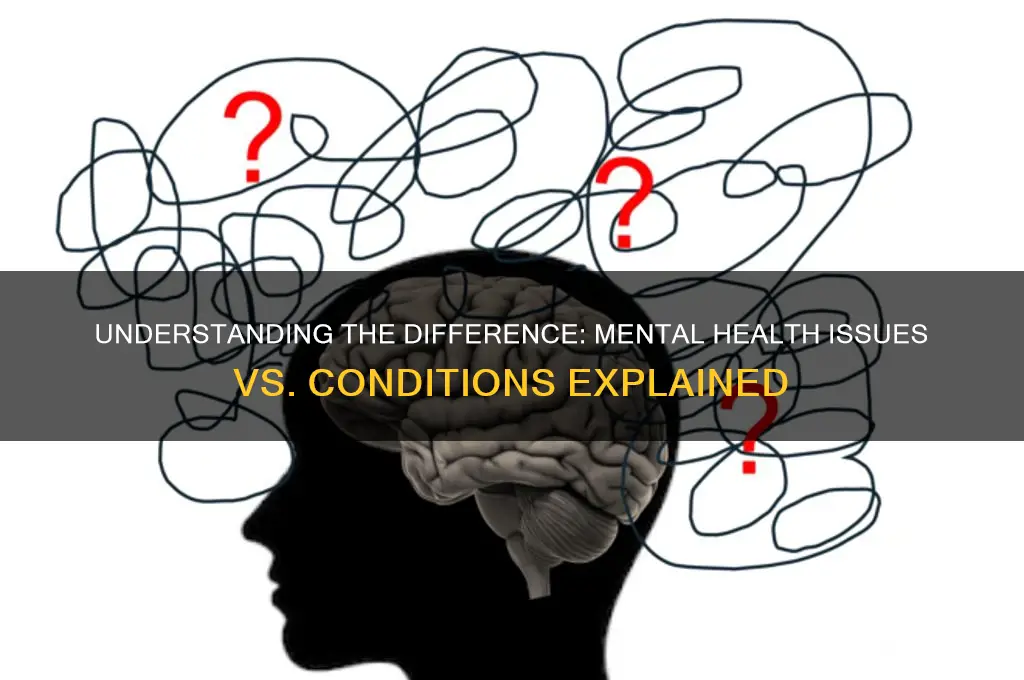
The distinction between a mental health issue and a mental health condition is often blurred, yet understanding the difference is crucial for accurate communication and effective support. While both terms relate to emotional, psychological, or behavioral challenges, they carry nuanced implications. A mental health issue typically refers to temporary or situational struggles, such as stress, grief, or adjustment difficulties, which may resolve with time or intervention. In contrast, a mental health condition generally denotes diagnosable disorders, like depression, anxiety, or schizophrenia, that are often chronic, clinically defined, and may require ongoing treatment. Clarifying this distinction fosters empathy, reduces stigma, and ensures individuals receive appropriate care tailored to their needs.
Explore related products




What You'll Learn
- Understanding the Terminology: Differentiating between issue and condition in mental health contexts
- Stigma and Language: How word choice impacts perception and societal attitudes toward mental health
- Clinical Diagnosis: When symptoms meet criteria for a recognized mental health condition
- Temporary vs. Chronic: Distinguishing short-term issues from long-term mental health conditions
- Seeking Professional Help: Importance of assessment to determine if it’s an issue or condition

Understanding the Terminology: Differentiating between issue and condition in mental health contexts
Language matters, especially in mental health. The terms "issue" and "condition" are often used interchangeably, but they carry distinct nuances that can impact perception and treatment. "Issue" implies a problem or challenge, often situational and potentially resolvable. "Condition," on the other hand, suggests a more enduring state, often rooted in biological or psychological factors. This distinction is crucial for accurate communication and effective care.
Consider anxiety. Referring to it as a "mental health issue" might emphasize its situational triggers, like stress at work or social pressures, and suggest that coping strategies or lifestyle changes could alleviate it. Calling it a "mental health condition," however, might highlight its chronic nature, potentially involving genetic predispositions or neurochemical imbalances, and point toward long-term management through therapy or medication. For instance, generalized anxiety disorder (GAD) is typically classified as a condition, requiring ongoing treatment, while exam-related anxiety might be framed as an issue, addressable through temporary interventions like mindfulness techniques or study skills training.
The choice of terminology also influences stigma. Labeling someone’s experience as an "issue" can inadvertently minimize its severity, implying it’s something they should "just get over." Conversely, "condition" may medicalize the experience, which, while validating for some, can feel disempowering for others by emphasizing pathology over personal agency. For example, a teenager experiencing depression might feel more understood if their struggle is acknowledged as a condition requiring professional support, but they might also resist this label if it makes them feel defined by their diagnosis.
To navigate this, consider context and intent. In clinical settings, precision is key—using "condition" for diagnosable disorders like schizophrenia or bipolar disorder aligns with medical terminology and treatment protocols. In everyday conversations, "issue" can be more approachable, fostering openness without imposing clinical connotations. For instance, a manager discussing employee well-being might use "mental health issues" to encourage dialogue without assuming medical diagnoses.
Ultimately, the goal is empathy and clarity. Ask yourself: What message am I conveying? How might this term affect the person’s perception of their experience? For practical guidance, start by listening to how individuals describe their own struggles. If they use "issue," follow their lead; if they identify with a diagnosed "condition," respect that framework. And remember, language evolves—stay informed about current usage and prioritize what best supports understanding and compassion.
Supporting Your Spouse: Navigating Mental Health Challenges Together
You may want to see also
Explore related products


$22.22 $46


Stigma and Language: How word choice impacts perception and societal attitudes toward mental health
Language is a powerful tool that shapes how we perceive and interact with the world, especially when it comes to mental health. The choice between "mental health issue" and "mental health condition" may seem trivial, but it carries significant weight in reducing stigma. "Issue" implies a problem to be solved, often framing mental health as a personal failing or temporary inconvenience. In contrast, "condition" acknowledges a persistent state that requires understanding and support, aligning with medical and scientific discourse. This subtle shift in terminology can influence societal attitudes, encouraging empathy over judgment.
Consider the impact of language on individuals seeking help. A person labeled as having a "mental health issue" might feel pressured to "fix" themselves quickly, internalizing shame if they cannot. Conversely, referring to a "mental health condition" validates their experience as legitimate and deserving of long-term care. For example, a teenager diagnosed with anxiety may feel more empowered to seek therapy if their struggle is framed as a manageable condition rather than a personal shortcoming. This reframing can reduce self-stigma and foster a sense of agency.
To combat stigma effectively, organizations and individuals must adopt intentional language practices. Start by replacing stigmatizing terms like "crazy" or "broken" with neutral, person-first language. For instance, say "a person with depression" instead of "a depressed person." Additionally, avoid sensationalist phrases like "battle with mental illness," which can inadvertently glorify suffering. Instead, use matter-of-fact descriptions that normalize mental health care, such as "managing anxiety through therapy." These small changes can cumulatively shift public perception.
Educators, healthcare providers, and media professionals play a critical role in modeling inclusive language. Incorporate workshops on mental health terminology into professional development programs, emphasizing the impact of words on patient outcomes. For parents and caregivers, encourage open conversations with children using age-appropriate language, such as explaining anxiety as "worry that feels extra big." By normalizing these discussions early, we can dismantle stigma before it takes root in the next generation.
Ultimately, the goal is to create a linguistic environment where mental health is discussed with the same clarity and compassion as physical health. While changing societal attitudes takes time, every conscious word choice brings us closer to a world where no one feels diminished by their diagnosis. Language is not just a reflection of our values—it’s a catalyst for change. Choose your words wisely, and you’ll contribute to a culture that prioritizes understanding over fear.
Supporting Teens: Practical Strategies for Mental Health and Well-Being
You may want to see also
Explore related products


$16.96 $18.99


Clinical Diagnosis: When symptoms meet criteria for a recognized mental health condition
Symptoms alone do not define a mental health condition. A clinical diagnosis requires a precise alignment of those symptoms with established criteria, as outlined in diagnostic manuals like the *Diagnostic and Statistical Manual of Mental Disorders* (DSM-5) or the *International Classification of Diseases* (ICD-11). For example, persistent sadness and loss of interest in activities are common symptoms, but to diagnose Major Depressive Disorder, these must persist for at least two weeks and significantly impair functioning, among other criteria. This distinction ensures that fleeting emotional states are not mislabeled as chronic conditions.
Consider the process of diagnosing Generalized Anxiety Disorder (GAD). A person experiencing worry is not automatically diagnosed with GAD. Clinicians assess whether the worry is excessive, difficult to control, and present more days than not for at least six months. Additionally, the worry must be accompanied by symptoms like restlessness, fatigue, or sleep disturbances. This structured approach prevents overdiagnosis and ensures that treatment is tailored to the specific condition, not just the symptom.
The diagnostic process is not without challenges. Criteria can sometimes feel rigid, failing to capture the complexity of individual experiences. For instance, a person may meet most but not all criteria for Post-Traumatic Stress Disorder (PTSD), yet still require intervention. Clinicians must balance adherence to guidelines with clinical judgment, often incorporating additional tools like rating scales or functional assessments to refine their understanding. This nuanced approach ensures that diagnosis is a starting point, not the entirety, of care.
Practical tips for individuals seeking diagnosis include documenting symptoms over time, noting their frequency, intensity, and impact on daily life. Bringing this information to a mental health professional can streamline the assessment process. It’s also crucial to be honest about substance use, medical history, and any previous treatments, as these factors can influence diagnosis and treatment planning. Remember, a clinical diagnosis is not a label but a tool to access effective, evidence-based care.
In conclusion, a clinical diagnosis transforms a collection of symptoms into a recognized mental health condition by applying standardized criteria. This process ensures clarity, consistency, and access to targeted interventions. While it may seem rigid, it is designed to serve as a foundation for personalized care, adapting to the unique needs of each individual. Understanding this distinction empowers both clinicians and patients to navigate mental health with precision and purpose.
Understanding Anger: Mental Health Implications and Effective Coping Strategies
You may want to see also
Explore related products




Temporary vs. Chronic: Distinguishing short-term issues from long-term mental health conditions
Mental health challenges manifest on a spectrum, with some experiences fleeting and others enduring. Distinguishing between temporary issues and chronic conditions is crucial for effective management and treatment. Temporary mental health issues, such as situational anxiety or grief, often arise in response to specific stressors and typically resolve within weeks or months. Chronic conditions, like major depressive disorder or schizophrenia, persist over years and require ongoing care. Understanding this difference empowers individuals to seek appropriate support and fosters a more nuanced approach to mental health.
Consider a 28-year-old professional experiencing panic attacks after a job loss. This acute stress response, characterized by rapid heartbeat and shortness of breath, aligns with a temporary issue. Treatment might involve short-term therapy (e.g., cognitive-behavioral therapy) and relaxation techniques. In contrast, a 45-year-old diagnosed with bipolar disorder faces a chronic condition marked by recurrent manic and depressive episodes. Their treatment plan could include mood stabilizers (e.g., lithium at 900–1200 mg/day), psychotherapy, and lifestyle adjustments to manage symptoms long-term. The key distinction lies in duration and the need for sustained intervention.
Analyzing the impact on daily functioning further clarifies this divide. Temporary issues may disrupt routines temporarily but rarely alter long-term goals. For instance, a college student experiencing exam-related burnout might miss a few classes but can recover with rest and time management strategies. Conversely, chronic conditions often necessitate significant lifestyle modifications. A person with obsessive-compulsive disorder (OCD) might spend hours daily performing rituals, affecting work, relationships, and overall quality of life. Recognizing these functional differences aids in tailoring interventions to individual needs.
Practical tips for distinguishing between the two include tracking symptom duration and intensity. If symptoms persist beyond three months or recur frequently, consult a mental health professional for evaluation. Keep a journal to note triggers, coping mechanisms, and progress. For temporary issues, focus on self-care practices like mindfulness, exercise, and social support. For chronic conditions, prioritize adherence to prescribed treatments and regular check-ins with a healthcare provider. Early identification and proactive management can mitigate the severity of both temporary and chronic mental health challenges.
In conclusion, the distinction between temporary and chronic mental health conditions hinges on duration, impact, and treatment approach. While temporary issues often resolve with time and targeted interventions, chronic conditions demand ongoing care and adaptation. By understanding these differences, individuals can navigate their mental health journeys more effectively, ensuring they receive the right support at the right time.
Imagining Non-Existent People: Mental Health Concern or Creative Expression?
You may want to see also
Explore related products


Seeking Professional Help: Importance of assessment to determine if it’s an issue or condition
The distinction between a mental health issue and a mental health condition isn't merely semantic—it shapes treatment, prognosis, and even insurance coverage. A fleeting bout of anxiety after a job interview might be an issue, while persistent panic attacks could indicate a condition like generalized anxiety disorder. Without professional assessment, self-diagnosis risks mislabeling temporary struggles as chronic illnesses or vice versa, leading to unnecessary medication or delayed intervention.
Consider this scenario: A 28-year-old experiences insomnia and irritability after a breakup. They assume it’s "just stress" and self-medicate with melatonin. Months later, symptoms worsen, revealing underlying bipolar disorder. Had they sought assessment, a psychiatrist might have identified hypomanic episodes masked by situational triggers, prescribing mood stabilizers instead of sleep aids. This example underscores why professional evaluation isn’t optional—it’s diagnostic triage.
Assessment tools like the DSM-5 or ICD-11 provide clinicians with criteria to differentiate issues (transient, context-specific) from conditions (chronic, biologically rooted). For instance, grief after a loss is an issue unless it evolves into major depressive disorder, marked by anhedonia lasting over two weeks. A psychologist might use structured interviews, symptom checklists, or cognitive tests to pinpoint severity, ruling out comorbidities like thyroid dysfunction that mimic mental health symptoms.
Here’s a practical tip: If symptoms persist beyond three months, interfere with daily functioning, or involve suicidal ideation, seek assessment immediately. Bring a symptom journal noting frequency, triggers, and duration to aid diagnosis. Avoid downplaying concerns—phrases like “It’s probably nothing” can delay critical care. Remember, early intervention for conditions like PTSD or schizophrenia improves outcomes significantly, often reducing medication dosages (e.g., starting SSRIs at 20mg/day instead of 40mg/day for anxiety disorders).
Ultimately, assessment isn’t about labeling but about tailoring solutions. Issues might resolve with therapy or lifestyle changes, while conditions may require medication or long-term management. Misclassification wastes time and resources, akin to treating a headache with chemotherapy. By prioritizing professional evaluation, individuals ensure their mental health strategy is as precise as it is compassionate.
Singulair and Mental Health: Frequency of Psychological Side Effects
You may want to see also
Frequently asked questions
A mental health issue is a broader term that refers to any challenge or struggle related to mental well-being, such as stress, anxiety, or mood fluctuations. A mental health condition, on the other hand, is a diagnosable disorder recognized by medical professionals, such as depression, bipolar disorder, or schizophrenia.
Yes, untreated or persistent mental health issues can sometimes escalate into diagnosable mental health conditions. For example, prolonged stress or anxiety may lead to generalized anxiety disorder or major depressive disorder if not addressed.
Mental health issues are often temporary and situational, while mental health conditions are typically long-term and impact daily functioning. Consulting a mental health professional is the best way to determine whether your symptoms meet the criteria for a diagnosable condition.