Ava Ramirez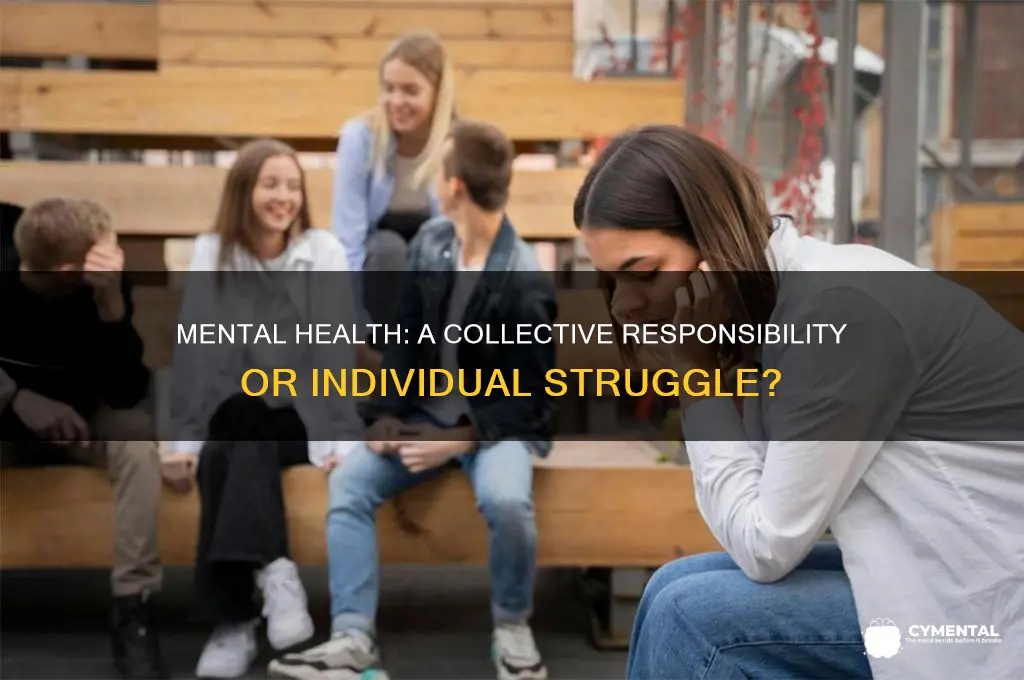
Mental health is increasingly recognized as a societal issue rather than solely an individual concern, as its impact extends far beyond the person experiencing it. Societal factors such as economic inequality, systemic discrimination, inadequate access to healthcare, and cultural stigma play significant roles in shaping mental well-being. Issues like poverty, unemployment, and social isolation can exacerbate mental health challenges, while societal norms and policies often determine the availability and quality of support systems. Furthermore, the collective stress of global crises, such as pandemics or climate change, highlights how mental health is deeply intertwined with broader social and environmental conditions. Addressing mental health, therefore, requires not only individual interventions but also systemic changes to create a more supportive and equitable society.
| Characteristics | Values |
|---|---|
| Prevalence | 1 in 8 people globally live with a mental health disorder (WHO, 2023). |
| Economic Impact | Mental health issues cost the global economy $1 trillion annually in lost productivity (WHO, 2023). |
| Stigma and Discrimination | 80% of individuals with mental health conditions report stigma (NAMI, 2023). |
| Access to Care | 75% of people in low-income countries lack access to mental health treatment (WHO, 2023). |
| Social Determinants | Poverty, inequality, and social exclusion are linked to higher mental health risks (CDC, 2023). |
| Workplace Impact | Mental health issues account for 12 billion lost workdays annually (WHO, 2023). |
| Youth and Education | 50% of mental health disorders begin by age 14, affecting education (WHO, 2023). |
| Healthcare Burden | Mental health accounts for 13% of the global disease burden (WHO, 2023). |
| Policy and Funding | Only 2% of national health budgets are allocated to mental health globally (WHO, 2023). |
| Intersectionality | Marginalized groups (e.g., LGBTQ+, racial minorities) face higher mental health risks (APA, 2023). |
Explore related products


What You'll Learn

Stigma and discrimination against people with mental illness
To dismantle this stigma, education must become a cornerstone of societal change. Schools, workplaces, and community centers should implement mandatory mental health literacy programs that challenge misconceptions and foster empathy. For instance, teaching the fact that 1 in 4 people globally will experience a mental health issue in their lifetime can humanize the struggle and reduce the "otherness" often associated with these conditions. Pairing this with practical strategies, such as active listening and recognizing early warning signs, empowers individuals to support peers without judgment. However, caution must be taken to avoid tokenistic efforts; programs should be evidence-based and continuously evaluated for impact.
A comparative analysis of countries like New Zealand and the United States reveals the power of policy in combating stigma. New Zealand’s "Like Minds, Like Mine" campaign, launched in 1997, has significantly reduced discriminatory attitudes by using personal stories to normalize mental illness. In contrast, the U.S. lacks a cohesive national campaign, leaving stigma reduction to fragmented local efforts. This underscores the need for governments to invest in large-scale, long-term initiatives that address stigma at its roots. Policymakers should also consider incentivizing businesses to adopt mental health-friendly practices, such as flexible work hours or subsidized therapy, to create systemic change.
Finally, the role of media cannot be overstated in shaping public perception. Portrayals of mental illness in film and television often rely on stereotypes—the violent schizophrenic, the suicidal depressive—which reinforce fear and misunderstanding. Media creators must commit to accurate, nuanced representations that reflect the diversity of mental health experiences. For example, the Netflix series *BoJack Horseman* offers a complex portrayal of depression and addiction, challenging viewers to empathize rather than stigmatize. By holding media accountable and supporting creators who prioritize authenticity, society can begin to rewrite the narrative around mental illness.
In conclusion, stigma and discrimination against people with mental illness are not inevitable; they are products of ignorance, fear, and systemic neglect. By combining education, policy, and media reform, society can create an environment where mental illness is understood, accepted, and supported. The cost of inaction is too high—lost potential, shattered lives, and a fractured social fabric. The time to act is now.
Supporting Mental Health: Compassionate Ways to Encourage and Uplift Others
You may want to see also
Explore related products


$42.55 $55.99


Impact of socioeconomic factors on mental health outcomes
Socioeconomic factors—income, education, employment, and housing—are not mere background details in the story of mental health; they are central characters. Research consistently shows that individuals in lower socioeconomic brackets face a disproportionately higher risk of mental health disorders. For instance, a study published in *The Lancet* found that people living in poverty are twice as likely to experience depression compared to their wealthier counterparts. This disparity isn’t coincidental; it’s systemic. Limited access to resources creates a cycle of stress, instability, and hopelessness that erodes mental well-being over time.
Consider the role of employment, a cornerstone of socioeconomic status. Job insecurity or unemployment doesn’t just drain bank accounts—it depletes mental resilience. A 2020 report by the World Health Organization highlighted that prolonged unemployment increases the risk of anxiety and depression by up to 40%. Even employed individuals aren’t immune if their jobs are precarious or low-paying. The constant pressure to make ends meet, coupled with a lack of control over work conditions, fosters chronic stress, a known precursor to mental health issues. Employers and policymakers take note: investing in job stability and fair wages isn’t just an economic strategy—it’s a mental health intervention.
Education, another socioeconomic pillar, shapes mental health outcomes from an early age. Children from low-income families often attend underfunded schools, limiting their access to quality education and supportive environments. This gap widens as they grow, with fewer opportunities for higher education or skill development. The result? A sense of exclusion and diminished self-worth, which can manifest as anxiety, depression, or even substance abuse. Here’s a practical tip: schools and communities can mitigate this by offering mentorship programs, mental health workshops, and affordable tutoring services to level the playing field.
Housing instability adds another layer of complexity. Imagine the toll of worrying about eviction or living in overcrowded, unsafe conditions. A study in *Social Science & Medicine* revealed that individuals experiencing homelessness are 15 times more likely to report severe psychological distress. Stable housing isn’t just a basic need—it’s a foundation for mental health. Governments and nonprofits can address this by expanding affordable housing initiatives and providing mental health resources tailored to at-risk populations.
The takeaway is clear: mental health isn’t an individual struggle in a vacuum; it’s deeply intertwined with socioeconomic realities. Addressing these disparities requires systemic change—policies that reduce poverty, improve access to education, stabilize employment, and ensure safe housing. Until then, mental health initiatives must incorporate socioeconomic factors to be truly effective. After all, a society’s well-being is only as strong as its most vulnerable members.
Supporting Your Son's Mental Health: Practical Steps for Parents
You may want to see also
Explore related products

$31.08 $44.95



Role of media in shaping mental health perceptions
Media doesn't just reflect societal attitudes toward mental health—it actively constructs them. Consider the portrayal of characters with mental illness in film and television. A 2019 study by the American Psychological Association found that 60% of characters depicted with mental health conditions were shown as dangerous or unpredictable, perpetuating harmful stereotypes. These representations seep into public consciousness, influencing how we perceive and interact with individuals facing mental health challenges. When media frames mental illness as a source of violence or ridicule, it discourages empathy and fosters stigma, making it less likely for people to seek help.
Now, let’s shift focus to social media, a double-edged sword in mental health discourse. Platforms like Instagram and TikTok can amplify awareness campaigns, such as #MentalHealthAwarenessMonth, reaching millions with personal stories and educational content. However, the same platforms often glorify unattainable lifestyles, contributing to anxiety and depression, particularly among adolescents. A 2021 study published in *JAMA Pediatrics* revealed that teens who spent more than three hours daily on social media were at a higher risk of developing mental health issues. The paradox here is clear: while social media can be a tool for advocacy, its algorithmic prioritization of engagement often rewards sensationalism over accuracy, muddying the waters of public understanding.
To counteract these effects, media creators must adopt ethical guidelines. For instance, journalists should avoid using stigmatizing language like “schizophrenic” or “crazy” and instead opt for person-first language, such as “individual with schizophrenia.” Broadcasters can include mental health resources at the end of programs featuring sensitive topics, as seen in Netflix’s *13 Reasons Why*, which added a disclaimer and crisis hotline information after criticism. Similarly, influencers should disclose sponsorships for wellness products to maintain transparency and avoid exploiting vulnerable audiences. These steps, though small, can collectively reshape narratives and reduce harm.
Finally, media literacy is a critical tool for audiences to navigate this landscape. Teaching individuals, especially young people, to critically analyze media messages can empower them to question stereotypes and seek reliable information. Schools can integrate media literacy into health education curricula, covering topics like identifying biased portrayals and understanding the impact of algorithmic content curation. Parents can model this behavior by discussing media consumption with their children, encouraging them to ask questions like, “Who benefits from this message?” or “What’s being left out of this story?” By fostering a more informed and skeptical audience, we can mitigate the media’s negative influence and promote a more nuanced understanding of mental health.
Understanding ADHD: Mental Health Condition or Neurodevelopmental Difference?
You may want to see also
Explore related products





Accessibility and affordability of mental health care services
Mental health care remains out of reach for millions due to prohibitive costs and limited availability, particularly in underserved communities. In the United States, nearly 60% of counties lack a single practicing psychiatrist, leaving rural residents with few options beyond telehealth or lengthy travel. Even in urban areas, the average cost of a therapy session ranges from $100 to $250, placing it beyond the means of many without comprehensive insurance. Globally, the situation is starker: the World Health Organization reports that low-income countries allocate less than $2 per capita annually to mental health, compared to over $50 in high-income nations. This disparity underscores how affordability and accessibility are not just individual struggles but systemic failures with societal repercussions.
Consider the case of a 28-year-old in a low-income neighborhood who works two jobs to support their family. Despite experiencing symptoms of anxiety and depression, they cannot afford the $150 weekly therapy sessions or the $400 monthly prescription for SSRIs. Their employer-provided insurance covers only 50% of mental health services, leaving them to choose between treatment and basic necessities. This scenario is not uncommon; a 2021 study found that 40% of Americans delayed or skipped mental health care due to cost. For marginalized groups—including racial minorities, LGBTQ+ individuals, and those with disabilities—these barriers are compounded by stigma and discrimination, further limiting access to culturally competent care.
To address these gaps, policymakers and healthcare providers must adopt multi-faceted strategies. First, insurance reforms are critical. Mandating parity between mental and physical health coverage, as outlined in the Mental Health Parity and Addiction Equity Act, is a start, but enforcement remains inconsistent. Second, expanding public funding for community mental health centers can bridge the gap in underserved areas. For instance, the UK’s Improving Access to Psychological Therapies (IAPT) program offers free, evidence-based treatments for common mental health conditions, reducing wait times and costs. Third, integrating mental health services into primary care settings can increase accessibility, particularly in rural areas where specialists are scarce.
However, affordability alone is insufficient without addressing the workforce shortage. Training more mental health professionals, particularly in culturally diverse and rural communities, is essential. Incentives such as loan forgiveness programs for providers working in underserved areas can help. Additionally, leveraging technology—such as telehealth platforms and mental health apps—can extend reach, though these solutions must be designed with equity in mind. For example, ensuring telehealth services are accessible to those without high-speed internet or digital literacy requires partnerships with community organizations and investment in infrastructure.
Ultimately, the accessibility and affordability of mental health care are not just healthcare issues but societal imperatives. Untreated mental health conditions cost economies billions annually in lost productivity, increased healthcare utilization, and social services. By investing in equitable, affordable care, societies can reduce this burden while fostering healthier, more resilient communities. The question is not whether we can afford to act, but whether we can afford not to.
How to Discuss Mental Health Concerns with Your Doctor Effectively
You may want to see also
Explore related products


Influence of cultural norms on mental health awareness and treatment
Cultural norms shape how societies perceive and address mental health, often dictating whether individuals seek help or suffer in silence. In collectivist cultures, such as those in East Asia, mental health struggles may be viewed as a private shame rather than a communal concern, leading to underreporting and delayed treatment. Conversely, individualistic societies like those in Western Europe may prioritize personal resilience, sometimes stigmatizing mental health issues as a sign of weakness. These contrasting norms highlight how cultural frameworks directly influence awareness and treatment-seeking behaviors, creating disparities in mental health outcomes across the globe.
Consider the role of language in framing mental health discussions. In some cultures, there are no direct translations for terms like "depression" or "anxiety," forcing individuals to describe their experiences through physical symptoms or vague emotional states. This linguistic barrier not only limits awareness but also hinders access to appropriate treatment. For instance, a study in rural India found that mental health issues were often expressed as "heartache" or "weakness of the mind," leading to misdiagnosis and ineffective interventions. Addressing this requires culturally sensitive tools, such as localized mental health glossaries or community-based education programs, to bridge the gap between experience and expression.
Practical steps can be taken to mitigate the influence of harmful cultural norms. For example, in communities where mental health is taboo, integrating mental health education into existing cultural practices—like religious gatherings or traditional storytelling—can normalize the conversation. In Japan, the "Kokoro no Mimamori" (Heart Watch) campaign uses culturally resonant imagery and language to encourage mental health check-ins without invoking Western psychiatric terminology. Similarly, in African communities, leveraging the role of elders or healers as mental health advocates can align treatment with cultural values, fostering trust and participation.
However, caution must be exercised to avoid cultural appropriation or oversimplification. While adapting mental health interventions to cultural norms is essential, it should not come at the expense of evidence-based practices. For instance, relying solely on traditional healing methods without incorporating modern therapies may limit treatment efficacy for severe conditions like schizophrenia or bipolar disorder. A balanced approach, such as the World Health Organization’s Mental Health Gap Action Programme (mhGAP), trains non-specialists to deliver culturally adapted, evidence-based care, ensuring both relevance and rigor.
Ultimately, the influence of cultural norms on mental health awareness and treatment underscores the need for a dual strategy: respecting cultural contexts while challenging norms that perpetuate stigma or exclusion. By fostering cross-cultural dialogue, developing context-specific resources, and integrating traditional and modern approaches, societies can create inclusive mental health systems. This not only improves individual outcomes but also transforms mental health from a silenced struggle into a shared responsibility, proving that cultural norms can be both a barrier and a bridge to healing.
FOMO and Mental Health: Understanding the Fear of Missing Out
You may want to see also
Frequently asked questions
Yes, mental health is a societal issue because it affects individuals, families, communities, and the overall functioning of society. Factors like socioeconomic status, access to care, stigma, and systemic inequalities contribute to its societal impact.
Mental health issues can lead to reduced productivity, increased healthcare costs, and higher rates of unemployment or disability, placing a significant economic burden on society.
Yes, societal stigma often prevents individuals from seeking help, exacerbates feelings of isolation, and perpetuates misconceptions about mental health, making it a critical societal concern.
Yes, societal factors such as poverty, inequality, and lack of access to resources are strongly linked to higher rates of mental health issues, highlighting the need for systemic solutions.
Absolutely, policies promoting mental health awareness, access to care, workplace support, and education can significantly improve outcomes and reduce the societal impact of mental health issues.