Madison Cole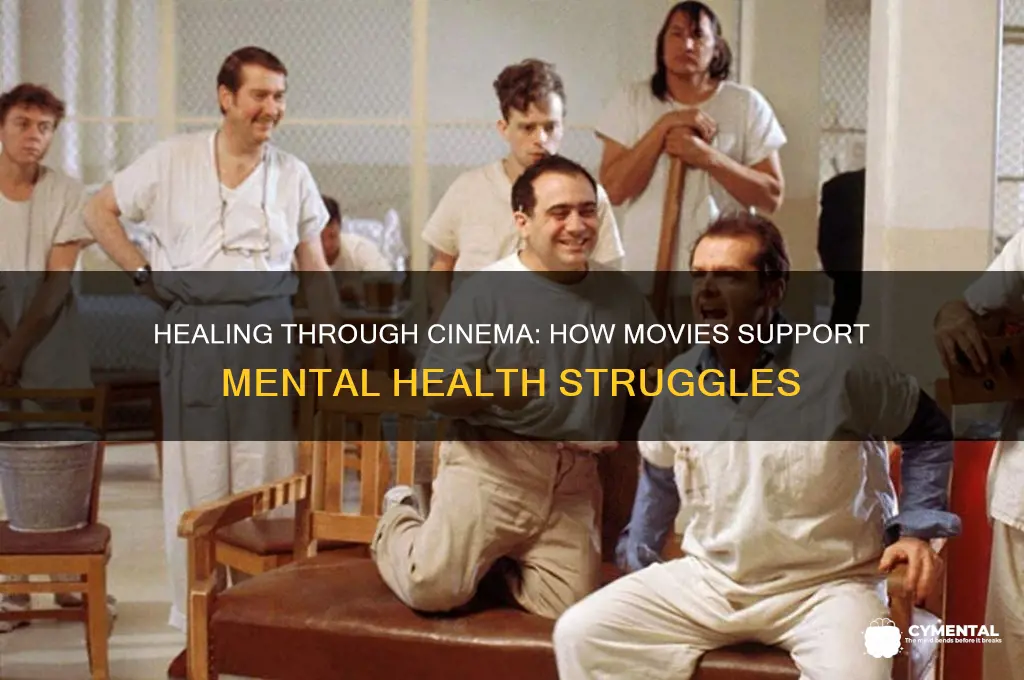
Movies have the power to serve as a therapeutic tool for individuals struggling with mental illness by offering a unique blend of storytelling, emotional resonance, and escapism. Through relatable characters and narratives, films can help viewers feel understood and less alone in their experiences, fostering a sense of connection and validation. Additionally, movies can raise awareness and reduce stigma by portraying mental health issues with empathy and accuracy, encouraging open conversations. The immersive nature of cinema can also provide temporary relief from stress and anxiety, allowing audiences to process emotions in a safe and controlled environment. By combining entertainment with education, movies can play a significant role in promoting mental well-being and supporting those on their journey to healing.
Explore related products


![Psych: The Complete Collection [DVD]](https://m.media-amazon.com/images/I/7111KdwL-hL._AC_UY218_.jpg)
What You'll Learn
- Reduce Stigma: Movies can normalize mental health struggles, fostering empathy and understanding among audiences
- Provide Escapism: Cinematic storytelling offers temporary relief from real-life stressors and emotional burdens
- Encourage Dialogue: Films spark conversations about mental health, breaking silence and promoting support
- Educate Audiences: Accurate portrayals of mental illness can inform viewers and dispel misconceptions
- Inspire Hope: Characters overcoming challenges can motivate viewers facing similar mental health battles

Reduce Stigma: Movies can normalize mental health struggles, fostering empathy and understanding among audiences
Movies have the power to shape perceptions, and when it comes to mental health, they can be a double-edged sword. On one hand, they can perpetuate stereotypes; on the other, they can dismantle them. Films like *Silver Linings Playbook* and *Inside Out* have shown that mental health struggles can be portrayed with nuance, humanity, and relatability. By presenting characters who grapple with conditions like bipolar disorder or emotional complexity, these movies normalize experiences that are often shrouded in silence. This normalization is the first step in reducing stigma—it signals to audiences that mental health challenges are not anomalies but part of the human condition.
Consider the impact of a well-crafted narrative. When a character’s mental health journey is depicted authentically, it invites viewers to step into their shoes. For instance, *A Beautiful Mind* doesn’t just show John Nash’s schizophrenia; it immerses the audience in his reality, making his struggles tangible. This empathy-building is crucial. Research shows that media portrayals of mental illness can significantly influence public attitudes, with positive representations fostering greater understanding and compassion. By humanizing mental health struggles, movies can counteract the fear and misunderstanding that often fuel stigma.
However, the responsibility lies in how these stories are told. A checklist for filmmakers could include: avoid sensationalism, consult mental health professionals, and ensure the narrative doesn’t end with a tidy resolution. Mental health is rarely a linear journey, and portraying its complexities honestly is key. For example, *Girl, Interrupted* offers a raw look at borderline personality disorder without romanticizing it, while *It’s Kind of a Funny Story* balances humor with the seriousness of depression. These films don’t just entertain—they educate, subtly correcting misconceptions along the way.
The takeaway for audiences is clear: mental health struggles are not something to be feared or judged. By witnessing characters navigate their challenges on screen, viewers can internalize the message that seeking help is a sign of strength, not weakness. This shift in perspective can encourage real-world conversations, making it easier for individuals to share their own experiences without fear of judgment. Movies, when done right, become tools for social change, transforming passive viewers into active allies in the fight against stigma.
Supporting Mental Health Crises: Compassionate Steps to Guide and Assist
You may want to see also
Explore related products



Provide Escapism: Cinematic storytelling offers temporary relief from real-life stressors and emotional burdens
One of the most immediate benefits of cinema for mental health is its ability to transport viewers away from their immediate realities. For individuals grappling with anxiety, depression, or trauma, the immersive nature of a well-crafted film can act as a temporary sanctuary. Consider the experience of watching a fantasy epic like *The Lord of the Rings* or a whimsical animation like *Spirited Away*—these films create alternate worlds where the rules of everyday life do not apply, offering a respite from the relentless cycle of negative thoughts or overwhelming responsibilities. This escapism is not about avoidance but about creating mental space to breathe and recalibrate.
However, not all escapism is created equal. The effectiveness of a film in providing relief depends on its alignment with the viewer’s emotional state. For instance, someone experiencing acute grief might find solace in a poignant drama like *The Fault in Our Stars*, which validates their emotions, while another person might prefer the lighthearted humor of a rom-com like *Crazy Rich Asians* to distract from their stress. The key is intentionality: choosing films that match the viewer’s need for either emotional resonance or complete detachment. Streaming platforms often categorize movies by mood, making it easier to select content tailored to one’s mental state.
It’s important to note that escapism through cinema should be a balanced practice. While a 2-hour film can provide immediate relief, excessive use of movies as a coping mechanism may lead to avoidance of underlying issues. Mental health professionals often recommend pairing cinematic escapism with other therapeutic activities, such as journaling or mindfulness exercises, to ensure it complements rather than replaces deeper healing. For example, after watching a film that resonates emotionally, spending 10–15 minutes reflecting on why it felt impactful can turn passive viewing into an active tool for self-awareness.
Finally, the communal aspect of cinema should not be overlooked. Watching a movie with others—whether in a theater or at home—can enhance its escapist benefits by fostering connection and shared experience. This is particularly valuable for individuals who feel isolated due to their mental health struggles. Group discussions post-film can also provide a safe space to process emotions indirectly, using the story as a catalyst for conversation. For instance, a film like *Inside Out* can spark dialogue about emotions in a way that feels less intimidating than direct personal disclosure. When used mindfully, cinematic escapism becomes more than just a distraction—it becomes a bridge to understanding and connection.
The Cost of Mental Health Care: Expensive Reality and Affordable Options
You may want to see also
Explore related products


Encourage Dialogue: Films spark conversations about mental health, breaking silence and promoting support
Movies have the power to transform silence into conversation, making them invaluable tools in addressing mental health. By portraying characters grappling with mental illness, films normalize these struggles, inviting viewers to see themselves or their loved ones reflected on screen. This recognition often serves as a catalyst for dialogue, as audiences feel less alone and more compelled to discuss their own experiences. For instance, *Silver Linings Playbook* and *A Beautiful Mind* not only humanize bipolar disorder and schizophrenia but also encourage viewers to question their own perceptions and biases, fostering open discussions in homes, classrooms, and therapy sessions.
To leverage this potential, consider hosting a film-focused discussion group. Start by selecting movies that explicitly tackle mental health, such as *Inside Out* for emotional literacy or *It’s Kind of a Funny Story* for adolescent mental health. After the screening, use structured questions to guide the conversation: “How did the protagonist’s behavior reflect their mental state?” or “What support systems were present, and how could they have been improved?” For younger audiences (ages 12–18), pair films with educational resources like worksheets or guided journals to deepen understanding. For adults, incorporate personal reflection prompts to bridge the gap between fiction and real-life application.
However, caution is necessary. Not all portrayals of mental illness are accurate or helpful. Some films perpetuate stereotypes or romanticize harmful behaviors, which can hinder productive dialogue. Before recommending a movie, research its reception within mental health communities. For example, while *13 Reasons Why* sparked conversations about suicide, it was criticized for its graphic depiction, which may have triggered vulnerable viewers. Always pair controversial films with disclaimers and follow-up resources, such as crisis hotline numbers or links to mental health organizations.
The takeaway is clear: films are not just entertainment; they are conversation starters. By choosing thoughtfully and creating safe spaces for dialogue, we can use movies to break the stigma surrounding mental illness. Whether in a family living room or a community center, these conversations can lead to increased empathy, better understanding, and ultimately, more support for those who need it. Start small—one film, one discussion—and watch how the ripple effect can transform lives.
Virtual Reality: A New Frontier for Astronaut Mental Health Support
You may want to see also
Explore related products


Educate Audiences: Accurate portrayals of mental illness can inform viewers and dispel misconceptions
Movies have the power to shape perceptions, and when it comes to mental illness, this influence can be transformative. Accurate portrayals of conditions like depression, anxiety, or schizophrenia can serve as educational tools, offering viewers a window into experiences they might not otherwise understand. For instance, films such as *Silver Linings Playbook* or *A Beautiful Mind* humanize mental health struggles, making them relatable rather than alienating. By presenting these stories with authenticity, movies can bridge the gap between ignorance and empathy, fostering a more informed and compassionate society.
Consider the impact of visual storytelling on audience perception. When mental illness is depicted with nuance—showing both the challenges and the resilience of individuals—it challenges stereotypes. For example, *Inside Out* uses animation to explore emotions and mental health in a way that resonates with both children and adults. This approach not only educates but also normalizes conversations about mental health, encouraging viewers to question their own biases. Practical tip: Pair film screenings with discussion guides or expert-led Q&A sessions to deepen understanding and ensure accurate takeaways.
However, accuracy is non-negotiable. Misrepresentations, like sensationalizing suicide or romanticizing disorders, can do more harm than good. Films must avoid oversimplifying complex conditions or perpetuating myths, such as linking mental illness solely to violence. Take *Girl, Interrupted*—while it sparked dialogue, it also faced criticism for its portrayal of borderline personality disorder. To educate effectively, filmmakers should consult mental health professionals and individuals with lived experiences to ensure authenticity. Caution: Audiences, especially younger viewers (ages 13–25), are highly impressionable, so responsible storytelling is critical.
The takeaway is clear: movies are not just entertainment; they are tools for social change. By accurately portraying mental illness, they can dismantle stigma, encourage empathy, and inspire action. For instance, *The Perks of Being a Wallflower* not only educates about trauma and depression but also highlights the importance of support systems. To maximize impact, filmmakers and educators should collaborate to create content that is both engaging and informative. Practical tip: Include resource lists at the end of films or on their websites, directing viewers to mental health organizations and helplines for further support.
Ultimately, the goal is to turn passive viewers into active advocates. When audiences leave the theater with a deeper understanding of mental illness, they are more likely to challenge stigma in their own communities. Films like *It’s Kind of a Funny Story* demonstrate how humor and honesty can coexist in mental health narratives, making the topic accessible without trivializing it. By prioritizing accuracy and empathy, movies can play a pivotal role in reshaping societal attitudes toward mental health, one frame at a time.
Exploring Psilocybin's Potential: Can Shrooms Improve Mental Health?
You may want to see also
Explore related products



Inspire Hope: Characters overcoming challenges can motivate viewers facing similar mental health battles
Movies have the power to mirror our struggles, and when characters on screen overcome mental health challenges, they become beacons of hope for viewers grappling with similar battles. Films like *Silver Linings Playbook* and *It’s Kind of a Funny Story* depict characters navigating bipolar disorder and depression, respectively, not as victims but as resilient individuals who find their way forward. These portrayals normalize the journey of recovery, showing that setbacks are part of the process, not the end of it. For someone watching, this can be a lifeline—proof that healing is possible, even when it feels out of reach.
Consider the analytical perspective: when viewers see characters like Pat Solitano in *Silver Linings Playbook* confront their mental health issues head-on, it reinforces the idea that recovery is an active, ongoing effort. This isn’t just storytelling—it’s a visual roadmap. Research suggests that media representations of mental illness can shape public perception and reduce stigma, but they can also serve as a form of vicarious empowerment. For a teenager struggling with anxiety or an adult battling PTSD, witnessing a character’s triumph can spark the belief that their own struggles are surmountable.
However, it’s crucial to approach this with caution. Not all portrayals are created equal, and some may inadvertently romanticize or oversimplify mental health issues. For instance, a character’s sudden “cure” through a single epiphany can set unrealistic expectations. To maximize the positive impact, filmmakers should consult mental health professionals and ensure authenticity in their narratives. Viewers should also pair these cinematic experiences with real-world support, such as therapy or peer groups, to translate inspiration into actionable steps.
Practically speaking, here’s how to leverage this: if you’re using movies as a tool for hope, choose films with nuanced portrayals and follow them up with reflective discussions. For example, after watching *Inside Out*, a family could talk about how emotions like sadness play a necessary role in our lives. For adults, pairing a film like *The Perks of Being a Wallflower* with journaling can help process its themes of trauma and resilience. The key is to use these stories as catalysts, not solutions—a way to feel less alone and more motivated to seek help.
In conclusion, movies that depict characters overcoming mental health challenges can be more than entertainment—they can be a source of hope and strength. By showing the messy, real journey of recovery, these films remind viewers that progress is possible, even when it’s slow. But their impact is most powerful when paired with authenticity, caution, and real-world resources. After all, hope isn’t just about seeing light at the end of the tunnel—it’s about believing you can walk toward it.
Supporting Athletes' Mental Health: Strategies for Resilience and Well-being
You may want to see also
Frequently asked questions
Yes, movies can offer therapeutic benefits by providing emotional catharsis, fostering empathy, and helping viewers process complex emotions. They can also serve as a form of escapism, reducing stress and anxiety temporarily.
Movies that accurately portray mental health struggles can raise awareness, humanize those affected, and challenge stereotypes. This can encourage understanding and compassion, reducing societal stigma.
Comedies, feel-good dramas, and inspirational films can boost mood and provide comfort. However, the effectiveness depends on individual preferences and the specific mental health needs of the viewer.
Yes, movies depicting mental illness can trigger distress or negative emotions, especially if the content resonates too closely with personal experiences. It’s important to choose films mindfully and seek support if needed.
Movies can prompt introspection by mirroring human experiences and emotions. They can inspire viewers to reflect on their own lives, gain new perspectives, and consider positive changes or coping strategies.