Madison Cole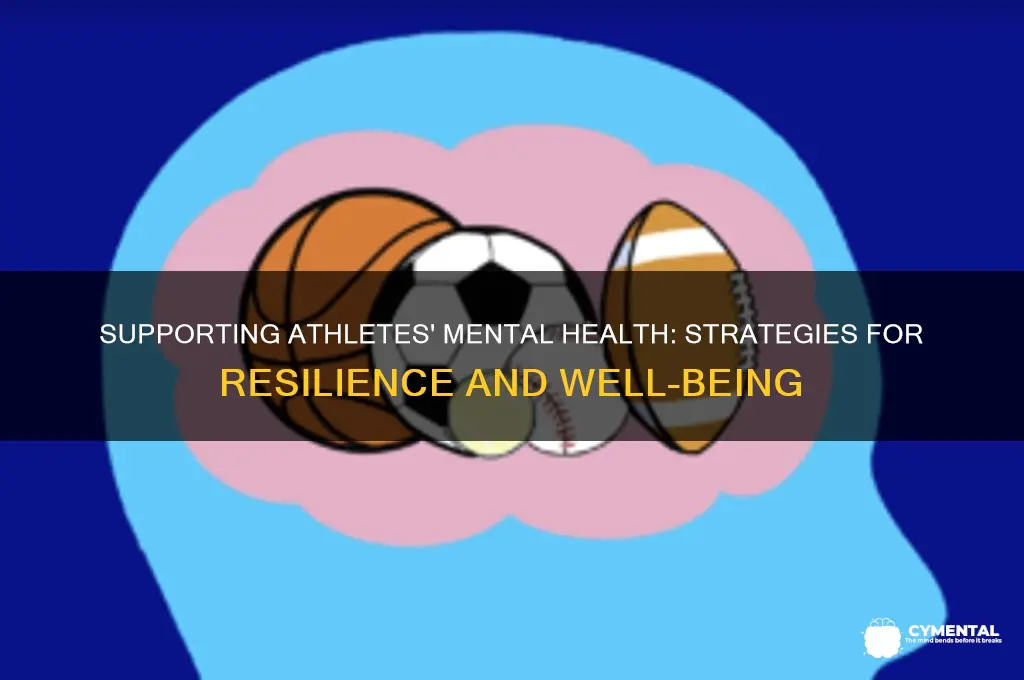
Supporting athletes' mental health is crucial for their overall well-being and performance, as the pressures of competition, injuries, and public scrutiny can take a significant toll. To effectively help athletes, it is essential to create a culture that normalizes open conversations about mental health, reduces stigma, and provides access to professional resources such as sports psychologists and counselors. Coaches, teammates, and support staff should be trained to recognize signs of distress and offer empathetic support, while athletes themselves should be encouraged to prioritize self-care, mindfulness, and work-life balance. Additionally, implementing structured mental health programs, fostering resilience through goal-setting and coping strategies, and ensuring a strong support network can empower athletes to thrive both on and off the field.
Explore related products


What You'll Learn
- Normalize Mental Health Conversations: Encourage open dialogue to reduce stigma and promote awareness among athletes
- Provide Access to Professionals: Ensure athletes have easy access to mental health experts like therapists or psychologists
- Teach Stress Management Techniques: Equip athletes with tools like mindfulness, meditation, and breathing exercises to handle pressure
- Foster Supportive Team Cultures: Create environments where teammates and coaches prioritize mental well-being and mutual support
- Balance Training and Rest: Implement structured schedules to prevent burnout and promote physical and mental recovery

Normalize Mental Health Conversations: Encourage open dialogue to reduce stigma and promote awareness among athletes
Athletes often face immense pressure to perform, both physically and mentally, yet discussions about their mental well-being remain shrouded in silence. This culture of stoicism perpetuates stigma, leaving athletes to grapple with anxiety, depression, and burnout in isolation. Normalizing mental health conversations is not just a suggestion—it’s a necessity. By fostering an environment where athletes feel safe to express their struggles, we can dismantle barriers and create a support system that prioritizes their holistic health.
Consider the power of language in shaping perceptions. Instead of labeling an athlete as "weak" for seeking help, reframe the narrative to celebrate their courage in addressing their mental health. For instance, organizations like the NBA and FIFA have begun integrating mental health resources into their programs, encouraging players to speak openly about their experiences. These initiatives send a clear message: vulnerability is strength. Practical steps include hosting regular team workshops, inviting mental health professionals to speak, and incorporating mental health check-ins alongside physical assessments.
However, normalizing these conversations requires more than just top-down initiatives. Peer-to-peer support is equally vital. Athletes often feel more comfortable confiding in teammates who understand the unique pressures of their sport. Programs like the "Mental Health Champions" in collegiate athletics train select athletes to serve as advocates, fostering a culture of empathy and openness. This approach not only reduces stigma but also ensures that mental health becomes a shared responsibility within the team.
Critics might argue that focusing on mental health could distract from athletic performance, but evidence suggests the opposite. Studies show that athletes who receive mental health support report improved focus, resilience, and overall performance. For example, Simone Biles’ decision to withdraw from the 2020 Olympics to prioritize her mental health sparked global conversations and demonstrated that self-care is non-negotiable, even at the highest levels of competition. Her actions underscored the importance of normalizing these discussions, proving that mental health is as critical as physical conditioning.
To implement this effectively, start small but consistently. Coaches and administrators can model openness by sharing their own experiences or struggles, even if they’re minor. Encourage athletes to use phrases like, "I’ve been feeling overwhelmed lately," rather than bottling up emotions. Provide concrete resources, such as access to sports psychologists or anonymous helplines, and ensure these services are actively promoted. Over time, these efforts will cultivate a culture where mental health is discussed as freely as physical injuries, ultimately benefiting athletes both on and off the field.
Seeking Support: Mental Health Treatment Access and Utilization Rates
You may want to see also
Explore related products


Provide Access to Professionals: Ensure athletes have easy access to mental health experts like therapists or psychologists
Athletes often face unique mental health challenges, from performance pressure to identity struggles post-retirement. Providing seamless access to mental health professionals isn’t just a luxury—it’s a necessity. Therapists and psychologists trained in sports-specific issues can address stressors like injury recovery, burnout, and the psychological toll of public scrutiny. Without this access, athletes may internalize struggles, leading to long-term consequences like depression or anxiety.
Consider the logistics: embed mental health experts within athletic organizations, ensuring confidentiality and convenience. For instance, the NBA mandates teams employ a licensed psychologist, normalizing mental health care as part of routine athlete support. Sessions should be flexible, offered weekly or bi-weekly, with emergency availability for crises. Pair this with digital platforms for remote access, as many athletes travel frequently.
Critics might argue cost or stigma barriers, but the ROI is clear. A study in the *Journal of Athletic Enhancement* found athletes with regular psychological support reported 30% higher resilience and 25% fewer performance slumps. Stigma diminishes when mental health is framed as performance optimization, not weakness. Organizations must lead by example, publicly endorsing these services and sharing success stories to shift culture.
Finally, tailor the approach. Younger athletes (under 25) may benefit from group therapy sessions focusing on identity development, while veterans nearing retirement might need one-on-one career transition counseling. Offer workshops on mindfulness or cognitive-behavioral techniques to complement individual therapy. By integrating professionals into the athletic ecosystem, we treat mental health not as an afterthought, but as a cornerstone of peak performance.
Expressing Emotions: How Sharing Feelings Boosts Mental Well-Being
You may want to see also
Explore related products




Teach Stress Management Techniques: Equip athletes with tools like mindfulness, meditation, and breathing exercises to handle pressure
Athletes face unique stressors—high expectations, public scrutiny, and the physical toll of competition. Teaching stress management techniques isn’t just a nicety; it’s a necessity. Mindfulness, meditation, and breathing exercises aren’t abstract concepts but practical tools that can be integrated into daily routines. For instance, a 5-minute mindfulness practice before training can ground athletes in the present moment, reducing anxiety about past mistakes or future outcomes. These techniques don’t replace hard work but enhance it by fostering mental clarity and resilience.
Consider the 4-7-8 breathing technique: inhale for 4 seconds, hold for 7, exhale for 8. This simple exercise activates the parasympathetic nervous system, counteracting the fight-or-flight response triggered by stress. It’s particularly effective during high-pressure moments, like pre-game jitters or post-loss frustration. Coaches can incorporate this into team warm-ups or cool-downs, making it a habitual practice rather than a last-resort fix. For younger athletes (ages 12-18), pairing this with visual cues—like imagining stress leaving the body with each exhale—can improve engagement and effectiveness.
Mindfulness isn’t about emptying the mind but observing thoughts without judgment. Apps like Headspace or Calm offer guided sessions tailored to athletes, with programs as short as 3 minutes. However, over-reliance on apps can feel impersonal. Instead, encourage athletes to practice during mundane activities, like tying shoelaces or waiting in line. This builds mental muscle memory, making it easier to access these tools under pressure. For elite athletes, integrating mindfulness into recovery sessions—like focusing on muscle sensations during stretching—can double its benefits.
Meditation often intimidates beginners, but it doesn’t require silence or stillness. Walking meditation, for example, involves focusing on the rhythm of footsteps, a technique particularly suited for athletes accustomed to movement. Start with 5-minute sessions and gradually increase duration. Caution against forcing it; if an athlete feels frustrated, suggest a different technique, like journaling or progressive muscle relaxation. The goal is consistency, not perfection.
The takeaway? Stress management isn’t a one-size-fits-all solution but a toolkit tailored to individual needs. By teaching these techniques systematically—starting with breathing, progressing to mindfulness, and exploring meditation—athletes gain tangible skills to navigate pressure. It’s not about eliminating stress but transforming it from a liability into a source of focus and strength. Equip them with these tools, and they’ll perform better—not just on the field, but in life.
Exploring Medical Marijuana's Potential in Treating Mental Health Disorders
You may want to see also
Explore related products


Foster Supportive Team Cultures: Create environments where teammates and coaches prioritize mental well-being and mutual support
Athletes spend countless hours training alongside teammates and coaches, making the team environment a powerful determinant of their mental health. A culture that normalizes vulnerability, encourages open communication, and actively supports well-being can act as a protective factor against stress, burnout, and mental illness. Conversely, toxic dynamics marked by competition, criticism, or indifference can exacerbate existing struggles.
Consider the New Zealand All Blacks, whose team culture emphasizes "whānau" (family) and "ka mate ka mate" (a commitment to each other's success). Players are encouraged to share personal struggles, and coaches prioritize emotional intelligence in their leadership. This approach has contributed not only to their on-field dominance but also to a reputation for resilience and camaraderie. Research supports this model: a 2021 study in the *Journal of Sports Sciences* found that athletes in teams with high emotional support reported significantly lower levels of anxiety and depression.
To foster such a culture, start with clear, actionable steps. First, establish a "no-judgment" policy during team meetings, where athletes can share concerns without fear of ridicule or dismissal. Second, integrate mental health check-ins into regular team routines, such as a 5-minute "mood rating" at the start of practice. Third, train coaches in mental health first aid, equipping them to recognize warning signs and provide appropriate resources. For youth teams (ages 12–18), involve parents in workshops to ensure consistent support at home.
However, beware of superficial gestures. Posting motivational quotes or hosting occasional seminars is not enough. A genuine supportive culture requires ongoing commitment, accountability, and adaptability. For instance, a college basketball team implemented a "buddy system," pairing players for weekly check-ins, but participation waned after a month. They revived the initiative by rotating pairs monthly and rewarding active engagement with team-building activities.
Ultimately, a supportive team culture is not a luxury but a necessity for athlete well-being. It requires intentionality, empathy, and a shared understanding that mental health is as vital as physical performance. By embedding these principles into daily interactions, teams can create an environment where athletes thrive—not just as competitors, but as individuals.
Empowering Minds: Social Workers Combating Mental Health Stigma Effectively
You may want to see also
Explore related products


Balance Training and Rest: Implement structured schedules to prevent burnout and promote physical and mental recovery
Athletes often fall into the trap of equating more training with better performance, but this mindset can lead to overtraining and mental exhaustion. Structured schedules that balance intense training with adequate rest are essential to prevent burnout and foster both physical and mental recovery. For instance, a study published in the *Journal of Sports Sciences* found that athletes who followed a periodized training plan—one that alternates high-intensity phases with recovery periods—reported lower levels of stress and improved mood compared to those with unstructured routines. This approach not only enhances performance but also safeguards mental well-being.
Implementing a structured schedule begins with understanding the athlete’s individual needs and limits. A practical starting point is the 80/20 rule, where 80% of training is performed at low to moderate intensity, and 20% at high intensity. For example, a runner might dedicate four days to easy runs and one day to interval training, with the remaining days reserved for active recovery or rest. This distribution ensures the body and mind have time to recover without sacrificing progress. Coaches and athletes should also incorporate weekly and monthly rest days, with at least one full day off per week and a deload week every 4–6 weeks, where training volume is reduced by 40–60%.
Active recovery plays a crucial role in this balance. Instead of complete inactivity, athletes can engage in low-impact activities like yoga, swimming, or light cycling. These activities promote blood flow, reduce muscle stiffness, and provide a mental break from high-intensity training. For instance, a 30-minute yoga session can improve flexibility and mindfulness, while a leisurely bike ride can clear the mind and reduce stress. The key is to keep the intensity low enough to allow recovery but high enough to maintain engagement.
However, rest isn’t just about physical recovery—it’s equally about mental rejuvenation. Athletes should schedule time for hobbies, social activities, or mindfulness practices like meditation or journaling. A study in *Psychology of Sport and Exercise* highlighted that athletes who engaged in non-sport-related activities reported higher levels of life satisfaction and lower burnout rates. For younger athletes (ages 13–18), this might mean limiting screen time and encouraging face-to-face interactions, while older athletes (ages 19–30) could benefit from setting boundaries between training and personal life.
In conclusion, a structured schedule that balances training and rest is not a luxury but a necessity for athletes’ mental health. By adhering to principles like the 80/20 rule, incorporating active recovery, and prioritizing mental rejuvenation, athletes can avoid burnout and sustain long-term performance. Coaches and athletes alike must recognize that rest is not a sign of weakness but a strategic tool for resilience and growth.
Social Media's Impact: Breaking Mental Health Stigma or Amplifying Struggles?
You may want to see also
Frequently asked questions
Coaches and trainers can support athletes' mental health by fostering an open and non-judgmental environment, encouraging communication, recognizing signs of distress, and providing access to mental health resources such as counselors or psychologists.
Mindfulness helps athletes reduce stress, improve focus, and enhance emotional regulation by teaching them to stay present and manage their thoughts, which can lead to better performance and overall well-being.
Athletes can balance performance pressure by setting realistic goals, practicing self-compassion, prioritizing rest and recovery, and seeking support from teammates, coaches, or mental health professionals.
Effective strategies include reframing failure as a learning opportunity, focusing on controllable factors, maintaining a growth mindset, and engaging in self-care activities like exercise, hobbies, or spending time with loved ones.
Taking breaks is crucial for athletes' mental health as it prevents burnout, allows for emotional recovery, and helps maintain motivation. Regular rest periods improve overall resilience and long-term performance.