Ava Ramirez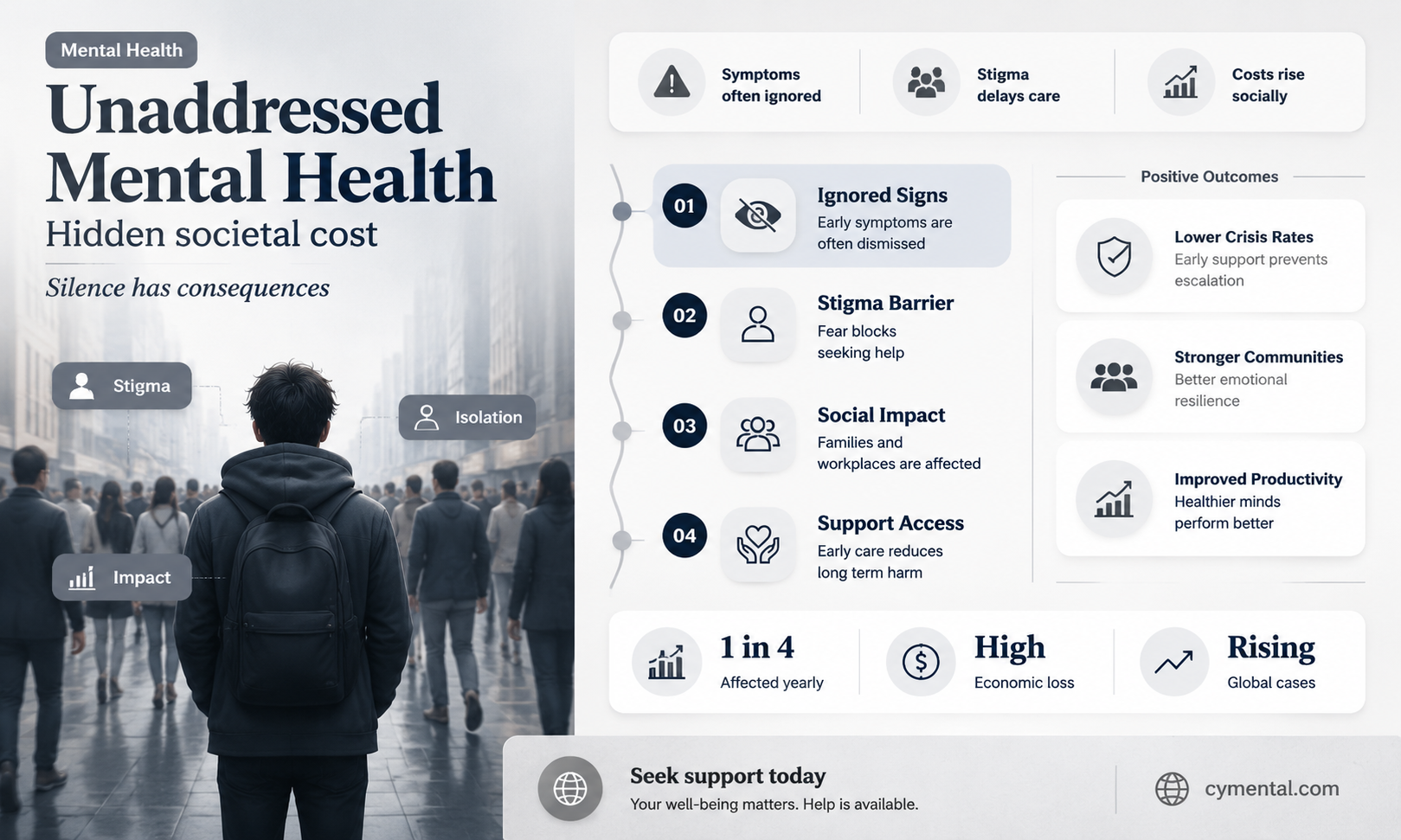
The reluctance of individuals to seek mental health support has far-reaching consequences for society, affecting not only personal well-being but also broader social and economic structures. When people avoid addressing mental health issues, untreated conditions can lead to decreased productivity, strained relationships, and increased healthcare costs due to physical manifestations of psychological distress. This avoidance often perpetuates stigma, creating a cycle where mental health remains a taboo topic, discouraging others from seeking help. Communities may experience higher rates of unemployment, homelessness, and even crime, as untreated mental health challenges can exacerbate social vulnerabilities. Moreover, the emotional toll on families and caregivers can be immense, further straining societal support systems. Addressing this issue requires destigmatizing mental health care, improving access to resources, and fostering a culture of empathy and understanding to encourage timely intervention and support.
| Characteristics | Values |
|---|---|
| Economic Burden | Increased healthcare costs due to untreated mental illness leading to physical health problems, hospitalizations, and emergency room visits. Untreated mental illness contributes to lost productivity, absenteeism, and reduced workplace performance, costing billions annually. |
| Social Stigma & Isolation | Perpetuates stigma surrounding mental health, discouraging others from seeking help. Individuals with untreated mental illness may withdraw from social activities, leading to loneliness and weakened community bonds. |
| Increased Risk of Harm | Higher risk of self-harm, suicide, and suicidal ideation. Increased likelihood of engaging in risky behaviors like substance abuse, which can lead to further health problems and social issues. |
| Impact on Families & Relationships | Strained relationships with family and friends due to symptoms of mental illness. Children of parents with untreated mental illness are at higher risk for developmental and mental health issues. |
| Criminal Justice Involvement | Higher rates of incarceration for individuals with untreated mental illness, often due to behaviors related to their condition. Increased burden on the criminal justice system and potential for recidivism. |
| Public Safety Concerns | In severe cases, untreated mental illness can lead to violent behavior, posing a risk to public safety. |
| Educational Disruption | Difficulty concentrating and attending school, leading to lower academic achievement and increased dropout rates. |
Explore related products


What You'll Learn
- Stigma Perpetuation: Unaddressed mental health issues can reinforce societal stigma, discouraging others from seeking help
- Economic Burden: Untreated mental illness increases healthcare costs and reduces workplace productivity
- Social Isolation: Individuals may withdraw, weakening community bonds and support networks
- Interpersonal Conflict: Mental health struggles can lead to strained relationships and family dynamics
- Public Safety Risks: Unmanaged conditions may contribute to increased crime or unsafe behaviors

Stigma Perpetuation: Unaddressed mental health issues can reinforce societal stigma, discouraging others from seeking help
Unaddressed mental health issues create a vicious cycle of silence and shame, perpetuating the very stigma that prevents people from seeking help in the first place. When individuals struggle in isolation, their visible symptoms—withdrawal, irritability, or erratic behavior—often become the public face of mental illness. Without context or understanding, these manifestations reinforce harmful stereotypes: the "unstable" colleague, the "lazy" student, the "difficult" neighbor. Each unchallenged assumption chips away at societal empathy, embedding the idea that mental health struggles are personal failings rather than treatable conditions.
Consider the workplace, where unaddressed mental health issues can foster a culture of avoidance. A team member grappling with depression might be labeled unmotivated, their struggles misinterpreted as disinterest. Over time, this narrative discourages others from disclosing their own challenges, fearing similar judgment. The result? A toxic environment where productivity suffers, burnout escalates, and the stigma of mental illness hardens. Employers lose valuable talent, and employees lose opportunities for support, all because the initial issue was never addressed openly.
The impact extends beyond professional settings. In families, untreated mental health conditions can strain relationships, leading to misunderstandings and resentment. A parent’s anxiety, for instance, might be mistaken for overprotectiveness, while a teenager’s bipolar disorder could be dismissed as hormonal mood swings. These misinterpretations not only delay necessary treatment but also teach younger generations to equate mental health struggles with weakness or embarrassment. The stigma becomes intergenerational, a silent rule passed down: “We don’t talk about this.”
Breaking this cycle requires proactive steps. First, normalize conversations about mental health in everyday settings. Share personal experiences where appropriate, or amplify stories of recovery to humanize the issue. Second, educate communities on the signs of mental illness and the importance of early intervention. Schools, workplaces, and social groups can host workshops or distribute resources, framing mental health care as a routine part of self-care. Finally, advocate for policies that reduce barriers to access, such as affordable therapy, flexible work arrangements, and confidential support systems. By addressing mental health openly, we dismantle the stigma brick by brick, creating a society where seeking help is not just accepted but encouraged.
Community Support: A Powerful Ally for Mental Health and Well-Being
You may want to see also
Explore related products


Economic Burden: Untreated mental illness increases healthcare costs and reduces workplace productivity
Untreated mental illness silently drains economies, imposing a dual burden on healthcare systems and workplaces. Consider this: individuals with unmanaged conditions like depression or anxiety often rely on emergency rooms for crises, a costly alternative to preventive care. A 2020 study revealed that untreated mental health issues contribute to $200 billion in annual healthcare expenditures in the U.S. alone. These costs escalate when physical ailments, exacerbated by mental stress, require intensive interventions. For instance, a 45-year-old with untreated anxiety might develop hypertension, necessitating lifelong medication and frequent doctor visits, adding thousands to their annual healthcare bill.
Workplace productivity suffers equally, if not more. Employees grappling with untreated mental illness are 2-3 times more likely to experience absenteeism or presenteeism—being physically present but unproductive. Imagine a software developer battling undiagnosed depression: their output drops from 10 lines of code per hour to 2, delaying projects and straining team resources. Over time, this inefficiency costs companies an estimated $1 trillion globally in lost productivity annually. Small businesses, with fewer buffers, often face disproportionate impacts, such as project cancellations or client losses.
Addressing this requires a two-pronged strategy. First, employers can implement mental health programs, like subsidized therapy or flexible schedules, to encourage early intervention. For example, a tech firm offering 10 free counseling sessions annually saw a 25% reduction in sick days within a year. Second, policymakers must expand access to affordable mental healthcare, particularly in underserved areas. Telehealth platforms, for instance, can bridge gaps for rural populations, ensuring timely support before conditions worsen.
The takeaway is clear: untreated mental illness is not just a personal struggle but a systemic economic challenge. By investing in prevention and accessibility, societies can reduce healthcare costs and foster more productive workplaces. Ignoring this issue perpetuates a cycle of inefficiency and expense, while proactive measures yield dividends in both human and financial capital.
Exercise and Mental Health: Boosting Mood, Focus, and Resilience Naturally
You may want to see also
Explore related products


Social Isolation: Individuals may withdraw, weakening community bonds and support networks
Social isolation, often a silent consequence of untreated mental health issues, creates a ripple effect that extends far beyond the individual. When people withdraw from social interactions, community bonds fray, and support networks—the very fabric of societal resilience—begin to unravel. This isn’t merely about personal loneliness; it’s about the collective loss of connection, collaboration, and mutual aid that sustains communities. For instance, a study published in *The Lancet* found that socially isolated individuals are 26% more likely to report poor mental health, perpetuating a cycle of withdrawal and disengagement.
Consider the practical implications: a young adult struggling with anxiety might avoid local volunteer groups, depriving the community of their skills and energy. Over time, this absence weakens the group’s capacity to organize events, support vulnerable neighbors, or advocate for local needs. Multiply this scenario across neighborhoods, workplaces, and social circles, and the societal impact becomes clear. Communities lose diversity of thought, reduced civic participation, and diminished collective problem-solving abilities.
To counteract this, proactive steps are essential. First, normalize mental health conversations in community settings—schools, workplaces, and faith-based organizations. For example, implementing peer support programs in workplaces can reduce stigma and encourage early intervention. Second, design inclusive spaces that cater to varying comfort levels. A community garden, for instance, allows individuals to engage at their own pace, fostering connection without pressure. Third, leverage technology responsibly: virtual support groups can bridge physical isolation, but they should complement, not replace, face-to-face interactions.
However, caution is necessary. Over-reliance on digital solutions can inadvertently deepen isolation by substituting shallow online interactions for meaningful in-person relationships. Additionally, avoid token gestures like one-off mental health awareness events. Sustainable change requires ongoing commitment, such as training community leaders in mental health first aid or integrating mental wellness into existing programs.
In conclusion, social isolation isn’t an individual’s burden to bear alone; it’s a societal issue demanding collective action. By fostering environments that encourage connection and support, communities can rebuild the bonds that untreated mental health issues threaten to sever. The takeaway is clear: strengthening mental health support isn’t just about individual well-being—it’s about preserving the very foundation of community resilience.
Shipping the Mentally Ill to California: Nevada's Controversial Solution
You may want to see also
Explore related products


Interpersonal Conflict: Mental health struggles can lead to strained relationships and family dynamics
Unaddressed mental health struggles often manifest as interpersonal conflict, creating a ripple effect that strains relationships and reshapes family dynamics. Consider a parent battling untreated depression: their emotional withdrawal, irritability, or inability to engage in daily activities can leave children feeling neglected or confused. Over time, this may foster resentment, erode trust, and disrupt the family’s emotional equilibrium. Similarly, a partner with unmanaged anxiety might project their fears onto their spouse, leading to constant tension, miscommunication, and a breakdown of intimacy. These scenarios illustrate how individual mental health challenges become collective burdens, silently fracturing the bonds that sustain families.
To mitigate these effects, families must adopt proactive strategies. Start by fostering open dialogue about mental health, normalizing conversations around emotions and struggles. For instance, a weekly family check-in can provide a safe space for members to express concerns without judgment. Encourage active listening—repeat back what you hear to ensure understanding and validate feelings. For parents, modeling vulnerability by sharing your own challenges can empower children to do the same. Additionally, establish boundaries to protect relationships; for example, agree on "time-outs" during heated arguments to prevent harmful words from being spoken in the heat of the moment.
However, reliance on family efforts alone is insufficient. Seeking professional help is critical, yet stigma and denial often impede this step. A practical tip: frame therapy as a collaborative tool rather than a personal failure. For instance, family therapy sessions can address collective patterns of conflict, while individual counseling equips members with coping mechanisms. Research shows that even short-term interventions, such as cognitive-behavioral therapy (CBT), can significantly improve communication and reduce relational strain. For younger individuals (ages 12–18), peer support groups can complement therapy by providing a sense of belonging and reducing feelings of isolation.
Compare this to the alternative: untreated mental health issues can escalate conflicts into long-term estrangements. A study published in *Family Process* found that families with unaddressed mental health struggles were three times more likely to experience chronic relational dysfunction. These fractures extend beyond the immediate family, impacting social networks and community cohesion. For example, a strained parent-child relationship can hinder a child’s ability to form healthy connections outside the home, perpetuating a cycle of conflict.
In conclusion, addressing mental health struggles is not just an individual responsibility but a collective imperative. By recognizing the signs of interpersonal strain, fostering open communication, and seeking professional support, families can transform conflict into opportunities for growth. Remember, the strength of a family lies not in the absence of challenges but in its ability to navigate them together. Start small, stay consistent, and prioritize empathy—the bonds you save may be your own.
Seaweed's Surprising Role in Supporting Mental Health and Wellness
You may want to see also
Explore related products



Public Safety Risks: Unmanaged conditions may contribute to increased crime or unsafe behaviors
Unmanaged mental health conditions can escalate public safety risks, as individuals struggling with untreated disorders may exhibit behaviors that endanger themselves and others. For instance, severe untreated schizophrenia can lead to psychotic episodes where individuals lose touch with reality, potentially resulting in violent outbursts or erratic actions. Studies show that while people with mental illness are more likely to be victims of violence, a small subset—particularly those with co-occurring substance abuse—may engage in aggressive behaviors. This highlights the critical need for early intervention and accessible mental health care to mitigate such risks.
Consider the role of untreated depression or anxiety in fostering unsafe behaviors. Chronic mental distress can impair judgment, leading to reckless driving, substance misuse, or self-harm. For example, a 2018 study found that individuals with untreated major depressive disorder were 60% more likely to be involved in traffic accidents due to reduced concentration and impulsivity. Similarly, untreated PTSD can trigger hypervigilance or flashbacks, increasing the likelihood of accidental harm in public spaces. Addressing these conditions through therapy, medication, or support systems could significantly reduce such incidents.
From a societal perspective, the criminal justice system often becomes the default response to unmanaged mental health crises, perpetuating a cycle of incarceration rather than treatment. Approximately 20% of jail inmates in the U.S. have a serious mental illness, many of whom could have been diverted to treatment programs if resources were available. Community-based initiatives, such as crisis intervention teams and mental health courts, offer alternatives by connecting individuals to care instead of punishment. Investing in these programs not only improves public safety but also reduces the long-term costs associated with incarceration and recidivism.
To minimize public safety risks, proactive measures are essential. Employers, educators, and community leaders can implement mental health screenings and training to identify at-risk individuals early. For example, schools can adopt programs like Youth Mental Health First Aid, which teaches staff to recognize warning signs and provide initial support. Additionally, policymakers should prioritize funding for affordable mental health services, particularly in underserved areas. By fostering a culture of awareness and accessibility, society can reduce the likelihood of unmanaged conditions leading to unsafe behaviors or criminal activity.
Sunlight and Mental Health: Unlocking Nature's Mood-Boosting Benefits
You may want to see also
Frequently asked questions
Stigma creates fear of judgment, discrimination, or shame, leading individuals to avoid seeking mental health support, which can worsen their condition and delay recovery.
Untreated mental health issues can lead to decreased focus, absenteeism, and reduced efficiency, negatively impacting overall workplace productivity and economic output.
Lack of mental health treatment can contribute to homelessness, substance abuse, and involvement in criminal activities, as individuals may struggle to cope with their conditions without support.
It can strain relationships, create emotional and financial burdens for families, and reduce community cohesion, as untreated conditions may lead to social withdrawal or conflict.