Harper Lewis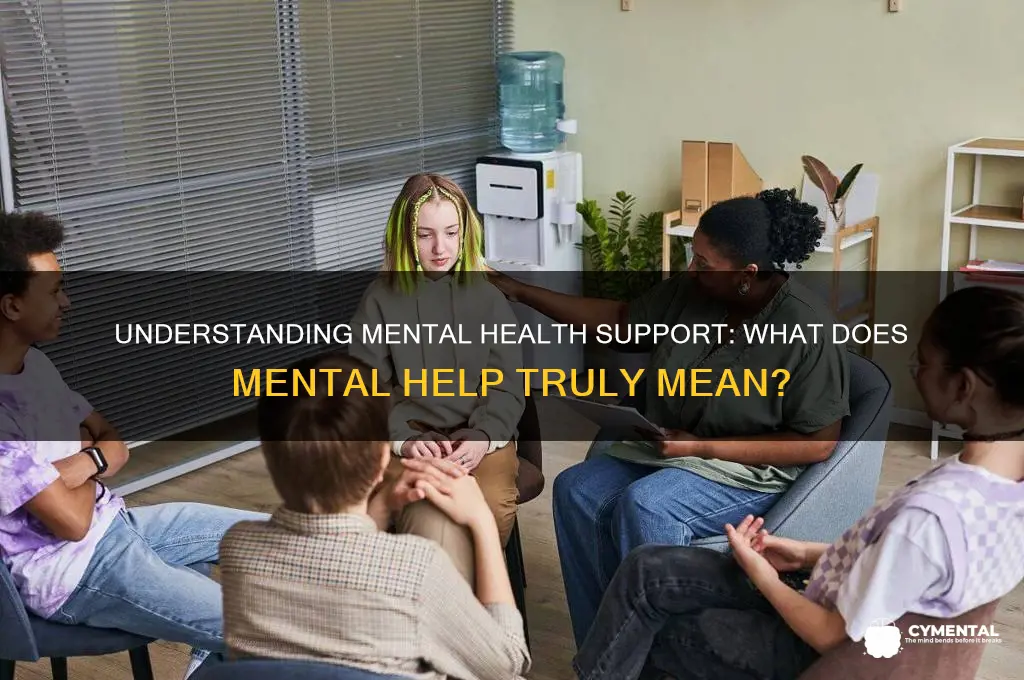
Mental health refers to a person's emotional, psychological, and social well-being, influencing how they think, feel, and act in daily life. Seeking mental help means accessing support, resources, or professional services to address challenges such as stress, anxiety, depression, or other mental health concerns. This can include therapy, counseling, medication, or self-care practices, all aimed at improving one's ability to cope, function, and thrive. Mental help is not a sign of weakness but a proactive step toward healing and personal growth, fostering resilience and a better quality of life.
Explore related products


What You'll Learn
- Understanding Mental Health: Defining mental well-being, emotional stability, and psychological resilience in individuals
- Seeking Professional Support: Accessing therapists, counselors, or psychiatrists for diagnosis and treatment
- Self-Care Practices: Incorporating mindfulness, exercise, and healthy habits to maintain mental balance
- Breaking Stigma: Challenging societal misconceptions and promoting open conversations about mental health
- Crisis Intervention: Recognizing warning signs and providing immediate assistance during mental health emergencies

Understanding Mental Health: Defining mental well-being, emotional stability, and psychological resilience in individuals
Mental well-being is not merely the absence of mental illness but a dynamic state of balance where individuals can cope with life’s challenges, work productively, and contribute to their communities. It encompasses emotional, psychological, and social health, enabling people to realize their full potential. For instance, a person with high mental well-being can maintain healthy relationships, manage stress effectively, and make rational decisions even in adversity. This definition shifts the focus from pathology to functionality, emphasizing the importance of fostering positive mental states rather than just treating negative ones.
Emotional stability, a cornerstone of mental health, refers to the ability to regulate emotions and maintain a consistent mood despite external pressures. It is not about suppressing emotions but understanding and managing them constructively. For example, a stable individual might feel anger but choose to address it through communication rather than lashing out. Techniques like mindfulness, cognitive-behavioral therapy (CBT), and journaling can enhance emotional stability. Practicing these methods for 10–15 minutes daily can significantly improve emotional regulation over time, particularly in adults aged 18–65 who often face heightened stressors.
Psychological resilience, the capacity to recover from difficulties, is another critical aspect of mental health. It involves adapting to change, bouncing back from setbacks, and growing stronger from experiences. Resilience is not an innate trait but a skill that can be developed through consistent effort. For instance, individuals who reframe failures as learning opportunities often exhibit higher resilience. Building resilience can include setting realistic goals, fostering a strong support network, and engaging in regular physical activity, which has been shown to reduce symptoms of anxiety and depression by up to 26% in studies involving participants aged 25–45.
Understanding these three components—mental well-being, emotional stability, and psychological resilience—requires a holistic approach. It’s not enough to focus on one without considering the others. For example, a person with high resilience but poor emotional stability may struggle to maintain relationships, while someone with well-being but low resilience might crumble under pressure. Integrating strategies like therapy, self-care, and social connections can create a robust mental health framework. Practical tips include scheduling weekly check-ins with oneself, limiting screen time to two hours daily, and engaging in activities that promote relaxation, such as reading or meditation.
Ultimately, mental health is a spectrum, and individuals will experience fluctuations based on circumstances. The goal is not perfection but progress. By defining and nurturing mental well-being, emotional stability, and psychological resilience, people can build a foundation that supports them through life’s highs and lows. This proactive approach not only prevents mental health issues but also enhances overall quality of life, making it a vital investment for individuals of all ages and backgrounds.
The Power of Friendship: How Friends Support Mental Health
You may want to see also
Explore related products




Seeking Professional Support: Accessing therapists, counselors, or psychiatrists for diagnosis and treatment
Professional mental health support is not a one-size-fits-all solution. Therapists, counselors, and psychiatrists each bring distinct expertise to the table. Therapists and counselors often specialize in talk therapy, helping individuals navigate emotional challenges, relationship issues, or behavioral patterns. Psychiatrists, on the other hand, are medical doctors who can diagnose mental health disorders and prescribe medications like SSRIs (e.g., fluoxetine 20mg daily) or mood stabilizers (e.g., lithium 300mg twice daily), often in conjunction with therapy. Understanding these roles ensures you seek the right professional for your needs.
Accessing these professionals begins with identifying your concerns. Are you experiencing persistent sadness, anxiety, or difficulty functioning daily? If so, start by consulting a primary care physician for a referral or use online directories like Psychology Today, which allow you to filter by specialization, location, and insurance acceptance. For urgent cases, crisis hotlines or telehealth platforms offer immediate support. Remember, the first step is often the hardest, but reaching out is a courageous act of self-care.
Once you’ve found a provider, preparation is key. Write down your symptoms, concerns, and questions beforehand. Be honest during sessions—mental health professionals rely on accurate information to tailor treatment plans. For instance, if you’re prescribed medication, disclose any allergies or other medications you’re taking to avoid adverse interactions. Similarly, if therapy feels unproductive, communicate this openly; collaboration is essential for progress.
Cost and accessibility are common barriers, but solutions exist. Many therapists offer sliding-scale fees based on income, and some psychiatrists provide medication management via telehealth at reduced rates. Insurance plans often cover mental health services, though verifying coverage beforehand is crucial. For those without insurance, community health centers or university training clinics provide low-cost options. Additionally, apps like BetterHelp or Talkspace offer affordable online therapy, though they may not replace in-person care for severe conditions.
Finally, seeking professional support is an ongoing process, not a quick fix. Therapy may take weeks or months to yield noticeable changes, and medication adjustments often require patience. Celebrate small victories along the way, and remember that asking for help is a sign of strength, not weakness. Whether you’re managing depression, anxiety, or another condition, professional guidance can provide the tools and insights needed to thrive.
Journaling for Mental Health: The Power of Writing Down Thoughts
You may want to see also
Explore related products


$7.84 $14.99

Self-Care Practices: Incorporating mindfulness, exercise, and healthy habits to maintain mental balance
Mental health support encompasses a spectrum of interventions, from professional therapy to personal strategies that foster resilience. Among these, self-care practices stand out as accessible, daily tools for maintaining mental balance. By integrating mindfulness, exercise, and healthy habits, individuals can proactively manage stress, improve emotional regulation, and enhance overall well-being. These practices are not one-size-fits-all but can be tailored to individual needs, making them a cornerstone of sustainable mental health.
Mindfulness: The Art of Presence
Mindfulness involves anchoring oneself in the present moment, often through meditation or focused breathing exercises. Research shows that just 10 minutes of daily mindfulness practice can reduce cortisol levels, the hormone associated with stress. For beginners, start with guided apps like Headspace or Calm, which offer structured sessions. Advanced practitioners might explore body scan techniques or mindful walking. The key is consistency; integrating mindfulness into routines, such as during morning coffee or before bed, ensures it becomes a habit rather than a chore. For children and teens, simplified practices like mindful coloring or short breathing exercises can be equally effective, fostering early emotional awareness.
Exercise: Movement as Medicine
Physical activity is a potent tool for mental health, releasing endorphins and reducing symptoms of anxiety and depression. The American Psychological Association recommends at least 150 minutes of moderate exercise weekly, such as brisk walking or cycling. High-intensity interval training (HIIT) or yoga can be particularly beneficial for stress relief and cognitive function. For those with busy schedules, breaking activity into 10-minute increments throughout the day can be just as effective. Exercise doesn’t have to be solitary; group activities like dance classes or team sports add a social dimension, addressing both physical and emotional needs. Even light activities, like gardening or stretching, can provide mental clarity for older adults or individuals with mobility limitations.
Healthy Habits: The Foundation of Balance
Nutrition, sleep, and hydration are often overlooked but critical components of mental self-care. A diet rich in omega-3 fatty acids, found in fish and flaxseeds, supports brain health, while reducing processed sugars can stabilize mood swings. Adults should aim for 7–9 hours of sleep nightly, with consistent bedtimes to regulate circadian rhythms. Hydration is equally vital; even mild dehydration can impair concentration and mood. Practical tips include keeping a water bottle nearby and limiting caffeine after noon. For those struggling with sleep, creating a tech-free, calming bedtime routine—such as reading or journaling—can signal to the brain that it’s time to wind down.
Synergy and Personalization: The Key to Success
While mindfulness, exercise, and healthy habits are powerful individually, their combined effect is transformative. For instance, pairing morning exercise with a mindful cooldown can amplify stress reduction. Personalization is crucial; what works for one person may not work for another. Experimentation is encouraged—try different mindfulness techniques, exercise types, and dietary adjustments to find what resonates. Tracking progress through journals or apps can provide insight into what practices yield the most benefit. Ultimately, self-care is not about perfection but about consistent, intentional actions that nurture mental balance in the long term.
Mental Health First Aid: Impact, Effectiveness, and Real-World Outcomes
You may want to see also
Explore related products


Breaking Stigma: Challenging societal misconceptions and promoting open conversations about mental health
Mental health support encompasses a range of services and interventions aimed at improving emotional, psychological, and social well-being. Yet, societal stigma often prevents individuals from seeking help, perpetuating misconceptions that mental health struggles are a sign of weakness or moral failing. Breaking this stigma requires a multifaceted approach, beginning with education and open dialogue. By challenging these misconceptions, we can create an environment where seeking mental help is normalized, not stigmatized.
Consider the analogy of physical health: no one hesitates to see a doctor for a broken bone or a persistent cough. Mental health should be treated with the same urgency and acceptance. One practical step is to integrate mental health education into school curricula, starting as early as age 10. Teach children emotional vocabulary, stress management techniques, and the importance of seeking help when needed. For example, a study by the World Health Organization found that school-based programs reduced stigma by 25% among adolescents. Pair this with public awareness campaigns that feature diverse individuals sharing their mental health journeys, emphasizing that recovery is possible and help is available.
Language plays a critical role in shaping perceptions. Avoid phrases like "commit suicide" and instead use "died by suicide" to reduce blame and sensationalism. Similarly, replace "mental illness" with "mental health condition" to humanize the experience. Employers can contribute by offering mental health days and training managers to recognize signs of distress. For instance, a company that implemented a mental health program saw a 30% increase in employee productivity and a 20% decrease in absenteeism. These small but impactful changes foster a culture of empathy and understanding.
Open conversations about mental health must extend beyond awareness to actionable support. Start by normalizing therapy and medication as valid forms of treatment, just like physical therapy or insulin for diabetes. Share resources like crisis hotlines (e.g., 988 in the U.S.), online therapy platforms, and local support groups. Encourage peer-to-peer support by training volunteers to facilitate mental health discussions in community settings. For example, a grassroots initiative in India trained barbers to identify signs of depression in customers, leading to a 15% increase in referrals to mental health professionals.
Finally, breaking stigma requires systemic change. Advocate for policies that ensure mental health care is affordable and accessible to all. Challenge media portrayals that sensationalize mental health issues or perpetuate stereotypes. Celebrate public figures who openly discuss their struggles, as their visibility can inspire others to seek help. Remember, stigma thrives in silence—every conversation, no matter how small, is a step toward a more compassionate society. By reframing mental help as a sign of strength and self-care, we can dismantle barriers and create a world where everyone feels safe to seek support.
Supporting Veterans: Accessing Mental Health Services for Lasting Well-Being
You may want to see also
Explore related products


Crisis Intervention: Recognizing warning signs and providing immediate assistance during mental health emergencies
Mental health emergencies demand swift, informed action. Recognizing warning signs is the first step in crisis intervention, a critical skill for anyone who might encounter someone in distress. These signs often manifest as drastic changes in behavior, mood, or functioning. For instance, a person who was once outgoing may become withdrawn, or someone typically calm might exhibit sudden, unexplained agitation. Physical symptoms like insomnia, drastic weight changes, or neglect of personal hygiene can also signal a crisis. Understanding these indicators allows for timely intervention, potentially preventing harm.
Once warning signs are identified, providing immediate assistance requires a structured approach. The CALM technique—Connect, Assess, Listen, Manage—is a practical framework. First, connect with the individual in a non-judgmental, empathetic manner. Use open-ended questions like, “How are you feeling right now?” to encourage dialogue. Next, assess the situation for immediate dangers, such as self-harm or suicidal intent. If there’s an imminent risk, call emergency services (e.g., 911 in the U.S.) without delay. Listen actively, avoiding interruptions or dismissive responses. Validate their emotions with phrases like, “It sounds like you’re going through a lot.” Finally, manage the crisis by offering practical support, such as helping them contact a mental health professional or accompanying them to a safe space.
Comparing crisis intervention to first aid for physical injuries highlights its importance. Just as CPR or wound dressing can save lives, knowing how to respond to a mental health emergency can prevent long-term harm. For example, a person experiencing a panic attack may hyperventilate and feel detached from reality. Simple interventions like guiding them to breathe slowly (inhale for 4 seconds, hold for 4 seconds, exhale for 6 seconds) or grounding techniques (e.g., naming five things they can see, four they can touch, etc.) can de-escalate the situation. These actions, though seemingly small, can be life-altering.
However, crisis intervention is not without challenges. Misinterpreting signs or overstepping boundaries can exacerbate the situation. For instance, pressing someone to talk when they’re not ready or dismissing their feelings as “overreactions” can alienate them further. It’s crucial to balance urgency with respect for their autonomy. Additionally, self-care for the intervener is often overlooked. Witnessing someone in distress can be emotionally taxing, so debriefing or seeking support afterward is essential. Organizations like the Crisis Text Line or local mental health hotlines offer resources for both individuals in crisis and those assisting them.
In conclusion, crisis intervention is a vital component of mental health support, requiring both awareness and action. By recognizing warning signs, employing structured techniques, and understanding the nuances of immediate assistance, individuals can make a profound difference in emergencies. Just as physical health crises demand swift, informed responses, so too do mental health emergencies—and the tools to address them are within reach for anyone willing to learn.
Empowering Financial Stability: Strategies for Managing Money with Mental Illness
You may want to see also
Frequently asked questions
Mental health refers to a person's emotional, psychological, and social well-being. It affects how individuals think, feel, and act, influencing their ability to handle stress, relate to others, and make choices.
Seeking mental help involves reaching out to professionals like therapists, counselors, or psychiatrists for support in managing mental health challenges. It can include therapy, medication, or other evidence-based treatments tailored to individual needs.
Mental help aims to improve a person's mental well-being by addressing issues like anxiety, depression, trauma, or stress. It helps individuals develop coping strategies, build resilience, and enhance their overall quality of life.
Mental help does not mean weakness or failure. It is a proactive step toward self-care and healing. It also does not necessarily involve long-term treatment; the duration and approach vary based on the individual's needs.