Ava Ramirez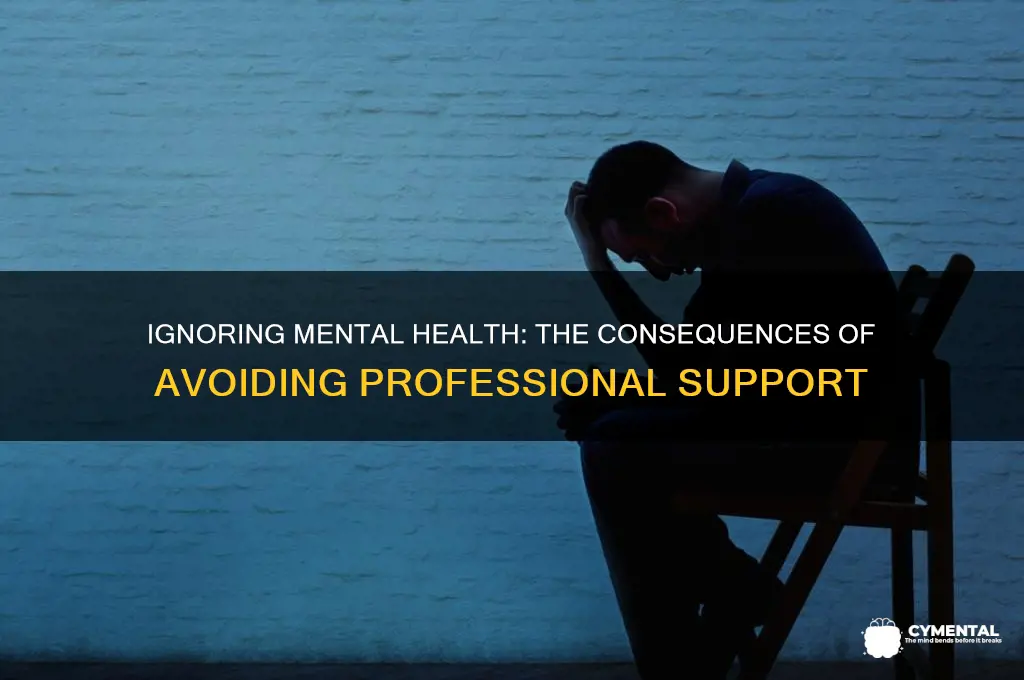
Failing to seek mental health support can have profound and far-reaching consequences, impacting not only emotional well-being but also physical health, relationships, and overall quality of life. Untreated mental health issues, such as anxiety, depression, or trauma, often worsen over time, leading to increased distress, isolation, and difficulty functioning in daily life. Without intervention, individuals may resort to unhealthy coping mechanisms, such as substance abuse or self-harm, further exacerbating their struggles. Over time, neglected mental health can contribute to chronic physical conditions, reduced productivity, and strained interpersonal connections. Moreover, the stigma surrounding mental health often prevents people from reaching out, creating a cycle of suffering that could be alleviated with timely and appropriate care. Recognizing the importance of mental health and seeking help is crucial for preventing long-term damage and fostering resilience and recovery.
| Characteristics | Values |
|---|---|
| Worsening Symptoms | Untreated mental health issues often lead to increased severity of symptoms, such as heightened anxiety, deeper depression, or more frequent panic attacks. |
| Chronic Physical Health Issues | Mental health is closely linked to physical health. Neglecting mental health can result in chronic conditions like heart disease, weakened immune function, and gastrointestinal problems. |
| Social Isolation | Individuals may withdraw from social interactions, leading to loneliness, strained relationships, and a reduced support network. |
| Decreased Productivity | Mental health struggles can impair focus, motivation, and performance at work or school, potentially leading to job loss or academic failure. |
| Substance Abuse | Many turn to alcohol, drugs, or other substances as a coping mechanism, increasing the risk of addiction and further health complications. |
| Financial Instability | Mental health issues can lead to poor financial decisions, job instability, and increased healthcare costs due to untreated conditions. |
| Suicidal Thoughts or Behaviors | Untreated mental health conditions are a significant risk factor for suicidal ideation, attempts, and completion. |
| Impaired Decision-Making | Mental health struggles can cloud judgment, leading to risky behaviors or poor life choices. |
| Strained Relationships | Unaddressed mental health issues can cause irritability, mood swings, and conflict, damaging personal and professional relationships. |
| Long-Term Disability | Severe, untreated mental health conditions can lead to long-term disability, affecting daily functioning and independence. |
| Increased Healthcare Costs | Delaying treatment often results in more complex and costly interventions in the future. |
| Impact on Family and Caregivers | Family members and caregivers may experience emotional and financial strain while supporting an untreated individual. |
| Reduced Quality of Life | Overall well-being and life satisfaction decline significantly without proper mental health care. |
| Stigma and Self-Blame | Avoidance of treatment can perpetuate stigma and lead to feelings of shame or self-blame. |
| Chronic Stress | Prolonged mental health issues contribute to chronic stress, which exacerbates both mental and physical health problems. |
Explore related products


What You'll Learn
- Increased risk of chronic mental health issues like depression, anxiety, and severe mood disorders
- Strained relationships due to unresolved emotional struggles and poor communication patterns
- Decline in work or academic performance, leading to job loss or failure
- Higher chances of self-harm, substance abuse, or suicidal tendencies without intervention
- Physical health deterioration, including weakened immunity and chronic pain conditions

Increased risk of chronic mental health issues like depression, anxiety, and severe mood disorders
Untreated mental health issues often spiral into chronic conditions, transforming temporary struggles into lifelong battles. Consider depression: what might begin as occasional sadness can, without intervention, deepen into major depressive disorder, marked by persistent hopelessness, fatigue, and suicidal ideation. Similarly, anxiety left unaddressed may evolve from situational stress into generalized anxiety disorder, where worry becomes all-consuming, interfering with daily functioning. Severe mood disorders, such as bipolar disorder, can also worsen, with untreated manic or depressive episodes increasing in frequency and intensity. This progression is not inevitable but is significantly more likely without professional help.
The mechanism behind this escalation is both psychological and physiological. Prolonged stress, for instance, floods the body with cortisol, a hormone that, in excess, damages neural pathways associated with mood regulation. Over time, this can rewire the brain, making it harder to recover from emotional setbacks. For example, a 20-year-old experiencing panic attacks might, by age 30, develop agoraphobia if the root cause of their anxiety remains unaddressed. Similarly, a teenager with mild depressive symptoms could, by their late 20s, face treatment-resistant depression if early signs are ignored. These outcomes are not merely theoretical; studies show that 80% of individuals with untreated depression experience chronic recurrence, often with greater severity.
Practical steps can mitigate this risk, even without immediate access to therapy. Tracking mood patterns using journaling apps like Daylio can help identify triggers before symptoms escalate. Incorporating stress-reduction techniques—such as 10 minutes of daily mindfulness meditation or progressive muscle relaxation—can lower cortisol levels and interrupt the cycle of worsening symptoms. However, these methods are not substitutes for professional care. For instance, while exercise releases endorphins that temporarily alleviate depression, it cannot address underlying neurotransmitter imbalances, which require targeted interventions like SSRIs or cognitive-behavioral therapy.
A comparative perspective highlights the urgency of early intervention. Just as untreated hypertension increases the risk of heart disease, unaddressed mental health issues compound over time. Imagine two individuals with identical anxiety symptoms at age 25: one seeks therapy and medication, while the other self-medicates with alcohol. By age 40, the former might manage their condition effectively, while the latter could face anxiety-induced alcoholism, complicating treatment exponentially. This analogy underscores the critical difference between proactive and reactive approaches to mental health.
Ultimately, the takeaway is clear: delaying mental health treatment is not a neutral decision but an active risk factor for chronic illness. While self-care strategies offer temporary relief, they cannot replace the diagnostic precision and therapeutic tools provided by professionals. For those hesitant to seek help, consider this: early intervention reduces the likelihood of long-term medication dependence and hospitalization. For example, adolescents treated for depression within six months of symptom onset have a 70% lower risk of developing chronic depression compared to those who wait years. Prioritizing mental health is not just about feeling better today—it’s about safeguarding your future self from avoidable suffering.
Accessing Mental Health Care Without Insurance: Affordable Options and Resources
You may want to see also
Explore related products


Strained relationships due to unresolved emotional struggles and poor communication patterns
Unresolved emotional struggles act as silent saboteurs in relationships, eroding trust and intimacy over time. When individuals fail to address their mental health issues, they often project their pain onto others, creating a cycle of resentment and misunderstanding. For instance, someone battling untreated anxiety might misinterpret a partner’s harmless comment as criticism, leading to frequent arguments. This pattern not only strains the relationship but also reinforces the individual’s belief that they are misunderstood, further isolating them. Without intervention, these dynamics can become self-perpetuating, making it increasingly difficult to reconnect.
Consider the role of poor communication patterns in this context. When emotional struggles go unaddressed, individuals may resort to passive-aggressive behavior, stonewalling, or emotional withdrawal as coping mechanisms. These behaviors, while seemingly protective, prevent genuine dialogue and deepen relational rifts. For example, a person dealing with depression might avoid discussing their feelings altogether, leaving their partner feeling shut out and frustrated. Over time, this lack of emotional transparency can lead to a breakdown in communication, where even minor issues escalate into major conflicts. Practical steps to mitigate this include setting aside dedicated time for open conversations and using "I" statements to express feelings without assigning blame.
The impact of strained relationships extends beyond the immediate partnership, affecting broader social networks and even professional interactions. Unresolved emotional struggles can make individuals hypersensitive to perceived slights, causing them to withdraw from friendships or become defensive in workplace settings. This isolation compounds their mental health challenges, creating a vicious cycle. For instance, a young adult struggling with untreated trauma might avoid social gatherings, missing out on opportunities to build supportive connections. To break this cycle, it’s crucial to encourage small, consistent efforts toward communication, such as sending a brief text to a friend or scheduling a short check-in with a colleague.
From a persuasive standpoint, seeking mental health support is not just an individual responsibility but a relational one. By addressing emotional struggles, individuals can improve their ability to communicate effectively, fostering healthier and more resilient relationships. Therapy, for example, provides tools to navigate difficult conversations and manage emotional triggers. Couples or family therapy can be particularly beneficial, offering a structured environment to address shared challenges. Investing in mental health is an investment in relationships, ensuring that emotional struggles do not become barriers to connection but opportunities for growth.
Finally, it’s essential to recognize that strained relationships are not irreversible. With awareness and effort, individuals can rebuild trust and improve communication. Start by acknowledging the impact of unresolved emotional struggles on your interactions and commit to seeking help. Practical tips include practicing active listening, validating each other’s feelings, and setting boundaries to prevent emotional overwhelm. Remember, the first step toward healing is often the hardest, but it’s also the most transformative. By prioritizing mental health, you not only improve your own well-being but also create a foundation for stronger, more fulfilling relationships.
Empathy and Growth: How Mental Health Connections Transform Us
You may want to see also
Explore related products


Decline in work or academic performance, leading to job loss or failure
Untreated mental health issues often manifest as a gradual erosion of focus, motivation, and resilience, which are critical for sustaining work or academic performance. Consider the case of a 28-year-old software developer who, after experiencing persistent anxiety and depression, began missing deadlines and producing subpar code. Despite his technical expertise, his inability to manage stress led to frequent absences and strained relationships with colleagues. Within six months, he was let go, not due to a lack of skill, but because his untreated mental health issues had rendered him unreliable. This example underscores how mental health struggles, when ignored, can directly sabotage professional stability.
The decline in performance is not always linear; it often starts subtly, with small lapses in productivity or quality. A college student battling undiagnosed ADHD might find themselves procrastinating on assignments, skipping classes, or failing to retain information during exams. Over time, these minor setbacks accumulate, leading to failing grades and, eventually, academic probation. Without intervention, the student may drop out, not because they lack intellectual capability, but because their mental health challenges were never addressed. This pattern highlights the compounding effect of untreated mental health issues on long-term academic and career prospects.
Employers and educators often misinterpret the symptoms of mental health struggles as laziness or lack of commitment. For instance, a teacher might label a student with untreated depression as unmotivated, failing to recognize the underlying emotional exhaustion and hopelessness. Similarly, a manager might view an employee’s increased errors as carelessness, rather than a sign of burnout or anxiety. This misattribution not only delays necessary support but also exacerbates the individual’s feelings of inadequacy, creating a vicious cycle of decline. Practical steps, such as implementing workplace mental health programs or offering academic counseling, can help break this cycle by fostering understanding and providing resources.
To mitigate the risk of job loss or academic failure, proactive measures are essential. For employees, this might include setting realistic work boundaries, seeking regular check-ins with supervisors, and utilizing employee assistance programs (EAPs) that offer confidential counseling services. Students can benefit from time management tools, peer support groups, and academic accommodations like extended deadlines or alternative testing formats. Both groups should prioritize self-care practices, such as regular exercise, adequate sleep, and mindfulness techniques, to build resilience against mental health challenges. Early intervention, whether through therapy, medication, or lifestyle changes, is key to preventing the downward spiral that can lead to professional or academic ruin.
Ultimately, the failure to seek mental health support transforms manageable challenges into insurmountable obstacles. The consequences extend beyond immediate performance issues, impacting financial stability, self-esteem, and future opportunities. For instance, a job loss due to untreated mental health issues can lead to long-term unemployment, while academic failure can close doors to desired careers. By recognizing the signs early and taking actionable steps, individuals can protect their professional and academic trajectories, ensuring that mental health struggles do not become permanent barriers to success.
Supporting Reluctant Loved Ones: Strategies for Assisting Mentally Ill Individuals
You may want to see also
Explore related products


$8.49 $11.99


Higher chances of self-harm, substance abuse, or suicidal tendencies without intervention
Untreated mental health issues can create a perfect storm for self-destructive behaviors. Imagine a pressure cooker without a release valve – the internal tension builds until it finds an outlet, often in the form of self-harm, substance abuse, or suicidal thoughts. Statistics paint a grim picture: individuals with untreated depression are four times more likely to engage in self-harm, while those with anxiety disorders are twice as likely to develop a substance use disorder. These aren't mere correlations; they're cries for help, desperate attempts to numb the emotional pain that feels unbearable.
Without intervention, these behaviors can spiral into a vicious cycle. Substance abuse, for instance, often exacerbates the very mental health issues it's meant to escape from. Alcohol, a common crutch, is a depressant, deepening the very darkness it aims to drown. Similarly, self-harm, while providing temporary relief, reinforces a dangerous pattern of coping through physical pain, making it harder to break free.
Consider a 16-year-old struggling with overwhelming anxiety. Left unaddressed, they might turn to cutting as a way to "feel something" amidst the emotional numbness. This act, while alarming, is a misguided attempt at self-regulation. Without professional guidance, this behavior can escalate, leading to more severe injuries and a heightened risk of accidental overdose on pain medication used to manage the wounds.
Similarly, a 35-year-old battling chronic depression might find solace in alcohol, initially using it to "take the edge off." Over time, tolerance builds, requiring larger doses to achieve the same effect. This dangerous progression can lead to alcohol dependence, further isolating the individual and deepening their depression, creating a cycle that's incredibly difficult to break without professional intervention.
The takeaway is clear: seeking help isn't a sign of weakness, but a crucial step towards breaking the cycle of self-destruction. Therapy provides tools to manage emotions, challenge negative thought patterns, and develop healthier coping mechanisms. Medication, when appropriate, can offer much-needed relief from debilitating symptoms. Support groups connect individuals with others who understand their struggles, fostering a sense of community and hope. Remember, reaching out for help is not giving up; it's choosing to live.
Veganism and Mental Health: Exploring the Mind-Diet Connection
You may want to see also
Explore related products



Physical health deterioration, including weakened immunity and chronic pain conditions
The mind-body connection is not a mere metaphor; it's a physiological reality. Chronic stress, anxiety, and depression, when left untreated, can wreak havoc on the body's intricate systems, leading to a cascade of physical health issues. One of the most profound consequences is the deterioration of the immune system. Research has shown that individuals with untreated mental health conditions often experience elevated levels of cortisol, the stress hormone, which can suppress the immune response. This means a simple cold can turn into a lingering illness, and the risk of developing infections increases significantly. For instance, a study published in the *Psychoneuroendocrinology* journal found that individuals with untreated depression had a 60% higher chance of developing a cold when exposed to the virus, compared to those without depressive symptoms.
Consider the following scenario: a 35-year-old professional, let's call her Sarah, has been battling anxiety for years without seeking professional help. She notices frequent colds, recurring skin infections, and a general sense of fatigue. Unbeknownst to her, her body's ability to fight off pathogens is compromised due to the constant flood of stress hormones. This weakened immunity not only affects her day-to-day life but also increases her susceptibility to more severe health issues over time.
Chronic pain conditions often emerge as another physical manifestation of neglected mental health. The brain and the body's pain perception systems are intricately linked, and mental distress can amplify pain signals. Conditions like fibromyalgia, migraines, and irritable bowel syndrome (IBS) are frequently associated with underlying mental health disorders. A study in the *Journal of Pain* revealed that individuals with depression are three times more likely to develop chronic pain conditions. This is not merely a coincidence; it's a result of the complex interplay between neurotransmitters, inflammation, and the body's stress response.
Here's a practical example: John, a 42-year-old construction worker, has been experiencing severe back pain for months. Despite physical therapy and medication, the pain persists. Upon further investigation, it becomes apparent that John has been struggling with undiagnosed post-traumatic stress disorder (PTSD) since a workplace accident years ago. His body's heightened stress response has been contributing to muscle tension and inflammation, exacerbating his pain. This case illustrates how mental health issues can directly influence physical pain and why a holistic approach to treatment is essential.
The impact of untreated mental health on physical well-being is a critical issue, especially considering the potential long-term consequences. Weakened immunity can lead to frequent illnesses, prolonged recovery times, and increased vulnerability to chronic diseases. Moreover, the development of chronic pain conditions can significantly impair one's quality of life, affecting mobility, sleep, and overall daily functioning. It is imperative to recognize these physical symptoms as potential red flags for underlying mental health struggles. Seeking professional help, such as therapy or counseling, can not only address the mental health concerns but also alleviate the associated physical ailments, promoting a healthier, more resilient body and mind.
In summary, the physical health deterioration resulting from neglected mental well-being is a serious concern. From weakened immunity to chronic pain, the body bears the brunt of untreated mental health issues. Recognizing these connections is crucial for early intervention and comprehensive care. By addressing mental health, individuals can take a proactive step towards improving their overall physical health and preventing further complications. This holistic approach to healthcare is essential for long-term well-being.
Gym and Mind: Boosting Mental Health Through Physical Fitness
You may want to see also
Frequently asked questions
Not seeking mental health help can lead to worsening symptoms, such as increased anxiety, depression, or stress, which may interfere with daily functioning and quality of life.
Yes, untreated mental health issues can manifest physically, leading to problems like chronic pain, sleep disturbances, weakened immune function, and increased risk of conditions like heart disease.
Avoiding treatment can strain relationships, as untreated mental health issues may lead to irritability, withdrawal, or difficulty communicating effectively with loved ones.
Without support, mental health struggles can reduce focus, motivation, and energy, negatively impacting productivity, job performance, and career advancement.
Yes, untreated conditions can escalate into more severe issues, such as chronic mental illness, substance abuse, self-harm, or suicidal thoughts and behaviors.