Ava Ramirez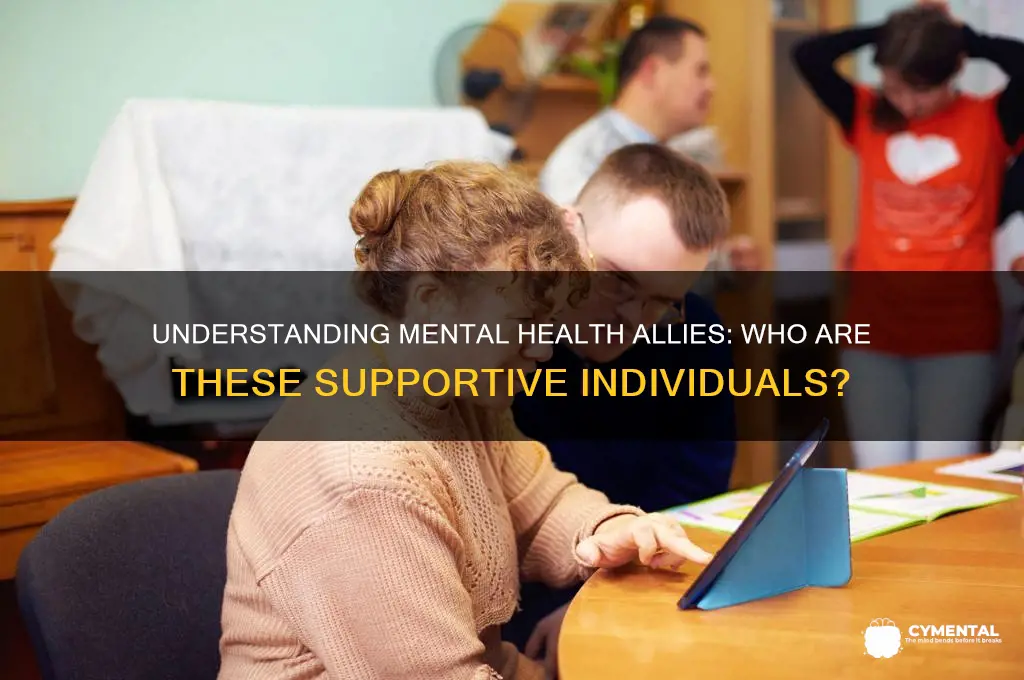
When someone is struggling with mental illness, having a supportive person to turn to can make a significant difference in their journey toward healing and recovery. This individual, often referred to as a mental health ally, can be a friend, family member, therapist, or counselor who provides emotional support, understanding, and guidance. They help by actively listening, offering encouragement, and connecting the individual to professional resources when needed. A mental health ally plays a crucial role in reducing stigma, fostering a sense of belonging, and empowering those affected by mental health challenges to seek help and take steps toward improved well-being.
Explore related products




What You'll Learn
- Therapists: Trained professionals offering talk therapy for mental health issues and emotional support
- Psychiatrists: Medical doctors diagnosing, treating, and prescribing medication for mental illnesses
- Counselors: Provide guidance and coping strategies for personal and emotional challenges
- Peer Support Specialists: Individuals with lived experience offering understanding and encouragement
- Crisis Hotlines: Immediate assistance and resources for urgent mental health situations

Therapists: Trained professionals offering talk therapy for mental health issues and emotional support
Therapists are the architects of safe spaces, meticulously trained to navigate the labyrinth of human emotion. Unlike friends or family, their expertise lies in evidence-based techniques honed through years of education and supervised practice. Cognitive Behavioral Therapy (CBT), for instance, is a cornerstone of many therapeutic approaches, proven effective for anxiety, depression, and PTSD. Imagine it as a mental workout regimen, retraining thought patterns to build emotional resilience. Dialectical Behavior Therapy (DBT), another powerful tool, equips individuals with skills for emotional regulation, particularly beneficial for those struggling with self-harm or borderline personality disorder. These are not mere conversations; they are structured interventions, tailored to individual needs, delivered by professionals who understand the intricate dance between biology, psychology, and environment.
Choosing a therapist is akin to finding a skilled guide for a treacherous mountain climb. Credentials matter. Look for licensed professionals like Licensed Clinical Social Workers (LCSWs), Licensed Professional Counselors (LPCs), or Psychologists (Ph.D./Psy.D.). These designations signify rigorous training and adherence to ethical standards. Don’t hesitate to ask about their specialization. A therapist experienced in treating eating disorders may not be the best fit for someone grappling with grief. Compatibility is equally crucial. Therapy is a deeply personal journey; feeling understood and respected by your therapist is non-negotiable. Many therapists offer brief consultations, a chance to assess this fit before committing to sessions, typically lasting 45-60 minutes, once or twice weekly.
The therapeutic process is not a quick fix, but a transformative journey. Progress is often measured in subtle shifts: a newfound ability to manage anxiety, improved relationships, or a deeper understanding of oneself. Medication, while sometimes prescribed by psychiatrists, is not always necessary. Therapists focus on equipping individuals with tools to manage their mental health long-term. Think of it as learning a new language – it requires practice, patience, and the right teacher. Consistency is key; skipping sessions can disrupt progress, much like neglecting physical therapy after an injury.
Therapy is an investment in oneself, a testament to strength, not weakness. It’s a space to unravel the complexities of the mind, to challenge limiting beliefs, and to cultivate resilience. For those grappling with mental health challenges, therapists offer more than just support – they provide a roadmap to healing, one conversation at a time. Remember, seeking help is not a sign of defeat; it’s a courageous step toward reclaiming your well-being.
Escaping Mental Abuse: Support and Resources for Spousal Victims
You may want to see also
Explore related products




Psychiatrists: Medical doctors diagnosing, treating, and prescribing medication for mental illnesses
Psychiatrists are medical doctors who specialize in mental health, uniquely qualified to diagnose, treat, and prescribe medication for mental illnesses. Unlike therapists or counselors, psychiatrists complete medical school and residency training, equipping them with expertise in the biological underpinnings of mental disorders. This medical background allows them to identify conditions like depression, anxiety, bipolar disorder, or schizophrenia by evaluating physical symptoms, lab results, and family medical history alongside psychological assessments. For instance, a psychiatrist might order a thyroid test to rule out hypothyroidism as a cause of depressive symptoms before prescribing an antidepressant like fluoxetine (Prozac), typically starting at 20 mg daily for adults.
The treatment approach of a psychiatrist often integrates medication management with brief psychotherapy, though they may refer patients to psychologists or therapists for more intensive talk therapy. Medication prescriptions are tailored to individual needs, considering factors like age, weight, and potential drug interactions. For example, adolescents prescribed stimulants for ADHD, such as methylphenidate (Ritalin), often start with lower doses (10–20 mg) compared to adults, with adjustments based on response and side effects. Psychiatrists also monitor patients regularly to assess medication efficacy and manage side effects, such as adjusting dosages or switching medications if initial treatments prove ineffective.
One of the key advantages of consulting a psychiatrist is their ability to address the complex interplay between physical and mental health. Conditions like chronic pain, hormonal imbalances, or neurological disorders can exacerbate mental illness, and psychiatrists are trained to treat these comorbidities holistically. For instance, a patient with treatment-resistant depression might undergo a trial of transcranial magnetic stimulation (TMS) or be referred for a sleep study to investigate underlying insomnia. This comprehensive approach ensures that treatment is not just symptomatic but targets root causes.
Despite their expertise, psychiatrists are not always the first point of contact for mental health concerns. Many individuals start with primary care physicians or therapists, who may then refer to a psychiatrist for specialized care. However, for severe or complex cases—such as psychosis, suicidal ideation, or medication-resistant disorders—direct consultation with a psychiatrist is often critical. Practical tips for working with a psychiatrist include keeping a symptom journal, being honest about medication adherence, and asking questions about potential side effects or alternative treatments. Ultimately, psychiatrists serve as vital allies in navigating the often intricate landscape of mental health, offering evidence-based interventions that can significantly improve quality of life.
Electronics as Tools: Supporting Mental Health and Wellness
You may want to see also
Explore related products





Counselors: Provide guidance and coping strategies for personal and emotional challenges
Counselors are trained professionals who specialize in helping individuals navigate personal and emotional challenges. Unlike friends or family, they offer a structured, non-judgmental space where you can explore your thoughts and feelings with someone who has the expertise to guide you. Their role is not to give advice but to help you uncover your own solutions through evidence-based techniques and strategies. For instance, cognitive-behavioral therapy (CBT) is a common approach where counselors help you identify and reframe negative thought patterns, a method proven effective for conditions like anxiety and depression.
Consider the process of working with a counselor as a collaborative journey. During sessions, which typically last 45–60 minutes, you’ll discuss specific challenges, set goals, and learn coping mechanisms tailored to your needs. For example, if you’re struggling with stress, a counselor might teach you mindfulness exercises or progressive muscle relaxation techniques. These tools are not one-size-fits-all; they’re adapted to your lifestyle, age, and the severity of your symptoms. For adolescents, counselors might incorporate creative therapies like art or music, while adults may benefit more from structured problem-solving exercises.
One of the most valuable aspects of counseling is its focus on long-term resilience. Counselors don’t just address immediate issues; they equip you with skills to manage future challenges independently. For instance, if you’re dealing with grief, a counselor might help you develop a routine that includes journaling, social support, and self-care practices. Over time, these strategies become habits, reducing the risk of relapse into unhealthy patterns. Studies show that individuals who engage in counseling consistently report improved emotional regulation and overall well-being after 8–12 sessions.
However, it’s important to note that counseling is not a quick fix. Progress takes time, and some sessions may feel more challenging than others. Counselors often encourage clients to track their progress through journaling or mood tracking apps, which can provide tangible evidence of growth. Additionally, counselors may recommend supplementary resources, such as support groups or self-help books, to enhance the therapeutic process. For those hesitant to start, remember that seeking help is a sign of strength, not weakness, and the first step is often the hardest.
In conclusion, counselors are invaluable allies in managing mental health. They provide a safe, structured environment to address personal and emotional challenges, offering tailored strategies that foster resilience and self-awareness. Whether you’re dealing with anxiety, grief, or life transitions, their expertise can guide you toward lasting change. If you’re considering counseling, start by researching licensed professionals in your area or exploring online platforms that offer virtual sessions. Taking that first step could be the beginning of a transformative journey toward better mental health.
Nature's Healing Power: Can Outdoor Time Ease Mental Health Struggles?
You may want to see also
Explore related products


Peer Support Specialists: Individuals with lived experience offering understanding and encouragement
Peer Support Specialists (PSS) are individuals who have navigated their own mental health challenges and now use their lived experience to support others. Unlike traditional mental health professionals, PSS offer a unique blend of empathy, understanding, and practical advice rooted in personal recovery. This role is not about clinical expertise but about shared humanity, making it a powerful complement to formal treatment. For instance, a PSS who has overcome depression can provide insights into coping strategies that worked for them, offering hope and a roadmap for someone currently struggling.
The effectiveness of Peer Support Specialists lies in their ability to bridge the gap between professional care and personal experience. Research shows that individuals are more likely to engage in treatment and adhere to recovery plans when supported by someone who has "been there." For example, a study published in the *Journal of Mental Health* found that peer support significantly improved social functioning and reduced hospitalization rates among participants. This is because PSS can relate to the emotional and logistical challenges of managing mental illness, providing a level of encouragement that clinical advice alone cannot.
To become a Peer Support Specialist, individuals typically complete a certification program that combines their lived experience with training in active listening, ethical boundaries, and recovery principles. Programs like the Peer Support Whole Health and Resiliency Training (WHR) emphasize the importance of self-care for PSS, ensuring they can support others without compromising their own well-being. Practical tips for those considering this role include joining local peer-run organizations, attending support group meetings, and documenting personal recovery milestones to strengthen credibility.
One of the most compelling aspects of Peer Support Specialists is their ability to foster a sense of community and belonging. Mental illness often isolates individuals, but PSS create safe spaces where people can share their struggles without fear of judgment. For example, a PSS might lead a weekly group where participants discuss their progress, setbacks, and strategies for managing symptoms. This communal approach not only reduces stigma but also reinforces the idea that recovery is a collective journey.
Incorporating Peer Support Specialists into mental health systems requires collaboration between healthcare providers, policymakers, and community organizations. Hospitals, clinics, and even schools can benefit from integrating PSS into their teams, offering clients a holistic support network. For instance, a PSS working in a hospital setting might accompany a patient to therapy sessions, providing real-time encouragement and helping them articulate their needs to clinicians. By valuing lived experience as a credential in itself, society can transform the way mental health care is delivered, making it more inclusive, relatable, and effective.
Counseling for Anxiety: Effective Strategies to Manage and Overcome Fear
You may want to see also
Explore related products


Crisis Hotlines: Immediate assistance and resources for urgent mental health situations
In moments of acute mental distress, crisis hotlines serve as a vital lifeline, offering immediate support to individuals grappling with suicidal thoughts, severe anxiety, or overwhelming emotional pain. These services are staffed by trained professionals and volunteers who provide empathetic listening, crisis de-escalation, and practical guidance. Unlike therapy or long-term counseling, crisis hotlines focus on stabilizing the caller in the present moment, ensuring safety, and connecting them to local resources for ongoing care. For instance, the National Suicide Prevention Lifeline (988 in the U.S.) is accessible 24/7 and can dispatch emergency services if the caller is at imminent risk. This immediacy makes hotlines a critical tool in preventing tragedies and offering hope during life’s darkest moments.
The effectiveness of crisis hotlines lies in their accessibility and anonymity, which lowers barriers for individuals hesitant to seek help. Callers do not need insurance, appointments, or even their real names to receive assistance. For example, the Crisis Text Line (text 741741 in the U.S.) caters to those who prefer texting over speaking, making it particularly appealing to younger demographics or those in situations where a phone call is unsafe. Research shows that such services significantly reduce feelings of isolation and suicidal ideation, with many callers reporting a sense of relief and clarity after just one conversation. This underscores the power of human connection in moments of crisis.
While crisis hotlines are invaluable, they are not a substitute for comprehensive mental health treatment. They are designed to address immediate emergencies, not long-term issues. For instance, a caller experiencing chronic depression may receive short-term coping strategies but will be encouraged to seek ongoing therapy or medication management. It’s essential for users to understand this distinction and follow through with recommended resources. Hotlines often provide referrals to local mental health clinics, support groups, or telehealth services, ensuring continuity of care beyond the initial crisis.
To maximize the benefit of a crisis hotline, callers should approach the conversation with openness and honesty. Trained responders are skilled at navigating sensitive topics without judgment, so sharing specific details about feelings or situations can lead to more tailored assistance. For example, stating, “I’ve been thinking about hurting myself and I don’t know what to do,” allows the responder to assess risk level and provide appropriate interventions. Additionally, keeping a notepad nearby to jot down suggested resources or coping techniques can help callers retain information during a distressing moment.
In conclusion, crisis hotlines are a cornerstone of emergency mental health support, offering immediate relief and guidance when seconds count. Their anonymity, accessibility, and focus on stabilization make them uniquely suited to address urgent situations. However, their role is distinct from long-term care, and callers should be prepared to engage with follow-up resources. By understanding how to effectively utilize these services, individuals can navigate crises more safely and take the first steps toward healing. Whether through a phone call, text, or online chat, help is always within reach.
Affirmations: Powerful Tools for Boosting Mental Health and Well-being
You may want to see also
Frequently asked questions
A person who helps with mental illness is often called a mental health professional. This can include psychologists, psychiatrists, therapists, counselors, or social workers, depending on their qualifications and the type of support they provide.
A therapist provides talk therapy, also known as psychotherapy, to help individuals manage mental health issues. They listen, offer coping strategies, and guide clients in understanding and addressing their thoughts, emotions, and behaviors.
A psychiatrist is a medical doctor who can diagnose, treat, and prescribe medication for mental health conditions. A psychologist typically holds a doctoral degree (PhD or PsyD) and focuses on therapy, counseling, and psychological testing but cannot prescribe medication in most cases.