Noah Parker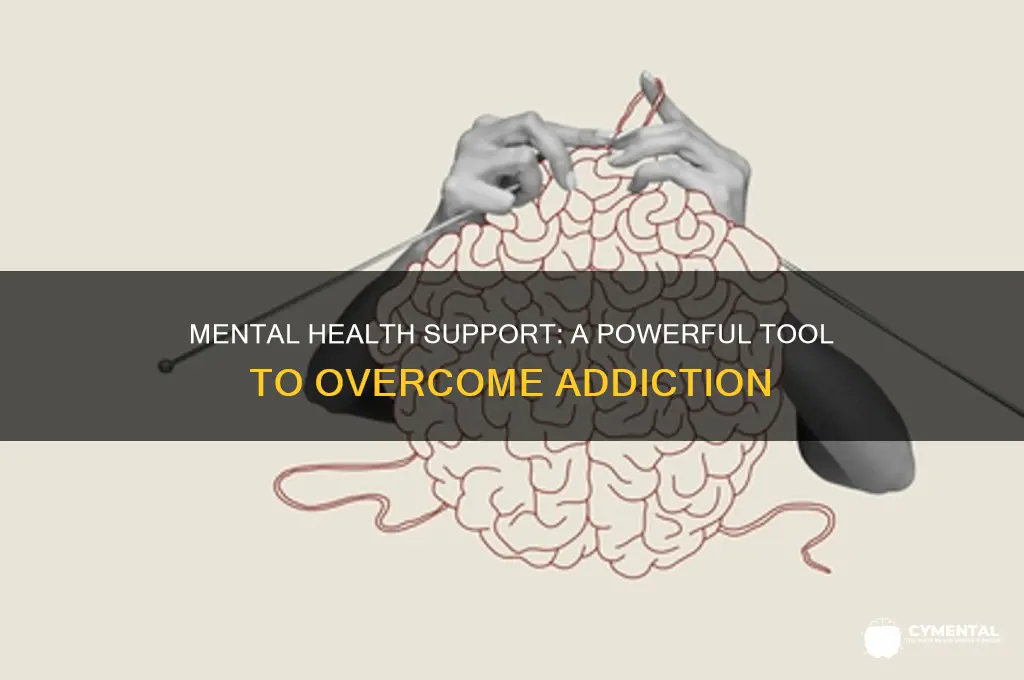
Mental health support plays a crucial role in addressing addiction by tackling the underlying psychological and emotional factors that often contribute to substance abuse. Addiction is frequently intertwined with issues such as anxiety, depression, trauma, or stress, and untreated mental health conditions can exacerbate addictive behaviors as individuals may turn to substances as a coping mechanism. By integrating mental health treatment, such as therapy, counseling, and medication, individuals can develop healthier coping strategies, address root causes of their addiction, and build resilience. Additionally, mental health interventions help improve self-awareness, emotional regulation, and overall well-being, which are essential for long-term recovery and reducing the risk of relapse. Thus, a holistic approach that combines addiction treatment with mental health care is vital for sustainable healing and recovery.
| Characteristics | Values |
|---|---|
| Dual Diagnosis Treatment | Addresses co-occurring mental health disorders (e.g., depression, anxiety) alongside addiction. |
| Cognitive Behavioral Therapy (CBT) | Helps identify and change harmful thought patterns and behaviors related to addiction. |
| Dialectical Behavior Therapy (DBT) | Focuses on emotional regulation, mindfulness, and coping skills to reduce substance use. |
| Medication-Assisted Treatment (MAT) | Uses medications (e.g., buprenorphine, naltrexone) to manage cravings and withdrawal symptoms. |
| Holistic Approaches | Incorporates mindfulness, yoga, and art therapy to support mental and emotional well-being. |
| Support Groups | Provides peer support through programs like Alcoholics Anonymous (AA) or SMART Recovery. |
| Trauma-Informed Care | Addresses underlying trauma that may contribute to addictive behaviors. |
| Individual Counseling | Offers personalized therapy to explore root causes of addiction and mental health issues. |
| Family Therapy | Involves family members to improve communication and support systems. |
| Relapse Prevention Strategies | Teaches skills to identify triggers and prevent relapse. |
| Mindfulness and Stress Reduction | Helps manage stress and anxiety, which are common triggers for substance use. |
| Psychoeducation | Educates individuals about addiction, mental health, and recovery processes. |
| Integrated Care Models | Combines mental health and addiction treatment in a coordinated approach. |
| Aftercare Planning | Provides ongoing support and resources post-treatment to maintain sobriety. |
| Motivational Interviewing (MI) | Enhances motivation and commitment to change addictive behaviors. |
| Emotional Regulation Skills | Teaches individuals to manage emotions without resorting to substance use. |
Explore related products


$12.52 $17.95


What You'll Learn
- Coping Mechanisms: Learning healthy ways to manage stress, anxiety, and triggers without substance use
- Dual Diagnosis: Addressing co-occurring mental health disorders like depression or PTSD alongside addiction
- Emotional Regulation: Developing skills to handle emotions without relying on addictive behaviors
- Trauma Healing: Treating underlying trauma that often fuels addictive patterns and behaviors
- Support Systems: Building a strong network of therapy, groups, and relationships to sustain recovery

Coping Mechanisms: Learning healthy ways to manage stress, anxiety, and triggers without substance use
Stress, anxiety, and triggers are often the invisible hands pushing individuals toward substance use. Without healthy coping mechanisms, these forces can feel insurmountable, leaving relapse as the only apparent escape. Learning to manage them without relying on substances is not just a skill—it’s a lifeline.
Consider mindfulness meditation, a practice backed by research for its ability to reduce stress and anxiety. Studies show that just 10 minutes of daily mindfulness can lower cortisol levels by up to 14%. Start small: sit in a quiet space, focus on your breath, and observe thoughts without judgment. Pair this with deep breathing exercises—inhale for 4 seconds, hold for 4, exhale for 6—to activate the parasympathetic nervous system, calming the body’s fight-or-flight response. These techniques are accessible to all ages and require no equipment, making them ideal for immediate implementation.
Physical activity is another powerful tool. Exercise releases endorphins, the body’s natural mood lifters, and can reduce cravings by up to 20%. Aim for 30 minutes of moderate activity, like brisk walking or yoga, at least 5 days a week. For those in recovery, joining a group fitness class can provide both accountability and social support, addressing isolation—a common trigger. However, avoid overexertion, as physical stress can backfire, increasing anxiety in some individuals.
Cognitive-behavioral therapy (CBT) offers a structured approach to identifying and reframing negative thought patterns that lead to substance use. For example, instead of thinking, “I can’t handle this stress,” CBT teaches you to reframe it as, “This stress is temporary, and I have tools to manage it.” Work with a therapist to develop personalized strategies, or use self-guided apps like Calm or Headspace for daily practice. This method is particularly effective for individuals aged 18–65, with studies showing a 50–60% success rate in reducing relapse.
Finally, building a support network is critical. Peer support groups, such as SMART Recovery or 12-step programs, provide a safe space to share experiences and learn from others. Schedule regular check-ins with a trusted friend or family member, and keep a list of emergency contacts for moments of intense craving. Remember, asking for help is not a sign of weakness—it’s a strategic move toward long-term recovery.
By integrating these coping mechanisms into daily life, individuals can reclaim control over their mental health and break the cycle of addiction. It’s not about eliminating stress or triggers entirely but learning to navigate them with resilience and clarity.
Empowering Young Voices: Creative Ways to Support Children’s Mental Expression
You may want to see also
Explore related products




Dual Diagnosis: Addressing co-occurring mental health disorders like depression or PTSD alongside addiction
Substance use disorders rarely exist in isolation. A staggering 50% of individuals with addiction also struggle with a co-occurring mental health disorder, a phenomenon known as dual diagnosis. This complex interplay between addiction and conditions like depression, anxiety, or PTSD creates a vicious cycle, each disorder fueling the other.
Imagine a person battling PTSD, haunted by traumatic memories. They might turn to alcohol to numb the emotional pain, finding temporary relief. However, alcohol, a depressant, exacerbates feelings of hopelessness and despair, deepening their depression. This, in turn, intensifies the urge to drink, creating a downward spiral.
Addressing dual diagnosis requires a nuanced, integrated approach. Treating only the addiction while neglecting the underlying mental health issue is akin to mending a broken leg while ignoring the infection causing the fever. Effective treatment involves simultaneous, coordinated care for both conditions. This often includes a combination of medication, psychotherapy, and support groups. For instance, antidepressants might be prescribed to manage depression, while cognitive-behavioral therapy helps individuals identify and change negative thought patterns contributing to both their mental health struggles and addictive behaviors.
Trauma-focused therapies like Eye Movement Desensitization and Reprocessing (EMDR) can be particularly beneficial for individuals with PTSD and addiction, helping them process traumatic memories and reduce their reliance on substances as a coping mechanism.
It's crucial to remember that recovery from dual diagnosis is a journey, not a destination. Relapses may occur, but they are not failures; they are opportunities for learning and growth. Building a strong support network, whether through therapy groups, 12-step programs, or close relationships, is vital for long-term success.
By acknowledging the intricate link between mental health and addiction, and implementing comprehensive treatment strategies, we can break the cycle of dual diagnosis and pave the way for lasting recovery and improved well-being.
Essential Tools for Streamlining Mental Health Practice Billing Processes
You may want to see also
Explore related products


Emotional Regulation: Developing skills to handle emotions without relying on addictive behaviors
Emotions, when left unchecked, can become the fuel for addictive behaviors. Individuals often turn to substances or compulsive actions as a means of escape or temporary relief from overwhelming feelings. This maladaptive coping mechanism, while providing short-term solace, ultimately exacerbates the underlying emotional turmoil, creating a vicious cycle. Understanding this dynamic is the first step toward breaking free.
The Science Behind Emotional Regulation
Neuroscientific research highlights the role of the prefrontal cortex in emotional regulation. This brain region, responsible for decision-making and impulse control, often exhibits reduced activity in individuals struggling with addiction. By engaging in practices that strengthen this area, such as mindfulness meditation or cognitive-behavioral therapy (CBT), one can enhance emotional resilience. For instance, a study published in the *Journal of Addiction Medicine* found that participants who underwent an 8-week mindfulness-based relapse prevention program showed significant improvements in emotional regulation and reduced cravings.
Practical Strategies for Emotional Mastery
Developing emotional regulation skills requires consistent practice and patience. Start with grounding techniques, such as deep breathing exercises or progressive muscle relaxation, to calm the nervous system during moments of distress. For example, the 4-7-8 breathing technique—inhale for 4 seconds, hold for 7 seconds, exhale for 8 seconds—can be particularly effective in reducing anxiety. Additionally, journaling allows individuals to process emotions objectively, while physical activity releases endorphins, naturally boosting mood. Incorporating these practices into daily routines can significantly diminish the urge to rely on addictive behaviors.
The Role of Professional Guidance
While self-help strategies are valuable, professional intervention often provides the structure and expertise needed for lasting change. Therapies like Dialectical Behavior Therapy (DBT) are specifically designed to teach emotional regulation skills. DBT typically involves weekly group sessions and individual therapy, focusing on mindfulness, distress tolerance, and interpersonal effectiveness. For adolescents, family-based interventions, such as the Community Reinforcement and Family Training (CRAFT) program, have shown promise in addressing both emotional dysregulation and addictive behaviors.
Long-Term Benefits and Cautions
Mastering emotional regulation not only aids in addiction recovery but also improves overall quality of life. Individuals who develop these skills report better relationships, increased productivity, and enhanced mental well-being. However, it’s crucial to approach this process with realistic expectations. Emotional regulation is not about suppressing feelings but learning to navigate them healthily. Avoid the trap of perfectionism; setbacks are natural and can be valuable learning opportunities. Consistency, rather than intensity, is key to long-term success.
By prioritizing emotional regulation, individuals can reclaim control over their lives, reducing the grip of addiction and fostering a more balanced, fulfilling existence.
Breaking Barriers: Overcoming Stigma for Men Seeking Mental Health Support
You may want to see also
Explore related products


Trauma Healing: Treating underlying trauma that often fuels addictive patterns and behaviors
Trauma often lies at the heart of addiction, acting as a silent catalyst for self-destructive behaviors. Studies show that individuals with a history of trauma are four times more likely to develop substance use disorders. This isn’t coincidence—it’s a survival mechanism gone awry. When unprocessed trauma lingers, the brain seeks relief, and addictive substances or behaviors become a temporary escape from emotional pain. Addressing addiction without treating the underlying trauma is like mopping a floor with a leaky roof; the root cause remains untouched.
Consider this: Trauma fragments the brain’s ability to regulate emotions, leading to heightened anxiety, depression, and hypervigilance. In response, individuals may turn to alcohol, drugs, or compulsive behaviors to numb these overwhelming feelings. For example, a veteran with PTSD might use alcohol to silence intrusive memories, while a survivor of childhood abuse may rely on gambling to distract from emotional voids. These patterns aren’t signs of weakness but desperate attempts to cope with unresolved pain. Trauma-informed therapy, such as Eye Movement Desensitization and Reprocessing (EMDR) or Cognitive Behavioral Therapy (CBT), can rewire these neural pathways, helping individuals process trauma safely and reduce reliance on addictive crutches.
Healing trauma isn’t a linear process, but it follows a structured path. Phase one involves establishing safety—both physical and emotional. Therapists often use grounding techniques, such as deep breathing or sensory exercises, to help clients feel secure in the present moment. Phase two focuses on processing traumatic memories. EMDR, for instance, uses bilateral stimulation (like eye movements or tapping) to help the brain reframe traumatic events, reducing their emotional charge. Phase three emphasizes integration, teaching skills to manage triggers and rebuild a sense of self. For instance, a 30-year-old recovering from addiction might learn to identify early signs of anxiety and use mindfulness instead of turning to substances.
Critics argue that revisiting trauma can retraumatize individuals, but when done with a skilled therapist, the process is controlled and empowering. Caution is necessary, however. Not all therapists are trauma-informed, and missteps can exacerbate harm. Look for providers trained in trauma-specific modalities and ensure they prioritize your comfort and pace. Additionally, combining therapy with somatic practices like yoga or acupuncture can enhance healing by addressing the body’s stored trauma. Remember, trauma healing isn’t about erasing the past but reclaiming control over the present.
The takeaway is clear: Addiction treatment must address trauma to be effective. Ignoring this link leaves individuals vulnerable to relapse. By integrating trauma-focused therapies, individuals can break the cycle of addiction, not by sheer willpower, but by healing the wounds that drive it. This approach isn’t quick, but it’s transformative, offering not just sobriety but a renewed sense of self and purpose.
Mental Health Hotlines: Lifelines of Support and Their Impactful Reach
You may want to see also
Explore related products





Support Systems: Building a strong network of therapy, groups, and relationships to sustain recovery
Recovery from addiction is a journey that thrives on connection. Isolating oneself, a common tendency during active addiction, only strengthens the grip of the disease. Building a robust support system, a network of therapy, groups, and relationships, becomes the cornerstone of sustainable recovery.
Imagine a tripod, each leg representing a vital element: professional therapy, support groups, and healthy relationships. Remove one leg, and the structure falters.
Therapy: The Architect of Change
Think of therapy as the architect, designing a personalized blueprint for recovery. Cognitive Behavioral Therapy (CBT), for instance, helps individuals identify and challenge negative thought patterns that fuel addictive behaviors. Dialectical Behavior Therapy (DBT) equips them with emotional regulation skills, crucial for managing cravings and triggers. Regular sessions, ideally weekly or bi-weekly, provide a safe space to process emotions, develop coping mechanisms, and address underlying mental health issues often intertwined with addiction.
Consider it a gym for the mind, where consistent "workouts" strengthen resilience and build emotional muscle.
Support Groups: The Power of Shared Experience
Support groups like Alcoholics Anonymous (AA) or Narcotics Anonymous (NA) offer a unique power: the power of shared experience. Here, individuals find a community of people who truly understand the struggles and triumphs of recovery. The 12-step model, a cornerstone of many groups, provides a structured framework for personal growth and accountability. Attending meetings regularly, ideally several times a week, fosters a sense of belonging, reduces feelings of isolation, and provides invaluable peer support. It's like joining a team where everyone is rooting for your success.
Relationships: The Safety Net of Love and Accountability
Healthy relationships act as a safety net, catching individuals when they stumble. Rebuilding trust with family and friends, damaged during active addiction, is crucial. Open communication, honesty, and setting clear boundaries are essential. New relationships, built on shared interests and values, provide positive influences and a sense of purpose. Consider volunteering, joining a hobby group, or reconnecting with old friends who support your sobriety. These connections offer love, encouragement, and a sense of belonging outside the realm of addiction.
Think of them as the roots of a tree, providing stability and nourishment for growth.
Building Your Network: A Practical Guide
- Start with a Therapist: Find a licensed therapist specializing in addiction. Websites like Psychology Today offer searchable directories.
- Explore Support Groups: Attend several meetings of different groups (AA, NA, SMART Recovery) to find the best fit. Most groups are free and welcome newcomers.
- Reconnect with Loved Ones: Initiate honest conversations, express remorse, and seek their support. Consider family therapy to rebuild trust.
- Cultivate New Relationships: Join clubs, take classes, or volunteer. Look for activities that align with your interests and values.
Remember: Building a strong support system takes time and effort. Be patient, persistent, and open to new connections. This network, a tapestry of therapy, groups, and relationships, will be your lifeline, guiding you through the challenges and celebrating the victories of your recovery journey.
Taking the First Step: A Guide to Seeking Mental Health Support
You may want to see also
Frequently asked questions
Mental health treatment addresses underlying psychological issues such as anxiety, depression, or trauma, which often contribute to addictive behaviors. By treating these root causes, individuals can develop healthier coping mechanisms and reduce reliance on substances.
Therapy, such as cognitive-behavioral therapy (CBT) or dialectical behavior therapy (DBT), helps individuals identify and change harmful thought patterns and behaviors associated with addiction. It also teaches stress management and emotional regulation skills.
Yes, medications for mental health conditions like depression, anxiety, or ADHD can stabilize mood and reduce cravings, making it easier to focus on recovery. Medication-assisted treatment (MAT) is also used for substance use disorders, such as methadone for opioid addiction.
Dual diagnosis treatment simultaneously addresses both addiction and co-occurring mental health disorders. This integrated approach ensures comprehensive care, reducing the risk of relapse and improving long-term recovery outcomes.