Lucas Bennett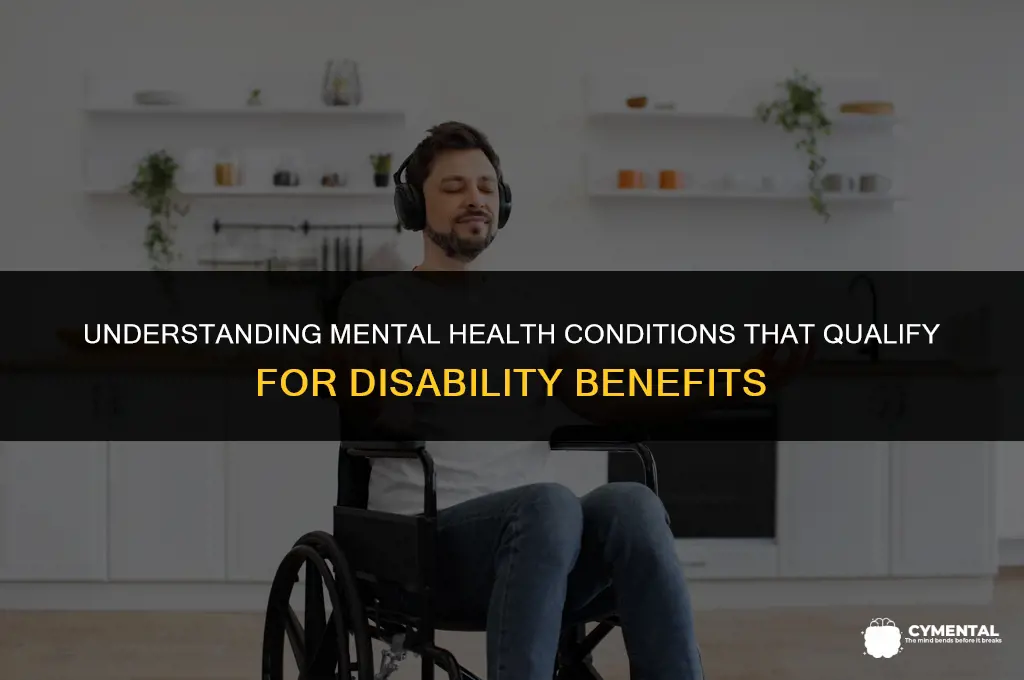
Mental health conditions can significantly impact an individual's daily life and ability to work, leading to the need for disability support. Understanding which mental health conditions qualify for disability benefits is crucial for those seeking assistance. Common qualifying conditions include major depressive disorder, anxiety disorders, bipolar disorder, schizophrenia, and post-traumatic stress disorder (PTSD). These conditions must be severe enough to limit a person's ability to perform substantial gainful activity. It's important to note that the specific criteria can vary depending on the governing body or insurance provider overseeing the disability claim.
Explore related products


What You'll Learn
- Depressive Disorders: Major depressive disorder, persistent depressive disorder, and bipolar disorder
- Anxiety Disorders: Generalized anxiety disorder, panic disorder, obsessive-compulsive disorder, and post-traumatic stress disorder
- Psychotic Disorders: Schizophrenia, schizoaffective disorder, and delusional disorder
- Neurodevelopmental Disorders: Autism spectrum disorder, attention deficit hyperactivity disorder, and intellectual disability
- Trauma and Stressor-Related Disorders: Acute stress disorder, adjustment disorder, and complex post-traumatic stress disorder

Depressive Disorders: Major depressive disorder, persistent depressive disorder, and bipolar disorder
Major depressive disorder (MDD), persistent depressive disorder (PDD), and bipolar disorder are serious mental health conditions that can significantly impact an individual's ability to function in daily life. These disorders are characterized by persistent feelings of sadness, hopelessness, and a lack of interest in activities that were once enjoyable. In severe cases, they can lead to suicidal thoughts and behaviors.
To qualify for disability benefits, individuals with these conditions must demonstrate that their symptoms are severe enough to interfere with their ability to perform substantial gainful activity (SGA). This typically involves providing medical evidence, such as diagnoses, treatment records, and statements from healthcare providers, that detail the nature and extent of their impairments.
The Social Security Administration (SSA) uses a set of criteria to evaluate disability claims based on mental health conditions. For MDD and PDD, the SSA requires that the individual experience at least five of the following symptoms: depressed mood, loss of interest in activities, significant weight loss or gain, insomnia or hypersomnia, psychomotor agitation or retardation, fatigue or loss of energy, feelings of worthlessness or guilt, diminished ability to think or concentrate, and recurrent thoughts of death or suicide.
For bipolar disorder, the SSA requires that the individual experience at least three of the following symptoms during a manic episode: elevated mood, increased energy, decreased need for sleep, racing thoughts, distractibility, increased goal-directed activity, impaired judgment, and potentially psychotic symptoms such as hallucinations or delusions. During a depressive episode, the individual must experience at least five of the symptoms listed for MDD and PDD.
In addition to meeting these symptom criteria, individuals must also demonstrate that their conditions are expected to last for at least 12 months or result in death. They must provide evidence that they have received ongoing treatment for their conditions and that their symptoms have not responded adequately to medication or therapy.
It is important to note that the process of applying for disability benefits can be complex and time-consuming. Individuals may need to work with a disability attorney or advocate to help them navigate the system and gather the necessary medical evidence to support their claim. With the right support and documentation, however, individuals with severe depressive disorders and bipolar disorder may be able to qualify for the disability benefits they need to manage their conditions and improve their quality of life.
Understanding the 1014 Crisis Code in Mental Health Contexts
You may want to see also
Explore related products

$77.39 $99.95


Anxiety Disorders: Generalized anxiety disorder, panic disorder, obsessive-compulsive disorder, and post-traumatic stress disorder
Individuals with anxiety disorders may be eligible for disability benefits, depending on the severity and impact of their condition. Generalized anxiety disorder (GAD), panic disorder, obsessive-compulsive disorder (OCD), and post-traumatic stress disorder (PTSD) are all recognized as potentially disabling conditions under certain circumstances. To qualify for disability benefits, individuals must demonstrate that their anxiety disorder significantly impairs their ability to perform daily activities, maintain employment, or interact socially.
For example, individuals with GAD may experience excessive worry and fear that interfere with their ability to concentrate, make decisions, or complete tasks. Those with panic disorder may have recurrent panic attacks that cause them to avoid certain situations or environments. Individuals with OCD may have intrusive thoughts and compulsive behaviors that consume a significant amount of time and energy, making it difficult to function in daily life. Similarly, those with PTSD may have flashbacks, nightmares, and avoidance behaviors that disrupt their ability to work, socialize, or maintain relationships.
When applying for disability benefits, individuals with anxiety disorders must provide thorough documentation of their condition, including medical records, psychological evaluations, and statements from friends, family, or employers. It is also important to demonstrate that the anxiety disorder has a significant impact on daily functioning and is not simply a matter of personal preference or lifestyle choice. By providing comprehensive evidence of their condition and its effects, individuals with anxiety disorders can increase their chances of qualifying for disability benefits and receiving the support they need to manage their symptoms and improve their quality of life.
Pathways to Becoming a Qualified Mental Health Professional
You may want to see also
Explore related products


Psychotic Disorders: Schizophrenia, schizoaffective disorder, and delusional disorder
Schizophrenia, schizoaffective disorder, and delusional disorder are severe mental health conditions that can significantly impact an individual's ability to function in daily life. These psychotic disorders are characterized by symptoms such as hallucinations, delusions, disorganized thinking, and impaired social functioning. Due to the severity of these symptoms, individuals diagnosed with these conditions may qualify for disability benefits.
To qualify for disability benefits, individuals must demonstrate that their condition substantially limits their ability to perform basic work activities. This can include tasks such as understanding and following instructions, maintaining concentration and persistence, interacting appropriately with coworkers and supervisors, and adapting to changes in the workplace. For those with schizophrenia, schizoaffective disorder, and delusional disorder, these challenges can be particularly pronounced, making it difficult to maintain employment.
The process of applying for disability benefits can be complex and requires thorough documentation of the individual's medical history, symptoms, and functional limitations. This may involve obtaining medical records, undergoing evaluations by mental health professionals, and providing detailed information about the impact of the condition on daily activities. It is essential to work closely with healthcare providers and disability advocates to ensure that all necessary documentation is gathered and presented in a compelling manner.
In addition to meeting the medical criteria for disability benefits, individuals must also satisfy certain non-medical requirements, such as having a sufficient work history and meeting income thresholds. These requirements can vary depending on the specific disability program and the individual's circumstances. It is important to consult with a disability attorney or advocate to understand the specific eligibility criteria and to navigate the application process effectively.
For those who are approved for disability benefits, it is crucial to continue receiving appropriate medical treatment and to participate in any required rehabilitation or vocational training programs. This can help to improve overall functioning and may eventually enable individuals to return to work or to engage in other meaningful activities. By accessing the necessary support and resources, individuals with schizophrenia, schizoaffective disorder, and delusional disorder can work towards achieving a higher quality of life and greater independence.
Establishing Hope: A Guide to Opening a Mental Health Facility
You may want to see also
Explore related products


$14.82 $15.95


$133.06 $169.99

Neurodevelopmental Disorders: Autism spectrum disorder, attention deficit hyperactivity disorder, and intellectual disability
Autism spectrum disorder (ASD), attention deficit hyperactivity disorder (ADHD), and intellectual disability are neurodevelopmental disorders that can significantly impact an individual's daily functioning and qualify them for disability support. These conditions are characterized by specific patterns of behavior, cognitive functioning, and developmental milestones that differ from typical development.
ASD is a complex disorder that affects social interaction, communication, and behavior. Individuals with ASD may have difficulty understanding social cues, engaging in reciprocal conversations, and adapting to changes in their environment. They may also exhibit repetitive behaviors, such as hand flapping or rocking, and have intense interests in specific topics. Diagnosis of ASD typically occurs in early childhood, and early intervention can significantly improve outcomes.
ADHD is characterized by inattention, hyperactivity, and impulsivity. Individuals with ADHD may have difficulty sustaining attention, following instructions, and completing tasks. They may also exhibit impulsive behaviors, such as interrupting others or acting without thinking. ADHD can affect individuals of all ages, and while it is often diagnosed in childhood, many adults also experience symptoms. Treatment for ADHD may include medication, behavioral therapy, or a combination of both.
Intellectual disability is a condition characterized by significant limitations in cognitive functioning and adaptive behavior. Individuals with intellectual disability may have difficulty with problem-solving, abstract thinking, and learning new information. They may also struggle with daily living skills, such as personal care, communication, and social interactions. Intellectual disability can be caused by a variety of factors, including genetic conditions, brain injuries, or infections.
Qualifying for disability support with these conditions typically involves a comprehensive evaluation by a healthcare professional, such as a psychologist or psychiatrist. The evaluation may include behavioral observations, cognitive testing, and interviews with the individual and their caregivers. If the evaluation determines that the individual meets the criteria for a neurodevelopmental disorder and that their symptoms significantly impact their daily functioning, they may be eligible for disability support services.
It is important to note that each individual's experience with these conditions is unique, and the level of support needed can vary greatly. Disability support services may include accommodations in education or employment, therapy, medication, and assistance with daily living skills. By understanding these neurodevelopmental disorders and their impact on individuals, we can better support those who are affected and help them lead fulfilling lives.
Unlocking Mental Wellness: The Essential Degrees for Counselors
You may want to see also
Explore related products


Trauma and Stressor-Related Disorders: Acute stress disorder, adjustment disorder, and complex post-traumatic stress disorder
Acute stress disorder (ASD) is a mental health condition that can qualify for disability benefits. It is characterized by the development of severe anxiety and dissociative symptoms following exposure to a traumatic event. To qualify for disability, individuals with ASD must demonstrate that their symptoms significantly impair their ability to function in daily life and work. This may involve providing evidence of hospitalizations, therapy sessions, and medication regimens, as well as statements from mental health professionals regarding the severity and impact of their condition.
Adjustment disorder is another condition that may qualify for disability benefits. It is a stress-related disorder that occurs in response to a significant life change or stressor, such as a job loss, divorce, or medical diagnosis. Individuals with adjustment disorder may experience symptoms such as anxiety, depression, and difficulty coping with daily tasks. To qualify for disability, they must show that their symptoms are severe enough to interfere with their ability to work and perform daily activities, and that they have sought appropriate treatment and support.
Complex post-traumatic stress disorder (C-PTSD) is a condition that can also qualify for disability benefits. It is a more severe and chronic form of PTSD that can develop following prolonged or repeated exposure to traumatic events. Symptoms of C-PTSD may include flashbacks, nightmares, emotional dysregulation, and difficulty forming and maintaining relationships. To qualify for disability, individuals with C-PTSD must provide extensive documentation of their symptoms, treatment history, and the impact of their condition on their ability to work and function in daily life. This may involve obtaining statements from mental health professionals, as well as providing evidence of hospitalizations, therapy sessions, and medication regimens.
When applying for disability benefits, individuals with trauma and stressor-related disorders must be prepared to provide comprehensive documentation of their condition and its impact on their daily life. This may involve working with mental health professionals to obtain detailed assessments and treatment plans, as well as gathering evidence of hospitalizations, therapy sessions, and medication regimens. Additionally, individuals may need to provide statements from friends, family members, and employers regarding the severity of their symptoms and the impact of their condition on their ability to work and perform daily activities. By providing thorough and compelling evidence, individuals with trauma and stressor-related disorders can increase their chances of qualifying for disability benefits.
Navigating Mental Health Leave: A Guide to Reclaiming Your Well-being
You may want to see also
Frequently asked questions
Common mental health conditions that may qualify for disability benefits include major depressive disorder, bipolar disorder, schizophrenia, obsessive-compulsive disorder (OCD), post-traumatic stress disorder (PTSD), and anxiety disorders.
The severity of a mental health condition is a critical factor in determining eligibility for disability benefits. To qualify, the condition must significantly limit daily activities, social interactions, or the ability to work. The more severe the condition and its impact on daily life, the stronger the case for disability benefits.
Documentation required to apply for disability benefits based on a mental health condition typically includes medical records, psychological evaluations, treatment history, medication lists, and statements from mental health professionals. Additionally, personal statements and evidence of how the condition affects daily life can be helpful.
The process for applying for disability benefits due to a mental health condition generally involves submitting an application to the relevant government agency, providing detailed medical and psychological documentation, and possibly undergoing additional evaluations or interviews. The specific steps and requirements can vary depending on the country and the agency handling the application.