Harper Lewis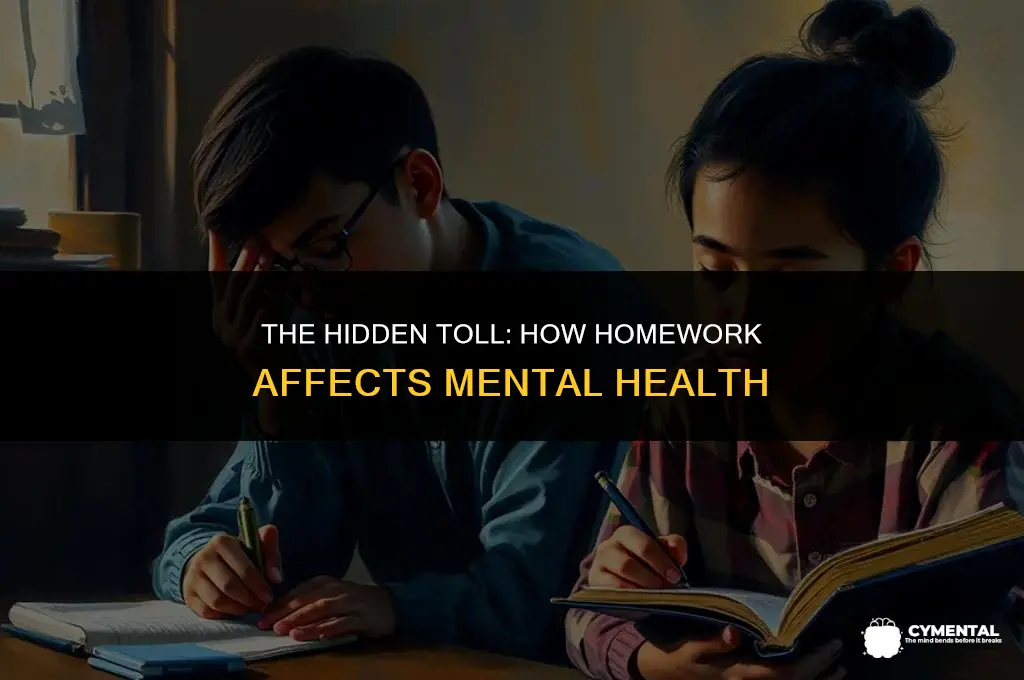
Homework has long been a contentious topic in the realm of education, with growing concerns about its impact on students' mental health. Excessive homework can lead to increased stress levels, anxiety, and even depression among students. The pressure to perform well academically, coupled with the demands of homework, can create an overwhelming burden that affects a student's overall well-being. Furthermore, homework can interfere with extracurricular activities, hobbies, and family time, which are essential for a balanced and healthy lifestyle. As a result, it is crucial to examine the negative effects of homework on mental health and consider alternative approaches to support student learning and development.
Explore related products


$12.99 $12.99

$11.91 $19


What You'll Learn

Excessive workload leads to stress and anxiety
Excessive workload, particularly in the form of homework, can significantly contribute to stress and anxiety in students. This is evident from numerous studies that have shown a direct correlation between the amount of homework assigned and the levels of stress experienced by students. The pressure to complete a large volume of work within a limited timeframe can lead to feelings of overwhelm and inadequacy, which in turn can exacerbate anxiety.
One of the primary reasons why excessive homework leads to stress is the lack of time it leaves for other activities. Students often find themselves sacrificing time that could be spent on extracurricular activities, hobbies, or even basic self-care in order to keep up with their homework assignments. This lack of balance can lead to burnout and increased stress levels.
Furthermore, the quality of homework can also play a role in contributing to stress and anxiety. Assignments that are overly complex or require a high level of critical thinking can cause students to feel anxious about their ability to complete them successfully. This fear of failure can lead to procrastination, which further compounds the stress associated with homework.
In addition to the direct impact on students, excessive homework can also affect their social lives and relationships. The time spent on homework can limit opportunities for social interaction, which is crucial for emotional well-being. This isolation can lead to feelings of loneliness and depression, which can exacerbate existing stress and anxiety.
To mitigate the negative effects of homework on mental health, it is important for educators to strike a balance between assigning work that is challenging yet manageable. Providing students with adequate time to complete assignments and offering support and resources can help reduce stress and anxiety. Additionally, encouraging students to engage in activities outside of school can help promote a healthy work-life balance and improve overall mental health.
Prioritizing Mental Health: The Foundation of Overall Well-being
You may want to see also
Explore related products

$19.36


Lack of free time impacts social life and hobbies
Homework can significantly reduce the amount of free time students have, leading to a negative impact on their social lives and hobbies. This lack of free time can result in students feeling isolated and disconnected from their peers, as they may not have the opportunity to engage in social activities or join clubs and organizations that interest them. Furthermore, without adequate time for hobbies and leisure activities, students may experience increased stress and anxiety, as they are unable to take breaks and recharge.
Research has shown that students who have more free time tend to have better social skills and emotional well-being. They are more likely to engage in extracurricular activities, which can help them develop new skills, build relationships, and explore their interests. In contrast, students who are overwhelmed with homework may struggle to find time for these activities, leading to a sense of imbalance and dissatisfaction with their lives.
The impact of homework on free time can also have long-term consequences. Students who are unable to develop social skills and explore their interests during their school years may struggle to form meaningful relationships and find fulfilling careers later in life. Additionally, the stress and anxiety caused by a lack of free time can lead to mental health issues, such as depression and anxiety disorders, which can persist into adulthood.
To mitigate the negative effects of homework on free time, it is important for educators to consider the overall workload of their students and to provide opportunities for breaks and leisure activities. This can include assigning less homework, providing more time for in-class work, or offering flexible deadlines. Additionally, schools can encourage students to participate in extracurricular activities and provide resources to help them manage their time effectively.
In conclusion, the lack of free time caused by excessive homework can have a significant impact on students' social lives and hobbies, leading to increased stress, anxiety, and feelings of isolation. It is essential for educators and schools to recognize the importance of free time and to take steps to ensure that students have a healthy balance between their academic and personal lives.
Establishing Hope: A Guide to Opening a Mental Health Facility
You may want to see also
Explore related products


Pressure to perform causes perfectionism and fear of failure
The relentless pressure to excel academically can foster a crippling sense of perfectionism in students. This perfectionism, while often seen as a positive trait, can lead to an unhealthy obsession with grades and performance. Students may become so fixated on achieving flawless results that they neglect their well-being, sacrificing sleep, social interactions, and extracurricular activities to meet their lofty standards. This can result in a vicious cycle of stress and anxiety, as the fear of failure looms large over their every endeavor.
Moreover, the fear of failure can be particularly debilitating for students who have been conditioned to equate their self-worth with their academic achievements. A single mistake or less-than-perfect grade can trigger a cascade of negative self-talk and self-doubt, leading to a loss of confidence and motivation. This can be especially problematic for students who are already struggling with mental health issues, as the added pressure to perform can exacerbate their symptoms and make it difficult for them to seek help.
To combat these issues, it is essential for educators and parents to recognize the signs of perfectionism and fear of failure in students and provide them with the necessary support and resources. This may include offering counseling services, teaching stress management techniques, and promoting a growth mindset that emphasizes learning and improvement over grades and performance. By fostering a more supportive and understanding environment, we can help students develop a healthier relationship with homework and reduce the negative impact it can have on their mental health.
Understanding Complex PTSD: A Guide to Mental Health Recovery
You may want to see also
Explore related products


Sleep deprivation affects mood and cognitive function
Sleep deprivation significantly impacts mood and cognitive function, which are critical aspects of mental health. When students spend late hours completing homework, they often sacrifice sleep, leading to a cascade of negative effects. Research indicates that even a single night of inadequate sleep can impair cognitive processes such as attention, memory, and decision-making. These impairments can make it more challenging for students to concentrate in class, remember important information, and make sound judgments, ultimately affecting their academic performance.
Moreover, sleep deprivation has a profound impact on mood regulation. Lack of sleep can increase irritability, anxiety, and stress levels, making it difficult for students to maintain a positive outlook. This can lead to mood swings, emotional instability, and a decreased ability to cope with the pressures of school life. Over time, chronic sleep deprivation can contribute to more severe mental health issues, such as depression and anxiety disorders.
The relationship between sleep deprivation and cognitive function is complex and multifaceted. During sleep, the brain consolidates memories and processes information, which is essential for learning and problem-solving. When students do not get enough sleep, these processes are disrupted, leading to difficulties in retaining new information and applying it effectively. Additionally, sleep plays a crucial role in emotional regulation, as it helps to balance the brain's stress response systems. Without adequate sleep, students may find it harder to manage their emotions and respond appropriately to challenging situations.
To mitigate the negative effects of sleep deprivation on mood and cognitive function, it is essential for students to prioritize sleep hygiene. This includes maintaining a consistent sleep schedule, creating a relaxing bedtime routine, and ensuring a sleep-conducive environment. By making sleep a priority, students can improve their cognitive performance, emotional well-being, and overall mental health, which can help them better manage the demands of their academic workload.
Empowering Wellness: Your Guide to Becoming a Mental Health Coach
You may want to see also
Explore related products


Homework-related conflicts strain family relationships
Homework-related conflicts can significantly strain family relationships, creating a tense and stressful environment that affects both parents and children. One of the primary reasons for this strain is the pressure that homework places on families to manage their time effectively. Parents often find themselves juggling work commitments, household chores, and the need to assist their children with homework, leading to feelings of overwhelm and frustration.
Children, on the other hand, may feel stressed and anxious about completing their homework assignments, especially if they struggle with the material or feel that their parents are overly critical. This can lead to arguments and conflicts, further exacerbating the strain on family relationships. Additionally, homework can create a sense of competition among siblings, as parents may inadvertently compare their children's academic achievements, leading to feelings of jealousy and resentment.
To mitigate these conflicts, it is essential for families to establish clear boundaries and expectations around homework. Parents can set aside dedicated time slots for homework assistance, ensuring that they are fully present and attentive during these periods. It is also important for parents to communicate with their children's teachers to understand the homework expectations and to advocate for their children's needs.
Furthermore, families can benefit from implementing stress-reduction strategies, such as mindfulness practices, physical activity, and open communication. By fostering a supportive and understanding environment, families can work together to navigate the challenges of homework and strengthen their relationships in the process.
Understanding the Duration of Mental Health Court Proceedings
You may want to see also
Frequently asked questions
Yes, excessive homework can lead to increased stress levels, anxiety, and depression in students. It can also result in a lack of time for other important activities such as physical exercise, socializing, and family time.
Studies have shown that students who have a lot of homework tend to stay up late to complete it, which can lead to sleep deprivation. This can have negative effects on mental health, including increased irritability, difficulty concentrating, and mood swings.
Some strategies that can help include setting aside specific times for homework, taking regular breaks, prioritizing tasks, and seeking help from teachers or tutors when needed. Additionally, engaging in stress-reducing activities such as meditation, yoga, or deep breathing exercises can also be beneficial.