Harper Lewis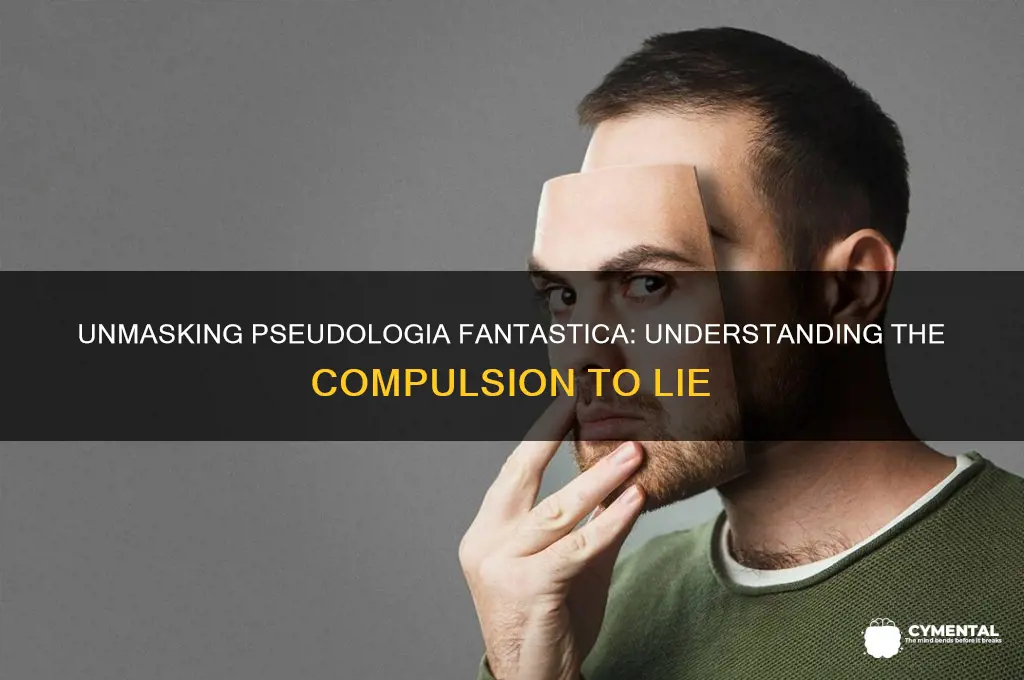
The mental illness often associated with an inability to resist lying is Mythomania, also known as compulsive lying or pseudologia fantastica. Unlike occasional dishonesty, which is a common human behavior, mythomania involves a persistent pattern of lying that feels uncontrollable to the individual. Those affected may fabricate stories or exaggerate events, often without clear personal gain, and sometimes even believe their own lies. This condition is not officially recognized as a standalone diagnosis in the *Diagnostic and Statistical Manual of Mental Disorders (DSM-5)* but is often linked to underlying psychological issues such as personality disorders (e.g., narcissistic or borderline personality disorder), low self-esteem, or trauma. Understanding mythomania requires exploring its psychological roots, its impact on relationships, and potential treatment approaches to address the compulsive behavior.
Explore related products



What You'll Learn
- Mythomania Definition: Compulsive lying disorder, characterized by an uncontrollable urge to lie, even without clear benefit
- Causes of Mythomania: Often linked to trauma, low self-esteem, or neurological differences affecting impulse control
- Symptoms of Mythomania: Frequent, elaborate lies, lack of guilt, and difficulty distinguishing truth from falsehood
- Diagnosis Challenges: No specific test; diagnosed through psychological evaluation and ruling out other disorders
- Treatment Options: Therapy (CBT), medication for underlying issues, and support to address root causes

Mythomania Definition: Compulsive lying disorder, characterized by an uncontrollable urge to lie, even without clear benefit
Mythomania, often referred to as compulsive lying disorder, is a condition where individuals feel an overwhelming, often uncontrollable urge to lie, even when there’s no apparent gain. Unlike strategic deception, these lies are impulsive, habitual, and seemingly pointless. For example, a person with mythomania might claim to have met a celebrity at a coffee shop, even though the interaction never occurred, simply because the idea feels more exciting than reality. This behavior isn’t about manipulation or self-preservation; it’s a reflexive distortion of truth that can alienate friends, family, and colleagues, leaving the individual isolated and misunderstood.
Diagnosing mythomania is complex, as it isn’t formally recognized in the *Diagnostic and Statistical Manual of Mental Disorders (DSM-5)*. Instead, it’s often grouped under broader conditions like antisocial personality disorder, narcissistic personality disorder, or even obsessive-compulsive disorder (OCD). Clinicians look for patterns: frequent, unnecessary lies, a lack of remorse, and a history of the behavior since adolescence. Treatment typically involves cognitive-behavioral therapy (CBT) to address underlying psychological triggers, such as low self-esteem or trauma. Medication isn’t a primary solution but may be prescribed if co-occurring conditions like anxiety or depression are present.
From a persuasive standpoint, understanding mythomania is crucial for empathy rather than judgment. People with this condition aren’t simply "bad" or "dishonest"; they’re often trapped in a cycle of behavior they can’t control. For instance, a teenager with mythomania might fabricate stories about academic achievements to feel accepted by peers, only to be exposed and further ostracized. Instead of dismissing them, loved ones can encourage professional help and create a supportive environment where honesty is rewarded, not punished. Early intervention is key, as untreated mythomania can lead to severe social and occupational consequences.
Comparatively, mythomania differs from other forms of deceit in its lack of purpose. Pathological liars, for instance, often lie to manipulate or gain something tangible, while individuals with mythomania lie out of habit, almost as if they’re compelled by an internal script. Take the case of a 30-year-old professional who falsely claims to have a terminal illness for attention, despite having a stable life. This lie isn’t driven by malice but by an unconscious need to feel significant. Unlike malingering (faking illness for concrete benefits), mythomania is rooted in psychological distress, making it a symptom rather than a strategy.
Practically speaking, if you suspect someone in your life has mythomania, approach the situation with care. Start by observing patterns: Do their stories often contradict themselves? Are their lies elaborate yet unnecessary? Gently suggest therapy, framing it as a way to explore why these behaviors occur. Avoid confrontation, as it can trigger defensiveness. For parents, watch for signs in children, such as frequent, fantastical stories that don’t align with reality. Early intervention through family therapy can help children develop healthier coping mechanisms. Remember, mythomania isn’t a choice—it’s a cry for help masked in deception.
Nutrition and Exercise: Unlocking Mental Health Benefits and Wellness
You may want to see also
Explore related products

$8.99


Causes of Mythomania: Often linked to trauma, low self-esteem, or neurological differences affecting impulse control
Mythomania, or compulsive lying, is a complex behavior often rooted in deeper psychological and neurological factors. One of the most significant contributors is trauma, particularly during formative years. Individuals who have experienced abuse, neglect, or significant loss may develop mythomania as a coping mechanism. Lying becomes a way to create a narrative that feels safer or more controllable than reality. For example, a child who grows up in an unstable home might fabricate stories of a loving family to shield themselves from emotional pain. This pattern can persist into adulthood, even when the original trauma is no longer present, as the brain has wired itself to rely on deception as a survival tool.
Another critical factor is low self-esteem, which often drives individuals to construct false personas to gain acceptance or admiration. People with mythomania may feel inadequate in their true selves and believe that lying is the only way to be valued by others. This behavior is particularly common in social settings where individuals fear rejection. For instance, someone might exaggerate their achievements or invent dramatic life events to appear more interesting or successful. Over time, these lies can become habitual, making it increasingly difficult to distinguish truth from fiction, even for the individual themselves.
Neurological differences also play a significant role in mythomania, particularly those affecting impulse control. Conditions such as attention deficit hyperactivity disorder (ADHD) or certain personality disorders can impair the brain’s ability to regulate impulsive behaviors. In these cases, lying may occur spontaneously, without a clear motive or long-term benefit. Research suggests that abnormalities in the prefrontal cortex, which governs decision-making and moral reasoning, may contribute to this impulsivity. For example, studies using functional MRI scans have shown reduced activity in this region among individuals prone to compulsive lying.
Understanding these causes is crucial for addressing mythomania effectively. Trauma-informed therapy, such as cognitive behavioral therapy (CBT) or eye movement desensitization and reprocessing (EMDR), can help individuals process underlying pain and develop healthier coping strategies. For those struggling with low self-esteem, self-compassion exercises and group therapy can foster a more positive self-image. Neurological contributors may require a combination of medication, such as stimulants for ADHD, and behavioral interventions to improve impulse control. Practical tips include journaling to track truth versus fiction, setting small goals for honesty, and seeking accountability from trusted individuals.
Ultimately, mythomania is not a choice but a symptom of deeper issues. By addressing trauma, building self-esteem, and managing neurological factors, individuals can break the cycle of compulsive lying and cultivate more authentic relationships. This process requires patience, professional guidance, and a commitment to self-improvement, but the potential for change is always within reach.
Boost Mental Health, Shed Pounds: The Mind-Body Weight Loss Connection
You may want to see also
Explore related products


Symptoms of Mythomania: Frequent, elaborate lies, lack of guilt, and difficulty distinguishing truth from falsehood
Mythomania, often referred to as compulsive lying, is a condition where individuals feel compelled to lie, often without clear motivation or benefit. One of its hallmark symptoms is the frequency and elaborateness of the lies. Unlike occasional white lies, mythomaniacs weave intricate, detailed falsehoods that can span personal achievements, relationships, or even medical histories. For example, someone might claim to have survived a rare disease, won a prestigious award, or been close friends with a celebrity—all fabrications designed to elevate their perceived status or gain attention. These lies are not impulsive but rather carefully constructed narratives, often delivered with convincing confidence.
Another striking symptom is the lack of guilt or remorse associated with the lying behavior. While most people experience discomfort or shame after being dishonest, mythomaniacs often feel indifferent or even justified in their deceit. This emotional detachment can make it difficult for them to recognize the harm their lies cause, whether it’s eroding trust in personal relationships or creating professional conflicts. For instance, a mythomaniac might repeatedly lie to their partner about their whereabouts, showing no remorse even when confronted with evidence of their dishonesty. This absence of guilt is a key differentiator between mythomania and occasional lying.
Perhaps the most perplexing symptom is the mythomaniac’s difficulty distinguishing truth from falsehood—not just in others, but in themselves. Over time, repeated lying can blur the lines between reality and fiction, leading individuals to believe their own lies. This cognitive distortion can manifest in bizarre ways, such as a person insisting they graduated from a university they never attended or recalling vivid details of events that never occurred. This symptom raises questions about the condition’s relationship to other mental health disorders, such as dissociative identity disorder or even psychosis, though mythomania is distinct in its focus on deceit.
Practical tips for identifying and addressing mythomania include observing patterns of behavior, such as inconsistencies in stories or a tendency to exaggerate even minor details. Loved ones can encourage professional intervention, as therapy—particularly cognitive-behavioral therapy (CBT)—has shown promise in helping individuals recognize and modify their lying habits. It’s crucial to approach the situation with empathy rather than accusation, as mythomaniacs often struggle with underlying issues like low self-esteem or a need for validation. While there’s no one-size-fits-all solution, early intervention and support can help mitigate the condition’s impact on personal and social functioning.
LSD's Potential: Unlocking Mental Health Benefits and Therapeutic Insights
You may want to see also
Explore related products





Diagnosis Challenges: No specific test; diagnosed through psychological evaluation and ruling out other disorders
The mental illness characterized by an uncontrollable urge to lie is often referred to as mythomania or pseudologia fantastica. Unlike occasional deception, this condition involves chronic, compulsive lying without clear external rewards. Diagnosing it, however, is far from straightforward. There is no blood test, brain scan, or genetic marker to confirm its presence. Instead, clinicians rely on a meticulous psychological evaluation, often compounded by the need to rule out other disorders that mimic its symptoms.
Consider the diagnostic process as a detective’s investigation. Step one involves a thorough clinical interview, where the individual’s history of lying is mapped against their emotional state, relationships, and life circumstances. Key questions include: How long has the behavior persisted? Are the lies elaborate or simple? Does the individual express guilt or remorse? Step two requires ruling out conditions like narcissistic personality disorder, antisocial personality disorder, or even bipolar disorder, where lying can be a symptom rather than the core issue. For instance, a person with bipolar disorder in a manic phase might lie impulsively due to heightened impulsivity, not mythomania.
Caution is paramount in this process. Misdiagnosis can lead to inappropriate treatment, such as prescribing antipsychotics for a condition that may respond better to cognitive-behavioral therapy (CBT). Clinicians must also be wary of the individual’s tendency to distort information during evaluation, a hallmark of the disorder. Practical tips for clinicians include corroborating the patient’s account with family members or friends and using structured interviews like the Structured Clinical Interview for DSM-5 (SCID) to standardize assessments.
The takeaway is clear: diagnosing mythomania is an art as much as a science. It demands patience, skepticism, and a multi-faceted approach. Without a specific test, the diagnosis hinges on the clinician’s ability to piece together a complex puzzle, ensuring the individual receives the right support to manage their compulsive lying effectively.
Recess and Mental Health: Unlocking Benefits for Student Well-Being
You may want to see also
Explore related products


Treatment Options: Therapy (CBT), medication for underlying issues, and support to address root causes
The compulsion to lie, often associated with conditions like mythomania or pseudologia fantastica, can stem from underlying mental health issues such as anxiety, low self-esteem, or personality disorders. Addressing this behavior requires a multifaceted approach, combining therapy, medication, and support systems to target both symptoms and root causes. Here’s how each treatment option can be effectively utilized.
Cognitive Behavioral Therapy (CBT) stands as a cornerstone in treating compulsive lying. This evidence-based approach helps individuals identify and challenge the distorted thought patterns that drive deceitful behavior. For instance, a therapist might work with a patient to uncover the fear of rejection or need for validation that fuels lies. Sessions often include homework assignments, such as journaling truthful interactions or practicing assertiveness in low-stakes situations. CBT is particularly effective for adults and adolescents, with studies showing significant improvement after 12–16 weekly sessions. A key takeaway: consistency and self-awareness are critical for long-term success.
Medication plays a complementary role, addressing underlying issues like anxiety, depression, or ADHD that may contribute to compulsive lying. For example, selective serotonin reuptake inhibitors (SSRIs) such as fluoxetine (20–60 mg/day) or sertraline (50–200 mg/day) can reduce anxiety and impulsivity, making it easier for individuals to resist the urge to lie. In cases where lying is tied to bipolar disorder or borderline personality disorder, mood stabilizers like lamotrigine (25–200 mg/day) or antipsychotics like aripiprazole (5–20 mg/day) may be prescribed. It’s essential to monitor side effects and adjust dosages under professional guidance, as medication alone cannot resolve the behavioral patterns without concurrent therapy.
Support systems—whether through group therapy, family involvement, or peer networks—are vital for sustained recovery. Group therapy, such as Dialectical Behavior Therapy (DBT) skills groups, teaches emotional regulation and interpersonal effectiveness, helping individuals build trust and accountability. Family therapy can address relational dynamics that may reinforce lying, fostering a supportive environment for honesty. Practical tip: encourage loved ones to respond calmly to truthful disclosures, even if they’re uncomfortable, to reinforce positive behavior. Support groups like Lying Anonymous (modeled after 12-step programs) offer a safe space for sharing experiences and strategies.
In conclusion, treating compulsive lying requires a tailored combination of CBT, medication, and support to address both the behavior and its underlying causes. While progress may be gradual, a holistic approach increases the likelihood of lasting change, empowering individuals to build authentic, trust-based relationships.
Prisoner Mental Health Support: Accessing Care Behind Bars
You may want to see also
Frequently asked questions
The condition often associated with compulsive lying is Mythomania or Pseudologia Fantastica, though it is not officially recognized as a distinct mental illness in diagnostic manuals like the DSM-5. It is characterized by a habitual tendency to lie excessively without clear external benefits.
Yes, compulsive lying can be a symptom of underlying conditions such as Narcissistic Personality Disorder, Borderline Personality Disorder, or Antisocial Personality Disorder. It may also be linked to low self-esteem, trauma, or attention-seeking behavior.
Yes, treatment often involves therapy, such as cognitive-behavioral therapy (CBT), to address underlying issues and develop healthier coping mechanisms. In some cases, medication may be prescribed to manage co-occurring conditions like anxiety or depression.