Ava Ramirez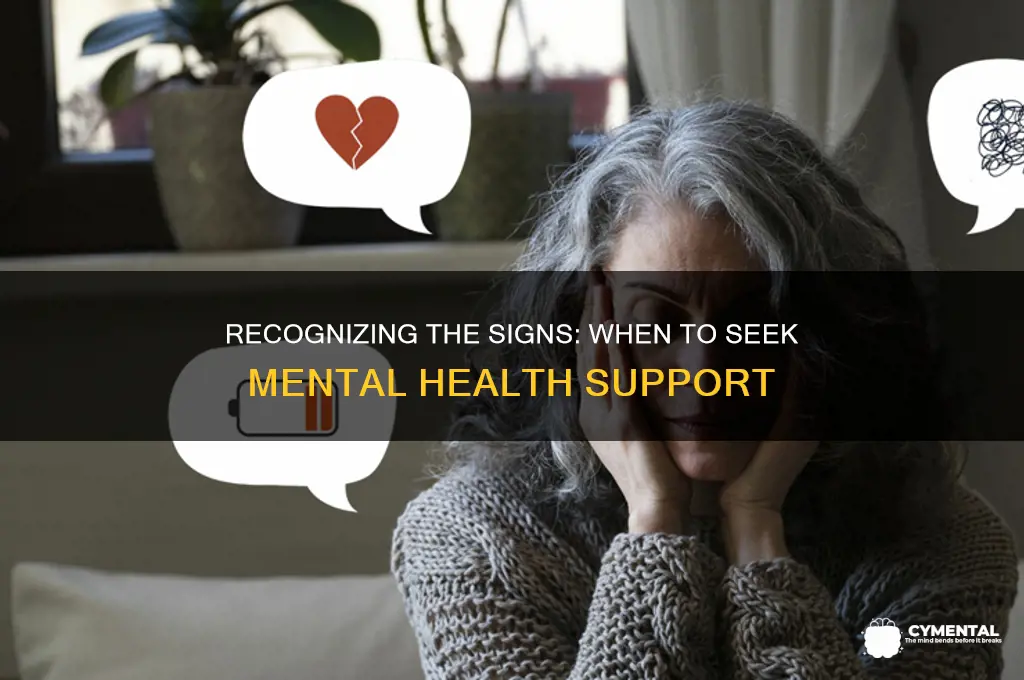
Recognizing when to seek mental health support is crucial for overall well-being, yet many people struggle to identify the signs that indicate a need for professional help. Common indicators include persistent feelings of sadness, anxiety, or hopelessness that interfere with daily life, sudden changes in behavior or mood, difficulty managing stress, or experiencing thoughts of self-harm or suicide. Additionally, if relationships, work, or personal goals are consistently affected, it may be time to consult a mental health professional. Seeking help is not a sign of weakness but a proactive step toward healing and growth, and early intervention can prevent more serious issues from developing.
Explore related products


What You'll Learn
- Persistent sadness or hopelessness lasting over two weeks, affecting daily life and functioning
- Sudden changes in behavior, mood, or personality without clear cause or reason
- Inability to manage stress, leading to panic attacks or overwhelming anxiety regularly
- Thoughts of self-harm, suicide, or persistent feelings of worthlessness or guilt
- Difficulty in relationships, work, or social situations due to emotional distress

Persistent sadness or hopelessness lasting over two weeks, affecting daily life and functioning
Persistent sadness or hopelessness that lingers for more than two weeks is a red flag signaling the need for mental health intervention. This isn’t about fleeting feelings of disappointment or temporary lows; it’s a prolonged emotional state that disrupts your ability to function in daily life. If you find yourself struggling to get out of bed, losing interest in activities you once enjoyed, or feeling overwhelmed by a sense of despair, it’s time to take action. These symptoms often align with clinical depression, a condition that affects millions globally and requires professional attention.
Consider this scenario: A 28-year-old professional notices they’ve been crying more frequently, skipping social gatherings, and struggling to meet work deadlines. Despite attributing it to stress, the feelings persist beyond what’s typical for a rough patch. This isn’t merely a phase—it’s a cry for help from their mental health. The two-week mark is critical because it distinguishes between transient mood fluctuations and a potential mental health disorder. Ignoring these signs can lead to worsening symptoms, including physical health decline, strained relationships, and reduced productivity.
From a practical standpoint, addressing persistent sadness involves a multi-step approach. Start by tracking your symptoms daily in a journal to identify patterns and triggers. Share your observations with a trusted friend or family member who can offer support and perspective. Next, consult a healthcare provider, such as a primary care physician or therapist, who can assess your condition and recommend treatment options. These may include therapy (e.g., cognitive-behavioral therapy), medication (e.g., selective serotonin reuptake inhibitors), or lifestyle changes (e.g., regular exercise, improved sleep hygiene). Early intervention is key—the longer depression goes untreated, the harder it becomes to manage.
Comparatively, untreated persistent sadness can spiral into more severe consequences, including suicidal ideation or chronic health conditions like cardiovascular disease. For instance, studies show that individuals with untreated depression are 40% more likely to develop heart problems over time. Conversely, those who seek help often experience significant improvement within 6–8 weeks of starting treatment. The takeaway? Recognizing and acting on these symptoms isn’t just about alleviating emotional pain—it’s about safeguarding your overall well-being.
Finally, remember that seeking help is a sign of strength, not weakness. Mental health struggles are as valid as physical ailments and deserve the same level of care. If you or someone you know is experiencing persistent sadness or hopelessness, don’t wait for it to resolve on its own. Reach out to a mental health professional, utilize resources like crisis hotlines, or explore online therapy platforms. Taking that first step can be daunting, but it’s the most crucial one toward reclaiming your life.
Recognizing the Signs: Guiding Loved Ones Toward Mental Health Support
You may want to see also
Explore related products


Sudden changes in behavior, mood, or personality without clear cause or reason
Sudden shifts in behavior, mood, or personality can be alarming, especially when they occur without an obvious trigger. These changes might manifest as unexplained irritability, withdrawal from social activities, or a drastic alteration in how someone expresses themselves. For instance, a typically outgoing person becoming uncharacteristically quiet or a calm individual suddenly exhibiting aggressive behavior. Such transformations can be a red flag, signaling an underlying mental health issue that requires attention.
Identifying the Signs: A Practical Approach
Imagine a scenario where a friend, let's call her Sarah, starts missing her regular coffee dates, citing fatigue and a lack of interest. Over time, she becomes increasingly reclusive, her once vibrant personality dimming. This could be a cause for concern, especially if Sarah's behavior change is abrupt and persists for more than two weeks. Other indicators include significant changes in appetite or sleep patterns, such as insomnia or oversleeping, which can be early warning signs of depression or anxiety disorders. Keep an eye out for any sudden, intense emotions or behaviors that seem out of character, as these may indicate a need for professional intervention.
The Importance of Timely Action
When these changes occur, it's crucial to act promptly. Mental health issues often respond better to early intervention. For adolescents and young adults, who are particularly susceptible to mood disorders, swift action can prevent potential long-term impacts on their development. Encourage the individual to seek help, offering to accompany them to a healthcare professional if needed. Remember, it's not about diagnosing but rather recognizing the need for expert guidance.
A Comparative Perspective
Consider the contrast between typical mood fluctuations and these sudden changes. While it's normal to feel sad or excited due to life events, these emotions usually have a clear cause and are transient. In contrast, the shifts we're discussing are often intense, persistent, and lack an apparent reason. For example, a person might experience a constant sense of dread without any significant life stressors, which could be indicative of an anxiety disorder. Recognizing this distinction is vital in understanding when to seek mental health support.
Taking the First Step
If you notice these signs in yourself or others, start by initiating a conversation. Approach the person privately and express your observations with empathy. Suggest a visit to a primary care physician or a mental health specialist, emphasizing the potential benefits of early assessment. Many mental health conditions are treatable, and various therapies and medications can effectively manage symptoms. For instance, cognitive-behavioral therapy (CBT) is a common and effective treatment for various disorders, often recommended as a first-line approach. Encouraging professional help is a powerful way to support someone experiencing these sudden changes.
Protein Shakes and Mental Health: Unlocking the Mind-Body Connection
You may want to see also
Explore related products





Inability to manage stress, leading to panic attacks or overwhelming anxiety regularly
Stress is an inevitable part of life, but when it becomes unmanageable, it can spiral into a debilitating cycle of panic attacks and overwhelming anxiety. If you find yourself frequently paralyzed by fear, unable to breathe, or trapped in a loop of catastrophic thoughts, it’s a red flag that your stress response has outgrown your coping mechanisms. Panic attacks, characterized by symptoms like rapid heartbeat, sweating, and a sense of impending doom, are not just "overreactions"—they’re your body’s emergency alarm, signaling that your mental health needs attention.
Consider this scenario: A 28-year-old professional, let’s call her Sarah, experiences panic attacks weekly, triggered by work deadlines. Despite knowing logically that missing a deadline won’t ruin her career, her body reacts as if her survival is at stake. This disconnect between rational thought and physical response is a hallmark of unmanaged stress. Sarah’s story isn’t unique; studies show that chronic stress can rewire the brain’s fear circuits, making anxiety attacks more frequent and intense over time. If this sounds familiar, it’s not just about learning to "calm down"—it’s about rewiring your response to stress before it becomes a chronic condition.
To address this, start with practical steps. First, track your triggers. Keep a journal for two weeks, noting when anxiety peaks and what preceded it. Look for patterns—specific people, tasks, or environments. Next, incorporate grounding techniques during early signs of anxiety, such as the 5-4-3-2-1 method (name five things you see, four you can touch, etc.). For long-term management, consider cognitive-behavioral therapy (CBT), which has been shown to reduce panic attack frequency by up to 70% in clinical trials. Pair this with lifestyle changes: limit caffeine (a known anxiety trigger), aim for 7–9 hours of sleep, and practice mindfulness or yoga for at least 10 minutes daily.
However, beware of common pitfalls. Avoid self-medicating with alcohol or benzodiazepines without medical supervision, as these can worsen anxiety over time. Also, don’t dismiss physical symptoms like chest pain or dizziness as "just anxiety"—always rule out underlying health issues with a doctor. Lastly, recognize that managing stress isn’t about eliminating it entirely but building resilience. Think of it as training for a marathon: you wouldn’t expect to run 26 miles without preparation, and your mind needs similar conditioning to handle life’s pressures.
In conclusion, regular panic attacks or overwhelming anxiety aren’t signs of weakness—they’re indicators that your stress management tools need an upgrade. By combining self-awareness, evidence-based techniques, and professional support, you can recalibrate your response to stress and reclaim control. Remember, seeking help isn’t a last resort; it’s a proactive step toward a healthier, more balanced life.
Supporting Loved Ones: A Guide to Accessing Mental Health Care
You may want to see also
Explore related products

$12.99

$14.15 $20

$12.14 $19.99


Thoughts of self-harm, suicide, or persistent feelings of worthlessness or guilt
If you find yourself trapped in a cycle of self-destructive thoughts, it’s crucial to recognize when these patterns signal a need for professional intervention. Thoughts of self-harm or suicide are not merely fleeting moments of despair; they are urgent cries for help from a mind overwhelmed by emotional pain. Persistent feelings of worthlessness or guilt, often rooted in distorted self-perception, can erode your sense of self and isolate you from support systems. These experiences are not signs of weakness but indicators of a deeper struggle that requires compassionate, expert care. Ignoring them can lead to irreversible consequences, while addressing them can open pathways to healing and recovery.
Consider this scenario: a 28-year-old professional begins to feel an unrelenting sense of failure despite excelling at work. Over time, these feelings escalate into thoughts of self-harm, accompanied by the belief that the world would be better off without them. This is not a rare case but a common manifestation of untreated mental health issues. Research shows that persistent negative self-evaluation can activate the brain’s stress response, creating a biochemical environment conducive to suicidal ideation. If you notice such patterns—especially if they last for more than two weeks or interfere with daily functioning—seek help immediately. Start by contacting a mental health hotline or scheduling an appointment with a therapist. Practical steps include keeping a journal to track these thoughts, limiting access to harmful tools, and confiding in a trusted friend or family member.
From a comparative perspective, societies that stigmatize mental health struggles often see higher rates of self-harm and suicide. In contrast, cultures that encourage open dialogue and provide accessible resources report better outcomes. For instance, countries like Sweden and the Netherlands have lower suicide rates, partly due to robust mental health support systems. This highlights the importance of both personal action and systemic change. If you’re in an environment where mental health is dismissed, take the initiative to educate yourself and others. Online platforms like Crisis Text Line or apps like Calm can offer immediate support while you work toward finding a long-term solution.
Persuasively speaking, delaying treatment for these symptoms is akin to ignoring a severe physical injury. Just as a broken bone requires medical attention, a mind plagued by self-harm or suicidal thoughts needs professional intervention. Therapy modalities like Cognitive Behavioral Therapy (CBT) have proven effective in reshaping harmful thought patterns, while medications such as selective serotonin reuptake inhibitors (SSRIs) can stabilize mood disorders. Combining these approaches often yields the best results. Remember, seeking help is not an admission of failure but a courageous step toward reclaiming your life. Start small—reach out to a mental health professional or join a support group—and build from there.
Finally, a descriptive lens reveals the emotional landscape of someone grappling with these issues: imagine a constant internal monologue that whispers you are unworthy, unlovable, or a burden. These feelings can manifest physically—tight chest, sleepless nights, or a pervasive sense of exhaustion. Over time, they may lead to isolation, substance abuse, or impulsive actions. However, this landscape can change. With the right support, individuals often describe a gradual lifting of the fog, a return of color to their world, and a renewed sense of purpose. This transformation is possible, but it begins with acknowledging the problem and taking that first step toward help.
Empowering Mental Health: The Vital Role of Community Health Workers
You may want to see also
Explore related products


Difficulty in relationships, work, or social situations due to emotional distress
Emotional distress can silently erode your ability to navigate relationships, work, and social situations, often leaving you feeling isolated and misunderstood. Consider this scenario: You find yourself snapping at colleagues over minor issues, withdrawing from friends who once brought you joy, or struggling to communicate effectively with your partner. These aren’t just "bad days"—they’re recurring patterns that signal deeper emotional turmoil. When emotional distress becomes a barrier to functioning in these critical areas, it’s a clear indicator that professional mental health support may be necessary.
Analyzing the impact of emotional distress on relationships reveals a cycle of miscommunication and frustration. For instance, unresolved anxiety or depression can make you hyper-sensitive to criticism, leading to defensive reactions that strain partnerships. At work, emotional distress might manifest as procrastination, irritability, or difficulty concentrating, jeopardizing your performance and career growth. Socially, you might avoid gatherings altogether, fearing judgment or overwhelm. These behaviors aren’t personal failings—they’re symptoms of underlying mental health challenges that thrive in silence.
To address these difficulties, start by acknowledging the connection between your emotions and your actions. Keep a journal to track situations where emotional distress interferes with your interactions. Note the triggers, your responses, and the outcomes. This self-awareness is the first step toward change. Next, practice grounding techniques, such as deep breathing or mindfulness, to manage immediate emotional surges. For example, if you feel overwhelmed during a work meeting, take a 30-second pause to inhale deeply through your nose, hold for 4 seconds, and exhale slowly through your mouth.
However, self-help strategies have limits. If emotional distress persists despite your efforts, seek professional intervention. Therapies like Cognitive Behavioral Therapy (CBT) can help reframe negative thought patterns, while medication may be prescribed for conditions like generalized anxiety disorder or major depression. For adults aged 18–65, the American Psychological Association recommends 12–20 sessions of CBT for moderate to severe cases. Don’t wait for relationships, careers, or social connections to unravel—prioritize your mental health before the cost becomes irreversible.
Comparing emotional distress to physical pain can offer perspective. Just as you’d seek treatment for chronic back pain, mental health struggles deserve the same urgency. Imagine ignoring a broken leg and trying to walk normally—it’s impossible. Similarly, untreated emotional distress will continue to hinder your ability to engage authentically in relationships, work, and social settings. The takeaway? Recognize the signs, take proactive steps, and remember that seeking help isn’t a weakness—it’s a necessary act of self-preservation.
The Power of Together: How Group Mentality Drives Success
You may want to see also
Frequently asked questions
You may need mental health help if you experience persistent feelings of sadness, anxiety, or hopelessness, have trouble functioning in daily life, or notice significant changes in your mood, behavior, or sleep patterns.
Seek professional help if stress or anxiety interferes with your work, relationships, or daily activities, or if you experience physical symptoms like headaches, insomnia, or digestive issues related to stress.
Yes, you don’t need to be in crisis to seek mental health help. Early intervention can prevent issues from worsening, and therapy or counseling can be beneficial for personal growth, self-improvement, or managing life challenges.
Emotions are normal, but if they feel overwhelming, uncontrollable, or persist for weeks or months, it may indicate a need for mental health support. Trust your instincts and consult a professional if you’re unsure.