Lucas Bennett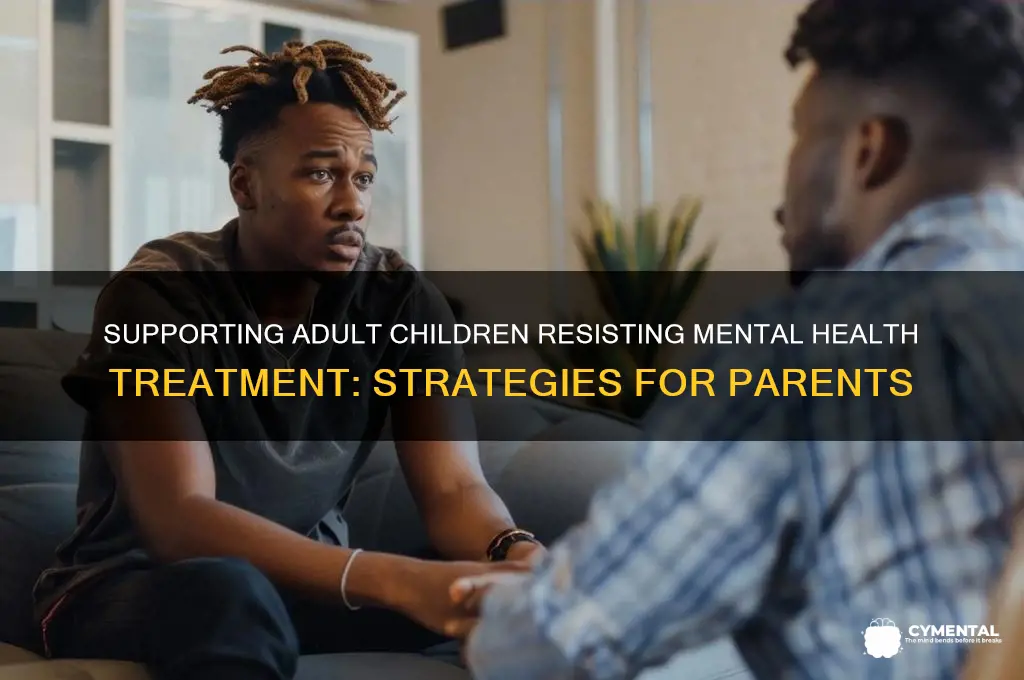
Watching an adult child struggle with mental health issues while refusing to seek help can be incredibly distressing for parents. It’s natural to feel helpless, frustrated, or even guilty, but it’s important to remember that you cannot force someone to accept assistance. Instead, focus on fostering open communication, expressing concern without judgment, and setting healthy boundaries to protect your own well-being. Educate yourself about mental health to better understand their perspective, and consider seeking support for yourself through therapy or support groups. While you can encourage professional help, ultimately, the decision to seek treatment rests with your child, and respecting their autonomy is crucial, even as you navigate this challenging situation.
| Characteristics | Values |
|---|---|
| Educate Yourself | Learn about mental health conditions, symptoms, and available treatments. |
| Open Communication | Use non-confrontational, empathetic language to express concern. |
| Set Boundaries | Establish clear limits to protect your own mental and emotional well-being. |
| Encourage Professional Help | Gently suggest therapy, counseling, or psychiatric evaluation. |
| Offer Support, Not Enablement | Provide emotional support without shielding them from consequences. |
| Seek Support for Yourself | Join support groups or seek therapy to cope with the situation. |
| Avoid Ultimatums | Refrain from threatening or coercing them into seeking help. |
| Focus on Self-Care | Prioritize your own physical and mental health. |
| Be Patient | Recognize that recovery and acceptance of help take time. |
| Explore Alternative Approaches | Suggest support groups, online resources, or peer support programs. |
| Respect Their Autonomy | Acknowledge their right to make their own decisions, even if you disagree. |
| Prepare for Crisis | Know emergency contacts and crisis intervention resources. |
| Stay Hopeful | Maintain a positive outlook while being realistic about the challenges. |
Explore related products

$10.99 $18.99


What You'll Learn
- Encourage Open Conversations: Create safe, non-judgmental spaces to discuss mental health concerns gently and empathetically
- Educate on Resources: Share information about therapists, support groups, and online tools to reduce stigma and fear
- Set Healthy Boundaries: Establish limits to protect your well-being while supporting their autonomy and responsibility
- Lead by Example: Seek therapy or self-care to normalize mental health care and inspire their action
- Consider Professional Intervention: Consult a therapist or interventionist for guidance on effective strategies and timing

Encourage Open Conversations: Create safe, non-judgmental spaces to discuss mental health concerns gently and empathetically
Adult children often resist mental health discussions due to fear of judgment, stigma, or a desire to maintain autonomy. To encourage open conversations, start by normalizing mental health as a routine part of overall well-being. For instance, share personal experiences or observations about stress, anxiety, or self-care in a casual, non-confrontational way. This models vulnerability and shows that discussing mental health is safe and accepted in your relationship. Avoid framing the conversation as an intervention; instead, approach it as a check-in, similar to how you’d discuss physical health. For example, “I’ve noticed you seem more stressed lately—how are you managing it?” creates an opening without implying blame or criticism.
Creating a non-judgmental space requires active listening and emotional validation. When your adult child shares concerns, resist the urge to offer solutions or advice unless explicitly asked. Instead, reflect their feelings to show you understand their perspective. Phrases like, “It sounds like you’re feeling overwhelmed,” or “That must be really hard for you,” communicate empathy and encourage further dialogue. Be mindful of body language and tone—avoid crossing your arms, interrupting, or sounding dismissive. If they shut down, don’t push; let them know you’re available when they’re ready. Consistency in these responses builds trust over time, making them more likely to open up in the future.
One practical strategy is to incorporate mental health discussions into everyday routines rather than treating them as serious, sit-down talks. For example, during a car ride or while cooking together, ask open-ended questions like, “What’s been on your mind lately?” or “How’s your stress level these days?” These low-pressure moments feel less intimidating and more natural. Additionally, use media or current events as conversation starters. If a TV show addresses mental health, say, “That character’s struggle reminds me of how hard it can be to ask for help—what do you think?” This indirect approach reduces defensiveness and keeps the focus on broader themes rather than their personal situation.
Encouraging open conversations also involves respecting boundaries while gently challenging avoidance. If your adult child deflects or changes the subject, acknowledge their discomfort without forcing the issue. For instance, “I get that this might feel awkward to talk about—it’s okay to take it slow.” However, periodically revisit the topic to signal that mental health remains a priority. Share resources subtly, such as leaving a book on mindfulness or a podcast recommendation in a shared space. Over time, these small, consistent efforts can shift their perception of mental health discussions from threatening to approachable, fostering a safe environment for eventual dialogue.
Nature's Healing Power: Can Outdoor Therapy Ease Mental Illness?
You may want to see also
Explore related products


Educate on Resources: Share information about therapists, support groups, and online tools to reduce stigma and fear
One of the most effective ways to encourage an adult child to seek mental health support is by normalizing the conversation around therapy and self-care. Start by compiling a list of local therapists, psychologists, and counselors who specialize in issues your child might be facing, such as anxiety, depression, or relationship challenges. Include details like their areas of expertise, therapeutic approaches (e.g., cognitive-behavioral therapy, mindfulness-based therapy), and whether they offer sliding-scale fees or accept insurance. Sharing this information casually, perhaps during a conversation about general well-being, can make professional help feel more accessible and less intimidating.
Support groups can be a less formal entry point into mental health care, offering a sense of community and shared experience. Research local or online groups tailored to specific struggles, such as grief, addiction, or chronic stress. For example, organizations like the National Alliance on Mental Illness (NAMI) offer peer-led support groups for individuals and their families. When presenting these options, emphasize the anonymity and low-pressure environment of group settings, which can reduce the fear of judgment often associated with seeking help.
Online tools and apps have revolutionized mental health support, providing discreet and flexible resources for those hesitant to engage in traditional therapy. Recommend evidence-based apps like Calm, Headspace, or Sanvello, which offer guided meditations, mood tracking, and cognitive-behavioral exercises. For more structured support, platforms like BetterHelp or Talkspace connect users with licensed therapists for virtual sessions. Highlight the convenience of these tools—accessible anytime, anywhere—and share testimonials or research studies demonstrating their effectiveness in reducing symptoms of anxiety and depression.
When sharing these resources, approach the conversation with empathy and without pressure. Frame it as a collaborative exploration of options rather than a push for immediate action. For instance, you might say, "I came across this list of therapists who specialize in stress management—thought it might be helpful to have on hand if you ever want to talk to someone." Pairing resource-sharing with open-ended questions, like "What do you think about trying something like this?" can invite dialogue and reduce defensiveness.
Finally, lead by example by incorporating mental health practices into your own life. Discuss your experiences with therapy, journaling, or mindfulness, normalizing these activities as part of self-care. This not only reduces stigma but also creates a shared language around mental health, making it easier for your child to envision themselves engaging in similar practices. Remember, the goal is to plant seeds of possibility, not to force a decision. Over time, consistent exposure to these resources can shift perceptions and encourage proactive steps toward healing.
Boost Your Mental Health: Practical Tips for a Happier Mind
You may want to see also
Explore related products


Set Healthy Boundaries: Establish limits to protect your well-being while supporting their autonomy and responsibility
As a parent, your instinct to protect and support your adult child is natural, but when their mental health struggles persist and they resist seeking help, it's crucial to establish healthy boundaries. This doesn't mean abandoning them; rather, it involves creating a framework that safeguards your well-being while encouraging their autonomy and personal responsibility.
Defining Your Limits:
Start by identifying your emotional, physical, and financial boundaries. Are you constantly canceling plans due to their crises? Are you providing financial support that enables avoidance of treatment? Be specific. For instance, you might decide you're available for one supportive phone call per day, lasting no more than 30 minutes, and that you won't cover expenses related to self-destructive behaviors.
Writing these boundaries down can provide clarity and serve as a reference point when emotions run high.
Communicating Boundaries Effectively:
Deliver your boundaries with empathy and firmness. Use "I" statements to express how their actions impact you, avoiding blame. For example, "I feel overwhelmed when I receive multiple calls throughout the day. I need to set a limit of one call per day to maintain my own well-being." Be prepared for resistance or guilt-tripping. Remain calm and reiterate your boundaries, emphasizing your love and support while upholding your limits.
Consider seeking guidance from a therapist or counselor to refine your communication skills and navigate difficult conversations.
Enforcing Boundaries with Consistency:
Consistency is key. If you've set a boundary, stick to it. If your child shows up unannounced after you've established a "no drop-in" policy, gently but firmly ask them to leave. This doesn't mean being unkind; it means following through on your established limits. Remember, you're teaching them about respect and responsibility, both for themselves and for others.
Consistency also applies to positive reinforcement. Acknowledge and praise any steps they take towards self-care or seeking help, no matter how small.
Supporting Autonomy While Upholding Boundaries:
Healthy boundaries don't diminish your love and support; they redefine how you express it. Offer encouragement and resources for seeking help, but respect their right to make their own choices. Provide a list of mental health professionals or support groups, but don't make appointments for them. Share articles or books on mental health, but don't force them to read them.
Remember, your role is to guide, not control. By setting and maintaining healthy boundaries, you're fostering an environment where your adult child can learn to take responsibility for their own well-being, ultimately leading to a healthier relationship for both of you.
Supporting College Athletes: Strategies for Mental Health and Well-Being
You may want to see also
Explore related products

$29.99
![[Essential Skills in Family Therapy] 3rd Edition 2018: [From the First Interview to Termination] Third Edition Paperback](https://m.media-amazon.com/images/I/61eFdRDaV-L._AC_UL320_.jpg)


$43.7 $70.95


Lead by Example: Seek therapy or self-care to normalize mental health care and inspire their action
Children, even adult ones, often mirror their parents’ behaviors, consciously or unconsciously. If mental health care is treated as taboo or unnecessary in your household, your adult child may internalize this attitude. By openly prioritizing your own mental well-being—whether through therapy, mindfulness practices, or self-care rituals—you dismantle the stigma and create a new norm. For instance, sharing that you’re attending therapy not as a last resort but as a proactive measure for personal growth can reframe their perception of seeking help.
Start small but be consistent. If therapy feels like a leap, begin with visible self-care practices like journaling, meditation, or even scheduling regular walks. These actions signal that mental health is a non-negotiable part of overall wellness. For example, if you’re in therapy, casually mention insights you’ve gained or how it’s helped you manage stress. Avoid preaching; instead, let your actions speak louder than words. If your child sees you carving out time for therapy or self-care despite a busy schedule, they’re more likely to recognize its value.
One common misconception is that seeking help is a sign of weakness or failure. Counter this by framing therapy or self-care as tools for resilience and self-improvement, not just crisis management. Share relatable examples, like how therapy helped you navigate a challenging work situation or how mindfulness improved your relationships. If your child is in their 20s or 30s, they’re likely facing pressures unique to their age group—career stress, relationship dilemmas, or identity questions. Position mental health care as a resource tailored to these challenges, not a one-size-fits-all solution.
While leading by example is powerful, it’s not a guaranteed fix. Avoid the trap of expecting your child to follow suit immediately. Change takes time, and their resistance may stem from deeper fears or misconceptions. Be patient but persistent. If they express skepticism, validate their concerns without dismissing them. For instance, if they say, “Therapy is only for people with serious problems,” respond with, “I used to think that too, but I’ve found it helpful for everyday stress and personal growth.”
Finally, remember that modeling behavior is just one piece of the puzzle. Pair it with open conversations about mental health, offering resources without forcing them, and respecting their autonomy. If you’re in therapy, suggest they try a single session or explore low-stakes options like online counseling. The goal isn’t to control their choices but to create an environment where seeking help feels safe and normal. Over time, your consistent example may plant a seed that grows into their willingness to take that first step.
Supporting Reluctant Loved Ones: Strategies for Accessing Mental Health Care
You may want to see also
Explore related products


Consider Professional Intervention: Consult a therapist or interventionist for guidance on effective strategies and timing
Professional intervention isn’t about forcing change—it’s about creating a structured pathway for your adult child to consider mental health support. Therapists and interventionists specialize in navigating resistance, using evidence-based methods to foster openness rather than defensiveness. For instance, a therapist might recommend a *CRAFT* (Community Reinforcement and Family Training) approach, which focuses on positive reinforcement and communication strategies to encourage treatment. This method has shown success rates of up to 70% in engaging resistant individuals in therapy, according to research.
Consider this a collaborative process, not a confrontation. Start by consulting a professional individually to assess the situation. They’ll help you identify triggers, communication pitfalls, and timing—such as approaching your child when they’re calm and receptive, rather than during an emotional crisis. For example, an interventionist might advise staging a brief, 10-minute conversation focused on specific behaviors and their impact, rather than a lengthy, accusatory discussion. The goal is to present treatment as a solution, not a punishment.
Timing is critical. Avoid intervening during high-stress periods, like exams or job transitions, as this can heighten resistance. Instead, aim for moments of relative stability. A therapist might suggest a *staged intervention*, starting with casual mentions of therapy benefits, then escalating to a formal conversation if needed. For instance, framing therapy as a tool for stress management rather than a response to "being broken" can reduce stigma. Practical tips include offering to accompany your child to the first session or researching therapists together to ease anxiety.
Caution: Not all professionals are equally skilled in this area. Seek a therapist or interventionist with experience in family dynamics and resistance to treatment. Credentials like *LMFT* (Licensed Marriage and Family Therapist) or *CIP* (Certified Intervention Professional) are strong indicators. Avoid generic advice; insist on a tailored plan that respects your child’s autonomy while addressing their unique barriers to care.
In conclusion, professional intervention is a strategic, compassionate approach to bridging the gap between concern and action. It’s not a quick fix but a guided process that leverages expertise to foster understanding and willingness. By investing in this step, you’re not just addressing immediate resistance—you’re equipping yourself with tools to navigate future challenges effectively.
Empowering Minds: How Organizations Foster Mental Health and Well-being
You may want to see also
Frequently asked questions
Encourage open communication without judgment, express your concerns calmly, and suggest starting with small steps like speaking to a primary care doctor or trying therapy. Respect their autonomy while emphasizing your support.
Share specific observations about their behavior or changes you’ve noticed, and frame your concerns from a place of love and care. Avoid blaming and focus on how seeking help could improve their well-being.
It’s important to set boundaries to protect your own mental health while still offering support. Consider family therapy or involving a professional mediator to address the impact on the household.
Acknowledge their feelings and avoid pushing the issue further. Let them know you’re there for them when they’re ready, and consider seeking support for yourself through counseling or support groups.