Caleb Wright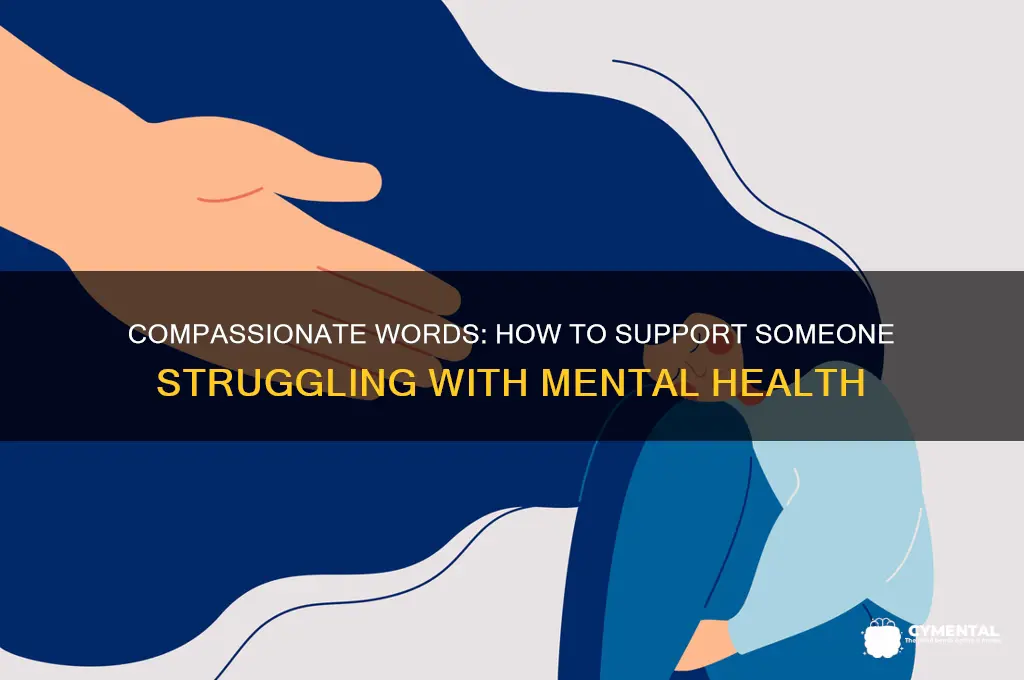
When someone is struggling with their mental health, knowing what to say can feel daunting, but offering genuine support and empathy is crucial. Start by creating a safe, non-judgmental space where they feel heard and understood, using phrases like, “I’m here for you” or “It’s okay to feel this way.” Avoid minimizing their experience with statements like “Just stay positive” or “It could be worse,” as these can invalidate their emotions. Instead, encourage them to share at their own pace, ask open-ended questions like, “How can I help?” and remind them that seeking professional help is a sign of strength. Above all, let them know they’re not alone and that their feelings matter, as small gestures of compassion can make a significant difference in their journey toward healing.
| Characteristics | Values |
|---|---|
| Be Empathetic | Acknowledge their feelings without judgment (e.g., "I can see you're struggling, and that sounds really hard."). |
| Listen Actively | Give them your full attention, avoid interrupting, and validate their emotions. |
| Avoid Minimizing | Refrain from saying things like "It could be worse" or "Just think positively." |
| Encourage Professional Help | Gently suggest seeking a therapist or counselor (e.g., "Have you considered talking to a professional about this?"). |
| Offer Support | Let them know you’re there for them (e.g., "I’m here for you whenever you need to talk."). |
| Avoid Giving Advice | Unless asked, focus on listening rather than offering solutions. |
| Be Patient | Understand that recovery takes time and avoid pressuring them to "get better." |
| Use Open-Ended Questions | Ask questions like, "How are you feeling?" or "What’s been on your mind?" to encourage them to open up. |
| Respect Boundaries | Don’t push if they’re not ready to talk and let them set the pace of the conversation. |
| Normalize Their Experience | Remind them they’re not alone (e.g., "Many people go through similar struggles."). |
| Avoid Stigmatizing Language | Refrain from using terms like "crazy" or "weak" when discussing mental health. |
| Show Genuine Care | Be authentic in your concern and avoid sounding dismissive or insincere. |
| Help Them Feel Safe | Create a non-judgmental space where they feel comfortable sharing their thoughts. |
| Encourage Self-Care | Suggest small steps like taking a walk, eating well, or getting enough sleep. |
| Follow Up | Check in with them later to show ongoing support (e.g., "How are you doing today?"). |
Explore related products


What You'll Learn
- Validate Their Feelings: Acknowledge their emotions without judgment, showing empathy and understanding
- Encourage Professional Help: Gently suggest therapy or counseling as a supportive step
- Offer Active Listening: Be fully present, avoid interrupting, and reflect their thoughts
- Avoid Minimizing Pain: Refrain from saying it could be worse or just stay positive
- Provide Reassurance: Let them know they’re not alone and you’re there to support them

Validate Their Feelings: Acknowledge their emotions without judgment, showing empathy and understanding
One of the most powerful ways to support someone struggling with their mental health is to validate their feelings. This means actively listening and acknowledging their emotions without trying to fix, minimize, or judge them. For example, instead of saying, “It’s not that bad,” try, “I can see how hard this must be for you.” This simple shift communicates that their experience is real and worthy of respect, which can foster trust and encourage them to open up further. Validation doesn’t require you to agree with their perspective, but it does require you to honor their emotional truth.
Validation is a skill that can be practiced and refined. Start by reflecting back what you hear them saying, using phrases like, “It sounds like you’re feeling overwhelmed,” or “I hear that you’re really hurting right now.” This technique, often used in therapy, helps the person feel heard and understood. Avoid inserting your own opinions or solutions unless asked; the goal is to create a safe space for them to express themselves. Research shows that feeling understood reduces emotional distress, making validation a critical first step in supporting someone’s mental health.
A common misconception is that validation means agreeing with everything the person says. In reality, it’s about acknowledging their emotions, not necessarily their interpretation of events. For instance, if someone says, “I’m a complete failure,” you might respond, “You’re feeling like you’ve let yourself down, and that’s really painful.” This approach separates the emotion from the self-criticism, helping them feel supported without reinforcing negative beliefs. It’s a delicate balance, but one that can make a significant difference in how they perceive their own struggles.
Practical tips for validating someone’s feelings include maintaining eye contact, nodding, and using nonverbal cues like a gentle touch (if appropriate) to show you’re engaged. Be mindful of your tone—keep it calm and nonjudgmental. If you’re unsure how to respond, it’s okay to say, “I’m here for you, and I want to understand.” Remember, validation isn’t about solving their problems; it’s about letting them know they’re not alone in their pain. Over time, this can help build resilience and encourage them to seek further help if needed.
Viagra and Mental ED: Exploring Its Role in Psychological Erectile Dysfunction
You may want to see also
Explore related products


Encourage Professional Help: Gently suggest therapy or counseling as a supportive step
Recognizing when someone needs mental health support is only the first step; guiding them toward professional help requires sensitivity and strategy. Therapy or counseling isn’t a one-size-fits-all solution, but it’s often a critical tool for managing mental health challenges. Start by normalizing the conversation around seeking help. For instance, instead of saying, “You should see a therapist,” try, “Therapy has helped a lot of people in similar situations—have you ever considered it?” This approach removes stigma and positions professional help as a common, accessible resource.
Consider the person’s cultural background and beliefs, as these can heavily influence their willingness to seek therapy. In some cultures, mental health struggles are seen as personal failures rather than treatable conditions. For example, in collectivist societies, framing therapy as a way to strengthen relationships or contribute to family well-being can be more persuasive than focusing on individual benefits. Similarly, if the person is religious, suggesting faith-based counseling or a therapist who shares their values can make the idea more palatable.
When suggesting professional help, avoid making it sound like a last resort or a sign of weakness. Instead, frame it as a proactive step toward self-care. Compare it to visiting a doctor for physical health: just as you’d see a physician for a broken bone, therapy is a specialized treatment for emotional or psychological pain. Provide concrete resources, such as recommending a trusted therapist, sharing a hotline number, or offering to help schedule the first appointment. Small actions like these reduce barriers and show genuine support.
Be mindful of potential resistance, which often stems from fear of the unknown or past negative experiences. If the person expresses hesitation, acknowledge their concerns without dismissing them. For example, say, “I understand it might feel overwhelming, but many people find the first session less intimidating than they expected.” Share relatable examples, like a friend who benefited from counseling, to humanize the process. Remember, your goal isn’t to convince them on the spot but to plant the seed and let them process the idea at their own pace.
Finally, emphasize that seeking help is a sign of strength, not defeat. Use language that empowers rather than pressures. For instance, “Taking care of your mental health is just as important as your physical health—it’s a brave step toward feeling better.” Avoid ultimatums or guilt-tripping, as these can backfire and deepen their reluctance. Instead, express your support consistently and let them know you’re there to help navigate the process, whether it’s researching therapists or simply listening after their first session.
Sharing Stories: A Powerful Tool for Healing Mental Illness
You may want to see also
Explore related products





Offer Active Listening: Be fully present, avoid interrupting, and reflect their thoughts
One of the most powerful ways to support someone struggling with their mental health is to offer active listening. This isn’t about giving advice or fixing problems—it’s about creating a safe space where they feel heard and understood. Start by putting away distractions like phones or laptops. Make eye contact (if culturally appropriate) and use open body language to signal engagement. Avoid the urge to interject with your own experiences or solutions; instead, let them lead the conversation at their own pace. Active listening isn’t passive; it’s an intentional act of presence that communicates, “You matter, and what you’re saying matters.”
Reflecting their thoughts is a key component of active listening. This involves paraphrasing what they’ve said to confirm understanding and show empathy. For example, if they say, “I feel like I’m drowning in stress,” you might respond, “It sounds like the pressure is overwhelming right now.” This technique not only clarifies their feelings but also validates them. Be cautious, though—reflection should feel natural, not robotic. Overdoing it can make the conversation feel clinical. Aim for a balance: reflect key emotions or concerns without turning the interaction into a therapy session.
A common pitfall is the desire to “fix” the problem. Resist this urge. When someone shares their struggles, they often aren’t looking for solutions—they’re seeking acknowledgment and connection. For instance, if they mention feeling isolated, avoid saying, “You should join a club.” Instead, say, “It must be really hard feeling alone like this.” This response honors their experience without minimizing it. Remember, active listening is about being with them in their pain, not rescuing them from it.
Practicing active listening requires patience and self-awareness. Notice if your mind starts wandering or if you’re formulating a response while they’re still speaking. Gently bring your focus back to them. If you’re unsure how to respond, a simple “Tell me more” or “How does that feel?” can keep the conversation flowing. Over time, this skill becomes more natural, but it’s okay to stumble—authenticity is more important than perfection. The goal is to make the person feel seen and supported, one attentive moment at a time.
Healing Crystals for Mental Health: A Guide to Inner Peace
You may want to see also
Explore related products


Avoid Minimizing Pain: Refrain from saying it could be worse or just stay positive
When someone is struggling with their mental health, the instinct to offer reassurance can lead to phrases like, "It could be worse" or "Just stay positive." While these statements may seem helpful, they often minimize the person’s pain and invalidate their experience. Consider this: if someone had a broken leg, you wouldn’t tell them, "At least it’s not both legs." Mental pain, though invisible, is just as real and deserves the same respect.
The problem with minimizing pain lies in its dismissive nature. Telling someone their situation could be worse shifts the focus away from their feelings and onto a hypothetical comparison. This not only fails to address their distress but also implies that their suffering isn’t significant enough to warrant attention. For example, if a friend shares they’re overwhelmed by anxiety, responding with, "Others have it harder," can leave them feeling unheard and ashamed for struggling. Instead, acknowledge their pain directly: "It sounds like you’re going through a really tough time. I’m here to listen."
A persuasive argument against minimizing pain is its long-term impact on trust and communication. When someone’s emotions are invalidated, they’re less likely to open up in the future. This can create a barrier to seeking help, as the individual may internalize the belief that their feelings are insignificant. Over time, this can exacerbate mental health issues, making it harder for them to reach out when they truly need support. By avoiding dismissive phrases, you foster an environment where they feel safe to express themselves without fear of judgment.
Practically speaking, here’s how to respond instead: use reflective listening and empathy-driven statements. For instance, say, "That sounds incredibly difficult. How can I support you right now?" or "I can’t imagine how hard this must be for you." These responses validate their experience while offering genuine support. Additionally, encourage professional help when appropriate, such as suggesting they speak to a therapist or providing resources like crisis hotline numbers (e.g., the National Suicide Prevention Lifeline at 988 in the U.S.).
In conclusion, refraining from minimizing someone’s pain is a critical step in providing meaningful support. By avoiding phrases that diminish their experience, you create space for genuine connection and understanding. Remember, the goal isn’t to fix their problems but to let them know they’re not alone. Small changes in how you respond can make a significant difference in how they feel and whether they continue to seek help.
Decluttering for Mental Clarity: How a Tidy Space Boosts Well-Being
You may want to see also
Explore related products


Provide Reassurance: Let them know they’re not alone and you’re there to support them
One of the most powerful ways to support someone struggling with their mental health is to offer genuine reassurance. When someone is in the depths of despair, feeling isolated and overwhelmed, a simple yet profound reminder that they are not alone can be a lifeline. It’s not about minimizing their pain or offering quick fixes; it’s about acknowledging their reality while extending a hand of solidarity. For instance, saying, “I can’t imagine how hard this must be for you, but I’m here, and you don’t have to go through this alone,” communicates empathy and commitment. This approach validates their experience while planting a seed of hope that they have a support system.
Reassurance isn’t a one-size-fits-all solution; it requires tailoring to the individual’s needs. For someone who feels like a burden, explicitly stating, “You’re not a burden to me—I care about you and want to help,” can dismantle their self-imposed barriers to reaching out. For others, offering specific actions, like, “I’m free tomorrow afternoon—can I bring over dinner and just sit with you?” provides tangible proof of your support. The key is to avoid vague promises and instead offer concrete, actionable ways you can be there for them. This specificity builds trust and shows that your reassurance is more than just words.
A common mistake is assuming reassurance means constant positivity or downplaying the severity of their struggle. Instead, it’s about creating a safe space where they feel understood and accepted, even in their darkest moments. Phrases like, “It’s okay to feel this way, and I’m here no matter what,” strike a balance between validation and encouragement. This approach avoids toxic positivity while reinforcing that your support is unconditional. It’s a delicate balance, but one that can make a significant difference in how they perceive their own resilience.
Finally, reassurance is an ongoing process, not a one-time conversation. Mental health struggles are often chronic, and consistent reminders of your presence can be a stabilizing force. Sending a brief text like, “Thinking of you today—how are you holding up?” or checking in weekly to ask, “What can I do this week to support you?” shows that your commitment isn’t fleeting. Over time, these small gestures accumulate, fostering a sense of security and connection that can help them navigate their challenges with greater confidence. Reassurance, when done thoughtfully and persistently, becomes a cornerstone of meaningful support.
Nigeria's Mental Health Initiatives: Support, Awareness, and Community Care
You may want to see also
Frequently asked questions
Start by expressing concern in a gentle, non-judgmental way. Use "I" statements, such as, "I’ve noticed you seem really stressed lately, and I’m worried about you. How are you feeling?" Let them know you’re there to listen without pushing them to open up.
Validate their feelings by saying something like, "That sounds really hard, and I’m sorry you’re going through this." Avoid offering advice unless asked, and instead focus on being supportive. Encourage professional help by saying, "It might be helpful to talk to someone who specializes in this."
Frame it as a suggestion rather than a demand. For example, "I know this is tough, and I think talking to a therapist or counselor could really help. Would you like me to help you find someone?" Offer to assist with the process, like researching options or accompanying them to an appointment.