Caleb Wright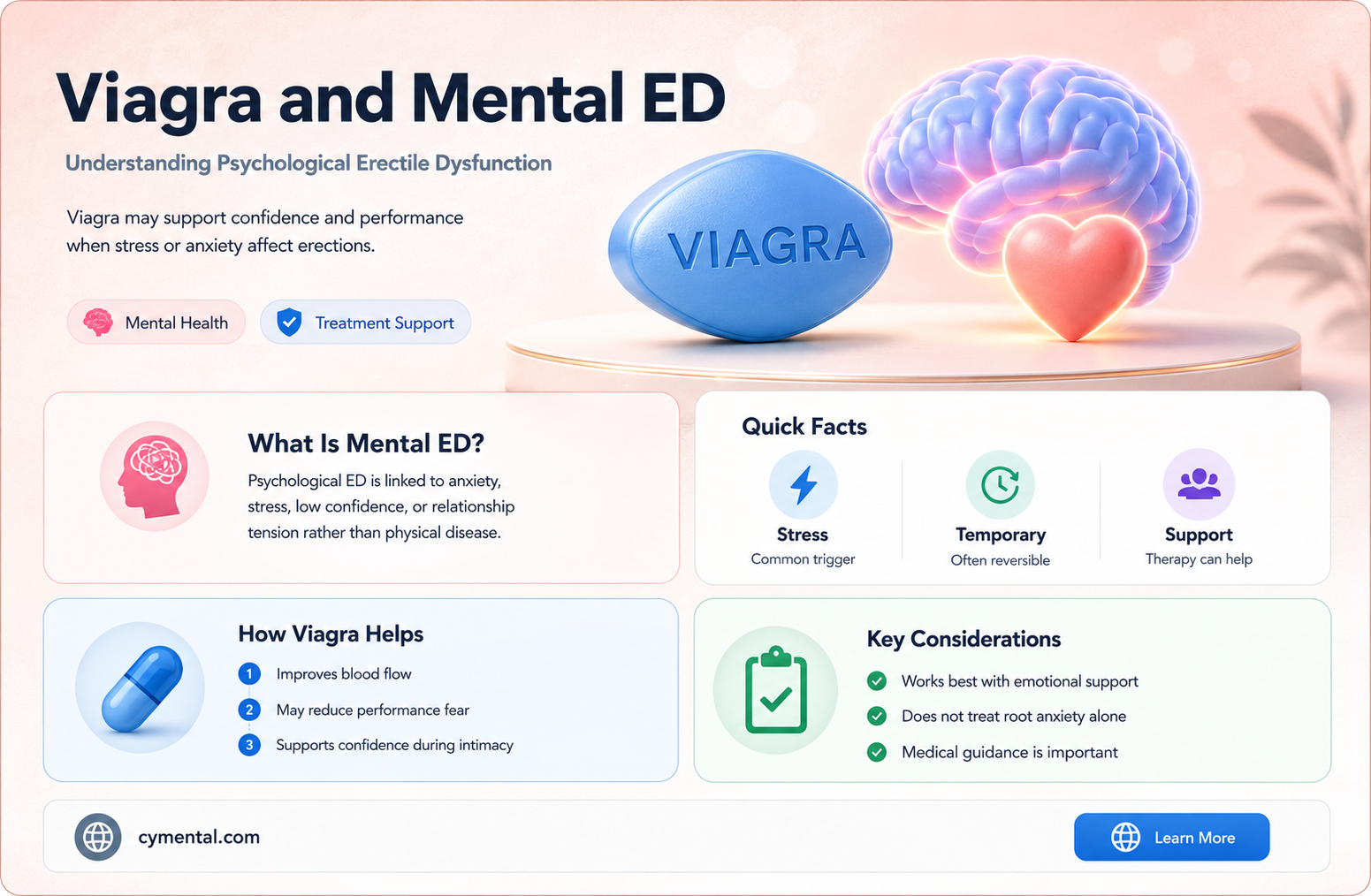
The question of whether Viagra can help with mental erectile dysfunction (ED) is a nuanced one, as ED often stems from psychological factors such as stress, anxiety, or relationship issues, rather than purely physical causes. While Viagra (sildenafil) is primarily designed to address physiological barriers to achieving an erection by increasing blood flow, its effectiveness in cases of mental ED is less straightforward. Some studies suggest that the psychological reassurance of knowing one can achieve an erection with Viagra may alleviate performance anxiety, indirectly improving mental ED. However, it is not a cure for underlying psychological issues and should be used in conjunction with therapy or counseling for long-term management of mental ED. Consulting a healthcare professional is essential to determine the root cause and appropriate treatment approach.
| Characteristics | Values |
|---|---|
| Effectiveness for Mental ED | Limited evidence suggests Viagra (sildenafil) may have some benefit for psychogenic erectile dysfunction (ED), but it's not as effective as for organic causes. |
| Mechanism of Action | Viagra primarily treats physical ED by increasing blood flow to the penis. It doesn't directly address psychological factors like anxiety or stress. |
| Potential Benefits | May improve confidence and reduce performance anxiety in some men with mental ED by facilitating erections. |
| Limitations | Doesn't address underlying psychological causes of ED. May not work for everyone with mental ED. |
| Alternatives | Therapy (cognitive-behavioral therapy, sex therapy), lifestyle changes, and addressing underlying psychological issues are often more effective for mental ED. |
| Consultation | It's crucial to consult a doctor to determine the cause of ED and discuss the most appropriate treatment options. |
Explore related products



What You'll Learn

Viagra's impact on psychological erectile dysfunction causes
Erectile dysfunction (ED) rooted in psychological causes—stress, anxiety, depression, or relationship issues—presents a unique challenge. Unlike physiological ED, where blood flow is the primary issue, psychological ED often stems from mental barriers that interfere with sexual performance. Viagra (sildenafil), a phosphodiesterase type 5 (PDE5) inhibitor, primarily addresses physical mechanisms by enhancing blood flow to the penis. However, its role in psychological ED is more nuanced. While Viagra doesn’t directly treat the underlying mental causes, it can break the cycle of performance anxiety by ensuring physical readiness, which may alleviate psychological pressure. For instance, a man experiencing ED due to stress might find that Viagra’s reliability reduces his fear of failure, indirectly improving his mental state.
Consider the scenario of a 35-year-old man whose ED is triggered by work-related stress. Starting with a standard 50mg dose of Viagra 30–60 minutes before sexual activity, he may find that the medication’s effectiveness in achieving an erection reduces his anticipatory anxiety over time. This success can gradually rebuild his confidence, diminishing the psychological barriers to performance. However, reliance on Viagra without addressing the root cause—stress—may lead to dependency. Combining medication with cognitive-behavioral therapy (CBT) or stress management techniques, such as mindfulness or couples counseling, can yield more sustainable results. The key is to use Viagra as a tool to bridge the gap between psychological distress and physical performance, not as a long-term crutch.
From a comparative perspective, Viagra’s impact on psychological ED differs from its role in physiological cases. In physical ED, the medication directly addresses the vascular issue, often providing immediate and consistent results. In psychological ED, the outcome is less predictable because mental factors are more variable. For example, a man with mild performance anxiety might respond well to Viagra alone, while someone with severe depression or relationship issues may require additional interventions. Studies show that Viagra’s success rate in psychological ED is lower than in organic causes, but it can still be a valuable component of a comprehensive treatment plan. The takeaway: Viagra is not a cure for psychological ED but a facilitator that, when paired with therapy, can help restore both physical and mental confidence.
Practical tips for using Viagra in psychological ED include starting with the lowest effective dose (25mg) to minimize side effects and maximize psychological comfort. Avoid alcohol, as it can exacerbate anxiety and reduce Viagra’s efficacy. Timing is critical—take the medication when you’re in a relaxed state, not under pressure. For men over 65 or those with comorbidities, consult a doctor to ensure safety, especially if combining Viagra with other medications. Finally, track your progress: note how your mental state evolves with each use. If anxiety or depression persists despite Viagra’s physical benefits, seek professional help to address the psychological root. Viagra can be a stepping stone, but lasting improvement in psychological ED requires a holistic approach.
Prisons vs. Treatment: Do Jails Help or Harm the Mentally Ill?
You may want to see also
Explore related products


Role of Viagra in performance anxiety treatment
Performance anxiety, often referred to as mental erectile dysfunction (ED), can be a debilitating condition, turning intimate moments into sources of stress. Viagra (sildenafil), primarily known for treating physical ED, has emerged as a potential solution for this psychological challenge. While it doesn’t directly address the mental roots of anxiety, its reliability in achieving physical arousal can break the cycle of fear and failure, offering a practical bridge to confidence. For men aged 18–65, a standard 50mg dose taken 30–60 minutes before intimacy often suffices, though a doctor may adjust based on response and tolerance.
Consider the case of a 32-year-old professional whose performance anxiety stemmed from a single episode of ED. Fear of recurrence became a self-fulfilling prophecy. After consulting a physician, he began using Viagra as needed. The drug’s consistent effectiveness reduced his anticipatory anxiety, allowing him to focus on the experience rather than the outcome. Over time, he relied less on the medication as his confidence rebuilt—a common trajectory when Viagra is used strategically rather than as a crutch.
However, Viagra isn’t a one-size-fits-all solution. Its role in treating performance anxiety hinges on understanding its limitations. It doesn’t cure psychological issues but provides a temporary physiological assurance. Combining it with cognitive-behavioral therapy (CBT) or mindfulness techniques can yield better long-term results. For instance, a 45-year-old man with chronic anxiety found that pairing Viagra with breathing exercises helped him manage both physical and mental symptoms during intimacy.
Practical tips for using Viagra in this context include avoiding alcohol, which can exacerbate anxiety and reduce the drug’s efficacy, and maintaining open communication with a partner. Starting with a lower dose (25mg) can minimize side effects like headaches or flushing, which might otherwise add to performance pressure. Regular follow-ups with a healthcare provider are essential to monitor progress and adjust treatment as needed.
In conclusion, Viagra’s role in treating performance anxiety lies in its ability to provide a physical foundation for rebuilding mental confidence. It’s a tool, not a cure, and works best when integrated into a broader strategy addressing the psychological aspects of ED. For those struggling with mental barriers to intimacy, it offers a tangible step toward reclaiming control and enjoyment.
Do I Need Mental Help? A Guide to Self-Assessment and Seeking Support
You may want to see also
Explore related products




Mental health benefits of Viagra use
Viagra, primarily known for its role in treating erectile dysfunction (ED), has emerged as a potential ally in addressing the psychological aspects of sexual health. Beyond its physiological effects, Viagra can significantly impact mental well-being by alleviating the anxiety and stress associated with performance-related concerns. For individuals whose ED stems from psychological factors, such as stress, depression, or relationship issues, Viagra can break the cycle of performance anxiety, fostering a sense of confidence and control. Studies suggest that even a single successful sexual experience after taking Viagra (typically 50–100 mg, as prescribed) can reduce mental barriers, encouraging a more positive outlook on intimacy.
Consider the case of a 45-year-old professional whose ED was exacerbated by workplace stress. After consulting a physician and starting a tailored Viagra regimen, he reported not only improved physical performance but also a noticeable reduction in anticipatory anxiety. This example underscores how Viagra’s reliability can act as a psychological crutch, enabling individuals to focus on the emotional aspects of intimacy rather than performance fears. However, it’s crucial to pair medication with open communication and, if necessary, therapy to address underlying mental health issues.
From a comparative standpoint, Viagra’s mental health benefits stand out when contrasted with other ED treatments. Unlike invasive procedures or daily medications, Viagra’s on-demand use (taken 30–60 minutes before activity) offers flexibility and spontaneity, which can reduce the psychological burden of planning. This convenience aligns with the needs of younger users (ages 30–50), who often seek solutions that fit their active lifestyles without adding stress. Moreover, Viagra’s well-documented safety profile, when used as directed, minimizes worries about side effects, further easing mental tension.
To maximize Viagra’s mental health benefits, practical steps should be followed. First, consult a healthcare provider to determine the appropriate dosage and rule out contraindications, especially if taking nitrates or alpha-blockers. Second, combine medication with mindfulness techniques, such as deep breathing or meditation, to address pre-performance jitters. Finally, maintain realistic expectations; Viagra enhances blood flow but doesn’t replace emotional connection or communication. By integrating these strategies, users can harness Viagra’s potential to improve both physical and mental aspects of sexual health.
Can Specific Frequencies Boost Your Mood and Mental Well-being?
You may want to see also
Explore related products





Viagra's effectiveness in stress-related ED cases
Erectile dysfunction (ED) linked to stress and anxiety often stems from psychological barriers rather than physical ones. Viagra, a phosphodiesterase type 5 (PDE5) inhibitor, primarily addresses physiological mechanisms by increasing blood flow to the penis. However, its effectiveness in stress-related ED cases hinges on whether the root cause is psychological or a blend of psychological and physiological factors. For purely psychological ED, Viagra may not resolve the underlying anxiety but can break the cycle of performance-related stress by ensuring physical readiness, which in turn reduces mental pressure.
Consider a scenario where a 35-year-old man experiences ED due to work-related stress. Starting with a standard 50 mg dose of Viagra 30–60 minutes before sexual activity can provide the physical assurance needed to alleviate performance anxiety. If effective, this can restore confidence and reduce the mental burden over time. However, reliance on medication without addressing stress through therapy or lifestyle changes may lead to dependency. Combining Viagra with cognitive-behavioral therapy (CBT) or mindfulness techniques often yields better long-term results for stress-induced ED.
A comparative analysis reveals that while Viagra treats the symptom, it does not cure the cause in stress-related cases. For instance, a study published in the *Journal of Sexual Medicine* found that 60% of men with psychogenic ED responded positively to PDE5 inhibitors like Viagra, but the success rate increased to 80% when paired with psychological interventions. This highlights the importance of a dual approach: using Viagra to restore function while tackling stress through professional counseling or stress-reduction strategies.
Practical tips for maximizing Viagra’s effectiveness in stress-related ED include timing the dose correctly, avoiding heavy meals that delay absorption, and maintaining open communication with a partner to reduce performance anxiety. For men over 50, starting with a lower 25 mg dose may minimize side effects like headaches or flushing. Additionally, incorporating relaxation techniques such as deep breathing or meditation before intimacy can enhance the medication’s efficacy by calming the mind.
In conclusion, Viagra can be a valuable tool for managing stress-related ED, particularly when used as part of a comprehensive strategy. While it addresses the physical aspect, combining it with psychological support ensures a more holistic and sustainable solution. For those struggling with stress-induced ED, consulting a healthcare provider to tailor a treatment plan that includes both medication and stress management is essential.
Suicidal Individuals: Are They Receiving Adequate Mental Health Support?
You may want to see also
Explore related products



Psychological confidence boost from Viagra usage
Viagra, primarily known for its physical effects on erectile dysfunction (ED), also plays a subtle yet significant role in boosting psychological confidence. For many men, the mere assurance of its efficacy reduces performance anxiety, creating a mental safety net. This phenomenon, often referred to as a "placebo effect on steroids," highlights how the drug’s reliability can shift mindset from apprehension to anticipation. Studies suggest that even the act of taking Viagra can trigger a psychological response, fostering a sense of control and readiness, which is particularly beneficial for those whose ED stems from mental stressors.
Consider the case of a 45-year-old professional who, after experiencing occasional ED, began using a 50mg dose of Viagra as needed. Initially, the physical results were his primary focus, but over time, he noticed a shift in his mental approach to intimacy. The fear of failure diminished, replaced by a proactive attitude. This example illustrates how Viagra’s reliability can rewire psychological patterns, turning a cycle of anxiety into one of confidence. For optimal results, users should follow prescribed dosages (typically 50mg, adjustable to 25mg or 100mg based on response) and allow 30–60 minutes for the drug to take effect, ensuring both physical and mental preparedness.
From a comparative standpoint, Viagra’s psychological impact contrasts with other ED treatments like therapy or lifestyle changes, which address root causes but require time and effort. Viagra offers immediate, tangible results, which can serve as a stepping stone for rebuilding confidence. However, it’s crucial to balance this reliance with long-term strategies, such as stress management or couples counseling, to ensure sustained mental well-being. For instance, combining Viagra use with mindfulness techniques can amplify its psychological benefits, creating a holistic approach to mental ED.
A persuasive argument for Viagra’s psychological boost lies in its ability to break the cycle of negative self-perception. For men in their 30s to 60s, ED can erode self-esteem, affecting relationships and overall quality of life. Viagra’s consistent performance acts as a psychological reset, allowing individuals to re-engage with intimacy without the burden of past failures. Practical tips include maintaining open communication with partners and using the drug as part of a broader strategy to address mental health, rather than a standalone solution.
In conclusion, Viagra’s role in mental ED extends beyond its physical mechanism, offering a psychological confidence boost that can transform how individuals approach intimacy. By understanding its dual impact and using it strategically, men can reclaim not just their physical capabilities but also their mental assurance. Always consult a healthcare provider to determine the appropriate dosage and ensure it aligns with overall health goals.
Soccer's Impact: Healing Minds and Battling Mental Illness
You may want to see also
Frequently asked questions
Viagra primarily addresses physical causes of ED by improving blood flow to the penis. While it may help with performance anxiety in some cases, it does not directly treat mental or psychological causes of ED, such as stress, depression, or relationship issues.
Viagra can temporarily improve erectile function, which may boost confidence for some men. However, it does not address the underlying psychological issues causing ED, so long-term confidence may require therapy or counseling.
No, Viagra is not a permanent solution for mental ED. It treats the symptom (erectile difficulty) but does not resolve the psychological root causes. Permanent solutions often involve addressing mental health through therapy, lifestyle changes, or other treatments.
Viagra may help with occasional ED caused by stress or anxiety, but it’s not a substitute for addressing the underlying issue. Consult a healthcare provider to explore psychological treatments or counseling alongside medication if needed.
Yes, alternatives include cognitive-behavioral therapy (CBT), couples counseling, stress management techniques, and lifestyle changes. In some cases, other medications or treatments targeting mental health may be recommended.








![SAP PP Interview Questions, 2011ed [eBook]](https://m.media-amazon.com/images/I/61CgkG2i+aL._AC_UL320_.jpg)