Noah Parker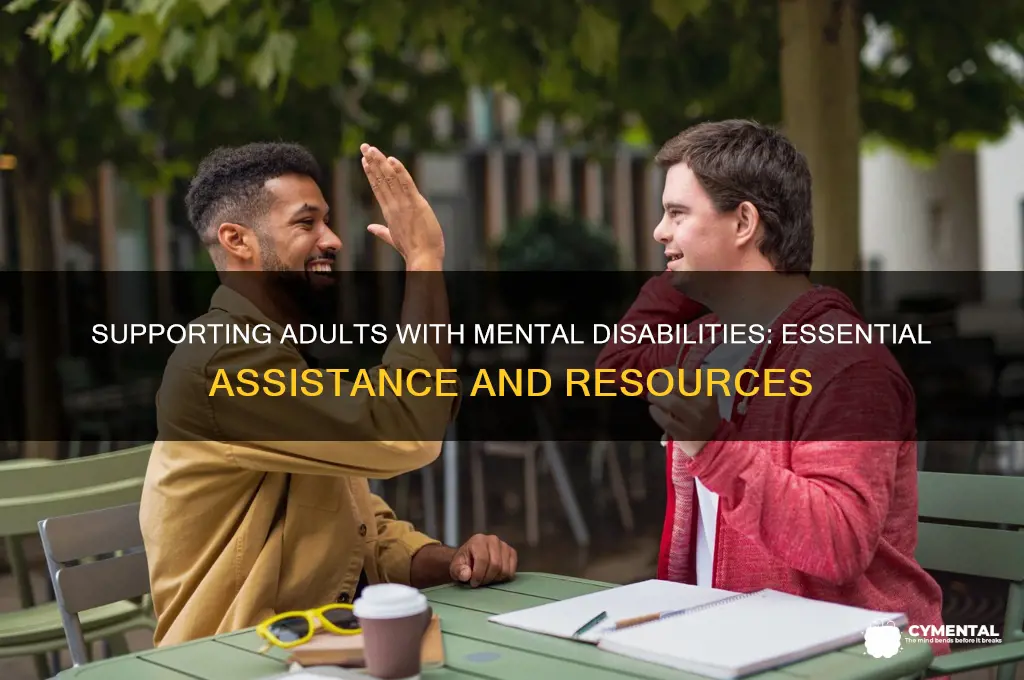
Adults with mental disabilities require a multifaceted support system that addresses their unique needs, encompassing emotional, practical, and social assistance. Emotional support, such as counseling and therapy, is crucial for managing mental health challenges and fostering resilience. Practical help, including assistance with daily tasks, financial management, and access to healthcare, ensures their independence and well-being. Social support, through community programs and inclusive environments, combats isolation and promotes meaningful relationships. Additionally, tailored vocational training and employment opportunities empower them to lead fulfilling, productive lives. Understanding and addressing these diverse needs is essential for creating a supportive and inclusive society that values the dignity and potential of all individuals.
Explore related products


What You'll Learn
- Daily Living Assistance: Support with tasks like cooking, cleaning, personal hygiene, and managing finances
- Employment Support: Job coaching, skill development, and workplace accommodations for successful employment
- Social Skills Training: Programs to improve communication, relationships, and community integration
- Mental Health Services: Access to therapy, medication management, and crisis intervention
- Legal and Advocacy: Assistance with rights protection, guardianship, and accessing disability benefits

Daily Living Assistance: Support with tasks like cooking, cleaning, personal hygiene, and managing finances
Adults with mental disabilities often face challenges in maintaining independence with daily living tasks, making structured support essential. Cooking, for instance, requires not only physical ability but also cognitive skills like planning, sequencing, and safety awareness. A 2021 study by the National Alliance on Mental Illness (NAMI) found that 60% of adults with severe mental illness struggle with meal preparation, leading to malnutrition or reliance on convenience foods. To address this, caregivers or support workers can introduce simplified recipes with step-by-step visual guides or pre-measured ingredients. For example, a weekly meal plan with pre-chopped vegetables and labeled storage containers can reduce decision fatigue and ensure balanced nutrition.
Cleaning and household maintenance pose similar hurdles, as they demand sustained attention and organizational skills. Adults with conditions like schizophrenia or ADHD may find it difficult to prioritize tasks or maintain routines. A practical solution is to break chores into smaller, manageable segments using a checklist or timer-based system. For instance, setting a 15-minute daily cleaning goal for one room can prevent overwhelm and build consistency. Additionally, adaptive tools like lightweight vacuum cleaners or color-coded cleaning supplies can make tasks less daunting and more accessible.
Personal hygiene, a cornerstone of self-esteem and social acceptance, is another area where tailored assistance is crucial. Mental health conditions such as depression or anxiety can sap motivation or distort self-perception, leading to neglect of basic care. Support strategies include creating a structured morning routine with gentle reminders or using sensory-friendly products (e.g., unscented soaps for those with sensory sensitivities). For individuals with severe challenges, occupational therapists can recommend adaptive equipment like long-handled brushes or step-by-step hygiene charts to foster independence.
Managing finances, a complex task requiring executive functioning and impulse control, is often a significant barrier for adults with mental disabilities. A 2019 report by the American Psychiatric Association highlighted that 40% of individuals with bipolar disorder experience financial difficulties due to impulsive spending. To mitigate this, caregivers can collaborate with them to set up automated bill payments, create a visual budget chart, or use spending tracker apps. For those with more severe impairments, representative payee programs or joint bank accounts with trusted individuals can provide oversight without compromising dignity.
The key to effective daily living assistance lies in personalization and empowerment. Rather than taking over tasks entirely, support should focus on building skills and confidence through gradual, structured guidance. For example, a person learning to manage finances might start by categorizing expenses into envelopes before progressing to digital budgeting tools. By acknowledging individual strengths and adapting strategies to specific needs, caregivers can foster a sense of autonomy and improve overall quality of life. This approach not only addresses immediate challenges but also lays the foundation for long-term independence.
Skincare Rituals: Nurturing Mental Well-Being Through Self-Care Practices
You may want to see also
Explore related products


Employment Support: Job coaching, skill development, and workplace accommodations for successful employment
Adults with mental disabilities often face unique challenges in securing and maintaining employment, but tailored support can make a significant difference. Job coaching emerges as a critical intervention, offering personalized guidance to navigate workplace expectations and tasks. A job coach works one-on-one with the individual, providing real-time feedback, breaking down complex tasks into manageable steps, and fostering independence. For instance, a coach might assist someone with autism in understanding social cues during team meetings or help an individual with ADHD develop time management strategies. Studies show that job coaching increases job retention rates by up to 40% for this population, making it a proven tool for long-term success.
Beyond coaching, skill development is essential to bridge the gap between abilities and job requirements. Programs focusing on soft skills, such as communication and problem-solving, alongside technical training, empower individuals to thrive in diverse roles. For example, a vocational training program might teach coding basics to someone with a learning disability while simultaneously addressing stress management techniques. Employers benefit too, as skilled employees contribute to productivity and innovation. A 2021 report by the National Organization on Disability highlighted that companies prioritizing skill development for employees with disabilities saw a 28% increase in revenue.
However, even with coaching and training, workplace accommodations are often necessary to ensure inclusivity. These adjustments, mandated by laws like the Americans with Disabilities Act (ADA), range from physical modifications to policy changes. For instance, providing noise-canceling headphones for an employee with sensory sensitivities or allowing flexible hours for someone managing anxiety can create a supportive environment. Employers should view these accommodations as investments rather than burdens; research indicates that 59% of accommodations cost nothing, while the rest average only $500—a small price for retaining skilled talent.
Implementing these supports requires collaboration among employers, employees, and disability service providers. Steps include conducting a needs assessment, identifying specific accommodations, and regularly reviewing progress. Cautions involve avoiding one-size-fits-all approaches, as each individual’s needs vary. For example, while one person might benefit from a quiet workspace, another may thrive with a mentor system. Conclusion: Employment support is not just about placing individuals in jobs but about creating pathways for sustained success. By combining job coaching, skill development, and thoughtful accommodations, society can unlock the potential of adults with mental disabilities, fostering independence and economic inclusion.
Art Therapy: Healing Serious Mental Illness Through Creative Expression
You may want to see also
Explore related products

$6.79 $14.99


Social Skills Training: Programs to improve communication, relationships, and community integration
Adults with mental disabilities often face challenges in social interactions, which can hinder their ability to form meaningful relationships and integrate into their communities. Social skills training programs emerge as a vital intervention, offering structured support to enhance communication, foster connections, and promote independence. These programs typically employ evidence-based techniques like role-playing, modeling, and feedback to teach specific skills such as initiating conversations, maintaining eye contact, and interpreting social cues. For instance, a program might use video demonstrations to illustrate appropriate body language in different social contexts, followed by group practice sessions where participants receive constructive feedback from peers and facilitators.
One effective approach within social skills training is the use of cognitive-behavioral strategies. These methods help individuals identify and challenge negative thought patterns that may impede social interactions, such as "I’ll say something wrong" or "No one wants to talk to me." By replacing these thoughts with more positive and realistic ones, participants can approach social situations with greater confidence. For example, a 12-week program targeting adults aged 18–35 with autism spectrum disorder might include weekly 90-minute sessions focused on topics like active listening, assertiveness, and conflict resolution. Each session could incorporate homework assignments, such as practicing a new skill in a real-world setting, to reinforce learning.
Community integration is another critical component of social skills training. Programs often include activities that encourage participants to engage with their local communities, such as volunteering, joining clubs, or attending social events. For instance, a program might partner with a local library to create a book club specifically for adults with mental disabilities, providing a safe and supportive environment to practice conversation and build friendships. Practical tips for facilitators include ensuring that community outings are well-planned, with clear schedules and roles, to minimize anxiety and maximize participation.
While social skills training is highly beneficial, it’s essential to tailor programs to individual needs and abilities. A one-size-fits-all approach can fall short, as the challenges faced by someone with schizophrenia may differ significantly from those of someone with intellectual disability. Assessments should be conducted at the outset to identify specific areas of strength and weakness, allowing for personalized goal-setting. For example, a participant who struggles with initiating conversations might focus on practicing open-ended questions, while another who has difficulty reading facial expressions might work on recognizing emotions through visual aids.
In conclusion, social skills training programs play a transformative role in the lives of adults with mental disabilities by equipping them with the tools to navigate social interactions successfully. By combining structured instruction, cognitive-behavioral techniques, and real-world practice, these programs empower individuals to build relationships, participate in their communities, and lead more fulfilling lives. For caregivers and professionals, investing time in understanding and implementing these programs can yield profound, lasting benefits for those they support.
Fasting's Surprising Impact: Boosting Mental Clarity and Emotional Well-being
You may want to see also
Explore related products


Mental Health Services: Access to therapy, medication management, and crisis intervention
Adults with mental disabilities often require a multifaceted approach to mental health services, and access to therapy, medication management, and crisis intervention is critical. Therapy, whether cognitive-behavioral, dialectical behavior, or psychodynamic, provides a structured environment for individuals to explore and manage their emotions, thoughts, and behaviors. For instance, a 30-year-old with schizophrenia might benefit from weekly cognitive-behavioral therapy sessions to address delusional beliefs and improve social functioning. These sessions, typically lasting 45–60 minutes, can be tailored to focus on specific challenges, such as managing auditory hallucinations or building coping strategies for stress.
Medication management is another cornerstone of mental health care for this population. For adults with conditions like bipolar disorder or major depressive disorder, consistent monitoring of medications such as lithium, antidepressants, or antipsychotics is essential. A 40-year-old with bipolar disorder, for example, may require monthly check-ins with a psychiatrist to adjust dosages—lithium levels should be maintained between 0.8–1.2 mEq/L for optimal efficacy and safety. Practical tips include using pill organizers to ensure adherence and keeping a symptom journal to track medication effectiveness and side effects.
Crisis intervention services act as a safety net during acute episodes of mental distress. These services, often available 24/7 via hotlines or mobile response teams, provide immediate support for individuals experiencing suicidal ideation, severe anxiety, or psychotic episodes. For instance, a 25-year-old with borderline personality disorder might call a crisis hotline during an emotional crisis, receiving de-escalation techniques and a referral to an emergency psychiatric evaluation if needed. The goal is to stabilize the individual and connect them to ongoing care, preventing hospitalization when possible.
Comparing these services highlights their interdependence. Therapy fosters long-term coping skills, medication management addresses biological aspects of mental illness, and crisis intervention provides immediate relief during emergencies. However, barriers such as cost, stigma, and limited availability of providers can hinder access. To improve outcomes, policymakers and healthcare providers must prioritize funding for these services, expand telehealth options, and integrate mental health care into primary care settings. For adults with mental disabilities, this comprehensive approach can mean the difference between struggling and thriving.
Early Diagnosis and Treatment: Key to Enhancing Mental Health Outcomes
You may want to see also
Explore related products


Legal and Advocacy: Assistance with rights protection, guardianship, and accessing disability benefits
Adults with mental disabilities often face unique challenges in navigating legal systems and advocating for their rights, making specialized assistance crucial. One critical area is rights protection, where individuals may require support to understand and exercise their legal entitlements. For instance, the Americans with Disabilities Act (ADA) ensures equal opportunities, but many adults with mental disabilities are unaware of its provisions or how to enforce them. Advocacy organizations, such as The Arc or Disability Rights Organizations, play a vital role in educating individuals about their rights and providing legal representation when violations occur. Without such support, these adults risk discrimination in employment, housing, and public services.
Another essential aspect is guardianship, a legal arrangement where a guardian is appointed to make decisions on behalf of an individual deemed unable to do so independently. While guardianship can provide necessary support, it must be approached cautiously to avoid overreach. Alternatives like supported decision-making, where individuals receive assistance in making their own choices, are increasingly favored. Legal advocates help assess whether guardianship is truly necessary and ensure it is tailored to the individual’s specific needs, preserving as much autonomy as possible. For example, a limited guardianship might only cover financial decisions, allowing the individual to retain control over personal and medical choices.
Accessing disability benefits is a third critical area where adults with mental disabilities often need assistance. Programs like Supplemental Security Income (SSI) and Social Security Disability Insurance (SSDI) provide financial support, but the application process is complex and often requires detailed medical documentation. Advocates and legal professionals can guide individuals through this process, increasing the likelihood of approval. For instance, a common challenge is proving the severity and duration of a mental disability to meet eligibility criteria. Practical tips include gathering comprehensive medical records, obtaining statements from healthcare providers, and appealing denials with the help of an attorney specializing in disability law.
Comparatively, while these legal and advocacy services are essential, they are often underutilized due to lack of awareness or accessibility. Rural areas, in particular, face shortages of specialized legal resources, leaving many individuals without the support they need. To address this gap, some organizations offer remote consultations or partner with local agencies to provide on-the-ground assistance. Additionally, proactive measures, such as legal education workshops for individuals and their families, can empower them to navigate systems more effectively. Ultimately, ensuring access to these services is not just a legal necessity but a moral imperative to uphold the dignity and rights of adults with mental disabilities.
Journaling for Mental Health: The Power of Writing Down Thoughts
You may want to see also
Frequently asked questions
Adults with mental disabilities may need assistance with activities of daily living (ADLs), such as personal hygiene, meal preparation, medication management, and household chores. Structured routines and visual aids can also help them maintain independence.
Access to mental health professionals, such as therapists, psychologists, or psychiatrists, is crucial for ongoing support, therapy, and medication management. Regular check-ins help address emotional and psychological needs effectively.
Vocational training and job coaching are essential for helping adults with mental disabilities develop job skills, find employment, and maintain workplace success. These programs promote financial independence and social inclusion.
Social and community support, such as support groups, recreational activities, and inclusive programs, helps reduce isolation, build relationships, and foster a sense of belonging. Community resources also provide practical assistance and advocacy.