Ava Ramirez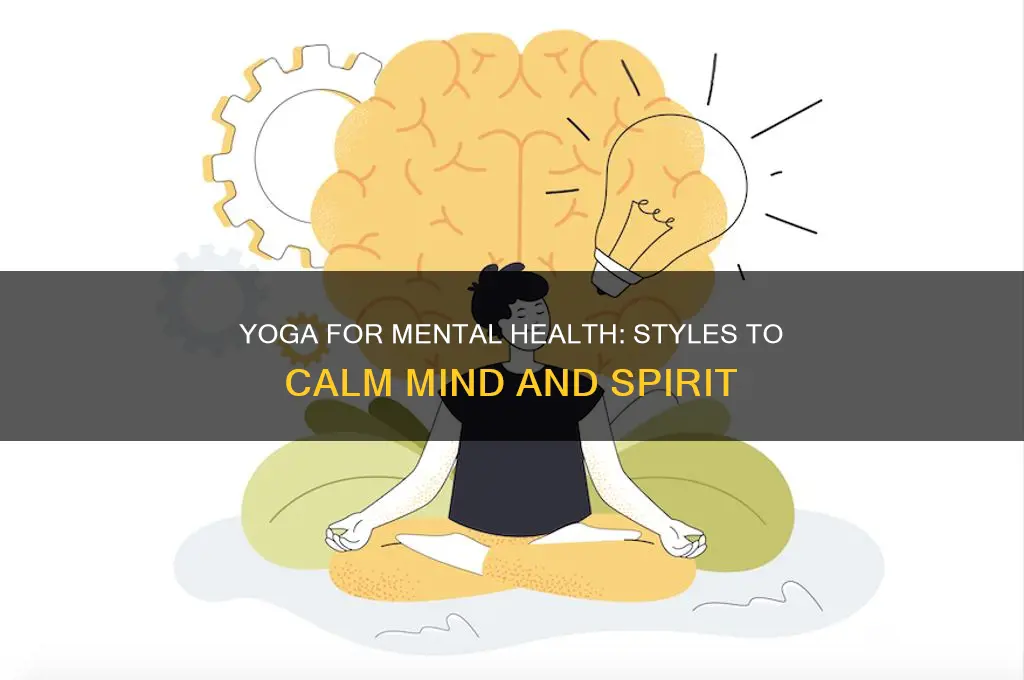
Yoga has long been recognized as a powerful tool for enhancing mental health, offering a holistic approach to reducing stress, anxiety, and depression while promoting emotional balance and clarity. Different types of yoga cater to various mental health needs, with practices like Hatha and Yin yoga focusing on gentle movements and mindfulness to calm the mind, while more dynamic styles such as Vinyasa or Kundalini yoga incorporate breathwork and energetic flows to boost mood and vitality. Restorative yoga, with its emphasis on relaxation and supported poses, is particularly beneficial for those seeking stress relief and emotional healing. By combining physical postures, breath control, and meditation, yoga provides a multifaceted solution to support mental well-being, making it an accessible and effective practice for individuals looking to nurture their mental health.
| Characteristics | Values |
|---|---|
| Type of Yoga | Hatha, Vinyasa, Yin, Restorative, Kundalini, Yoga Nidra, Trauma-Informed Yoga |
| Focus | Mindfulness, breath control, relaxation, emotional healing, stress reduction |
| Benefits for Mental Health | Reduces anxiety, depression, PTSD symptoms, improves mood, enhances mindfulness, promotes emotional regulation |
| Key Practices | Slow-paced movements, deep breathing, meditation, prolonged holds, guided relaxation |
| Suitable For | Beginners, individuals with anxiety, depression, trauma, or high stress levels |
| Scientific Evidence | Studies show reduced cortisol levels, improved brain function, and increased serotonin |
| Accessibility | Can be practiced at home, in studios, or online; adaptable for all fitness levels |
| Duration | Sessions typically range from 30 minutes to 1.5 hours |
| Additional Tools | Use of props (blocks, bolsters), essential oils, calming music, or guided imagery |
| Philosophical Basis | Focuses on connecting mind, body, and spirit for holistic healing |
Explore related products


What You'll Learn
- Hatha Yoga: Gentle poses, breath control, reduces stress, anxiety, and improves mood effectively
- Yin Yoga: Slow-paced, targets deep tissues, promotes relaxation, and fosters emotional healing
- Vinyasa Flow: Dynamic movement, mindfulness, boosts focus, and reduces symptoms of depression
- Restorative Yoga: Supported poses, deep relaxation, alleviates anxiety and enhances mental clarity
- Kundalini Yoga: Combines movement, breath, and meditation, reduces stress, and uplifts mood

Hatha Yoga: Gentle poses, breath control, reduces stress, anxiety, and improves mood effectively
Hatha yoga, with its focus on gentle poses and mindful breathing, offers a sanctuary for those seeking mental clarity and emotional balance. Unlike more vigorous styles, Hatha moves at a deliberate pace, allowing practitioners to cultivate awareness of their bodies and thoughts. This slow, intentional practice encourages a shift from the chaos of daily life to a state of calm, making it particularly effective for managing stress and anxiety.
Consider this: a typical Hatha session begins with grounding poses like Mountain Pose (Tadasana) or Child’s Pose (Balasana), which anchor the mind and body. These simple yet powerful postures are often held for several breaths, fostering a sense of stability. Breath control, or pranayama, is another cornerstone of Hatha yoga. Techniques such as diaphragmatic breathing or alternate nostril breathing (Nadi Shodhana) are integrated seamlessly, helping to regulate the nervous system and reduce cortisol levels. Research suggests that even 20–30 minutes of daily Hatha practice can significantly lower stress markers and improve mood over time.
For those new to yoga or dealing with physical limitations, Hatha’s adaptability is a game-changer. Poses can be modified with props like blocks, straps, or blankets, ensuring accessibility for all ages and fitness levels. For instance, a seated Forward Fold (Paschimottanasana) can be practiced with bent knees or using a chair, making it inclusive for older adults or individuals with mobility challenges. The emphasis is not on perfection but on presence—being fully engaged in the moment, which is a powerful antidote to anxiety.
A practical tip for integrating Hatha into your routine: start with a 10-minute morning practice focusing on three to five poses and mindful breathing. Gradually extend the duration as your comfort and confidence grow. Pairing this with a consistent bedtime routine can amplify its benefits, as studies show that regular yoga practice improves sleep quality, further enhancing mental well-being.
In a world where mental health challenges are increasingly prevalent, Hatha yoga stands out as a gentle yet potent tool. Its combination of physical postures, breathwork, and mindfulness creates a holistic approach to emotional healing. By carving out time for this practice, you’re not just moving your body—you’re nurturing your mind, one breath and one pose at a time.
Employment Boosts Mental Health: Stability, Purpose, and Social Connection
You may want to see also
Explore related products


$13.04 $15.99


Yin Yoga: Slow-paced, targets deep tissues, promotes relaxation, and fosters emotional healing
Yin Yoga stands apart from more dynamic styles by emphasizing stillness and depth, making it particularly effective for mental health. Unlike Yang practices that focus on muscle engagement, Yin targets the connective tissues—ligaments, fascia, and joints—through passive, long-held poses. This slow-paced approach encourages practitioners to hold postures for 3 to 5 minutes, sometimes even longer, allowing the body to release tension stored in these deeper layers. Such prolonged holds stimulate the parasympathetic nervous system, promoting relaxation and reducing stress hormones like cortisol. For those grappling with anxiety or chronic stress, this physiological shift can be transformative, offering a tangible sense of calm that extends beyond the mat.
The emotional healing benefits of Yin Yoga are rooted in its ability to create space for introspection. As the body surrenders to gravity in poses like Butterfly or Sphinx, the mind often follows suit, releasing not just physical tension but also emotional weight. This practice encourages practitioners to observe their thoughts and feelings without judgment, a core principle of mindfulness. Over time, this heightened self-awareness can lead to greater emotional resilience, helping individuals process trauma or navigate challenging emotions more effectively. Incorporating Yin Yoga into a weekly routine—even just 20 to 30 minutes, 2 to 3 times a week—can serve as a powerful complement to therapy or other mental health strategies.
For beginners, it’s essential to approach Yin Yoga with patience and caution. While the poses may appear simple, their intensity lies in their duration. Props like bolsters, blankets, or blocks can be invaluable in modifying poses to suit individual needs, ensuring comfort without strain. For instance, in a seated forward fold, placing a cushion under the knees or using a strap around the feet can alleviate pressure while maintaining the pose’s therapeutic benefits. It’s also crucial to listen to your body and avoid pushing into pain, as Yin Yoga is about yielding, not forcing. This gentle approach makes it accessible to people of all ages and fitness levels, including older adults or those recovering from injuries.
Comparatively, while Vinyasa or Power Yoga may energize and strengthen, Yin Yoga nurtures and restores, addressing mental health from a different angle. Its focus on stillness and surrender counterbalances the fast-paced, high-stress demands of modern life, offering a sanctuary for both body and mind. For those seeking a practice that goes beyond physical flexibility to foster emotional healing, Yin Yoga provides a unique and profound pathway. By carving out time for this slow, intentional practice, individuals can cultivate a deeper sense of inner peace and emotional clarity, making it a valuable tool in the toolkit for mental well-being.
Accessing Free Mental Health Support: A Comprehensive Guide to Resources
You may want to see also
Explore related products


Vinyasa Flow: Dynamic movement, mindfulness, boosts focus, and reduces symptoms of depression
Vinyasa Flow yoga, characterized by its dynamic sequences and synchronized breath, offers a powerful tool for enhancing mental health. Unlike static styles, Vinyasa’s continuous movement generates heat and elevates the heart rate, releasing endorphins that counteract symptoms of depression. A 2017 study published in the *Journal of Psychiatric Practice* found that participants who engaged in Vinyasa Flow reported significant reductions in depressive symptoms after just eight weeks of consistent practice. This style’s emphasis on fluid transitions between poses mirrors the natural rhythm of life, fostering resilience and emotional balance.
To harness Vinyasa Flow’s mental health benefits, aim for 3–4 sessions per week, each lasting 45–60 minutes. Beginners should start with slower-paced classes to build familiarity with the sequences and breathwork. Incorporate poses like Warrior II, Downward Dog, and Child’s Pose, which combine strength and surrender, reflecting the practice’s dual focus on effort and ease. Mindfulness is key: maintain awareness of your breath and body sensations throughout the flow to anchor your mind in the present moment, reducing anxiety and improving focus.
One of Vinyasa Flow’s unique strengths lies in its adaptability. Instructors often tailor sequences to target specific mental health concerns, such as stress or insomnia. For instance, a class focused on grounding might include more earth-connected poses like Standing Forward Fold or Seated Forward Bend, while a session aimed at energizing the mind could incorporate inversions like Downward Dog or Handstand Prep. This versatility makes Vinyasa Flow accessible to practitioners of all ages and fitness levels, from teens seeking focus to seniors managing mood fluctuations.
Practical tips can enhance your experience. Invest in a non-slip mat to ensure stability during transitions, and wear breathable clothing that allows for unrestricted movement. If attending in-person classes feels intimidating, start with online tutorials or apps that guide you through beginner-friendly flows. Finally, pair your practice with journaling to reflect on how the movement and mindfulness affect your mood and thought patterns. Over time, this combination of dynamic movement and intentional awareness can transform Vinyasa Flow into a sustainable mental health ritual.
Navigating Drunkenness and Mental Breakdown: Compassionate Strategies for Support
You may want to see also
Explore related products


Restorative Yoga: Supported poses, deep relaxation, alleviates anxiety and enhances mental clarity
Restorative yoga is a gentle practice designed to activate the parasympathetic nervous system, often referred to as the "rest and digest" mode. Unlike more dynamic styles, it uses supported poses held for extended periods—sometimes 5 to 20 minutes—to encourage deep relaxation. Props like bolsters, blankets, and blocks are essential, as they allow the body to fully surrender, releasing physical tension and calming the mind. This deliberate stillness creates a therapeutic environment where the focus shifts from doing to being, making it particularly effective for alleviating anxiety and mental fatigue.
Consider the pose *Supported Reclined Bound Angle (Supta Baddha Konasana)*. Here, a bolster is placed lengthwise along the spine, with blankets under the knees and a folded blanket or block under the head. The hips gently open, and the heart remains supported, fostering a sense of safety. As the body relaxes, the mind follows suit, often leading to a meditative state. Research suggests that such poses reduce cortisol levels, the hormone associated with stress, while increasing oxytocin, which promotes feelings of calm and connection. For maximum benefit, practice this pose for 10–15 minutes, focusing on slow, diaphragmatic breathing.
While restorative yoga is accessible to all ages and fitness levels, it’s particularly beneficial for individuals experiencing chronic stress, insomnia, or anxiety disorders. However, it’s not a replacement for professional mental health treatment but rather a complementary tool. Beginners may initially find the stillness challenging, as it requires confronting restless thoughts without distraction. To ease into the practice, start with shorter holds (5 minutes) and gradually increase duration. Pairing the practice with guided meditation or soothing music can also enhance its calming effects.
A key distinction of restorative yoga is its emphasis on *non-striving*. Unlike other styles that build strength or flexibility, this practice prioritizes passive release. For instance, in *Supported Child’s Pose (Balasana)*, the forehead rests on a block, and arms drape loosely, allowing the spine to lengthen without effort. This approach encourages mindfulness, as practitioners observe sensations without judgment. Over time, this cultivates mental clarity, as the constant chatter of the mind quiets, revealing a sense of inner spaciousness.
Incorporating restorative yoga into a weekly routine—even just once—can yield significant mental health benefits. For those with busy schedules, a 20-minute session before bed can improve sleep quality and reduce nighttime anxiety. Pairing the practice with journaling or gratitude reflection amplifies its emotional impact. Ultimately, restorative yoga is not about achieving a pose but about creating a sanctuary where the mind can heal, one supported posture at a time.
Effective Strategies to Navigate and Recover from a Mental Breakdown
You may want to see also
Explore related products
$6.79 $14.99



Kundalini Yoga: Combines movement, breath, and meditation, reduces stress, and uplifts mood
Kundalini Yoga stands out as a dynamic practice that integrates physical movement, breath control, and meditation to address mental health challenges. Unlike more static forms of yoga, Kundalini actively engages the body through repetitive motions, such as arm pumps or spinal flexes, while synchronizing breath with mantra or specific patterns. This combination stimulates the nervous system, releasing tension and promoting a sense of calm. For instance, a study published in the *International Journal of Yoga* found that regular Kundalini practice significantly reduced symptoms of anxiety and depression in participants over an 8-week period. The practice’s structured yet fluid nature makes it particularly effective for those seeking both physical release and mental clarity.
One of the key techniques in Kundalini Yoga is the use of *pranayama* (breath control) to regulate the autonomic nervous system. Exercises like *Breath of Fire*, a rapid, rhythmic inhalation and exhalation through the nose, increase oxygenation and activate the body’s relaxation response. This technique is often paired with *kriyas*—sequences of movements designed to target specific outcomes, such as stress reduction or emotional balance. For example, the *Kriya for Elevation* combines vigorous arm movements with deep breathing to release pent-up energy and uplift the mood. Practitioners are encouraged to start with 3-minute sessions and gradually increase to 11 minutes daily for optimal benefits, as consistency is key to experiencing lasting effects.
Meditation plays a central role in Kundalini Yoga, often incorporating mantras or focused visualization to quiet the mind. The *Sadar Guru Ghar Mantra*, chanted during meditation, is believed to connect the practitioner to their inner wisdom and foster a sense of peace. Unlike traditional seated meditation, Kundalini often includes movement-based meditations, such as *Dancing Dharma*, which combines gentle swaying with mantra repetition. This approach is particularly accessible for individuals who find stillness challenging, as it allows for emotional release through motion. Research from the *Journal of Alternative and Complementary Medicine* highlights that such practices can reduce cortisol levels, the hormone associated with stress, by up to 20% after just one session.
While Kundalini Yoga is accessible to all ages and fitness levels, beginners should approach it with mindfulness. The intensity of certain kriyas can be physically demanding, so modifications are often necessary. For instance, those with joint issues can reduce the range of motion during spinal flexes or use a chair for support. It’s also advisable to practice under the guidance of a certified instructor, especially when learning breathwork techniques, to avoid hyperventilation or discomfort. Despite these cautions, the practice’s adaptability makes it a valuable tool for mental health, offering a holistic approach to managing stress, anxiety, and mood disorders.
Incorporating Kundalini Yoga into a daily routine can be transformative, but it requires commitment and patience. Start with a 15-minute morning practice, focusing on a simple kriya like *Sunrise Kriya*, which combines stretching, breathwork, and meditation to energize the body and clear the mind. Over time, gradually introduce more complex sequences and longer meditation periods. Practical tips include creating a dedicated space free from distractions, wearing comfortable clothing, and maintaining a journal to track progress and emotional shifts. By blending movement, breath, and mindfulness, Kundalini Yoga offers a powerful pathway to mental well-being, proving that healing can be both active and meditative.
Supporting Student Well-Being: Practical Strategies for Mental Health in Schools
You may want to see also
Frequently asked questions
Hatha yoga is highly recommended for stress and anxiety reduction due to its focus on slow, gentle movements and breath control, which promote relaxation and mindfulness.
Yes, yoga can help with depression. Yin yoga, with its long-held, passive poses, is particularly effective as it encourages introspection and emotional release while calming the nervous system.
Vinyasa yoga, with its dynamic and flowing sequences, is great for improving focus and mental clarity as it requires concentration and synchronization of breath with movement.
Trauma-Informed Yoga is specifically designed to help individuals with PTSD. It emphasizes safety, choice, and empowerment, avoiding triggers while fostering a sense of calm and grounding.
Restorative yoga uses props to support the body in passive poses, promoting deep relaxation and stress relief. It’s ideal for anyone experiencing burnout, insomnia, or high levels of mental fatigue.