Ava Ramirez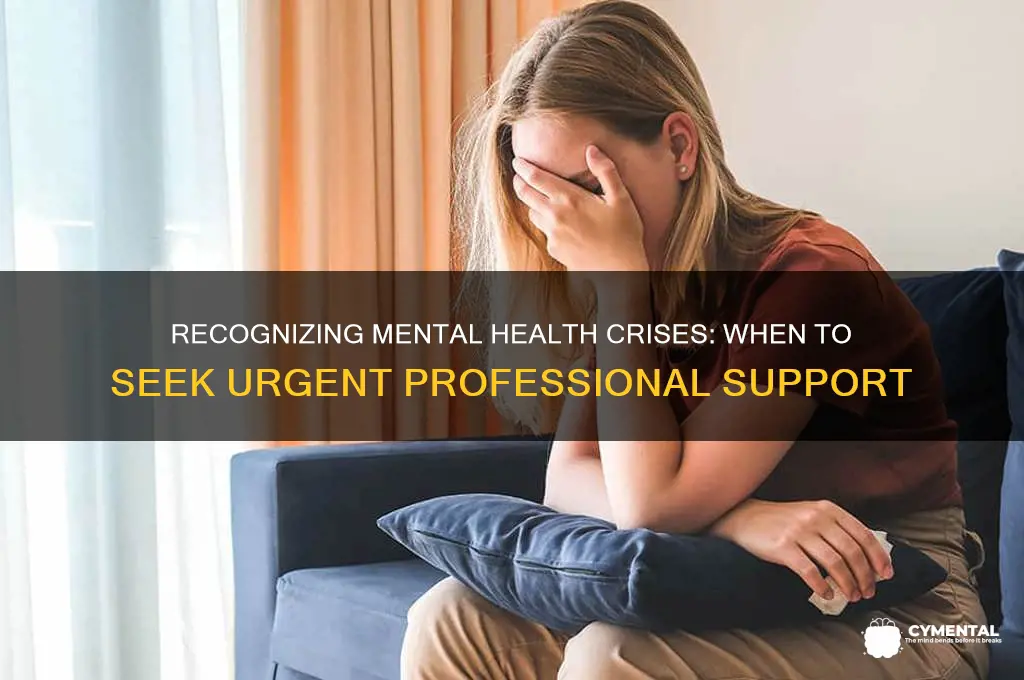
Recognizing when to seek immediate help for mental illness is crucial, as timely intervention can prevent worsening symptoms and potential crises. If you or someone you know is experiencing severe symptoms such as suicidal thoughts, self-harm, hallucinations, delusions, or an inability to function in daily life, it is essential to seek emergency assistance. Additionally, sudden changes in behavior, extreme mood swings, or signs of psychosis warrant urgent attention. Mental health emergencies should be treated with the same urgency as physical health crises, and resources like crisis hotlines, emergency rooms, or mental health professionals can provide immediate support and guidance. Early action can save lives and pave the way for effective treatment and recovery.
Explore related products


What You'll Learn

Severe suicidal thoughts or plans
Suicidal thoughts are a medical emergency, demanding immediate action. If you or someone you know is experiencing severe suicidal thoughts or has a plan to end their life, call emergency services (911 in the U.S.) or a suicide hotline (988 in the U.S.) without delay. Time is critical, and professional intervention can save lives.
The presence of a specific plan—such as acquiring means (e.g., pills, weapons) or setting a date—significantly increases the risk of a suicide attempt. Unlike passive thoughts like "I wish I weren’t here," severe suicidal ideation involves active planning and intent. For instance, statements like "I’ve decided how I’ll do it" or "I’ve written a goodbye note" are red flags requiring urgent attention.
Children and adolescents may express suicidal intent differently than adults. Warning signs in younger individuals include sudden changes in behavior (e.g., giving away prized possessions), increased isolation, or explicit statements like "No one will miss me." In older adults, risk factors include recent loss, chronic illness, or access to firearms. Regardless of age, any mention of a suicide plan warrants immediate professional intervention.
While waiting for emergency help, ensure the person’s environment is safe by removing potential means of self-harm, such as medications, sharp objects, or firearms. Stay with the individual, listen without judgment, and validate their feelings. Avoid arguments or dismissive statements like "Things could be worse." Instead, focus on connecting them to crisis resources, such as the National Suicide Prevention Lifeline or a local mental health professional.
The aftermath of a suicide attempt or severe crisis requires ongoing support. Encourage the individual to engage in long-term treatment, such as therapy or medication, and help them build a safety plan. This plan might include identifying triggers, listing coping strategies, and designating emergency contacts. Remember, severe suicidal thoughts are a symptom of extreme distress, not a character flaw, and recovery is possible with timely and compassionate care.
Is Mental Health Care Free? Exploring Access and Affordability
You may want to see also
Explore related products


$15.49 $29.99


Hallucinations or delusions
Hallucinations and delusions are red flags that demand immediate attention, signaling a potential break from reality that can escalate quickly. These symptoms often indicate severe mental health conditions like schizophrenia, bipolar disorder, or severe depression with psychotic features. Unlike fleeting moments of imagination or daydreaming, hallucinations involve sensing things that aren’t there—hearing voices, seeing visions, or feeling touch without a physical source. Delusions, on the other hand, are unshakable false beliefs, such as thinking one is being persecuted or possesses extraordinary abilities. If you or someone you know experiences these symptoms, especially if they cause distress or impair daily functioning, seek emergency psychiatric care. Delaying intervention risks worsening symptoms, self-harm, or harm to others.
Consider the case of a 28-year-old woman who began hearing voices commanding her to harm herself. Her family initially dismissed it as stress, but within weeks, she developed delusions of being monitored by the government. This progression illustrates how untreated psychosis can spiral. Immediate steps include contacting a crisis hotline, visiting an emergency room, or consulting a psychiatrist. Medications like antipsychotics (e.g., olanzapine or risperidone) are often prescribed to stabilize symptoms, but dosage and type must be tailored by a professional. Family or friends should remain calm, avoid arguing about the delusions, and focus on expressing support while urging professional help.
From a comparative perspective, hallucinations and delusions differ from other mental health symptoms like anxiety or mood swings in their direct link to psychosis. While anxiety might distort thoughts, it rarely creates entirely fabricated sensory experiences. Similarly, mood swings in bipolar disorder are distinct from the fixed, irrational beliefs of delusions. This distinction underscores why these symptoms require urgent, specialized care. Early intervention, such as through programs like Early Psychosis Intervention (EPI), can significantly improve long-term outcomes by preventing the deterioration of cognitive and social functioning.
Practically, recognizing these symptoms in others can be challenging, especially if the individual is high-functioning or secretive. Look for indirect signs: sudden social withdrawal, erratic behavior, or unexplained fearfulness. For instance, a college student who stops attending classes, claims classmates are plotting against them, and talks to unseen entities needs immediate help. If you’re unsure, err on the side of caution. Use resources like the Psychosis Screening Test or consult a mental health professional for guidance. Remember, addressing hallucinations or delusions promptly isn’t just about managing symptoms—it’s about reclaiming a life disrupted by a distorted reality.
Accessing Mental Health Support: A Guide for Syrians in Crisis
You may want to see also
Explore related products


Inability to perform daily tasks
One of the most alarming signs that immediate mental health intervention is necessary is when an individual struggles to perform basic daily tasks. These tasks, often taken for granted, include personal hygiene, meal preparation, and maintaining a clean living space. For instance, someone who previously showered daily might go days without bathing, or a person who once cooked balanced meals might rely solely on takeout or skip meals altogether. This decline in functionality can be a red flag, signaling that mental health issues have reached a critical point.
Consider the case of a 28-year-old professional who begins missing deadlines at work, not because of laziness, but because they cannot summon the energy to open their laptop. This inability to engage in routine activities is not merely a matter of motivation; it often stems from overwhelming anxiety, depression, or other mental health conditions. When such symptoms persist for more than two weeks, it’s crucial to seek professional help. Ignoring these signs can lead to further deterioration, making recovery more challenging.
From a practical standpoint, here’s a step-by-step approach to address this issue: First, acknowledge the problem without self-judgment. Second, enlist the help of a trusted friend or family member to assist with tasks temporarily. Third, contact a mental health professional—a therapist, psychiatrist, or crisis hotline—to develop a treatment plan. For severe cases, inpatient care might be necessary to stabilize the individual. Finally, incorporate small, manageable goals into daily routines, such as setting a timer for 10 minutes to tidy up or using meal prep services to ensure nutrition.
Comparatively, while occasional difficulty with daily tasks is normal during stressful periods, a persistent inability to function is distinct. For example, a college student might procrastinate on assignments during exam week, but someone with untreated depression might abandon their studies entirely. The key difference lies in duration and intensity. Mental health crises often manifest as a complete breakdown in routine, whereas temporary stress affects productivity in a more fluctuating manner.
In conclusion, the inability to perform daily tasks is a critical indicator that mental health has reached a breaking point. It requires immediate attention, not just for the individual’s well-being but also to prevent long-term consequences. By recognizing the signs, taking proactive steps, and seeking professional help, recovery becomes a more attainable goal. Remember, asking for help is not a sign of weakness but a courageous step toward healing.
Can CES Therapy Alleviate Symptoms of Mental Health Disorders?
You may want to see also
Explore related products




![healblend 10 in 1 Immune Support Supplement Booster with Elderberry, Zinc, Echinacea, Turmeric, Lactobacillus Acidophilus, for Adults [120 Capsules]](https://m.media-amazon.com/images/I/71U7ywpCSFL._AC_UL320_.jpg)

Severe panic attacks or anxiety
Severe panic attacks can feel like a heart attack, complete with chest pain, shortness of breath, and a sense of impending doom. Unlike general anxiety, which may simmer in the background, panic attacks are acute episodes of intense fear that peak within minutes. If you or someone you know experiences recurring panic attacks—especially if they’re accompanied by avoidance behaviors, such as refusing to leave the house or isolating from others—immediate professional intervention is critical. Untreated panic disorder can lead to complications like agoraphobia or substance abuse as individuals self-medicate to cope.
Recognizing the signs of a severe panic attack is the first step toward seeking help. Symptoms often include rapid heartbeat, trembling, sweating, and a feeling of detachment from reality. If these episodes occur frequently (e.g., multiple times a week) or last longer than 10 minutes, they’re considered severe. Additionally, if the fear of having another attack begins to dominate daily life, it’s a red flag. In such cases, emergency care may be warranted, particularly if the individual expresses suicidal thoughts or feels unable to manage their distress.
For immediate relief during a panic attack, grounding techniques can help. Try the 5-4-3-2-1 method: identify five things you can see, four you can touch, three you can hear, two you can smell, and one you can taste. However, these are temporary fixes. Long-term management requires professional treatment, such as cognitive-behavioral therapy (CBT) or medications like SSRIs (e.g., sertraline 50–200 mg/day) or benzodiazepines (e.g., alprazolam 0.25–2 mg/day, though these are typically prescribed for short-term use due to dependency risks). A mental health professional can tailor a treatment plan to address the root causes of the panic disorder.
Comparing panic attacks to everyday stress highlights their severity. While stress might make you feel overwhelmed, a panic attack is a physiological event that can mimic life-threatening conditions. This distinction is crucial because it underscores the need for urgent care. Waiting to seek help can exacerbate the condition, making recovery more challenging. For instance, a 30-year-old with untreated panic disorder may develop chronic health issues like hypertension or gastrointestinal problems due to prolonged stress responses.
In conclusion, severe panic attacks are not just "bad nerves"—they’re a medical emergency when they disrupt daily functioning or lead to self-harm risks. Immediate steps include contacting a crisis hotline, visiting an emergency room, or scheduling an urgent appointment with a psychiatrist. Remember, acknowledging the problem is a sign of strength, not weakness. With the right support, individuals can regain control and reduce the frequency and intensity of panic attacks, improving their overall quality of life.
Conversing with Strangers: Unlocking Mental Health Benefits and Social Growth
You may want to see also
Explore related products


Self-harm or harm to others
Self-harm, whether directed inward or outward, is a critical red flag that demands immediate intervention. Cutting, burning, or hitting oneself are overt signs, but self-harm can also manifest subtly—skipping meals, refusing necessary medication, or engaging in reckless behaviors like unsafe sex or substance abuse. These actions often stem from an inability to cope with emotional pain, and they escalate the risk of accidental death or long-term physical damage. For instance, repeated cutting can lead to nerve damage, infection, or severe blood loss, while disordered eating can cause organ failure. If you or someone you know is self-harming, contact a crisis hotline, such as the National Suicide Prevention Lifeline (988), or seek emergency medical attention immediately.
Harm to others is equally urgent, though it often triggers fear or stigma rather than empathy. Threats of violence, especially when specific (e.g., "I’m going to hurt my ex-partner") or accompanied by access to weapons, require immediate action. In children and adolescents, aggressive behavior like frequent physical fights, cruelty to animals, or fire-setting can signal underlying mental health issues such as conduct disorder or emerging psychosis. Adults exhibiting sudden changes in behavior—increased agitation, paranoid delusions, or fixation on violent themes—may be experiencing a psychotic break. In these cases, call 911 or local emergency services, and if possible, remove any weapons or dangerous objects from the environment. Do not attempt to confront the individual alone; prioritize safety for all involved.
The line between self-harm and harm to others can blur, particularly in cases of psychosis or severe mood disorders. For example, someone experiencing command hallucinations may feel compelled to harm themselves or someone else, believing it’s a directive from an external force. This intersection requires specialized care, often involving psychiatric hospitalization to stabilize symptoms and adjust medication. If you suspect someone is experiencing such symptoms, document their behavior (e.g., "They said they heard voices telling them to hurt their child") and relay this to mental health professionals. Early intervention can prevent tragedy and provide a pathway to recovery.
Practical steps for immediate support include creating a safe environment by removing sharp objects, medications, or weapons. Use calm, non-judgmental language to express concern and offer to accompany the individual to an emergency room or crisis center. For those hesitant to seek help, emphasize that self-harm or violent urges are treatable symptoms, not moral failings. Apps like Crisis Text Line (text HOME to 741741) can provide real-time support while en route to care. Remember, acting swiftly not only saves lives but also opens the door to long-term healing through therapy, medication, and community support.
Can Cannabis Break Mental Ruts? Exploring Weed's Role in Mindset Shifts
You may want to see also
Frequently asked questions
Seek immediate help if you experience severe symptoms like suicidal thoughts, self-harm urges, hallucinations, delusions, inability to care for yourself, or extreme agitation. These are signs of a crisis that need urgent attention.
If you’re having suicidal thoughts, call a suicide hotline (e.g., 988 in the U.S.), reach out to a trusted person, or go to the nearest emergency room immediately. Do not wait—your life is worth saving.
Seek emergency help if someone is expressing suicidal or homicidal intent, is severely disoriented, or is in danger of harming themselves or others. Call 911 or a crisis hotline for assistance.
No, therapy is not immediate care. If you’re in crisis, go to the emergency room, call a crisis hotline, or contact a mobile crisis team for urgent support before seeking long-term treatment.