Lucas Bennett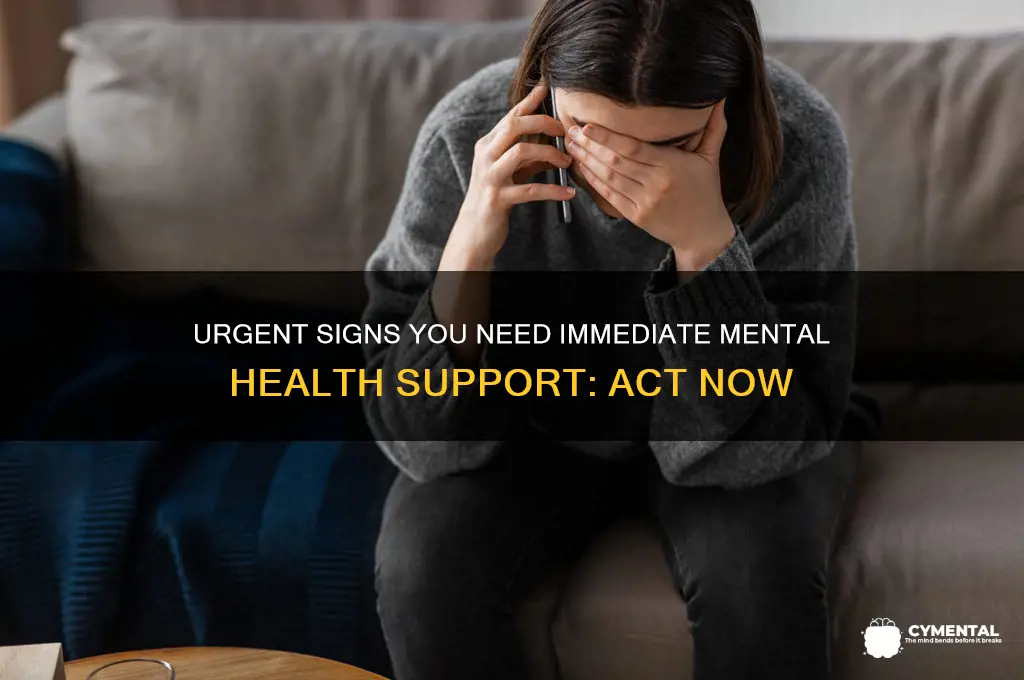
Recognizing when to seek mental health help immediately is crucial for preventing crises and ensuring well-being. Immediate intervention is necessary if someone is experiencing suicidal thoughts, self-harm tendencies, or severe panic attacks that impair functioning. Other red flags include sudden, intense mood swings, hallucinations, or delusions, which may indicate a psychotic episode. Additionally, if an individual is unable to perform daily activities, expresses extreme hopelessness, or poses a danger to themselves or others, professional help should be sought without delay. Ignoring these signs can lead to worsening conditions, making timely action essential for recovery and safety.
Explore related products


What You'll Learn
- Suicidal Thoughts or Plans: Immediate help is crucial if experiencing persistent suicidal ideation or self-harm urges
- Severe Anxiety or Panic: Uncontrollable panic attacks, constant fear, or inability to function require urgent intervention
- Psychotic Symptoms: Hallucinations, delusions, or detachment from reality warrant immediate professional attention
- Severe Depression: Persistent hopelessness, inability to eat/sleep, or withdrawal from life need urgent care
- Substance Abuse Crisis: Overdose risk, withdrawal symptoms, or uncontrollable addiction demand immediate mental health support

Suicidal Thoughts or Plans: Immediate help is crucial if experiencing persistent suicidal ideation or self-harm urges
Suicidal thoughts are a mental health emergency, demanding immediate attention. Unlike fleeting moments of despair, persistent suicidal ideation—recurring thoughts of ending one’s life—or concrete plans to self-harm signal a critical breakdown in coping mechanisms. These thoughts are not a sign of weakness but a symptom of severe distress, often rooted in untreated depression, anxiety, trauma, or other mental health conditions. Ignoring them can lead to irreversible consequences, making urgent intervention non-negotiable.
Recognizing the signs is the first step. Warning signs include preoccupation with death, giving away possessions, sudden mood shifts, or expressing feelings of hopelessness. If you or someone you know exhibits these behaviors, act swiftly. Contact emergency services (e.g., 911 in the U.S.), a local crisis hotline (like the 988 Suicide & Crisis Lifeline), or a trusted mental health professional. Do not leave the person alone until help arrives. Practical steps include removing access to potential means of self-harm, such as medications, weapons, or sharp objects, and staying calm while offering reassurance.
Comparing suicidal ideation to other mental health concerns highlights its urgency. While anxiety or mild depression may allow time for scheduled therapy appointments, suicidal thoughts require immediate crisis intervention. Think of it as the difference between treating a chronic condition and responding to a heart attack—both are serious, but one demands instant action. Delaying help in these situations can be fatal, underscoring the need for a rapid, decisive response.
Finally, seeking help is not a failure but a courageous act of self-preservation. Many fear judgment or stigma, but mental health professionals are trained to provide compassionate, nonjudgmental support. Treatment may include hospitalization for stabilization, medication to address underlying conditions, and therapy to develop coping strategies. For example, cognitive-behavioral therapy (CBT) has proven effective in reframing negative thought patterns, while dialectical behavior therapy (DBT) focuses on emotion regulation and distress tolerance. Remember: reaching out saves lives, and recovery is possible with the right support.
Seeking Support: How to Approach Teachers About Mental Health Concerns
You may want to see also
Explore related products


$10.99 $28.99


Severe Anxiety or Panic: Uncontrollable panic attacks, constant fear, or inability to function require urgent intervention
Uncontrollable panic attacks aren’t just moments of discomfort—they’re full-body alarms signaling that your nervous system is in overdrive. Unlike fleeting stress, these episodes often include heart palpitations, shortness of breath, dizziness, and an overwhelming sense of doom. When they occur repeatedly, without an obvious trigger, or last longer than 10 minutes, they cease to be isolated incidents and become a red flag. The body’s fight-or-flight response, designed for survival, is hijacking daily life. If you’re experiencing this, it’s not "just anxiety"—it’s a crisis demanding immediate attention.
Consider the case of a 28-year-old professional who began avoiding elevators, highways, and crowded spaces after recurrent panic attacks left her paralyzed with fear. Her inability to function at work or maintain relationships wasn’t a character flaw; it was a symptom of untreated severe anxiety. This isn’t uncommon. Research shows that untreated panic disorder can lead to agoraphobia in up to 30% of cases. The takeaway? Persistent panic attacks aren’t something to "tough out." They’re a medical emergency in slow motion, eroding mental and physical health if ignored.
Here’s a practical framework for action: First, track your symptoms. Note the frequency, duration, and triggers of panic attacks. Second, seek immediate help if attacks occur multiple times a week, last longer than 15 minutes, or are accompanied by chest pain or fainting. Third, contact a mental health professional or visit an urgent care clinic. Short-term interventions like benzodiazepines (e.g., 0.5–1 mg of lorazepam, as prescribed) can provide rapid relief, but they’re not a long-term solution. Cognitive-behavioral therapy (CBT) and selective serotonin reuptake inhibitors (SSRIs) are evidence-based treatments for sustained recovery.
Comparing severe anxiety to physical illnesses can help normalize the urgency. Just as you’d seek immediate care for unrelenting chest pain, uncontrollable panic warrants the same response. The brain, like any organ, can malfunction, and panic attacks are its distress signal. Delaying treatment risks complications like depression, substance abuse, or even cardiovascular issues. Prioritize your mental health with the same vigilance you’d apply to physical symptoms—your well-being depends on it.
Finally, a descriptive note: Severe anxiety isn’t just "feeling stressed." It’s a relentless storm of fear that clouds judgment, drains energy, and isolates you from the world. Imagine being trapped in a maze where every turn feels like a dead end, and every breath is a battle. This isn’t living—it’s surviving. Urgent intervention isn’t a sign of weakness; it’s a lifeline. Reach out, because the first step toward reclaiming your life starts with acknowledging the severity of what you’re experiencing.
Physical Education: A Powerful Tool for Boosting Mental Well-being
You may want to see also
Explore related products


Psychotic Symptoms: Hallucinations, delusions, or detachment from reality warrant immediate professional attention
Psychotic symptoms are not merely plot devices in thrillers; they are urgent red flags demanding immediate intervention. Hallucinations—seeing, hearing, or feeling things that aren’t there—and delusions—fixed, false beliefs resistant to reason—signal a profound disconnection from reality. Unlike fleeting stress-induced paranoia or daydreams, these experiences persist, intensify, and disrupt daily functioning. For instance, a person hearing commanding voices or believing they’re being persecuted requires urgent psychiatric evaluation. Ignoring these symptoms risks self-harm, harm to others, or a spiraling psychotic episode.
Consider the case of a 24-year-old college student who begins insisting the government is monitoring him through his phone, despite no evidence. His sleep deteriorates, he stops attending classes, and he isolates himself. This isn’t a phase—it’s a psychotic break. Early intervention, such as antipsychotic medication (e.g., olanzapine 5–20 mg/day) paired with cognitive-behavioral therapy, can stabilize symptoms and prevent long-term impairment. Delaying treatment increases the risk of chronic conditions like schizophrenia, where recovery becomes exponentially harder.
Detachment from reality, often termed dissociation, manifests as feeling "outside oneself" or experiencing memory lapses for everyday events. While mild dissociation can occur under stress, severe forms—such as depersonalization disorder—warrant immediate care. A 35-year-old mother who suddenly feels her body isn’t her own and struggles to recognize her children isn’t merely exhausted; she’s in crisis. Grounding techniques (e.g., holding ice, naming five objects in a room) can temporarily help, but professional assessment is non-negotiable.
Here’s a practical tip: if you notice someone exhibiting these symptoms, approach calmly, avoid dismissing their experiences, and encourage professional help. Say, *"I’m concerned about what you’re going through—let’s find someone who can help make sense of this together."* Avoid arguing about their perceptions, as this can escalate distress. Instead, contact a crisis hotline (e.g., 988 in the U.S.) or accompany them to an emergency room.
The takeaway is clear: psychotic symptoms are medical emergencies, not moral failings or personal weaknesses. Untreated, they can shatter lives. Yet, with swift action—medication, therapy, and support—most individuals regain stability. Recognizing these signs isn’t about labeling someone "crazy"; it’s about offering a lifeline before the gap between perception and reality becomes unbridgeable.
Paws in the Classroom: Pets Boosting Student Mental Health
You may want to see also
Explore related products


Severe Depression: Persistent hopelessness, inability to eat/sleep, or withdrawal from life need urgent care
Persistent feelings of hopelessness, a pervasive inability to engage in basic self-care, and a complete withdrawal from life’s activities are not merely signs of a bad day—they are red flags signaling severe depression that demands immediate attention. Unlike fleeting sadness or temporary disinterest, these symptoms represent a profound disruption to one’s ability to function, often accompanied by a sense of being trapped in an unescapable void. Recognizing these signs early can be the difference between prolonged suffering and timely intervention. If you or someone you know is experiencing these symptoms, it’s critical to act swiftly, as untreated severe depression can lead to life-threatening consequences, including self-harm or suicidal ideation.
Consider the case of a 28-year-old professional who, after months of feeling overwhelmed at work, began skipping meals, sleeping only a few hours a night, and isolating themselves from friends and family. What started as manageable stress spiraled into a state where they could no longer leave their apartment or even respond to texts. This example illustrates how severe depression can manifest in seemingly high-functioning individuals, often going unnoticed until it reaches a crisis point. The inability to eat or sleep isn’t just about physical discomfort—it’s a symptom of a brain in distress, signaling that the body’s most basic survival mechanisms are being compromised.
From a practical standpoint, here’s what to do if you suspect severe depression in yourself or someone else: first, contact a mental health professional immediately. Many clinics offer emergency appointments for acute cases. If access to a therapist is delayed, visit an urgent care center or emergency room, where medical staff can assess the risk of self-harm and provide stabilization. Second, create a supportive environment by encouraging small, manageable tasks, such as taking a short walk or eating a nutritious snack. Avoid minimizing their experience with phrases like “it’s all in your head”—instead, validate their feelings and emphasize that help is available. Finally, monitor for signs of suicidal intent, such as giving away possessions or sudden calmness after a period of despair, and call emergency services if these occur.
Comparatively, mild or moderate depression may involve occasional sadness or reduced motivation, but severe depression is characterized by its unrelenting nature and its interference with survival instincts. While someone with milder symptoms might still find joy in hobbies or social interactions, a severely depressed individual often feels completely detached from life, as if they’re watching their existence from behind a glass wall. This distinction is crucial, as it underscores why severe depression requires urgent, often intensive treatment, such as hospitalization, medication, or electroconvulsive therapy (ECT), rather than the talk therapy or lifestyle adjustments typically recommended for less acute cases.
The takeaway is clear: severe depression is not a condition that resolves on its own or with mere willpower. It’s a medical emergency that requires immediate, professional intervention. By understanding the specific symptoms—persistent hopelessness, inability to eat or sleep, and withdrawal from life—you can act decisively to prevent long-term damage or tragedy. Remember, seeking help is not a sign of weakness but a courageous step toward reclaiming a life worth living.
Accessing Kaiser Mental Health Support: A Step-by-Step Guide
You may want to see also
Explore related products



Substance Abuse Crisis: Overdose risk, withdrawal symptoms, or uncontrollable addiction demand immediate mental health support
Substance abuse crises often escalate silently, with individuals underestimating the severity of their situation until it’s too late. Overdose risk is a stark reality for anyone misusing opioids, benzodiazepines, or alcohol, where even a slight increase in dosage—say, from 20 mg to 30 mg of oxycodone—can depress respiratory function fatally. Withdrawal symptoms, such as seizures from abrupt alcohol cessation or delirium tremens, are equally dangerous, requiring medical supervision to manage safely. Uncontrollable addiction, marked by compulsive use despite adverse consequences, signals a brain hijacked by substances, demanding immediate intervention. Ignoring these red flags can lead to irreversible damage or death, making timely mental health support not just beneficial but critical.
Consider the case of a 28-year-old struggling with heroin addiction. Despite repeated attempts to quit, withdrawal symptoms—muscle aches, insomnia, and intense cravings—drive them back to use. This cycle increases their tolerance, pushing them closer to a lethal overdose. Immediate mental health support, such as medication-assisted treatment (MAT) with buprenorphine or methadone, coupled with therapy, can break this cycle. MAT reduces cravings and withdrawal symptoms, while counseling addresses underlying psychological triggers. Delaying treatment in such cases isn’t just unwise—it’s life-threatening.
For those witnessing a loved one’s struggle, recognizing the signs of a substance abuse crisis is crucial. Behavioral changes like secrecy, financial instability, or neglect of responsibilities often accompany physical symptoms such as slurred speech, pinpoint pupils, or sudden weight loss. If overdose risk is suspected—for instance, if someone is unresponsive with slow breathing after consuming opioids—administer naloxone immediately and call emergency services. Withdrawal symptoms like tremors or hallucinations in alcoholics require urgent medical attention to prevent complications. Practical steps include keeping naloxone kits at home, knowing the location of the nearest emergency room, and encouraging professional intervention without judgment.
The argument for immediate mental health support in substance abuse crises is not just ethical but empirical. Studies show that early intervention reduces mortality rates by up to 50% in opioid users and significantly improves long-term recovery outcomes. Dual diagnosis treatment, addressing both addiction and co-occurring mental health disorders like depression or anxiety, is particularly effective. For instance, a 35-year-old with alcohol addiction and PTSD benefits from trauma-focused therapy alongside MAT, addressing both the addiction and its root cause. Delaying such comprehensive care risks deepening the crisis, making it harder to treat.
Finally, societal stigma often prevents individuals from seeking help, but the urgency of a substance abuse crisis overrides such barriers. If you or someone you know is at risk of overdose, experiencing severe withdrawal, or trapped in uncontrollable addiction, immediate action is non-negotiable. Contact local crisis hotlines, visit an emergency room, or reach out to addiction specialists. Remember, addiction is a treatable condition, and timely intervention can save lives. The first step is acknowledging the crisis—the next is acting on it.
Mental Illness Diagnosis: A Lifeline or a Label?
You may want to see also
Frequently asked questions
Seek immediate help if you experience severe symptoms like suicidal thoughts, self-harm urges, hallucinations, delusions, or an inability to care for yourself. Additionally, if you’re in a crisis or feel completely overwhelmed and unable to cope, don’t hesitate to reach out.
Look for sudden changes in behavior, such as extreme agitation, withdrawal, talking about death or suicide, or giving away possessions. If they seem unable to function or express feelings of hopelessness, encourage them to seek help or contact a crisis hotline for guidance.
Yes, if you or someone else is in immediate danger due to mental health symptoms, such as suicidal behavior, severe panic attacks, or psychosis, go to the emergency room or call emergency services. They can provide urgent care and stabilize the situation.
Immediate resources include crisis hotlines (e.g., 988 in the U.S.), emergency rooms, and mobile crisis teams. You can also contact a mental health professional or use telehealth services for urgent consultations. Don’t wait if you’re in distress—help is available.