Madison Cole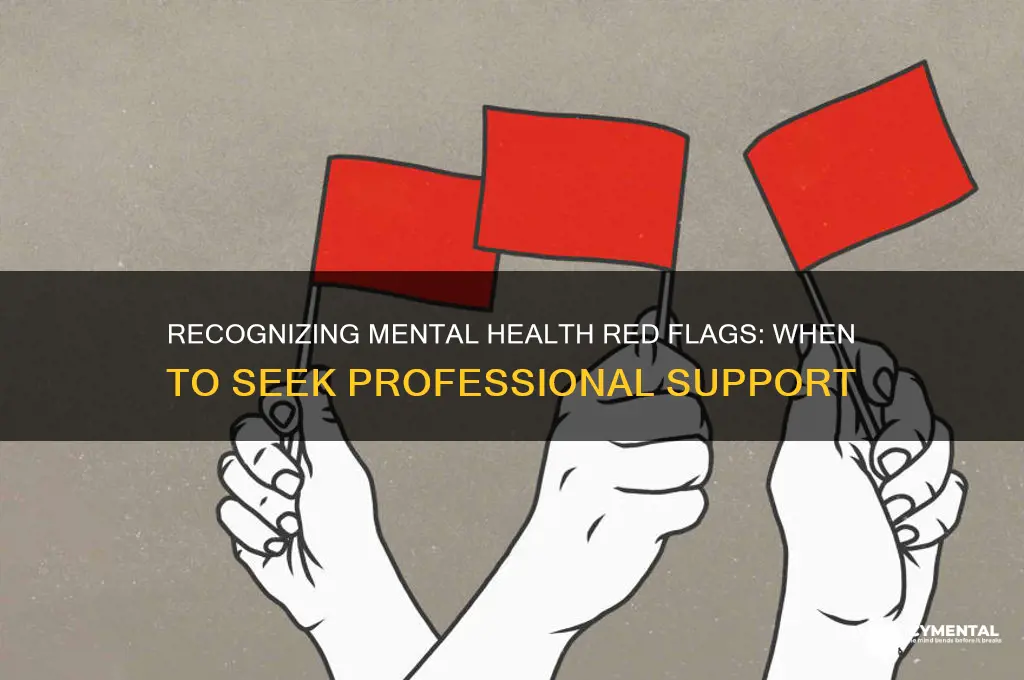
Recognizing when to seek professional help for mental health signs is crucial for overall well-being, as early intervention can significantly improve outcomes. While it’s normal to experience occasional stress, sadness, or anxiety, persistent or worsening symptoms such as prolonged feelings of hopelessness, severe mood swings, difficulty functioning in daily life, or thoughts of self-harm warrant immediate attention. Other red flags include changes in sleep or appetite, withdrawal from social activities, or unexplained physical ailments. If these signs interfere with relationships, work, or personal goals, consulting a mental health professional—such as a therapist, counselor, or psychiatrist—can provide essential support, diagnosis, and treatment tailored to individual needs. Seeking help is a sign of strength and a vital step toward recovery and resilience.
Explore related products


$93.5 $100.95


What You'll Learn
- Persistent sadness or hopelessness lasting more than two weeks
- Sudden changes in behavior, mood, or personality without clear cause
- Thoughts of self-harm or suicide, even fleeting or infrequent
- Inability to perform daily tasks due to anxiety or stress
- Physical symptoms like headaches, fatigue, or pain tied to emotional distress

Persistent sadness or hopelessness lasting more than two weeks
Persistent sadness or hopelessness that lingers for more than two weeks is a red flag that should not be ignored. This duration is significant because it distinguishes fleeting emotional responses from potential clinical depression. While it’s normal to feel down after a setback or loss, prolonged feelings of despair can interfere with daily functioning, relationships, and overall well-being. Recognizing this timeline is the first step in determining whether professional intervention is necessary.
Consider the following scenario: A 28-year-old professional notices they’ve been struggling to get out of bed for three weeks, despite having a job they once enjoyed. They find themselves withdrawing from friends, losing interest in hobbies, and constantly feeling overwhelmed by a sense of futility. This isn’t just a "bad week" or "winter blues"—it’s a pattern that aligns with the criteria for seeking help. The two-week marker serves as a practical threshold to differentiate between transient mood fluctuations and symptoms that warrant clinical attention.
Analytically, this symptom often overlaps with other indicators of depression, such as changes in appetite, sleep disturbances, and difficulty concentrating. However, its persistence is particularly telling. For instance, a study published in the *Journal of Affective Disorders* highlights that individuals experiencing sadness lasting beyond two weeks are three times more likely to meet the diagnostic criteria for major depressive disorder. This underscores the importance of not dismissing prolonged emotional distress as mere "moodiness."
From a practical standpoint, here’s what to do if you or someone you know is experiencing this: Step 1: Track the duration of the sadness or hopelessness. Use a journal or a mental health app to log daily emotions. Step 2: Assess its impact on daily life—is it affecting work, relationships, or self-care? Step 3: Reach out to a mental health professional, such as a therapist or psychiatrist, who can provide a thorough evaluation. Caution: Avoid self-diagnosis or relying solely on online quizzes. While they can be informative, they are not substitutes for professional assessment.
Persuasively, ignoring persistent sadness can lead to worsening symptoms, including suicidal ideation or physical health deterioration. Early intervention, such as cognitive-behavioral therapy (CBT) or medication, can prevent the condition from escalating. For example, selective serotonin reuptake inhibitors (SSRIs) are commonly prescribed for depression, but they require 4–6 weeks to take full effect, emphasizing the need for timely action. Delaying treatment not only prolongs suffering but also reduces the effectiveness of interventions.
In conclusion, persistent sadness or hopelessness lasting more than two weeks is a critical signal to seek professional help. It’s not a sign of weakness but a call to action. By recognizing this timeline, understanding its implications, and taking proactive steps, individuals can address underlying mental health issues before they become debilitating. Remember, reaching out for help is a courageous step toward reclaiming emotional well-being.
Planting Vegetables: Cultivating Mental Well-being Through Gardening
You may want to see also
Explore related products


Sudden changes in behavior, mood, or personality without clear cause
Sudden, unexplained shifts in behavior, mood, or personality can be alarming, often signaling an underlying mental health issue that requires attention. These changes might manifest as a once-sociable person withdrawing from friends, an uncharacteristically irritable demeanor, or a sudden lack of interest in previously enjoyed activities. While occasional mood fluctuations are normal, persistent or drastic alterations without an obvious trigger—such as a major life event—warrant concern. Recognizing these signs early is crucial, as they may indicate conditions like depression, anxiety, bipolar disorder, or even psychosis, which are more manageable when addressed promptly.
Consider a hypothetical scenario: a 28-year-old professional who transitions from being highly organized and outgoing to becoming forgetful, reclusive, and tearful over a few weeks. Colleagues and family members might initially attribute this to stress, but if the behavior persists or intensifies, it’s essential to encourage professional intervention. Mental health professionals often assess such cases by ruling out external factors like substance use, medical conditions, or recent trauma. If no clear cause emerges, a comprehensive evaluation, including psychological testing and interviews, can help diagnose the issue accurately.
From a practical standpoint, knowing when to act is as important as recognizing the signs. If sudden changes last for two weeks or more, interfere with daily functioning, or pose a risk to safety (e.g., self-harm ideation), seeking help is non-negotiable. For adolescents and young adults, whose brains are still developing, such changes can be particularly concerning, as they may indicate emerging disorders like schizophrenia or borderline personality disorder. Parents, partners, or friends should approach the individual with empathy, expressing concern without judgment, and suggest professional support as a collaborative step toward understanding and improvement.
Comparatively, while physical health emergencies like chest pain prompt immediate action, mental health crises are often downplayed or misunderstood. Yet, untreated mental health issues can escalate, leading to severe consequences like chronic illness, relationship breakdowns, or even suicidal behavior. Just as one wouldn’t ignore persistent physical symptoms, sudden behavioral changes demand the same urgency. Scheduling an appointment with a therapist, psychiatrist, or primary care physician is a proactive first step. Telehealth platforms also offer accessible options for those hesitant to seek in-person help.
In conclusion, sudden changes in behavior, mood, or personality without a clear cause are not to be dismissed as fleeting quirks. They are red flags that, when heeded, can prevent the progression of serious mental health conditions. By staying vigilant, fostering open communication, and prioritizing timely intervention, individuals and their support networks can navigate these challenges effectively, ensuring a path toward recovery and well-being.
Sea Moss Gel: A Natural Boost for Mental Health?
You may want to see also
Explore related products


Thoughts of self-harm or suicide, even fleeting or infrequent
Experiencing thoughts of self-harm or suicide, even if they feel fleeting or infrequent, is a critical signal that professional intervention is necessary. These thoughts, no matter how transient, indicate underlying distress that requires immediate attention. Ignoring them can lead to escalation, as they often reflect deeper issues such as depression, anxiety, or trauma. Recognizing this sign early and seeking help is not a sign of weakness but a proactive step toward recovery and safety.
Analyzing the nature of these thoughts reveals their complexity. Fleeting suicidal ideation might seem harmless, but it can be a precursor to more persistent or intense urges. For instance, research shows that individuals who experience passive suicidal thoughts (e.g., "I wish I wasn’t here") are at higher risk of developing active plans over time. Similarly, self-harm ideation, even without immediate intent, often serves as a maladaptive coping mechanism for emotional pain. Understanding this progression underscores the urgency of addressing these thoughts before they solidify into dangerous behaviors.
If you or someone you know is grappling with these thoughts, taking specific steps can mitigate risk and foster support. First, contact a mental health professional or crisis hotline immediately. In the U.S., the 988 Suicide & Crisis Lifeline provides 24/7 assistance. Second, remove access to potential means of self-harm, such as sharp objects or medications, as a temporary safety measure. Third, confide in a trusted friend or family member who can provide accountability and emotional support. These actions create a safety net while professional help is being arranged.
Comparing the approach to physical health emergencies highlights the importance of swift action. Just as chest pain warrants an immediate call to emergency services, thoughts of self-harm or suicide demand urgent mental health intervention. Delaying care in either case can have irreversible consequences. This parallel emphasizes that mental health crises are equally valid and life-threatening, deserving the same level of priority and response.
Finally, seeking professional help for these thoughts often involves a combination of therapy and, in some cases, medication. Cognitive-behavioral therapy (CBT) is particularly effective in addressing suicidal ideation and self-harm by challenging negative thought patterns and building healthier coping strategies. Medications like antidepressants may be prescribed to stabilize mood, though their effects can take 4–6 weeks to manifest. Practical tips include maintaining a structured daily routine, engaging in physical activity, and practicing mindfulness to reduce emotional overwhelm. Remember, acknowledging these thoughts and seeking help is a courageous act that can save lives.
Alcohol and Mental Health: Unraveling the Myth of Relief
You may want to see also
Explore related products


Inability to perform daily tasks due to anxiety or stress
Anxiety and stress can manifest in ways that subtly erode your ability to function, often before you realize the extent of their impact. For instance, tasks that once felt routine—like answering emails, grocery shopping, or even showering—may now feel insurmountable. This isn’t merely about feeling overwhelmed; it’s about a persistent inability to complete these tasks despite understanding their importance. When this pattern lasts for two weeks or more, it’s a clear signal that professional intervention may be necessary. Ignoring this sign can lead to a downward spiral, where unfinished tasks compound stress, creating a cycle that further impairs daily life.
Consider the mechanics of this impairment: anxiety and stress hijack your prefrontal cortex, the brain region responsible for decision-making and task execution. Studies show that chronic stress reduces cognitive flexibility, making it harder to switch between tasks or adapt to changes. For example, a 30-year-old professional might find themselves staring at a blank screen for hours, unable to start a report despite knowing the deadline. This isn’t laziness or lack of motivation; it’s a physiological response to prolonged stress. Practical steps to mitigate this include breaking tasks into smaller, manageable chunks (e.g., writing one paragraph instead of an entire report) and setting timers to limit overthinking.
Comparatively, while occasional stress-induced procrastination is normal, a consistent inability to perform tasks across multiple areas of life—work, home, or social—differentiates a temporary setback from a deeper issue. For instance, a college student who skips classes due to anxiety might initially attribute it to a lack of interest, but if this behavior persists alongside physical symptoms like insomnia or stomachaches, it’s time to seek help. Therapies like Cognitive Behavioral Therapy (CBT) have proven effective here, with studies showing a 50–75% success rate in reducing anxiety-related functional impairment over 12–16 sessions.
Persuasively, delaying professional help can exacerbate the problem. Untreated anxiety or stress can lead to secondary issues like depression, substance misuse, or even physical health problems such as hypertension. For example, a 45-year-old caregiver overwhelmed by responsibilities might neglect their own health, leading to burnout and chronic illness. Early intervention, such as medication (e.g., SSRIs prescribed at 10–20 mg/day for moderate anxiety) combined with therapy, can prevent this cascade. The takeaway is clear: if daily tasks feel like climbing a mountain, it’s not just “in your head”—it’s a valid reason to reach out for professional support.
Empowering Change: Simple Ways You Can Make a Difference Today
You may want to see also
Explore related products


$10.49 $21


Physical symptoms like headaches, fatigue, or pain tied to emotional distress
The mind-body connection is a powerful force, often manifesting emotional distress as physical symptoms. Headaches, fatigue, and unexplained pain can be more than just bodily complaints; they may be red flags signaling an underlying mental health struggle. This interplay between emotional and physical health is a critical aspect of understanding when to seek professional help.
Recognizing the Link: A Case Study
Imagine a 28-year-old professional, Sarah, who experiences frequent migraines, back pain, and constant exhaustion. Despite numerous medical tests, no physical cause is found. Upon further investigation, Sarah reveals a high-stress job, recent relationship issues, and a history of bottling up emotions. This scenario illustrates how emotional distress can translate into physical symptoms, a phenomenon often overlooked. Research suggests that stress, anxiety, and depression can contribute to chronic pain, with studies showing a strong correlation between mental health disorders and physical ailments like headaches and gastrointestinal problems.
The Mechanism Behind the Pain
Emotional distress triggers a cascade of physiological responses. When faced with stress or anxiety, the body releases stress hormones like cortisol, which, over time, can lead to inflammation and physical discomfort. This process is often referred to as 'somatization,' where psychological stress is converted into physical symptoms. For instance, tension headaches are commonly associated with stress, and chronic fatigue can be a symptom of depression. Understanding this mechanism is crucial in identifying when physical symptoms are more than meets the eye.
When to Take Action: A Practical Guide
If you experience persistent physical symptoms without a clear medical cause, consider the following steps:
- Track Your Symptoms: Maintain a journal to record the frequency and intensity of physical ailments alongside your emotional state. Look for patterns that suggest a connection between stress, mood, and physical discomfort.
- Assess Your Mental Health: Reflect on your emotional well-being. Are you experiencing prolonged periods of stress, anxiety, or low mood? Have you noticed changes in your sleep, appetite, or energy levels?
- Consult a Professional: If physical symptoms persist and are accompanied by emotional distress, seek help. Start with your primary care physician, who can rule out medical causes and refer you to a mental health specialist if needed. Cognitive-behavioral therapy (CBT) and mindfulness-based interventions have shown effectiveness in managing both emotional and physical symptoms.
Breaking the Cycle: Treatment and Prevention
Addressing the root cause is essential. Therapy can provide tools to manage stress and emotions, thereby reducing physical symptoms. Techniques like relaxation exercises, meditation, and cognitive restructuring can help break the cycle of emotional distress and physical pain. Additionally, lifestyle changes such as regular exercise, a balanced diet, and adequate sleep can significantly improve both mental and physical health. For instance, studies suggest that aerobic exercise can reduce symptoms of depression and anxiety while also alleviating chronic pain.
In summary, physical symptoms should not be dismissed, especially when they coincide with emotional struggles. Recognizing the mind-body connection is a vital step in taking control of your health. By understanding this link, individuals can make informed decisions about seeking professional help, ensuring a holistic approach to well-being. This awareness empowers people to address the underlying causes of their distress, leading to more effective and comprehensive treatment.
Supporting Young Minds: Education Systems Empowering Mentally Ill Children
You may want to see also
Frequently asked questions
If you experience persistent symptoms like prolonged sadness, anxiety, sleep disturbances, difficulty functioning daily, or thoughts of self-harm, it’s time to seek professional help.
Encourage them to seek help if you notice significant changes in behavior, mood, or functioning, especially if they express feelings of hopelessness or withdraw from social activities.
Yes, signs include severe panic attacks, suicidal thoughts, hallucinations, extreme aggression, or an inability to care for oneself. These require immediate professional intervention.
Yes, even mild symptoms that persist or interfere with your quality of life can benefit from early intervention to prevent worsening.
Seek help as soon as possible. Early intervention improves outcomes, so don’t wait for symptoms to become severe before reaching out to a mental health professional.