Caleb Wright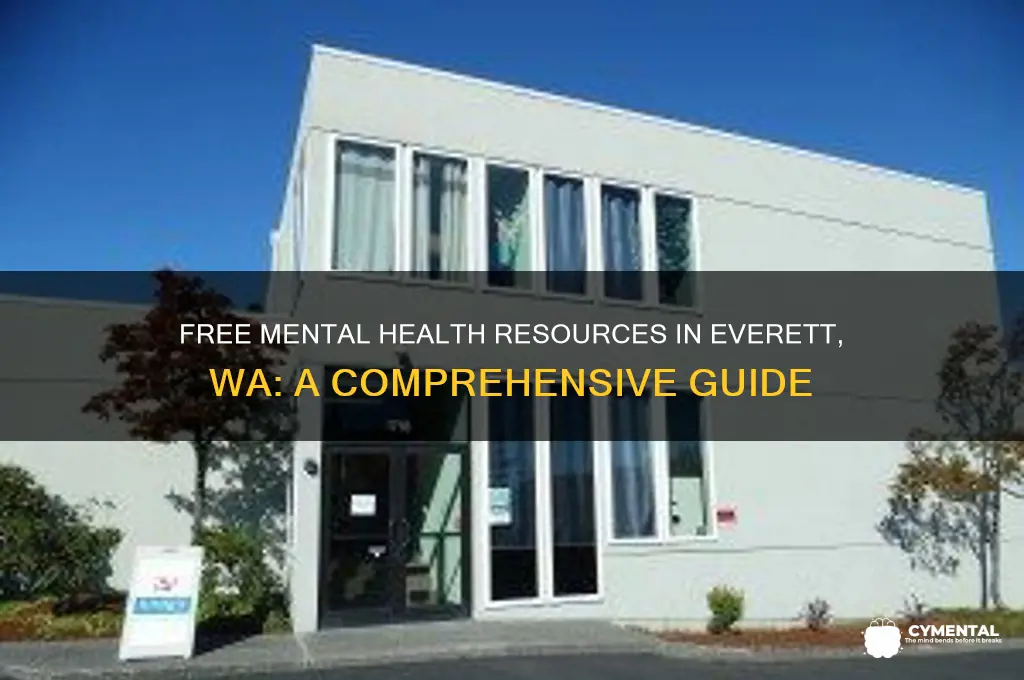
Finding free mental health resources in Everett, WA, is essential for individuals seeking support without financial barriers. Everett offers a variety of options, including community health clinics, non-profit organizations, and government-funded programs that provide counseling, therapy, and crisis intervention services at no cost. Organizations like the Snohomish County Human Services Department and local branches of the National Alliance on Mental Illness (NAMI) offer free workshops, support groups, and referrals. Additionally, many churches and community centers host free mental health events and provide access to licensed professionals. Online platforms and hotlines, such as the Washington Recovery Help Line, also offer immediate assistance and guidance for those in need. These resources ensure that residents of Everett have access to vital mental health support regardless of their financial situation.
Explore related products


What You'll Learn

Local community health centers offering free counseling services
Everett, Washington, is home to several community health centers that provide free or low-cost counseling services, making mental health support accessible to those who might otherwise face financial barriers. These centers often operate on a sliding scale fee system, ensuring that individuals and families can receive care regardless of their income level. For instance, the Community Health Center of Snohomish County offers integrated behavioral health services, including individual and group counseling, often at no cost to uninsured or underinsured residents. This model exemplifies how local resources can bridge gaps in mental health care.
One standout feature of these community health centers is their holistic approach to wellness. Unlike specialized clinics that focus solely on mental health, these centers often integrate counseling services with primary care, dental care, and even substance abuse treatment. This comprehensive care model is particularly beneficial for individuals dealing with co-occurring physical and mental health issues. For example, the Everett Gospel Mission not only provides free counseling but also offers shelter and meals, addressing the interconnected needs of vulnerable populations. Such integration ensures that mental health care is not siloed but rather woven into the fabric of overall well-being.
Accessing these services typically begins with a simple intake process, which may include a brief assessment to determine the appropriate level of care. Many centers, like the Snohomish County Human Services Department, offer walk-in hours or same-day appointments for urgent needs. It’s important to bring proof of income and residency to qualify for free or reduced-cost services. Additionally, some centers provide counseling in multiple languages, ensuring that language barriers do not prevent individuals from seeking help. Practical tips include calling ahead to confirm availability and asking about any required documentation to streamline the process.
While these community health centers are invaluable resources, it’s worth noting their limitations. Free counseling services often have waitlists due to high demand, and session frequency may be limited compared to private therapy. However, they remain a critical lifeline for many, particularly those without insurance or with limited financial means. For individuals seeking immediate support while waiting for an appointment, centers like the Crisis Text Line or local support groups can provide interim assistance. Ultimately, community health centers in Everett demonstrate that mental health care can be both accessible and community-driven, fostering resilience and recovery at the grassroots level.
Supporting Loved Ones: Practical Ways to Aid Mental Health Recovery
You may want to see also
Explore related products


Nonprofit organizations providing mental health support groups
Everett, WA, is home to several nonprofit organizations that offer free mental health support groups, providing a lifeline for individuals seeking community and understanding. One standout example is The Imagine Institute, which hosts weekly peer-led support groups for adults dealing with anxiety, depression, and trauma. These groups are facilitated by trained volunteers who create a safe, nonjudgmental space for participants to share their experiences. Unlike clinical therapy, these sessions focus on mutual support and shared coping strategies, making them accessible to those who may not qualify for or afford traditional mental health services.
Another key player is Compass Health, a nonprofit with a robust presence in Everett. While they offer a range of paid services, their community outreach includes free drop-in support groups for specific demographics, such as teens and LGBTQ+ individuals. These groups are particularly valuable for younger populations, who often face unique mental health challenges but may lack the resources or privacy to seek help elsewhere. Compass Health’s approach combines peer support with occasional input from mental health professionals, ensuring a balance between relatability and expertise.
For those seeking faith-based support, Catholic Community Services provides free mental health groups rooted in spiritual principles. These sessions are open to individuals of all beliefs and focus on themes like grief, addiction recovery, and stress management. The integration of faith can be a powerful tool for some, offering a sense of purpose and connection that complements traditional coping mechanisms. However, it’s important to note that these groups may not align with everyone’s preferences, so exploring multiple options is advisable.
A lesser-known but impactful resource is NAMI Snohomish County, the local chapter of the National Alliance on Mental Illness. They offer free peer-led support groups for individuals living with mental health conditions and their families. For example, the Connection group is designed for adults with mental illness, while the Family Support Group caters to caregivers and loved ones. These groups are particularly beneficial for those who feel isolated or misunderstood, as they foster a sense of belonging and shared resilience.
When considering these options, it’s crucial to assess your specific needs and preferences. Peer-led groups like those at The Imagine Institute and NAMI Snohomish County are ideal for those seeking a community of equals, while Compass Health’s demographic-specific groups offer tailored support. Faith-based options like Catholic Community Services can provide additional spiritual grounding, though they may not suit everyone. Regardless of your choice, these nonprofits ensure that cost is never a barrier to accessing mental health support in Everett.
Restorative Yoga: A Gentle Path to Teen Mental Wellness
You may want to see also
Explore related products


Online therapy platforms with free trial options
For those in Everett, WA, seeking mental health support without immediate financial commitment, online therapy platforms with free trial options offer a flexible and accessible solution. These platforms typically provide a 7- to 14-day trial period, allowing users to test services before subscribing. Examples include BetterHelp, which offers a free week of unlimited messaging and one live session, and Talkspace, which provides a free consultation and a week of text-based therapy. These trials are ideal for individuals unsure about online therapy’s effectiveness or those wanting to match with the right therapist before investing.
Analyzing the value of these trials, they serve as a low-risk entry point into mental health care. For instance, platforms like Calmerry and ReGain include assessments during the trial to tailor therapy to specific needs, such as relationship counseling or anxiety management. However, users should note that free trials often require credit card information upfront, with automatic billing starting after the trial unless canceled. To maximize benefits, engage actively during the trial—respond promptly to therapist messages, complete any assigned exercises, and assess communication style fit.
Persuasively, free trials address a critical barrier to mental health care: uncertainty. Many hesitate to start therapy due to concerns about cost, therapist compatibility, or the format’s effectiveness. Platforms like Online-Therapy.com, which offers a 20% discount on the first month after a free trial, alleviate these worries by letting users experience the platform’s structure, such as CBT-based worksheets and live sessions. This approach empowers individuals to make informed decisions about their care, particularly beneficial for those in Everett with limited local resources.
Comparatively, while local Everett resources like the Snohomish County Human Services offer free in-person counseling, online platforms provide unique advantages. For example, 7 Cups offers a free week of anonymous chat-based support with trained listeners, ideal for those preferring immediate, text-based interaction. In contrast, in-person services may have waitlists or require transportation. Online trials also cater to diverse preferences—some platforms, like Teen Counseling, specialize in age-specific support, while others, like Pride Counseling, focus on LGBTQ+ communities, ensuring tailored care.
Descriptively, navigating these trials involves a few practical steps. First, research platforms to match your needs—for instance, Cerebral includes medication management in its trial, suitable for those seeking both therapy and psychiatric support. Second, set clear goals for the trial period, such as reducing anxiety symptoms or improving communication skills. Finally, track your experience using a journal or app to evaluate progress and decide whether to continue. For Everett residents, combining these trials with local resources like the Crisis Text Line (text “HOME” to 741741) ensures comprehensive, immediate support while exploring long-term options.
Art's Healing Power: Boosting Mental Health Through Creative Expression
You may want to see also
Explore related products


Government-funded mental health clinics in Everett
Everett, Washington, residents seeking free mental health services can turn to government-funded clinics that provide accessible care without financial barriers. These clinics, supported by state and federal programs, offer a range of services, including therapy, medication management, and crisis intervention, tailored to individuals of all ages. For example, the Snohomish County Human Services Department operates several facilities that prioritize low-income individuals, uninsured patients, and those facing homelessness. Eligibility often depends on income level, residency, and specific program criteria, but no one is turned away due to inability to pay.
One notable resource is the Snohomish County Community Mental Health Center, which provides sliding-scale fee structures based on income. Services include individual and group therapy, psychiatric evaluations, and substance use disorder treatment. For children and adolescents, the Children’s Intensive Therapy Program (CITP) offers specialized care for severe emotional and behavioral issues, often funded through Medicaid or state grants. Parents can access these services by contacting the clinic directly or through referrals from schools or primary care providers. It’s essential to bring proof of income and residency to streamline the enrollment process.
For immediate crisis support, the Snohomish County Crisis Line (1-800-584-3578) connects individuals to government-funded mobile crisis teams available 24/7. These teams can provide on-site assessments, short-term stabilization, and referrals to longer-term care. Additionally, the Everett Community Health Center offers integrated mental health services alongside primary care, ensuring holistic treatment for low-income and uninsured patients. While wait times can vary, calling ahead to schedule an intake appointment is recommended.
Comparatively, government-funded clinics in Everett stand out for their comprehensive approach, often addressing co-occurring issues like housing instability or substance abuse. Unlike private practices, these clinics prioritize accessibility over profit, making them ideal for those without insurance or with limited financial means. However, patients should be prepared for potential waitlists and paperwork requirements, which can delay initial appointments.
To maximize the benefits of these services, individuals should gather necessary documents (e.g., ID, proof of income) before their first visit. For ongoing care, maintaining open communication with providers and attending scheduled appointments is crucial. While government-funded clinics may not offer the same level of personalization as private therapy, their affordability and breadth of services make them a vital lifeline for Everett residents in need of mental health support.
Pottery Therapy: Crafting Calm and Healing Minds Through Clay Creation
You may want to see also
Explore related products

$9.59 $16.99


Peer-led support groups and recovery programs
Peer-led support groups in Everett, WA, offer a unique blend of empathy and shared experience, creating safe spaces for individuals navigating mental health challenges. Unlike traditional therapy, these groups are facilitated by peers who have firsthand experience with recovery, fostering a sense of "been there, done that" understanding. For example, the National Alliance on Mental Illness (NAMI) Snohomish County hosts free peer-led programs like Connection Recovery Support Groups, where participants discuss coping strategies, setbacks, and victories in a non-judgmental environment. These groups often meet weekly at local community centers or online, making them accessible to those with varying schedules.
Analyzing the structure of these programs reveals their effectiveness. Peer leaders are trained to guide conversations without dominating them, ensuring every voice is heard. This democratic approach contrasts with clinician-led sessions, where expertise can sometimes create a power imbalance. Studies show that peer-led groups improve social connectedness and reduce feelings of isolation, critical factors in mental health recovery. For instance, a 2020 report by the Washington State Department of Health highlighted that participants in peer-led programs reported a 30% increase in self-efficacy after just six weeks of consistent attendance.
To join a peer-led group in Everett, start by contacting local organizations like Compass Health, which offers the Peer Wellness Coaching Program. This initiative pairs individuals with certified peer specialists who provide one-on-one support and help navigate community resources. Another option is Everett Public Library, which occasionally hosts Mental Health Peer Support Drop-In Sessions in collaboration with NAMI. These sessions are ideal for those hesitant to commit to a long-term group but still seeking connection. Practical tips include arriving early to ease anxiety, bringing a journal to jot down insights, and being open to sharing—even if it’s just a few words.
Comparatively, peer-led recovery programs in Everett stand out for their flexibility and inclusivity. Unlike rigid treatment plans, these programs adapt to participants’ needs, incorporating art therapy, mindfulness exercises, or even outdoor activities like walks in Legion Park. For youth, Cocoon House offers Peer-Led Drop-In Groups for ages 12–24, focusing on trauma-informed care and skill-building. For older adults, Snohomish County Senior Services partners with peer leaders to address age-specific challenges like grief and loneliness. This diversity ensures that no matter your background or age, there’s a group tailored to your needs.
The takeaway? Peer-led support groups and recovery programs in Everett are not just about surviving mental health struggles—they’re about thriving together. By leveraging shared experiences, these programs empower participants to become active agents in their recovery. Whether you’re seeking structure, spontaneity, or simply a listening ear, Everett’s peer-led initiatives offer a pathway to healing that’s as unique as you are. Start by reaching out to local organizations, and remember: in these groups, you’re not just a participant—you’re a partner in progress.
Mental Health Diagnoses: A Helpful First Step or Hindrance?
You may want to see also
Frequently asked questions
Everett, WA offers several free mental health resources, including the Snohomish County Crisis Line (1-800-584-3578), which provides 24/7 support for individuals in crisis. Additionally, the Community Health Center of Snohomish County offers free or low-cost mental health services based on income. Local organizations like the National Alliance on Mental Illness (NAMI) Snohomish County also provide free support groups and education programs.
Yes, low-income individuals in Everett can access free counseling services through organizations like Catholic Community Services (CCS) and the YWCA Snohomish County. Both offer mental health support and counseling on a sliding scale or free of charge based on financial need. Additionally, the Washington Recovery Help Line (1-866-789-1511) can connect individuals to free or low-cost counseling resources.
Free mental health support groups in Everett are available through NAMI Snohomish County, which offers peer-led groups for individuals and families affected by mental illness. The Everett Public Library also occasionally hosts free mental health workshops and support sessions. Additionally, local churches and community centers may provide free support groups, so checking their event calendars can be helpful.