Caleb Wright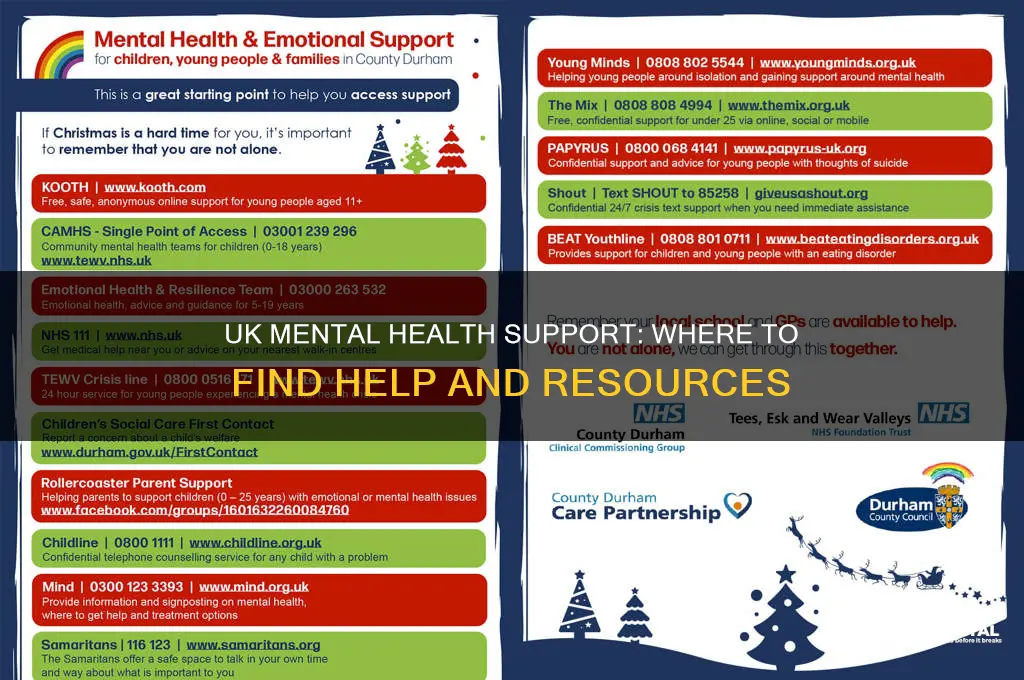
Accessing mental health support in the UK is crucial for anyone struggling with emotional or psychological challenges, and there are numerous resources available to provide assistance. The NHS offers a range of services, including GP referrals to therapists, counseling, and specialist mental health teams, which can be accessed by contacting your local GP or calling the NHS non-emergency number, 111. Additionally, organizations like Mind, Samaritans, and Rethink Mental Illness provide helplines, online resources, and community support groups for those in need. For immediate crisis support, the NHS also operates 24/7 crisis lines and mental health emergency teams. Private therapy options are available through platforms like Psychology Today or BACP, though these may come at a cost. Universities, workplaces, and local charities often offer counseling services or signposting to further help, ensuring that individuals have multiple pathways to find the support they require.
| Characteristics | Values |
|---|---|
| NHS Services | GPs, Mental Health Teams, IAPT (Improving Access to Psychological Therapies), Crisis Teams, and Psychiatric Hospitals. |
| Helplines | Samaritans (116 123), NHS 111 (option 2 for mental health crisis), Shout (text 85258), Mind Infoline (0300 123 3393). |
| Charities & Organizations | Mind, Rethink Mental Illness, SANE, YoungMinds, CALM (Campaign Against Living Miserably). |
| Online Resources | NHS Every Mind Matters, Mental Health Foundation, Anxiety UK, and self-help apps like Calm, Headspace, and Moodpath. |
| Private Therapy | Private psychologists, psychiatrists, and counsellors (via platforms like Counselling Directory or BACP). |
| Support Groups | Local community groups, peer support groups, and online forums (e.g., Elefriends by Mind). |
| Workplace Support | Employee Assistance Programmes (EAPs), occupational health services, and mental health first aiders. |
| Emergency Services | A&E for immediate mental health crises, or contact 999 if there’s an immediate risk to life. |
| Funding & Accessibility | Free NHS services, some charities offer free support, private therapy costs vary. |
| Referral Process | Self-referral for some services (e.g., IAPT), GP referral for specialist care. |
| Waiting Times | Varies by service; NHS waiting times can range from weeks to months. |
| Age-Specific Services | CAMHS (Child and Adolescent Mental Health Services) for under 18s, older adult mental health teams. |
| Cultural & Language Support | Some services offer interpreters or culturally sensitive support. |
| Confidentiality | All services adhere to strict confidentiality policies unless there’s a risk of harm. |
Explore related products


What You'll Learn
- NHS Mental Health Services: Access free support via GPs, IAPT, and local NHS trusts
- Charities and Helplines: Contact Mind, Samaritans, or CALM for immediate assistance
- Private Therapy Options: Find accredited therapists through BACP or UKCP directories
- Online Resources: Use NHS Every Mind Matters or apps like Calm and Headspace
- Support Groups: Join local or online groups via Meetup or Mental Health UK

NHS Mental Health Services: Access free support via GPs, IAPT, and local NHS trusts
The NHS offers a comprehensive mental health support system, often starting with your local GP. This primary care physician acts as a gateway, providing initial assessments, referrals, and, in some cases, basic treatment options. If you're experiencing anxiety, depression, or other common mental health concerns, your GP can refer you to the Improving Access to Psychological Therapies (IAPT) program. IAPT offers evidence-based talking therapies like Cognitive Behavioral Therapy (CBT), proven effective for managing mild to moderate mental health conditions.
Expect to complete a brief assessment to determine suitability for IAPT. This might involve discussing your symptoms, their impact on daily life, and any previous experiences with mental health support.
For more complex or severe mental health needs, your GP may refer you directly to your local NHS mental health trust. These trusts provide a wider range of specialist services, including:
- Community Mental Health Teams (CMHTs): Offering ongoing support and treatment for individuals with enduring mental health conditions.
- Crisis Resolution and Home Treatment Teams (CRHTTs): Providing intensive support during acute mental health crises, often as an alternative to hospital admission.
- Inpatient Services: For individuals requiring hospitalization due to the severity of their condition.
- Specialist Services: Catering to specific needs, such as eating disorders, personality disorders, or perinatal mental health.
While waiting for NHS services, consider self-help strategies like mindfulness, exercise, and connecting with supportive individuals. Charities like Mind and Samaritans offer valuable resources and helplines for immediate support. Remember, seeking help is a sign of strength, and the NHS is committed to providing accessible mental health care for all.
Supporting Her Journey: Practical Ways to Aid Girls' Mental Health
You may want to see also
Explore related products


Charities and Helplines: Contact Mind, Samaritans, or CALM for immediate assistance
In moments of crisis, knowing where to turn can be a lifeline. Charities and helplines like Mind, Samaritans, and CALM offer immediate support for mental health struggles, often available 24/7. These organisations are staffed by trained professionals and volunteers who provide a listening ear, practical advice, and guidance on next steps. Unlike clinical services, they’re accessible without appointments or referrals, making them ideal for urgent situations or when you’re unsure where else to go.
Mind specialises in mental health support, offering a helpline (0300 123 3393) and online resources tailored to specific conditions like anxiety, depression, and bipolar disorder. Their services are particularly useful for those seeking information about managing symptoms or finding local support groups. For example, their "Elefriends" online community provides a safe space for peer support, while their legal advice line helps with issues like employment rights and benefits.
Samaritans is best known for its crisis support, available via phone (116 123), email, or letter. Their approach is non-judgmental and confidential, focusing on listening rather than advising. This makes them a go-to resource for anyone feeling overwhelmed, suicidal, or simply in need of someone to talk to. Unlike other helplines, Samaritans doesn’t specialise in specific mental health conditions but instead offers a universal space for emotional distress.
CALM (Campaign Against Living Miserably) targets men aged 15–55, a demographic less likely to seek help for mental health issues. Their helpline (0800 58 58 58) and webchat are open daily from 5 p.m. to midnight, addressing topics like depression, anxiety, and suicidal thoughts. CALM’s tone is informal and relatable, often incorporating humour and real-life stories to encourage men to open up. They also provide practical tips, such as breathing exercises and strategies for coping with stress.
While these charities are invaluable, it’s important to note their limitations. Helplines aren’t a substitute for long-term therapy or medical treatment, but they can bridge the gap until professional help is available. If you’re in immediate danger, always call 999. For ongoing support, consider pairing helpline use with self-care practices like journaling, exercise, or mindfulness. Remember, reaching out isn’t a sign of weakness—it’s a step toward reclaiming your well-being.
Exploring Alcohol's Role in Mental Health: Benefits or Risks?
You may want to see also
Explore related products


Private Therapy Options: Find accredited therapists through BACP or UKCP directories
Navigating the landscape of private therapy in the UK can feel overwhelming, but accredited directories like the British Association for Counselling and Psychotherapy (BACP) and the UK Council for Psychotherapy (UKCP) offer a reliable starting point. These organisations maintain rigorous standards for their members, ensuring that therapists listed in their directories have undergone extensive training and adhere to ethical guidelines. By using these resources, you can filter therapists by specialisation, location, and modality, making it easier to find a professional who aligns with your needs.
Consider the BACP directory as a comprehensive tool for those seeking counselling or psychotherapy. It allows you to search by postcode, therapy type, or issue, such as anxiety, depression, or relationship difficulties. Each therapist’s profile includes their qualifications, approach, and fees, providing transparency that helps you make an informed decision. For instance, if you’re looking for cognitive behavioural therapy (CBT) in Manchester, the directory will display accredited practitioners in your area, along with their contact details and a brief description of their practice.
The UKCP directory, on the other hand, focuses specifically on psychotherapists and psychotherapeutic counsellors. It’s particularly useful if you’re seeking a therapist trained in specific modalities like psychodynamic therapy, humanistic therapy, or integrative approaches. The directory also highlights therapists who work with particular age groups, such as children, adolescents, or adults, ensuring you find someone with relevant expertise. For example, if you’re a parent seeking support for a teenager, you can filter results to find therapists experienced in working with young people.
While both directories are invaluable, it’s essential to consider practical factors like cost and availability. Private therapy sessions typically range from £40 to £120 per hour, depending on the therapist’s experience and location. Some therapists offer sliding scale fees or reduced rates for students and low-income individuals, so don’t hesitate to inquire. Additionally, check if your private health insurance covers therapy sessions, as this can significantly reduce out-of-pocket expenses.
In conclusion, using the BACP or UKCP directories streamlines the process of finding a qualified therapist, offering peace of mind through their accreditation standards. By leveraging these resources, you can focus on what matters most: finding the right support for your mental health journey. Whether you’re dealing with a specific issue or seeking personal growth, these directories provide a structured, trustworthy way to connect with professionals who can help.
Positivity's Power: Transforming Mental Health and Enhancing Daily Life
You may want to see also
Explore related products


Online Resources: Use NHS Every Mind Matters or apps like Calm and Headspace
The NHS Every Mind Matters platform is a cornerstone of digital mental health support in the UK, offering tailored advice and practical tips to improve mental wellbeing. Launched by Public Health England, it provides a free, accessible starting point for anyone seeking guidance. Users complete a brief quiz to receive a personalised "Mind Plan," which includes strategies for stress reduction, better sleep, and mood enhancement. Unlike generic self-help content, this resource adapts to individual needs, making it particularly effective for those unsure where to begin. For instance, a working parent might receive tips on time management, while a student could focus on exam-related anxiety.
While NHS Every Mind Matters excels in personalised guidance, apps like Calm and Headspace offer structured, daily interventions through meditation and mindfulness. Calm’s "Daily Move" sessions combine physical activity with mental relaxation, ideal for those who find stillness challenging. Headspace, on the other hand, uses animated videos to demystify mindfulness, appealing to visual learners. Both apps are evidence-based, with studies showing reductions in stress and anxiety after consistent use. However, they operate on subscription models, with Calm costing £28.99 annually and Headspace £49.99—a consideration for those on tight budgets. Free trials (7 days for Calm, 14 for Headspace) allow users to assess their fit before committing.
Comparing these resources reveals distinct strengths. NHS Every Mind Matters is free, NHS-backed, and holistic, addressing lifestyle changes alongside mental health. Calm and Headspace, while paid, offer depth in mindfulness and meditation, with gamified features like streaks and rewards to encourage daily use. For those seeking community, Calm’s "Sleep Stories" narrated by celebrities like Matthew McConaughey provide a unique, soothing experience. Headspace’s "SOS" sessions, meanwhile, are designed for acute moments of panic, offering immediate tools to regain calm. Choosing between them depends on whether you prefer broad, personalised advice or focused, structured practices.
Practical integration of these tools into daily life maximises their impact. Start by dedicating 5–10 minutes daily to an NHS Mind Plan activity, such as journaling or breathing exercises. Pair this with a Calm or Headspace session in the morning or before bed to build consistency. For example, use Headspace’s "Wind Down" feature 30 minutes before sleep to signal to your body it’s time to rest. If cost is a barrier, explore NHS-recommended alternatives like the free app "Stay Alive," which includes crisis support tools. Combining these resources creates a layered approach, addressing both preventative care and immediate needs.
Ultimately, online resources like NHS Every Mind Matters, Calm, and Headspace democratise access to mental health support, offering flexibility and anonymity. While not a replacement for professional therapy, they serve as valuable tools for self-management. The key is consistency—whether through daily mindfulness or weekly check-ins with your Mind Plan. By leveraging these platforms, individuals can take proactive steps toward better mental health, tailored to their unique circumstances and preferences.
Supporting Mental Health: Practical Ways to Offer Help and Care
You may want to see also
Explore related products


Support Groups: Join local or online groups via Meetup or Mental Health UK
Support groups offer a unique blend of camaraderie and understanding, often filling a gap that professional therapy or medication alone cannot. Whether you’re grappling with anxiety, depression, or simply seeking a sense of belonging, joining a local or online group via platforms like Meetup or Mental Health UK can be transformative. These groups provide a safe space to share experiences, learn coping strategies, and build connections with individuals who truly "get it." Unlike one-on-one therapy, support groups foster collective healing, reminding participants they are not alone in their struggles.
To get started, visit Meetup.com or Mental Health UK’s website and filter groups by location, focus (e.g., anxiety, bereavement, LGBTQ+), or format (in-person or virtual). For instance, a quick search on Meetup might reveal "Anxiety Warriors London," a weekly in-person group, or "Virtual Depression Support UK," which meets biweekly via Zoom. Mental Health UK often curates groups led by trained facilitators, ensuring a structured yet empathetic environment. Pro tip: If you’re hesitant about in-person meetings, start with an online group to ease into the process. Most platforms allow you to observe first before actively participating.
While support groups are invaluable, they aren’t a substitute for professional treatment. If you’re on medication or in therapy, inform your group facilitator to ensure alignment. Additionally, be mindful of group dynamics—some participants may share triggering content. If this occurs, it’s okay to step away or seek a different group. The goal is to find a community that uplifts rather than overwhelms. For those under 18, parental consent is often required, and age-specific groups are recommended to ensure relevance and safety.
The beauty of support groups lies in their diversity. You might join a walking group that combines physical activity with mental health discussions or a creative writing group that uses art as therapy. Online groups, particularly, offer flexibility for those with busy schedules or mobility issues. For example, Mental Health UK’s "Mindful Mornings" meets daily for 15 minutes, perfect for a quick mental reset. Remember, consistency is key—attending regularly maximizes the benefits of shared experiences and accountability.
In conclusion, support groups are a powerful yet often overlooked resource in the UK’s mental health landscape. By leveraging platforms like Meetup or Mental Health UK, you can access communities tailored to your needs, whether you’re seeking local camaraderie or virtual convenience. Approach with an open mind, respect boundaries, and don’t hesitate to try multiple groups until you find the right fit. In a world that often feels isolating, these groups remind us that healing is not just individual—it’s collective.
Nutrition's Impact: How Eating Better Boosts Mental Health and Well-Being
You may want to see also
Frequently asked questions
Free mental health support in the UK is available through the NHS. You can start by contacting your GP, who can refer you to NHS Talking Therapies (formerly IAPT) for services like cognitive behavioural therapy (CBT). Charities like Mind, Samaritans, and Rethink Mental Illness also offer free resources, helplines, and support groups.
For urgent mental health support, call NHS 111 or visit your nearest Accident and Emergency (A&E) department. You can also contact the 24/7 NHS Mental Health Crisis Line by calling 111 and selecting the mental health option. In some areas, Crisis Resolution and Home Treatment Teams (CRHT) provide urgent care at home.
Yes, several helplines offer mental health support in the UK. These include the Samaritans (116 123), Shout (text 85258), Mind (0300 123 3393), and the Campaign Against Living Miserably (CALM) for men (0800 58 58 58). These services are free, confidential, and available 24/7.
Yes, you can self-refer to NHS Talking Therapies for issues like anxiety and depression without a GP referral in many areas. Additionally, charities and organisations like Mind, Anxiety UK, and Rethink Mental Illness offer self-help resources, online support, and peer-led groups.
Young people in the UK can access mental health support through NHS Child and Adolescent Mental Health Services (CAMHS), which can be referred to via a GP, school, or self-referral in some areas. Charities like YoungMinds, The Mix (0808 808 4994), and Childline (0800 1111) also provide specialised support for young people.


![Help![Blu-ray]](https://m.media-amazon.com/images/I/6155cLsT0HL._AC_UY218_.jpg)


![Help! [LP]](https://m.media-amazon.com/images/I/71Lo3XMoSlL._AC_UY218_.jpg)