Caleb Wright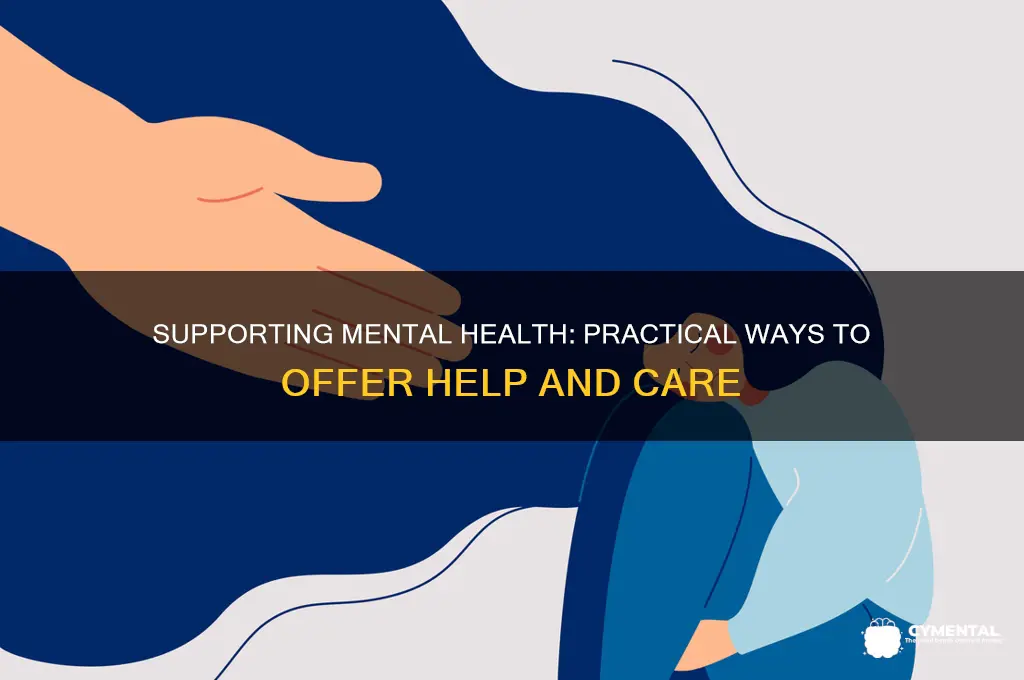
Helping someone with their mental health requires empathy, understanding, and proactive support. Start by creating a safe, non-judgmental space for open communication, allowing them to express their feelings without fear of criticism. Encourage professional help, such as therapy or counseling, while also offering practical assistance like accompanying them to appointments. Small, consistent gestures, like checking in regularly or engaging in activities they enjoy, can make a significant difference. Educate yourself about their specific challenges to better understand their experience, and prioritize self-care to avoid burnout while supporting them. Remember, patience and compassion are key, as mental health recovery is a gradual process.
| Characteristics | Values |
|---|---|
| Active Listening | Give undivided attention, avoid interrupting, and validate feelings. |
| Encourage Professional Help | Suggest therapy, counseling, or psychiatric support. |
| Promote Self-Care | Encourage healthy habits like sleep, exercise, and nutrition. |
| Reduce Stigma | Normalize conversations about mental health and avoid judgment. |
| Offer Emotional Support | Be present, empathetic, and reassuring during difficult times. |
| Help Identify Triggers | Assist in recognizing patterns or stressors that worsen mental health. |
| Encourage Social Connection | Foster relationships and community involvement. |
| Provide Practical Assistance | Help with daily tasks if mental health affects functioning. |
| Educate on Mental Health | Share reliable resources and information to increase awareness. |
| Be Patient and Consistent | Understand recovery takes time and maintain steady support. |
| Encourage Mindfulness Practices | Suggest meditation, deep breathing, or grounding techniques. |
| Limit Pressure and Expectations | Avoid overwhelming demands and allow space for healing. |
| Monitor for Crisis Signs | Learn warning signs of severe distress or suicidal ideation. |
| Promote Purpose and Goals | Help set small, achievable goals to boost motivation and self-esteem. |
| Respect Boundaries | Allow autonomy and avoid pushing beyond comfort levels. |
| Stay Informed | Keep updated on mental health trends, treatments, and support strategies. |
Explore related products


What You'll Learn
- Active Listening: Show empathy, avoid judgment, and focus fully on the person speaking to build trust
- Encourage Professional Help: Gently suggest therapy or counseling as a supportive step toward recovery
- Promote Self-Care: Encourage healthy habits like sleep, exercise, and mindfulness to improve mental well-being
- Stay Connected: Maintain regular contact and offer companionship to combat feelings of isolation
- Educate Yourself: Learn about mental health to better understand and support their struggles effectively

Active Listening: Show empathy, avoid judgment, and focus fully on the person speaking to build trust
Effective communication is a cornerstone of supporting mental health, and active listening stands out as a powerful yet often overlooked tool. It’s not just about hearing words; it’s about understanding the emotions, thoughts, and experiences behind them. When someone feels truly heard, it fosters a sense of validation and safety, which are critical for emotional well-being. For instance, a study published in the *Journal of Counseling Psychology* found that individuals who perceived their therapists as actively listening reported higher levels of trust and better therapeutic outcomes. This principle applies equally in everyday interactions, whether with friends, family, or colleagues.
To practice active listening, start by eliminating distractions. Put away your phone, maintain eye contact, and orient your body toward the speaker. These nonverbal cues signal that you’re fully present. Next, use reflective responses to show you’re engaged. For example, if someone says, “I’m feeling overwhelmed at work,” respond with, “It sounds like your workload is really weighing on you.” This not only clarifies their message but also demonstrates empathy. Avoid interrupting or offering solutions unless asked; the goal is to create a space where the speaker feels understood, not judged.
Empathy is the heart of active listening, but it requires intentional effort. Try to step into the speaker’s shoes, even if their perspective differs from yours. Phrases like “That must be really hard” or “I can see why you’d feel that way” validate their emotions without requiring you to agree. Be mindful of your tone and facial expressions, as these can convey judgment unintentionally. For example, a furrowed brow or crossed arms might signal skepticism, even if your words are supportive. Practice self-awareness to ensure your body language aligns with your intent.
One common pitfall is the urge to fix problems. While it’s natural to want to help, unsolicited advice can undermine trust. Instead, ask open-ended questions like, “What do you think might help in this situation?” or “How can I support you right now?” This shifts the focus back to the speaker and empowers them to find their own solutions. Remember, active listening isn’t about solving; it’s about connecting. Over time, this approach builds trust and strengthens relationships, creating a foundation for meaningful support.
Finally, active listening is a skill that improves with practice. Start small by setting aside 5–10 minutes daily to engage in focused conversations. Pay attention to how the other person responds—do they seem more at ease? Do they open up more readily? Reflect on your own tendencies, such as interrupting or planning your response while they speak. With consistency, active listening becomes second nature, transforming how you connect with others and contribute to their mental health. It’s a simple yet profound way to show you care.
Supporting the Severely Mentally Ill: Compassionate Strategies for Recovery and Hope
You may want to see also
Explore related products


Encourage Professional Help: Gently suggest therapy or counseling as a supportive step toward recovery
Professional help can be a lifeline for someone struggling with mental health, yet stigma and fear often prevent individuals from seeking it. Therapy or counseling isn’t a sign of weakness; it’s a proactive step toward healing and self-improvement. By framing it as a normal, accessible option, you can help reduce barriers and encourage action. For instance, instead of saying, “You should see a therapist,” try, “Therapy has helped many people in similar situations—it might offer tools you’d find useful.”
Approaching the conversation with empathy and timing is crucial. Wait for a moment when the person is receptive, and avoid bringing it up during heightened emotions. Use “I” statements to express concern without sounding judgmental, such as, “I care about you and think talking to a professional could provide some support.” Offer to help research therapists, accompany them to the first appointment, or simply listen without pushing. Small gestures like these can make the idea feel less daunting.
Comparing therapy to other forms of self-care can normalize it further. Just as someone might see a doctor for physical pain, mental health challenges deserve professional attention. Highlight the variety of therapeutic approaches available—from cognitive-behavioral therapy (CBT) to mindfulness-based stress reduction (MBSR)—to show that it’s not one-size-fits-all. For example, CBT is often recommended for anxiety and depression, with studies showing significant improvement after 12–20 sessions.
Finally, address common concerns directly but gently. If cost is a barrier, mention sliding-scale clinics, telehealth options, or employee assistance programs. If fear of judgment is holding them back, share statistics: over 40% of adults in the U.S. have sought mental health treatment at some point. By providing practical solutions and reassurance, you empower them to take that first step. Encouraging professional help isn’t about forcing a decision—it’s about planting a seed of possibility and offering unwavering support along the way.
Faith and Healing: Exploring Religion's Role in Mental Health Support
You may want to see also
Explore related products


Promote Self-Care: Encourage healthy habits like sleep, exercise, and mindfulness to improve mental well-being
Sleep is the cornerstone of mental resilience, yet it’s often the first sacrifice in a busy schedule. Adults require 7–9 hours nightly, but nearly 35% fall short, according to the CDC. Chronic sleep deprivation amplifies anxiety, depression, and cognitive fog. To reset your sleep cycle, establish a "wind-down" ritual 60–90 minutes before bed: dim lights, silence notifications, and avoid screens. Incorporate magnesium-rich foods (spinach, almonds) or a 200–400 mg supplement to aid relaxation. For shift workers or insomniacs, cognitive behavioral therapy for insomnia (CBT-I) has a 70–80% success rate in improving sleep quality within 4–6 weeks.
Exercise isn’t just about physical health—it’s a potent antidepressant. A meta-analysis in *JAMA Psychiatry* found that 30 minutes of moderate exercise (brisk walking, cycling) three times weekly reduces depressive symptoms by 20–30%. The key is consistency, not intensity. For those overwhelmed by gym routines, start with 10-minute bursts of movement, like stair-climbing or dancing. Pair exercise with social interaction (group yoga, team sports) to double its mental health benefits. Caution: Over-exercising (more than 90 minutes daily) can backfire, triggering cortisol spikes and fatigue.
Mindfulness isn’t about emptying your mind—it’s about observing thoughts without judgment. A study in *Psychiatry Research* showed that 10 minutes of daily mindfulness meditation reduces rumination by 40% in 8 weeks. Beginners can use guided apps (Headspace, Calm) or focus on breath for 2 minutes at a time. Incorporate "micro-mindfulness" into daily tasks: feel the texture of your coffee mug, listen to the rhythm of rain. For skeptics, start with body scans: lie down and mentally trace sensations from toes to scalp. This grounds you in the present, breaking cycles of worry.
Self-care isn’t selfish—it’s strategic. Pair these habits for compounding effects: exercise in natural light to regulate circadian rhythms, meditate post-workout to enhance focus, and prioritize sleep to consolidate emotional resilience. Track progress with journals or apps to stay motivated. Remember, small, sustainable changes outperform drastic overhauls. Mental well-being isn’t a destination but a practice, and self-care is its foundation. Start today—your mind will thank you tomorrow.
Team Building: A Powerful Tool for Mental Health Support
You may want to see also
Explore related products



Stay Connected: Maintain regular contact and offer companionship to combat feelings of isolation
Human beings are inherently social creatures, and our mental health thrives on connection. Loneliness and isolation can exacerbate existing mental health struggles, creating a vicious cycle of withdrawal and despair. Regular, meaningful contact acts as a powerful antidote, offering a sense of belonging, support, and perspective.
Think of it as emotional nourishment – just as our bodies need food, our minds need connection to flourish.
The Power of Presence:
It's not just about the quantity of interactions, but the quality. A daily text exchange can be more impactful than a weekly superficial conversation. Aim for genuine engagement, active listening, and shared experiences. This could be a phone call where you truly listen without judgment, a walk in the park where you share observations about nature, or a shared activity like cooking a meal together. The key is to be fully present, demonstrating that the person matters and their company is valued.
Consider the person's preferences – some may prefer face-to-face interactions, while others find comfort in written communication. Adapt your approach to their needs and comfort level.
Building a Support Network:
Encourage the individual to diversify their connections. While close friends and family are invaluable, consider community groups, support groups, or online forums focused on shared interests or experiences. These provide opportunities for connection with individuals who understand specific struggles and can offer unique perspectives and coping strategies. Remember, building a support network takes time and effort. Encourage patience and persistence, celebrating small victories along the way.
Technology as a Tool:
Technology can be a double-edged sword, but when used mindfully, it can bridge distances and facilitate connection. Video calls, online games, and social media platforms can help maintain contact with loved ones far away. However, it's crucial to set boundaries and prioritize real-world interactions whenever possible. Encourage a healthy balance between online and offline connections, ensuring technology enhances, rather than replaces, genuine human interaction.
A Note of Caution:
While connection is vital, it's important to respect boundaries and avoid overwhelming the individual. Be mindful of their energy levels and preferences. Offer support without being intrusive, and allow them to take the lead in initiating contact when they feel ready. Remember, the goal is to empower them to build and maintain connections that are meaningful and sustainable.
Do Therapists Truly Help? Exploring Mental Health Therapy's Impact and Benefits
You may want to see also
Explore related products


Educate Yourself: Learn about mental health to better understand and support their struggles effectively
Understanding mental health begins with recognizing its complexity. Mental health conditions are not one-size-fits-all; they manifest differently across individuals, cultures, and age groups. For instance, anxiety in a teenager might present as irritability and social withdrawal, while in an older adult, it could appear as excessive worry or physical symptoms like fatigue. By educating yourself on these nuances, you can avoid oversimplifying someone’s experience and instead offer tailored, empathetic support. Start by exploring reputable resources like the National Alliance on Mental Illness (NAMI) or the World Health Organization (WHO), which provide age-specific guides and culturally sensitive insights.
Education is not just about knowing the symptoms; it’s about understanding the systemic barriers that often exacerbate mental health struggles. For example, marginalized communities face higher rates of mental health issues due to factors like discrimination, lack of access to care, and socioeconomic disparities. A 2020 study by the American Psychological Association found that Black Americans are 20% more likely to experience serious psychological distress than their white counterparts. By learning about these disparities, you can advocate for equitable support systems and avoid inadvertently perpetuating stigma. Practical steps include attending workshops on cultural competency or reading books like *The Body Keeps the Score* to grasp the intersection of trauma and mental health.
One common misconception is that mental health education requires a formal degree or extensive training. In reality, small, consistent efforts can make a significant difference. Dedicate 15–30 minutes weekly to learning about a specific condition, such as depression or bipolar disorder, through podcasts like *The Hilarious World of Depression* or TED Talks by mental health experts. Pair this with actionable strategies, like learning how to actively listen without offering unsolicited advice. For instance, instead of saying, “You just need to think positively,” try, “I’m here for you, and I’m willing to listen whenever you’re ready.” These micro-actions build trust and show genuine commitment to understanding someone’s struggles.
Finally, educating yourself is not a one-time task but an ongoing process. Mental health research evolves rapidly, with new therapies, medications, and coping mechanisms emerging regularly. For example, the FDA recently approved esketamine nasal spray for treatment-resistant depression, a breakthrough for those who haven’t responded to traditional antidepressants. Staying informed allows you to share evidence-based resources and encourage professional help when needed. Remember, your role isn’t to become a therapist but to be a knowledgeable ally who can navigate conversations with sensitivity and accuracy. By investing in your education, you empower both yourself and those you aim to support.
Boost Mental Health: The Power of Physical Education Explained
You may want to see also
Frequently asked questions
Listen without judgment, encourage professional help, and offer practical support like helping with daily tasks or accompanying them to appointments.
Practice mindfulness, exercise regularly, maintain a balanced diet, get enough sleep, and connect with supportive friends or family.
Seek help if symptoms persist for two weeks or more, interfere with daily life, or include thoughts of self-harm. Early intervention is key.