Caleb Wright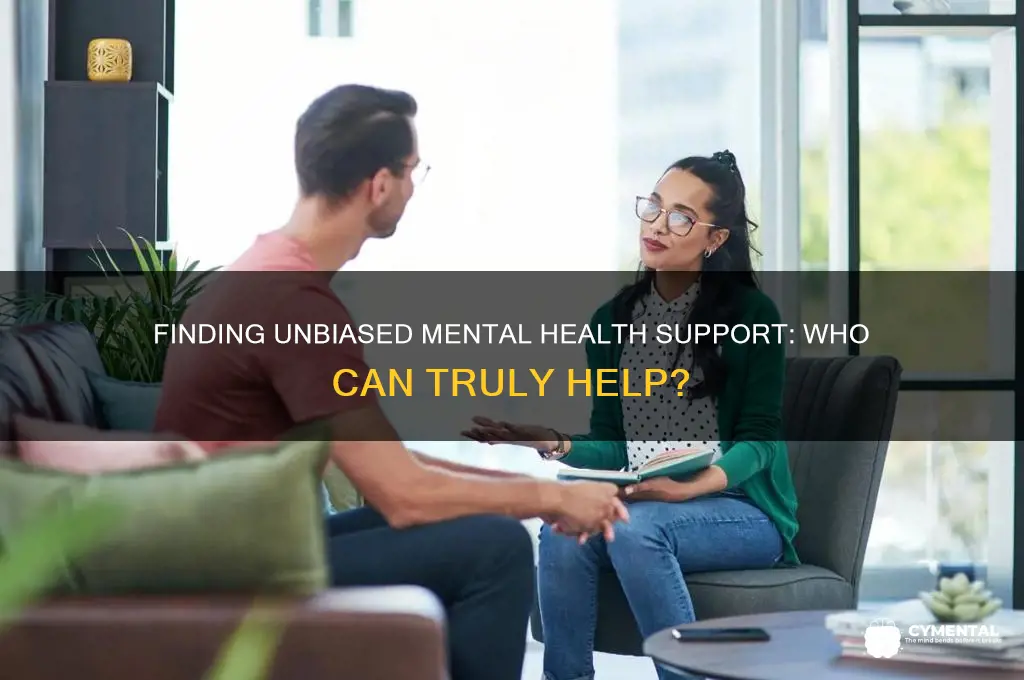
Mental health support is most effective when provided by professionals who are trained to offer unbiased, evidence-based care. Psychiatrists, psychologists, licensed therapists, and counselors are equipped with the expertise to diagnose and treat mental health conditions without judgment or prejudice. Additionally, peer support specialists, who have personal experience with mental illness, can provide empathetic and relatable guidance. Community mental health organizations, helplines, and online platforms also play a crucial role in offering accessible, impartial assistance. It is essential to seek help from individuals or entities committed to confidentiality, cultural sensitivity, and a non-discriminatory approach to ensure holistic and effective support for those struggling with mental health challenges.
Explore related products


What You'll Learn
- Mental Health Professionals: Psychiatrists, psychologists, therapists offer unbiased, evidence-based treatment and support for mental illness
- Support Groups: Peer-led groups provide non-judgmental spaces for sharing experiences and coping strategies
- Crisis Hotlines: Trained volunteers offer immediate, unbiased assistance during mental health emergencies
- Community Health Workers: Culturally sensitive advocates connect individuals to unbiased mental health resources
- Online Platforms: Anonymous, unbiased forums and apps provide accessible mental health support and information

Mental Health Professionals: Psychiatrists, psychologists, therapists offer unbiased, evidence-based treatment and support for mental illness
Mental health professionals—psychiatrists, psychologists, and therapists—are trained to provide unbiased, evidence-based care for individuals struggling with mental illness. Unlike well-meaning friends or family, these experts adhere to ethical guidelines and clinical standards that prioritize objectivity. For instance, psychiatrists, as medical doctors, can diagnose conditions like major depressive disorder or schizophrenia using criteria from the *Diagnostic and Statistical Manual of Mental Disorders (DSM-5)*, ensuring treatment is tailored to specific symptoms rather than personal biases. This structured approach distinguishes professional care from anecdotal advice, offering a foundation of reliability for those seeking help.
Consider the role of evidence-based practices in mental health treatment. Cognitive Behavioral Therapy (CBT), a modality widely used by psychologists and therapists, has been rigorously tested in randomized controlled trials, proving effective for conditions such as anxiety and PTSD. A typical CBT course involves 12–20 sessions, during which patients learn to identify and reframe negative thought patterns. Unlike self-help strategies, which may lack consistency, CBT follows a structured protocol, ensuring interventions are grounded in research rather than intuition. This scientific basis is a cornerstone of unbiased care, providing measurable outcomes for patients.
Psychiatrists bring a unique dimension to mental health treatment through their ability to prescribe medication. For example, selective serotonin reuptake inhibitors (SSRIs) like fluoxetine (Prozac) are commonly prescribed for depression, with dosages typically starting at 20 mg/day and adjusted based on patient response. This pharmacological expertise complements talk therapy, offering a dual approach that addresses both biological and psychological factors. However, medication is not one-size-fits-all; psychiatrists carefully consider factors like age, medical history, and potential drug interactions to ensure safe and unbiased treatment. This individualized care is a hallmark of professional mental health services.
Therapists, including licensed clinical social workers (LCSWs) and marriage and family therapists (MFTs), provide a safe, nonjudgmental space for patients to explore their emotions and behaviors. Unlike casual conversations, therapy sessions follow ethical frameworks that protect patient confidentiality and ensure neutrality. For instance, a therapist treating a patient with borderline personality disorder would use dialectical behavior therapy (DBT), a specialized approach that balances acceptance and change. Practical tips, such as mindfulness exercises or emotion regulation techniques, are taught in structured modules, empowering patients with tools they can use outside of sessions. This blend of empathy and structure fosters trust and progress.
While mental health professionals offer unbiased care, accessibility remains a challenge. Telehealth services have expanded options, particularly for those in rural areas or with mobility limitations. Platforms like BetterHelp and Talkspace connect patients with licensed therapists, often at lower costs than traditional in-person sessions. However, it’s crucial to verify a provider’s credentials and ensure they adhere to evidence-based practices. Ultimately, seeking help from trained professionals ensures that treatment is rooted in science, ethics, and individualized care, providing a reliable path toward mental wellness.
Embrace the Unease: How Mental Discomfort Fuels Personal Growth
You may want to see also
Explore related products


Support Groups: Peer-led groups provide non-judgmental spaces for sharing experiences and coping strategies
Peer-led support groups offer a unique form of mental health assistance by creating environments where individuals can openly discuss their struggles without fear of stigma or judgment. Unlike clinical settings, these groups are facilitated by individuals who have firsthand experience with mental health challenges, fostering a sense of shared understanding and empathy. This peer-to-peer dynamic allows participants to feel heard and validated, which can be particularly empowering for those who feel isolated or misunderstood in their daily lives. For example, groups like the National Alliance on Mental Illness (NAMI) Peer-to-Peer program provide structured sessions where members learn coping strategies while building connections with others who "get it."
The effectiveness of these groups lies in their ability to combine emotional support with practical advice. Participants often share coping mechanisms they’ve found helpful, such as mindfulness techniques, journaling, or specific self-care routines. For instance, a peer might describe how practicing 10 minutes of deep breathing daily reduced their anxiety, offering a tangible strategy for others to try. This exchange of lived experiences can be more relatable and actionable than generalized advice from professionals, especially for those who feel overwhelmed by clinical jargon or one-size-fits-all approaches.
However, joining a support group requires careful consideration. Not all groups are created equal, and finding the right fit is crucial. Prospective members should research groups that align with their specific needs, whether it’s depression, anxiety, bipolar disorder, or another condition. Online platforms like 7 Cups or in-person groups through local mental health organizations can be good starting points. It’s also important to assess the group’s structure: Does it have a clear facilitator? Are there ground rules to ensure respectful dialogue? A well-moderated group can prevent triggering conversations and maintain a safe space for all participants.
One of the most compelling aspects of peer-led support groups is their accessibility. Many are free or low-cost, making them an inclusive option for individuals who may not have access to expensive therapy or medication. Additionally, these groups often meet regularly—weekly or biweekly—providing consistent support that complements professional treatment. For younger adults or teens, groups tailored to their age range, such as those offered by Active Minds on college campuses, can address age-specific challenges like academic stress or identity issues.
In conclusion, peer-led support groups serve as a vital resource for mental health by offering non-judgmental spaces where individuals can share experiences and learn coping strategies from those who truly understand. While they are not a replacement for professional care, they provide a unique layer of support that fosters resilience and community. By choosing the right group and actively participating, individuals can find both solace and practical tools to navigate their mental health journeys.
Empowering Change: Simple Actions to Make a Positive Impact Today
You may want to see also
Explore related products





Crisis Hotlines: Trained volunteers offer immediate, unbiased assistance during mental health emergencies
In moments of acute mental distress, the immediacy of support can be as crucial as its quality. Crisis hotlines, staffed by trained volunteers, bridge this gap by offering real-time, unbiased assistance to individuals in mental health emergencies. Unlike clinical settings that may require appointments or long wait times, these hotlines are accessible 24/7, ensuring help is available precisely when it’s needed most. Volunteers undergo rigorous training to de-escalate crises, provide active listening, and connect callers to appropriate resources, all while maintaining confidentiality and neutrality.
Consider the structure of a typical crisis hotline interaction. When a caller dials in, they are met with a calm, non-judgmental voice trained to assess the situation without bias. Volunteers follow a protocol that includes acknowledging the caller’s emotions, asking open-ended questions to understand their needs, and offering immediate coping strategies. For instance, a caller experiencing suicidal thoughts might be guided through grounding techniques, such as deep breathing or naming objects in their surroundings, while the volunteer arranges for emergency services if necessary. This dual approach—immediate emotional support paired with practical intervention—sets crisis hotlines apart from other mental health resources.
One of the most compelling aspects of crisis hotlines is their ability to serve diverse populations without discrimination. Volunteers are trained to navigate cultural, linguistic, and socio-economic differences, ensuring that every caller receives respectful and relevant assistance. For example, many hotlines offer services in multiple languages, and some specialize in supporting specific communities, such as LGBTQ+ individuals or veterans. This inclusivity is critical, as marginalized groups often face barriers to accessing mental health care. By providing unbiased support, crisis hotlines act as a safety net for those who might otherwise fall through the cracks.
Despite their effectiveness, crisis hotlines are not a substitute for long-term mental health treatment. They are, however, a vital first step in addressing acute distress. Callers often report feeling less alone and more capable of managing their immediate situation after speaking with a volunteer. To maximize their utility, individuals should be aware of local and national hotline numbers and keep them readily accessible. For instance, in the United States, the 988 Suicide & Crisis Lifeline is a widely recognized resource, while other countries have similar services tailored to their populations. Sharing this information with loved ones can also ensure that more people know where to turn in times of need.
In conclusion, crisis hotlines exemplify a unique and essential approach to supporting mental health: immediate, unbiased, and accessible. By leveraging trained volunteers, these services provide a lifeline during emergencies, offering both emotional relief and practical guidance. While they are not a long-term solution, their role in stabilizing individuals in crisis cannot be overstated. Knowing how and when to use these resources can make a profound difference in someone’s life, underscoring the importance of integrating crisis hotlines into broader mental health awareness efforts.
Setting Goals: A Powerful Tool for Mental Health and Well-being
You may want to see also
Explore related products


$14.2 $44.99

$25.04 $42.99


Community Health Workers: Culturally sensitive advocates connect individuals to unbiased mental health resources
In many communities, mental health stigma and cultural barriers prevent individuals from seeking help. Community Health Workers (CHWs) emerge as vital bridges, offering culturally sensitive advocacy to connect people with unbiased mental health resources. Unlike traditional healthcare providers, CHWs often share cultural backgrounds, languages, and life experiences with those they serve, fostering trust and understanding. For instance, in Somali immigrant communities, CHWs trained in mental health first aid have successfully navigated cultural taboos around mental illness, encouraging individuals to access therapy and support groups. This localized approach ensures that mental health care is not only accessible but also respectful of diverse beliefs and practices.
Consider the role of CHWs as navigators in a complex healthcare system. They assess needs, provide education, and link individuals to appropriate services, ensuring that cultural preferences are honored. For example, a CHW working with a Latino family might recommend a bilingual therapist who incorporates traditional healing practices, such as *curanderismo*, alongside evidence-based treatments. This dual approach not only addresses mental health concerns but also validates the family’s cultural identity. Training programs for CHWs often include modules on cultural humility, active listening, and resource mapping, equipping them to serve as effective advocates in diverse settings.
One practical strategy CHWs employ is the use of storytelling and peer support to reduce stigma. By sharing personal or community-based narratives of mental health recovery, they normalize seeking help and challenge misconceptions. In rural African American communities, CHWs have organized faith-based initiatives where church leaders and congregants discuss mental health openly, integrating spiritual and clinical perspectives. Such efforts demonstrate how CHWs can leverage existing community structures to promote unbiased mental health care. For those interested in becoming a CHW, certifications like the *Promotor(a) de Salud* program in Hispanic communities offer specialized training in mental health advocacy.
However, the effectiveness of CHWs depends on sustained support and funding. Without adequate resources, their reach remains limited, and burnout becomes a risk. Policymakers and healthcare organizations must invest in CHW programs, ensuring fair compensation, ongoing training, and integration into broader mental health systems. For instance, the *Massachusetts Community Health Worker Initiative* provides stipends and mentorship for CHWs, enhancing their capacity to serve underserved populations. By prioritizing these advocates, communities can dismantle barriers to unbiased mental health care and foster resilience on a grassroots level.
Finding the Right Mental Health Support: A Guide to Your Needs
You may want to see also
Explore related products




Online Platforms: Anonymous, unbiased forums and apps provide accessible mental health support and information
The digital age has revolutionized how we seek mental health support, with anonymous online platforms emerging as a vital resource. These forums and apps offer a unique blend of accessibility, anonymity, and unbiased guidance, breaking down barriers that traditional therapy often presents. For individuals hesitant to share personal struggles face-to-face or constrained by geographical limitations, these platforms provide a safe, judgment-free space to connect with others and access reliable information.
Consider the mechanics of these platforms: users can post questions, share experiences, or seek advice without revealing their identities. For instance, apps like *7 Cups* connect individuals with trained listeners or therapists, while forums like *Reddit’s r/mentalhealth* foster peer-to-peer support. These spaces are particularly valuable for marginalized groups, such as LGBTQ+ individuals or those in stigmatizing cultures, who may face bias in traditional settings. Studies show that anonymity encourages more honest disclosures, leading to deeper self-reflection and actionable insights. However, it’s crucial to verify the credibility of information shared, as not all advice comes from professionals.
One practical tip for maximizing these platforms is to start with specific, actionable questions. Instead of asking, “How do I deal with anxiety?” try, “What are effective grounding techniques for panic attacks?” This approach yields more targeted responses. Additionally, set boundaries—limit daily usage to avoid overwhelm and prioritize platforms with moderation policies to ensure respectful interactions. For teens and young adults, apps like *Calm Harm* or *NotOK* offer structured tools for crisis management, blending anonymity with evidence-based strategies.
While online platforms are not a replacement for professional therapy, they serve as a bridge for those unable to access it immediately. A comparative analysis reveals that these tools are particularly effective for mild to moderate symptoms, offering coping mechanisms and community support. For severe cases, they can complement traditional treatment by providing supplementary resources or encouragement to seek professional help. The key takeaway? Online platforms democratize mental health care, making support available 24/7, free from the biases of face-to-face interactions.
To integrate these tools effectively, begin by exploring platforms tailored to your needs—whether peer support, professional guidance, or self-help resources. Pair their use with offline strategies, like journaling or mindfulness, to reinforce progress. Remember, anonymity is a strength, but it’s equally important to seek verified sources and professional intervention when needed. In a world where mental health struggles are increasingly common, these platforms offer a lifeline, proving that unbiased support is just a click away.
Microdosing Acid: A Potential Ally in Mental Health Treatment?
You may want to see also
Frequently asked questions
Mental health professionals such as licensed therapists, psychologists, and psychiatrists are trained to provide unbiased, evidence-based care. Additionally, peer support specialists, who have personal experience with mental health challenges, can offer empathetic and non-judgmental assistance.
Yes, community mental health centers, crisis hotlines, and nonprofit organizations often provide unbiased support. These resources are typically staffed by trained professionals and volunteers who adhere to ethical guidelines to ensure impartial care.
Family and friends can educate themselves about mental health, practice active listening, and avoid making assumptions or judgments. Encouraging professional help and offering emotional support while respecting boundaries can also ensure unbiased assistance.