Lucas Bennett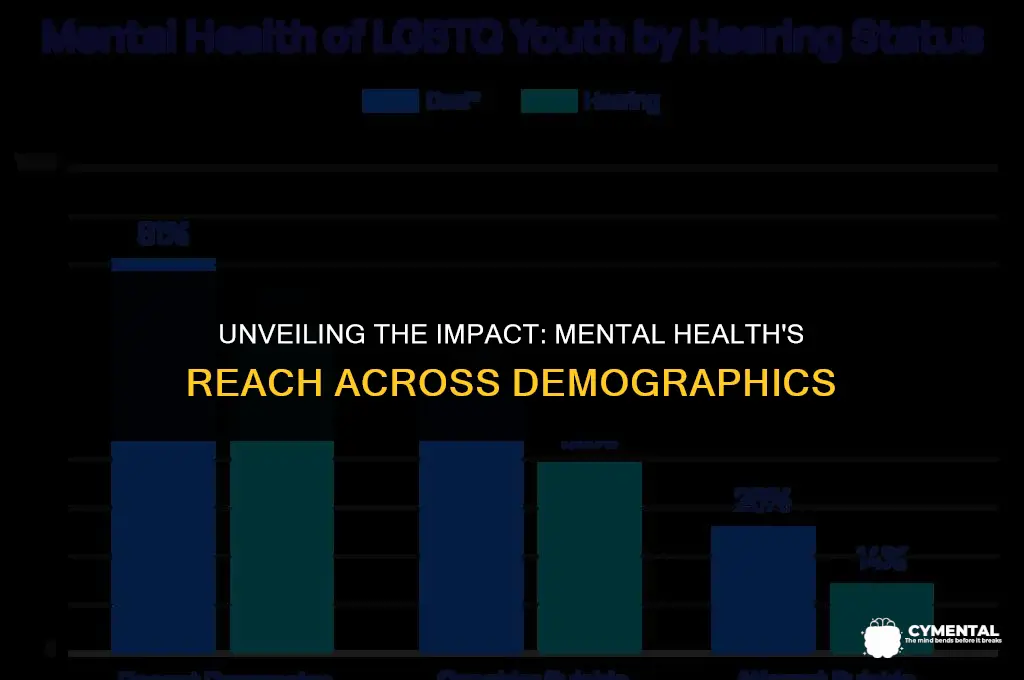
Mental health is a critical issue that affects individuals across all demographics, but certain groups are disproportionately impacted. Research indicates that women are more likely to experience mental health disorders than men, with anxiety and depression being particularly prevalent among females. Additionally, young adults and adolescents are at a higher risk, as they navigate significant life changes and societal pressures. Marginalized communities, including LGBTQ+ individuals, people of color, and those living in poverty, also face unique challenges that can exacerbate mental health issues. Understanding these disparities is crucial in developing targeted interventions and support systems to address the mental health needs of these vulnerable populations.
Explore related products

$21.77 $24.95


$9.83 $16.99


What You'll Learn
- Children and Adolescents: Mental health issues often emerge during childhood and adolescence, impacting development and future well-being
- Adults: Stress, anxiety, and depression are prevalent among adults, affecting work, relationships, and overall quality of life
- Older Adults: Mental health concerns in older adults can include dementia, depression, and anxiety, complicating healthcare and social support
- Minority Communities: Cultural and systemic factors contribute to higher rates of mental health issues in minority populations, necessitating targeted interventions
- Healthcare Workers: The mental health of healthcare professionals is critical, as they face high stress, burnout, and compassion fatigue, impacting patient care

Children and Adolescents: Mental health issues often emerge during childhood and adolescence, impacting development and future well-being
Mental health issues in children and adolescents are a critical concern, as they often lay the foundation for future psychological well-being. According to the World Health Organization (WHO), half of all mental health conditions emerge by the age of 14, and 75% by the age of 24. This underscores the importance of early intervention and support during these formative years.
One unique aspect of mental health in children and adolescents is the impact on their developing brains. Neurological development during these stages is rapid, and mental health issues can disrupt this process, leading to long-term consequences. For example, conditions like depression and anxiety can affect cognitive development, academic performance, and social skills, which are crucial for future success and well-being.
Another critical consideration is the role of environmental factors in the emergence of mental health issues during childhood and adolescence. Factors such as family dynamics, peer relationships, school environment, and exposure to trauma or stress can significantly influence mental health. Addressing these factors through targeted interventions, such as family therapy, school-based programs, and community support, can help mitigate the risk of mental health issues and promote resilience.
It is also important to recognize the signs and symptoms of mental health issues in children and adolescents, as early detection can lead to more effective treatment. Common indicators include changes in mood, behavior, or appetite, difficulty concentrating, and withdrawal from social activities. Parents, educators, and healthcare providers play a vital role in identifying these signs and ensuring that children receive the necessary support and care.
In conclusion, mental health issues in children and adolescents are a complex and multifaceted problem that requires a comprehensive approach. By understanding the unique challenges faced during these developmental stages, and by addressing environmental factors and promoting early intervention, we can help support the mental health and well-being of young people, setting them on a path to a healthier and more fulfilling future.
Exploring the Impact of Culture on Mental Health: A Comprehensive Guide
You may want to see also
Explore related products


Adults: Stress, anxiety, and depression are prevalent among adults, affecting work, relationships, and overall quality of life
Stress, anxiety, and depression are pervasive issues among adults, significantly impacting various aspects of their lives. These mental health challenges can stem from a multitude of factors, including work-related pressures, financial instability, relationship problems, and health concerns. The fast-paced nature of modern life often exacerbates these issues, leaving many adults feeling overwhelmed and unable to cope.
One of the most concerning aspects of mental health issues in adults is their impact on work performance and productivity. High levels of stress and anxiety can lead to decreased concentration, impaired decision-making, and increased absenteeism. This not only affects individual employees but also has broader implications for businesses and the economy as a whole. In fact, according to the World Health Organization, depression and anxiety disorders cost the global economy an estimated $1 trillion in lost productivity each year.
Relationships are another area where mental health issues can have a profound impact. Adults struggling with stress, anxiety, and depression may find it difficult to maintain healthy relationships with family, friends, and romantic partners. This can lead to social isolation, further exacerbating feelings of loneliness and despair. Moreover, the stigma surrounding mental health issues can prevent individuals from seeking help, fearing judgment or rejection from those around them.
The overall quality of life for adults with mental health issues is often significantly compromised. Simple daily tasks can become daunting challenges, and the ability to enjoy leisure activities and hobbies may be diminished. This can lead to a vicious cycle of inactivity and further decline in mental well-being. Additionally, untreated mental health issues can have serious physical health consequences, such as increased risk of heart disease, diabetes, and other chronic conditions.
Addressing mental health issues in adults requires a multifaceted approach. This includes increasing awareness and reducing stigma, improving access to mental health services, and promoting healthy coping mechanisms. Employers can also play a crucial role by implementing workplace wellness programs and providing support for employees struggling with mental health issues. By taking a proactive and comprehensive approach, it is possible to mitigate the impact of stress, anxiety, and depression on adults and improve their overall well-being.
The Impact of Body Image on Mental Health: A Comprehensive Guide
You may want to see also
Explore related products

$26.95 $26.95



Older Adults: Mental health concerns in older adults can include dementia, depression, and anxiety, complicating healthcare and social support
As the population ages, the prevalence of mental health concerns among older adults is becoming increasingly significant. Dementia, depression, and anxiety are among the most common mental health issues affecting this demographic, posing unique challenges for healthcare providers and social support systems. These conditions not only impact the quality of life for older adults but also place a substantial burden on caregivers and healthcare resources.
Dementia, characterized by cognitive decline and memory loss, is one of the most pressing mental health concerns in older adults. It affects not only the individual but also their families and caregivers, who must navigate the complexities of providing constant care and support. Depression, another prevalent issue, can manifest differently in older adults, often being mistaken for other age-related conditions such as fatigue or physical pain. Anxiety disorders, while less common than dementia and depression, still significantly impact the mental well-being of older adults, often leading to social isolation and decreased quality of life.
The healthcare system faces several challenges in addressing mental health concerns in older adults. Limited access to mental health services, a shortage of trained professionals, and the stigma associated with mental illness all contribute to the under-treatment of these conditions. Additionally, older adults may have multiple comorbidities, making it difficult to manage their mental health alongside other physical health issues. Social support systems also play a crucial role in addressing these concerns, as isolation and loneliness can exacerbate mental health problems.
Innovative approaches are needed to effectively address mental health concerns in older adults. This includes increasing access to mental health services through telehealth and community-based programs, providing training for healthcare professionals to better recognize and treat mental health issues in older adults, and implementing social support initiatives that foster connection and engagement. By taking a comprehensive and multifaceted approach, we can better support the mental health and well-being of our aging population.
The Impact of Mental and Emotional Illnesses on Social Well-being
You may want to see also
Explore related products





Minority Communities: Cultural and systemic factors contribute to higher rates of mental health issues in minority populations, necessitating targeted interventions
Cultural and systemic factors significantly contribute to the higher rates of mental health issues observed in minority populations. These factors encompass a broad spectrum, including socioeconomic disparities, discrimination, lack of access to healthcare, and cultural stigma surrounding mental illness. For instance, minority communities often face systemic barriers such as poverty, unemployment, and inadequate housing, which can exacerbate stress and lead to mental health problems. Moreover, discrimination and prejudice can result in feelings of isolation and marginalization, further deteriorating mental well-being.
The lack of access to mental healthcare services is another critical issue. Minority populations may face language barriers, financial constraints, and a shortage of culturally competent healthcare providers, making it difficult for them to seek and receive appropriate treatment. Cultural stigma also plays a significant role, as mental illness is often viewed negatively in many minority communities, leading individuals to hide their symptoms or avoid seeking help altogether.
Targeted interventions are essential to address these disparities. Such interventions should be culturally sensitive and tailored to the specific needs of minority populations. This could include community-based programs that provide education and awareness about mental health, as well as initiatives that increase access to affordable and culturally competent mental healthcare services. Additionally, efforts to reduce systemic barriers, such as poverty and discrimination, are crucial in promoting mental health equity.
In conclusion, the higher rates of mental health issues in minority populations are a complex problem influenced by a multitude of cultural and systemic factors. Addressing these disparities requires a multifaceted approach that includes targeted interventions, increased access to healthcare, and efforts to reduce systemic barriers. By doing so, we can work towards promoting mental health equity and improving the well-being of minority communities.
Exploring the Dark Side: Factors Undermining Youth Mental Health
You may want to see also
Explore related products


Healthcare Workers: The mental health of healthcare professionals is critical, as they face high stress, burnout, and compassion fatigue, impacting patient care
Healthcare workers are among the most vulnerable populations when it comes to mental health challenges. The nature of their work exposes them to high levels of stress, burnout, and compassion fatigue, which can have a profound impact on their well-being and, consequently, the quality of patient care they provide. Long hours, demanding workloads, and the emotional toll of dealing with life-and-death situations on a daily basis can lead to a range of mental health issues, including anxiety, depression, and post-traumatic stress disorder (PTSD).
One of the key factors contributing to the mental health struggles of healthcare professionals is the high-pressure environment in which they work. The constant need to make critical decisions, often with limited time and resources, can create a sense of overwhelming responsibility and stress. Additionally, the emotional demands of caring for patients who are suffering or in distress can lead to compassion fatigue, a state of emotional exhaustion that can make it difficult for healthcare workers to empathize with and provide adequate care to their patients.
Burnout is another significant concern, characterized by feelings of exhaustion, cynicism, and reduced effectiveness in one's role. Prolonged burnout can lead to a decrease in job satisfaction, increased absenteeism, and a higher likelihood of making medical errors. Furthermore, the stigma surrounding mental health issues within the healthcare profession can prevent individuals from seeking the help they need, fearing judgment or repercussions for their careers.
To address these challenges, it is essential for healthcare organizations to prioritize the mental health and well-being of their staff. This can include providing access to mental health resources, such as counseling and support groups, as well as implementing strategies to reduce stress and burnout, like flexible scheduling, adequate staffing levels, and opportunities for self-care and relaxation. By taking a proactive approach to supporting the mental health of healthcare workers, organizations can not only improve the well-being of their staff but also enhance the overall quality of patient care.
The Silent Menace: Noise Pollution's Impact on Mental and Physical Health
You may want to see also
Frequently asked questions
Mental health issues can affect anyone regardless of age, gender, or background. However, certain groups may be more vulnerable due to various factors such as genetics, environment, and life experiences.
Yes, certain demographics such as young adults, women, and individuals from marginalized communities tend to experience higher rates of mental health issues. Additionally, people living in poverty or those who have experienced trauma may also be at a higher risk.
Mental health issues can manifest differently across various age groups. For example, children and adolescents may experience issues such as anxiety and depression, while older adults may be more prone to conditions like dementia and late-life depression.
Some common mental health issues that affect the general population include anxiety disorders, depression, bipolar disorder, and post-traumatic stress disorder (PTSD). These conditions can impact individuals of all ages and backgrounds.
Mental health issues can be addressed and treated through a combination of approaches such as therapy, medication, lifestyle changes, and support from friends and family. Seeking professional help from a mental health provider is often the first step towards recovery.