Lucas Bennett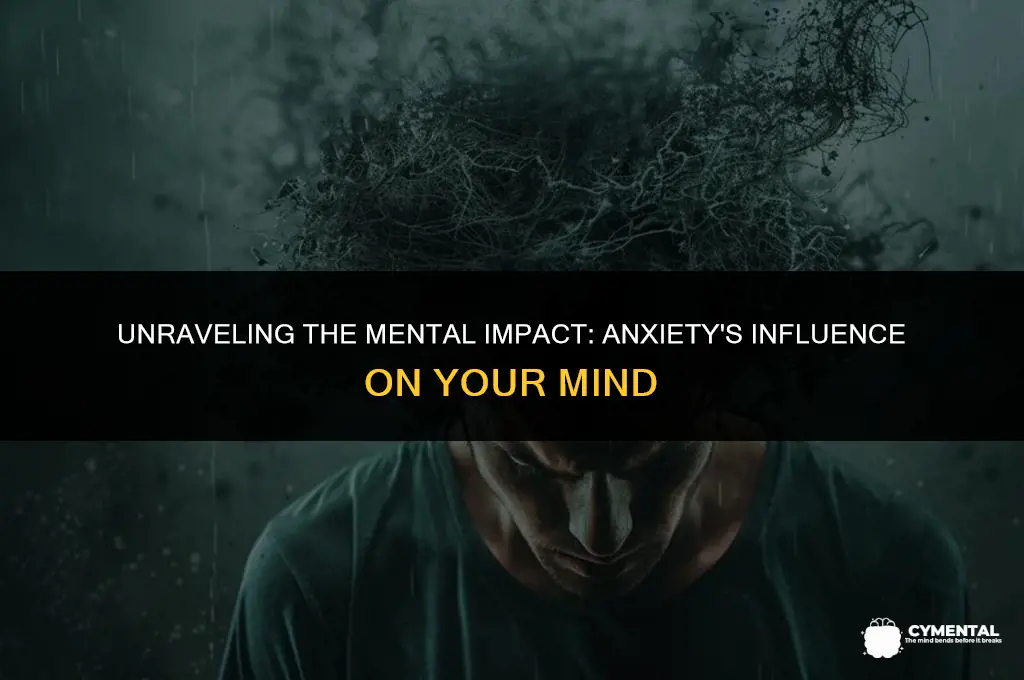
Anxiety is a pervasive mental health condition that can significantly impact an individual's cognitive and emotional well-being. Characterized by persistent feelings of worry, fear, and apprehension, anxiety can manifest in various ways, including intrusive thoughts, avoidance behaviors, and physical symptoms such as rapid heartbeat and sweating. Over time, chronic anxiety can lead to a range of mental health issues, including depression, substance abuse, and sleep disorders. Moreover, anxiety can impair cognitive functioning, making it difficult for individuals to concentrate, make decisions, and process information effectively. Understanding the mental effects of anxiety is crucial for developing effective coping strategies and seeking appropriate treatment.
Explore related products


$6.79 $14.99


What You'll Learn
- Intrusive Thoughts: Anxiety can cause repetitive, unwanted thoughts that are distressing and difficult to control
- Concentration Issues: Difficulty focusing and maintaining attention due to racing thoughts and mental restlessness
- Memory Problems: Anxiety may impair memory formation and retrieval, leading to forgetfulness and cognitive difficulties
- Emotional Turmoil: Intense feelings of fear, worry, and sadness that can be overwhelming and debilitating
- Sleep Disturbances: Anxiety can lead to insomnia, nightmares, and other sleep-related problems, affecting overall mental health

Intrusive Thoughts: Anxiety can cause repetitive, unwanted thoughts that are distressing and difficult to control
Intrusive thoughts are a common symptom of anxiety disorders, characterized by repetitive, unwanted thoughts that can be distressing and difficult to control. These thoughts often revolve around fears, worries, or negative scenarios that the individual finds hard to shake off. For example, someone with a fear of flying might repeatedly imagine their plane crashing, despite knowing statistically that flying is one of the safest modes of transportation.
The persistence of intrusive thoughts can significantly impact an individual's mental well-being. They can lead to increased stress, difficulty concentrating, and a sense of being overwhelmed. In severe cases, they can also contribute to the development of other mental health issues, such as depression or obsessive-compulsive disorder (OCD). It's important to note that while everyone experiences occasional intrusive thoughts, it's the frequency, intensity, and impact on daily life that distinguish them as a symptom of anxiety.
One effective strategy for managing intrusive thoughts is cognitive-behavioral therapy (CBT). CBT helps individuals identify and challenge the negative thought patterns that contribute to their anxiety. By learning to reframe these thoughts in a more positive and realistic light, individuals can reduce the frequency and intensity of their intrusive thoughts. For instance, someone with a fear of public speaking might learn to replace the thought "I'm going to embarrass myself" with "I'm well-prepared and capable of delivering a good presentation."
Another helpful technique is mindfulness meditation, which involves focusing on the present moment and observing thoughts without judgment. This practice can help individuals develop a greater awareness of their thoughts and learn to let go of intrusive thoughts more easily. Regular exercise and a balanced diet can also play a role in reducing anxiety and, consequently, intrusive thoughts.
In conclusion, while intrusive thoughts can be a distressing symptom of anxiety, there are effective strategies available for managing them. By seeking professional help and incorporating techniques such as CBT, mindfulness meditation, and lifestyle changes, individuals can learn to control their intrusive thoughts and improve their overall mental well-being.
Nourishing Your Mind: The Impact of Healthy Eating on Mental Health
You may want to see also
Explore related products

$10.58 $18.99





Concentration Issues: Difficulty focusing and maintaining attention due to racing thoughts and mental restlessness
Anxiety can significantly impair cognitive functions, particularly the ability to concentrate and maintain focus. This is often due to the overwhelming presence of racing thoughts and mental restlessness, which can create a constant state of distraction. Such concentration issues can affect various aspects of life, including work performance, academic achievements, and personal relationships.
One of the primary reasons anxiety leads to concentration difficulties is the body's fight-or-flight response. When anxious, the brain releases stress hormones like cortisol and adrenaline, which prepare the body for immediate action. This physiological response can cause rapid breathing, increased heart rate, and heightened alertness, all of which can make it challenging to focus on tasks that require sustained attention.
Moreover, anxiety can lead to rumination, where individuals become trapped in cycles of repetitive, intrusive thoughts. These thoughts often revolve around worries about the future or regrets about the past, making it difficult to stay present and engaged in current activities. Mental restlessness, another common symptom of anxiety, can further exacerbate concentration problems by creating a sense of constant movement or agitation, both mentally and physically.
To manage these concentration issues, individuals can employ various strategies. Mindfulness meditation, for example, can help train the brain to stay focused on the present moment, reducing the impact of racing thoughts. Regular physical exercise can also alleviate anxiety symptoms by promoting the release of endorphins, which are natural mood elevators. Additionally, establishing a structured routine can provide a sense of stability and predictability, which can be comforting for those experiencing anxiety-related concentration difficulties.
In some cases, professional intervention may be necessary. Cognitive-behavioral therapy (CBT) is a highly effective treatment for anxiety disorders, and it often includes techniques specifically aimed at improving concentration and focus. Medications such as selective serotonin reuptake inhibitors (SSRIs) or benzodiazepines may also be prescribed to help manage anxiety symptoms, although these should be used under the guidance of a healthcare professional due to potential side effects and risks of dependency.
In conclusion, concentration issues stemming from anxiety can be challenging to overcome, but with the right strategies and support, individuals can learn to manage their symptoms and improve their ability to focus. By understanding the underlying causes of these difficulties and employing a combination of self-help techniques and professional guidance when necessary, those affected by anxiety can take steps towards regaining control over their mental well-being.
Navigating Choices: The Impact of Stress and Mental Health on Decision-Making
You may want to see also
Explore related products


Memory Problems: Anxiety may impair memory formation and retrieval, leading to forgetfulness and cognitive difficulties
Anxiety has a profound impact on cognitive functions, particularly memory. Research indicates that heightened levels of anxiety can significantly impair both the formation and retrieval of memories. This occurs due to the body's fight-or-flight response, which, when chronically activated, can interfere with the normal functioning of the brain's memory centers.
One of the primary ways anxiety affects memory is through its influence on the hippocampus, a brain region crucial for the consolidation of new memories. When anxiety is persistent, the hippocampus can become damaged, leading to difficulties in forming new memories. This can manifest as forgetfulness, where individuals may struggle to recall recent events or information.
Furthermore, anxiety can also impact working memory, which is essential for tasks that require holding and manipulating information in the mind for short periods. This can lead to cognitive difficulties, such as problems with concentration, decision-making, and problem-solving. Individuals may find it challenging to stay focused on tasks, leading to decreased productivity and performance.
In addition to these cognitive impairments, anxiety can also lead to emotional memory biases. This means that anxious individuals may be more likely to remember negative events and emotions, while positive memories may be less accessible. This bias can perpetuate a cycle of anxiety, as the individual is more likely to dwell on past negative experiences, further fueling their anxiety.
To mitigate these memory problems, it is essential to manage anxiety effectively. Techniques such as mindfulness meditation, deep breathing exercises, and cognitive-behavioral therapy can help reduce anxiety levels and improve memory function. Additionally, lifestyle changes, such as regular exercise and a balanced diet, can also support overall brain health and cognitive function.
In conclusion, anxiety's impact on memory is multifaceted, affecting both the formation and retrieval of memories, as well as cognitive functions and emotional memory biases. By understanding these effects and implementing strategies to manage anxiety, individuals can improve their memory and overall mental well-being.
Unveiling the Long-Term Impact of Alcohol on Mental Health
You may want to see also
Explore related products


$14.15 $18.95


Emotional Turmoil: Intense feelings of fear, worry, and sadness that can be overwhelming and debilitating
Anxiety can manifest in a myriad of ways, but one of the most debilitating forms is emotional turmoil. This state is characterized by intense feelings of fear, worry, and sadness that can be overwhelming and paralyzing. Emotional turmoil can make it difficult to function in daily life, affecting everything from personal relationships to professional responsibilities. It's as if a storm is raging inside, making it hard to find calm and clarity amidst the chaos.
One of the unique aspects of emotional turmoil is how it can distort one's perception of reality. When gripped by intense anxiety, individuals may find themselves catastrophizing, assuming the worst-case scenario in every situation. This can lead to a cycle of negative thinking, where each thought fuels the next, creating a spiraling effect that's hard to break free from. For example, a person might start by worrying about a minor issue at work, which then escalates into a fear of losing their job, and eventually spirals into a belief that they'll never find employment again.
Another distinctive feature of emotional turmoil is its physical impact. Anxiety can manifest in the body, leading to symptoms such as rapid heartbeat, shortness of breath, and muscle tension. These physical sensations can be terrifying, especially when they occur unexpectedly or without an obvious trigger. Over time, this can lead to a heightened state of alertness, where the body is constantly primed for danger, even when there's no real threat present.
Breaking free from emotional turmoil requires a multifaceted approach. One effective strategy is to practice mindfulness, focusing on the present moment rather than getting caught up in worries about the future or regrets about the past. This can help to ground individuals and provide a sense of control over their thoughts and emotions. Additionally, seeking support from friends, family, or a mental health professional can be crucial in navigating the complexities of anxiety and finding ways to manage its symptoms.
In conclusion, emotional turmoil is a distinct and challenging aspect of anxiety that can have far-reaching effects on an individual's life. By understanding its unique characteristics and implementing targeted strategies, it's possible to find relief and regain a sense of balance and well-being.
The Ripple Effect: Mental Health's Impact on Society
You may want to see also
Explore related products


Sleep Disturbances: Anxiety can lead to insomnia, nightmares, and other sleep-related problems, affecting overall mental health
Anxiety's impact on mental health is multifaceted, and one of the most significant yet often overlooked aspects is its effect on sleep. Sleep disturbances, such as insomnia and nightmares, are common symptoms of anxiety that can exacerbate the condition and lead to a vicious cycle of worsening mental health. Understanding the relationship between anxiety and sleep is crucial for developing effective coping strategies and improving overall well-being.
Insomnia, characterized by difficulty falling asleep or staying asleep, is a prevalent sleep disturbance among individuals with anxiety. The racing thoughts and heightened arousal associated with anxiety can make it challenging to relax and drift off to sleep. Furthermore, the fear of not being able to sleep can itself become a source of anxiety, leading to a self-reinforcing cycle. Nightmares are another sleep-related problem that can stem from anxiety. These vivid, distressing dreams can disrupt sleep and contribute to feelings of fear and unease, further intensifying anxiety symptoms.
The impact of sleep disturbances on mental health should not be underestimated. Chronic sleep deprivation can impair cognitive function, mood regulation, and emotional resilience, making it more difficult to manage anxiety. Additionally, sleep disturbances can contribute to the development of other mental health conditions, such as depression and substance abuse disorders. Therefore, addressing sleep-related problems is an essential component of anxiety treatment and management.
Fortunately, there are several strategies that can help alleviate sleep disturbances associated with anxiety. Establishing a consistent sleep schedule, creating a relaxing bedtime routine, and maintaining a sleep-conducive environment can all promote better sleep quality. Cognitive-behavioral therapy for insomnia (CBT-I) is a specialized form of therapy that can help individuals with anxiety-related sleep problems develop healthier sleep habits and reduce anxiety. In some cases, medication may be necessary to manage sleep disturbances, but it should be used in conjunction with other therapeutic approaches and under the guidance of a healthcare professional.
In conclusion, sleep disturbances are a significant aspect of anxiety's impact on mental health. By understanding the relationship between anxiety and sleep and implementing effective coping strategies, individuals can improve their sleep quality and overall well-being. Addressing sleep-related problems should be a priority in anxiety treatment, as it can lead to better outcomes and a higher quality of life.
Exploring the Complex Link Between Abortion and Mental Health
You may want to see also
Frequently asked questions
Anxiety can significantly impact your mental health by causing excessive worry, fear, and stress. It can lead to a range of mental health issues, including depression, panic attacks, and social anxiety disorder.
Common symptoms of anxiety include feeling restless or on edge, difficulty concentrating, irritability, muscle tension, and sleep disturbances. You may also experience panic attacks, which are intense episodes of fear and anxiety.
Yes, anxiety can also affect your physical health. It can cause symptoms such as headaches, stomachaches, and chest pain. Chronic anxiety can also weaken your immune system and increase your risk of developing other health problems.
There are several effective ways to manage anxiety, including practicing relaxation techniques such as deep breathing and meditation, exercising regularly, maintaining a healthy diet, and seeking professional help from a therapist or counselor. Medications such as anti-anxiety drugs and antidepressants can also be helpful in some cases.