Madison Cole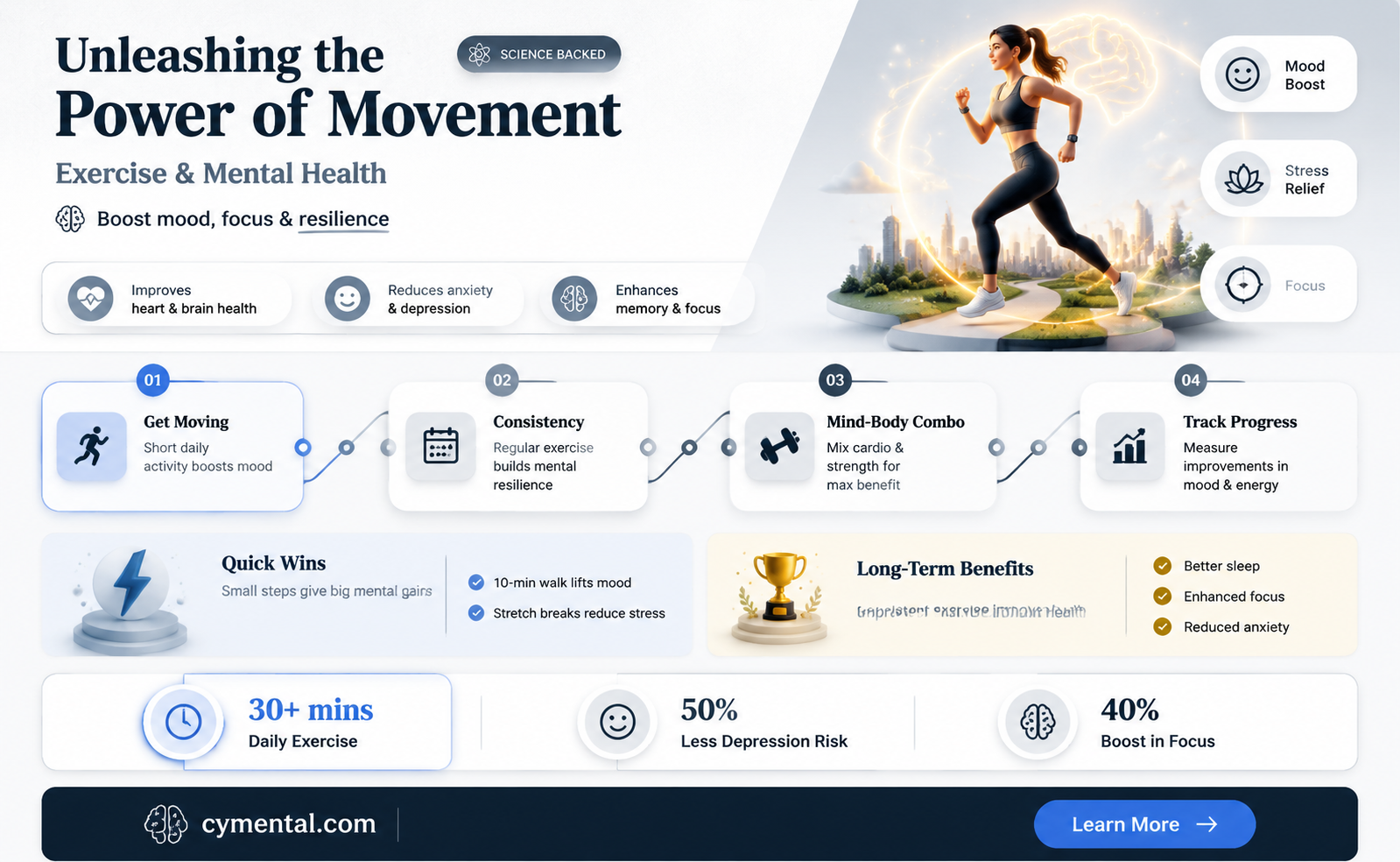
Regular physical activity has been widely recognized for its numerous physical health benefits, but its impact on mental health is equally significant. Exercise has been shown to reduce symptoms of anxiety and depression, improve mood, and enhance cognitive function. The release of endorphins during physical activity can create a sense of euphoria, often referred to as runner's high, which can help alleviate stress and promote relaxation. Additionally, exercise can serve as a healthy coping mechanism, providing a constructive outlet for managing emotions and reducing the risk of substance abuse. Research suggests that even moderate amounts of exercise, such as brisk walking or cycling, can have a positive effect on mental well-being. Furthermore, the social aspect of group fitness activities can foster a sense of community and belonging, which can be particularly beneficial for individuals struggling with feelings of isolation or loneliness. Overall, incorporating regular exercise into one's routine can be a powerful tool for maintaining both physical and mental health.
Explore related products


$15.32 $25.99


What You'll Learn
- Neurotransmitter Regulation: Exercise influences brain chemistry by regulating neurotransmitters like serotonin and dopamine, which impact mood and emotions
- Stress Reduction: Physical activity helps reduce stress levels by promoting relaxation and improving the body's ability to handle stressors
- Improved Sleep: Regular exercise can enhance sleep quality, which is crucial for maintaining good mental health and emotional well-being
- Cognitive Function: Exercise has been shown to improve cognitive function, including memory, attention, and problem-solving skills
- Self-Esteem and Confidence: Engaging in physical activity can boost self-esteem and confidence, positively impacting overall mental health and social interactions

Neurotransmitter Regulation: Exercise influences brain chemistry by regulating neurotransmitters like serotonin and dopamine, which impact mood and emotions
Exercise has a profound impact on brain chemistry, primarily through the regulation of neurotransmitters such as serotonin and dopamine. These neurotransmitters play crucial roles in mood regulation, emotional responses, and overall mental health. Serotonin, often referred to as the "feel-good" hormone, helps to stabilize mood, reduce feelings of anxiety, and improve sleep patterns. Dopamine, on the other hand, is associated with reward, motivation, and pleasure. Regular physical activity has been shown to increase the levels of these neurotransmitters in the brain, leading to improved mental well-being.
One of the mechanisms by which exercise influences neurotransmitter levels is through the stimulation of neurogenesis, the process of generating new neurons in the brain. Exercise promotes neurogenesis in regions such as the hippocampus, which is involved in memory and emotion regulation. This increased neurogenesis is accompanied by a rise in neurotransmitter production, contributing to the positive effects on mental health.
Moreover, exercise has been found to enhance the sensitivity of neurotransmitter receptors, making them more responsive to the neurotransmitters themselves. This increased receptor sensitivity can lead to more efficient neurotransmission, further improving mood and emotional stability. Additionally, physical activity can reduce the levels of stress hormones such as cortisol, which can negatively impact neurotransmitter function and mental health.
The type and intensity of exercise can also influence its effects on neurotransmitter regulation. Aerobic exercises, such as running, cycling, and swimming, have been shown to be particularly effective in boosting serotonin and dopamine levels. Resistance training and high-intensity interval training (HIIT) can also have positive effects, although the specific impact on neurotransmitters may vary.
In conclusion, exercise serves as a powerful tool for regulating neurotransmitters like serotonin and dopamine, which are essential for maintaining good mental health. By promoting neurogenesis, enhancing receptor sensitivity, and reducing stress hormones, regular physical activity can lead to significant improvements in mood and emotional well-being.
Unveiling the Impact: Mental Illness and Brain Function Explored
You may want to see also
Explore related products

$14.84 $15.99

$51.19 $67.99


$15.95 $19.99

Stress Reduction: Physical activity helps reduce stress levels by promoting relaxation and improving the body's ability to handle stressors
Regular physical activity is a powerful tool for stress reduction. When you engage in exercise, your body releases endorphins, which are natural chemicals that act as mood elevators and pain relievers. These endorphins help to counteract the negative effects of stress hormones like cortisol, leading to a more relaxed state of mind. Additionally, exercise can improve your body's ability to handle stressors by enhancing your overall physical health and resilience.
One of the key ways that exercise promotes relaxation is through its impact on the nervous system. Physical activity can help to calm the sympathetic nervous system, which is responsible for the "fight or flight" response that often accompanies stress. By reducing the activity of this system, exercise can help you feel more at ease and better able to cope with challenging situations. Furthermore, exercise can improve the quality of your sleep, which is essential for managing stress levels. When you get enough restful sleep, you're better equipped to handle the demands of daily life without feeling overwhelmed.
Exercise can also provide a valuable distraction from the stressors of everyday life. When you're focused on a physical activity, you're less likely to dwell on negative thoughts or worries. This mental break can help you gain perspective and return to your daily tasks with a renewed sense of energy and focus. Moreover, engaging in exercise can give you a sense of accomplishment and boost your self-esteem, which can further contribute to stress reduction.
It's important to note that the benefits of exercise for stress reduction can be seen across a wide range of physical activities. Whether you prefer high-intensity workouts like running or cycling, or more gentle activities like yoga or walking, you can experience stress-relieving effects. The key is to find an activity that you enjoy and that fits into your lifestyle, so that you can make it a regular part of your routine. By incorporating exercise into your daily life, you can build resilience against stress and improve your overall mental health.
The Impact of Cell Phones on Mental Health: A Comprehensive Guide
You may want to see also
Explore related products

$42.42


Improved Sleep: Regular exercise can enhance sleep quality, which is crucial for maintaining good mental health and emotional well-being
Regular exercise is a powerful tool for improving sleep quality, which in turn has a significant impact on mental health and emotional well-being. When we engage in physical activity, our bodies release endorphins, which are natural chemicals that promote feelings of happiness and relaxation. This can help to reduce stress and anxiety, making it easier to fall asleep and stay asleep throughout the night.
In addition to the psychological benefits, exercise also has a physiological impact on sleep. Physical activity can help to regulate our circadian rhythms, which are the internal processes that control our sleep-wake cycles. By exercising at the right time of day, we can help to ensure that our bodies are ready for sleep when it's time to wind down.
One of the most effective ways to use exercise to improve sleep is to engage in moderate-intensity physical activity, such as brisk walking, cycling, or swimming, for at least 30 minutes a day. It's important to avoid exercising too close to bedtime, as this can actually interfere with sleep. Instead, aim to finish your workout at least 2-3 hours before you plan to go to sleep.
Another important consideration is the type of exercise you choose. While any form of physical activity can be beneficial, some types of exercise may be more effective than others for improving sleep. For example, yoga and tai chi have been shown to be particularly helpful for reducing stress and promoting relaxation, which can make it easier to fall asleep.
Finally, it's important to be consistent with your exercise routine. Regular physical activity is more likely to have a lasting impact on sleep quality than sporadic or infrequent exercise. By making exercise a priority and incorporating it into your daily routine, you can improve your sleep quality and, in turn, support your mental health and emotional well-being.
The Emotional Toll: How Cheating Impacts a Woman's Mental Health
You may want to see also
Explore related products

$32.99 $8.99


Cognitive Function: Exercise has been shown to improve cognitive function, including memory, attention, and problem-solving skills
Regular physical activity has a profound impact on cognitive function, enhancing various mental processes essential for daily life. One of the most significant benefits of exercise is its ability to improve memory. Studies have shown that aerobic exercise, in particular, can increase the size of the hippocampus, a region of the brain responsible for memory formation and spatial navigation. This can lead to better performance in tasks that require remembering information, such as learning new skills or recalling past events.
In addition to memory, exercise also plays a crucial role in enhancing attention and focus. Engaging in regular physical activity has been linked to increased levels of dopamine and norepinephrine, neurotransmitters that are vital for maintaining alertness and concentration. This can be particularly beneficial for individuals who struggle with attention deficit hyperactivity disorder (ADHD), as exercise can help mitigate symptoms and improve cognitive performance.
Furthermore, exercise has been shown to boost problem-solving skills and creativity. Physical activity stimulates the release of endorphins, which can help reduce stress and anxiety, allowing the brain to function more efficiently. This can lead to improved cognitive flexibility, enabling individuals to switch between tasks more easily and approach problems from different perspectives. Regular exercise can also promote neurogenesis, the growth of new neurons, which can further enhance cognitive abilities.
The benefits of exercise on cognitive function are not limited to any specific age group. While the effects may be more pronounced in older adults, who are at a higher risk of cognitive decline, regular physical activity can also have a significant impact on children and adolescents. In fact, exercise has been shown to improve academic performance in school-aged children, highlighting the importance of incorporating physical activity into daily routines from a young age.
To maximize the cognitive benefits of exercise, it is essential to engage in a variety of physical activities that challenge both the body and the mind. This can include aerobic exercises, such as running or cycling, as well as strength training and flexibility exercises. Additionally, incorporating activities that require coordination and balance, such as yoga or dance, can further enhance cognitive function.
In conclusion, exercise is a powerful tool for improving cognitive function, with benefits that extend to memory, attention, problem-solving skills, and creativity. By making regular physical activity a priority, individuals can not only enhance their mental performance but also reduce the risk of cognitive decline and improve overall well-being.
The Impact of School on Students' Mental Health: A Comprehensive Look
You may want to see also
Explore related products


Self-Esteem and Confidence: Engaging in physical activity can boost self-esteem and confidence, positively impacting overall mental health and social interactions
Engaging in regular physical activity has been shown to have a profound impact on an individual's self-esteem and confidence. This is particularly true for activities that involve mastering new skills or achieving personal goals, such as learning to play a musical instrument or completing a marathon. As individuals experience a sense of accomplishment and progress in their chosen activity, they are more likely to develop a positive self-image and feel confident in their abilities.
One of the key mechanisms by which exercise boosts self-esteem is through the release of endorphins, often referred to as "feel-good" hormones. These chemicals are produced by the brain during physical activity and have been shown to improve mood, reduce stress, and increase feelings of happiness and well-being. Additionally, exercise can lead to physical changes in the body, such as weight loss or increased muscle tone, which can further enhance self-esteem and confidence.
The social benefits of exercise should not be overlooked, as participating in group activities or sports can provide opportunities for social interaction and support. This can be especially beneficial for individuals who struggle with social anxiety or feel isolated. By engaging in physical activity with others, individuals can build relationships, develop communication skills, and feel a sense of belonging to a community.
It is important to note that the benefits of exercise on self-esteem and confidence are not limited to any specific age group or fitness level. Research has shown that physical activity can have a positive impact on self-esteem across the lifespan, from children to older adults. Furthermore, even small amounts of exercise can be beneficial, with as little as 30 minutes of moderate-intensity activity per day being sufficient to see improvements in self-esteem and confidence.
In conclusion, engaging in physical activity can be a powerful tool for boosting self-esteem and confidence, with benefits extending to overall mental health and social interactions. By finding an activity that they enjoy and setting achievable goals, individuals can experience a sense of accomplishment and progress that can lead to improved self-image and confidence.
Nurturing Mental Wellness: The Power of Supportive Friendships
You may want to see also
Frequently asked questions
Yes, exercise has been shown to have a positive impact on mental health. Physical activity can help reduce symptoms of anxiety and depression, improve mood, and enhance overall psychological well-being.
Aerobic exercises, such as running, swimming, and cycling, are particularly beneficial for mental health. Additionally, activities like yoga and tai chi, which combine physical movement with mindfulness and relaxation techniques, can also be helpful.
Exercise increases the production of endorphins, which are natural mood elevators. It also promotes the release of neurotransmitters like serotonin and dopamine, which play a role in regulating mood and emotions. Furthermore, exercise can help reduce inflammation and oxidative stress in the brain, contributing to better mental health.
While exercise should not replace professional treatment, it can be a valuable adjunct to therapy and medication for mental health conditions. Regular physical activity can help alleviate symptoms and improve overall quality of life for individuals with anxiety, depression, and other mental health disorders.
Even small amounts of exercise can have a positive impact on mental health. Aiming for at least 30 minutes of moderate-intensity physical activity most days of the week can lead to noticeable improvements in mood and well-being. Consistency is key, so finding an exercise routine that you enjoy and can stick to is important.