Noah Parker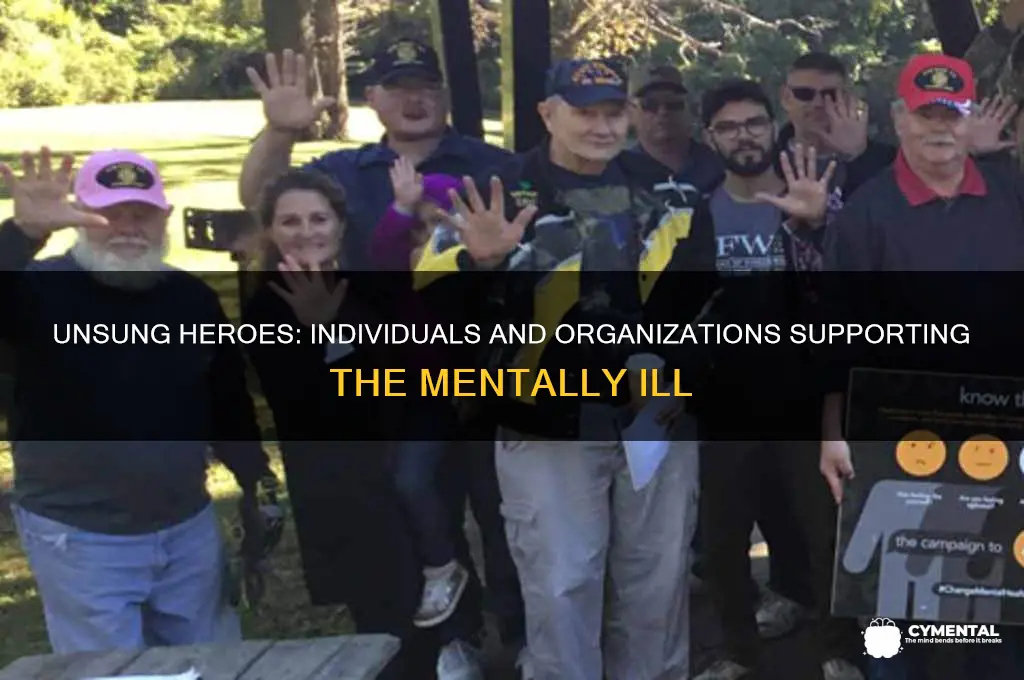
Throughout history, numerous individuals and organizations have played pivotal roles in supporting and advocating for the mentally ill, challenging stigma, and advancing treatment. Early pioneers like Philippe Pinel and Dorothea Dix revolutionized the care of the mentally ill by promoting humane treatment and establishing asylums. In the 20th century, figures such as Sigmund Freud and Carl Jung laid the groundwork for modern psychotherapy, while activists like Clifford Beers founded organizations like the National Mental Health Association to push for better care and rights. Today, mental health professionals, nonprofits, and global initiatives like the World Health Organization continue this legacy, working tirelessly to improve access to care, raise awareness, and foster compassion for those struggling with mental illness.
Explore related products


What You'll Learn
- Historical Figures: Pioneers like Philippe Pinel and Dorothea Dix revolutionized mental health care
- Modern Advocates: Organizations like NAMI and Mental Health America provide support and awareness
- Therapists & Psychiatrists: Professionals offer therapy, medication, and personalized treatment plans for recovery
- Peer Support Groups: Communities of individuals with lived experience foster understanding and healing
- Government Initiatives: Policies and funding for mental health services improve access and care

Historical Figures: Pioneers like Philippe Pinel and Dorothea Dix revolutionized mental health care
Philippe Pinel, a French physician, stands as a pivotal figure in the transformation of mental health care during the late 18th century. Before his interventions, the mentally ill were often shackled, abused, and treated as criminals rather than patients. Pinel's groundbreaking approach, known as "moral treatment," emphasized compassion, humane care, and the therapeutic value of a supportive environment. At the Bicêtre Hospital in Paris, he famously removed the chains from patients, replacing physical restraint with psychological understanding. This act symbolized a shift from punishment to treatment, laying the foundation for modern psychiatric care. Pinel's work not only improved the lives of the mentally ill but also challenged societal perceptions, proving that kindness and empathy could yield better outcomes than cruelty.
Across the Atlantic, Dorothea Dix emerged as a tireless advocate for the mentally ill in 19th-century America. Appalled by the conditions in prisons and almshouses where the mentally ill were often confined, Dix conducted extensive investigations and lobbied state legislatures for reform. Her efforts led to the establishment of the first public mental hospitals in the United States, designed to provide humane care rather than mere containment. Dix's advocacy was rooted in her belief that society had a moral obligation to protect and care for its most vulnerable members. Her work not only improved institutional conditions but also spurred legislative changes, ensuring that mental health care became a public responsibility.
Comparing Pinel and Dix reveals both similarities and contrasts in their approaches. Both pioneers challenged the status quo, advocating for humane treatment in an era of neglect and abuse. However, Pinel's focus was on clinical practice and the therapeutic environment, while Dix concentrated on systemic reform and policy change. Their combined efforts illustrate the dual need for compassionate care and institutional advocacy in addressing mental illness. Pinel's moral treatment provided a model for individual patient care, while Dix's activism ensured that such care could be implemented on a broader scale.
The legacies of Pinel and Dix continue to shape mental health care today. Pinel's emphasis on understanding and empathy paved the way for modern psychiatric practices, including talk therapy and patient-centered care. Dix's advocacy for public mental health systems remains relevant in ongoing debates about healthcare accessibility and funding. Their work reminds us that progress in mental health care requires both individual compassion and collective action. For those seeking to improve mental health systems today, studying their methods offers valuable lessons: prioritize humanity in treatment, advocate relentlessly for policy change, and recognize the interconnectedness of individual care and systemic reform.
Hockey's Mental Health Benefits: Boosting Resilience and Well-being on the Ice
You may want to see also
Explore related products


Modern Advocates: Organizations like NAMI and Mental Health America provide support and awareness
In the United States, one in five adults experiences mental illness each year, yet stigma and lack of access to care persist. Organizations like the National Alliance on Mental Illness (NAMI) and Mental Health America (MHA) have emerged as modern advocates, filling critical gaps in support and awareness. NAMI, founded in 1979 by families of individuals with mental illness, offers peer-led education programs like Family-to-Family, which has reached over 300,000 participants. MHA, established in 1909, pioneered the Mental Health Month campaign in May, now a global initiative. Together, these organizations provide a lifeline for millions, combining grassroots efforts with national reach.
Consider this: NAMI’s NAMI Basics course is a free, 6-session program designed for parents and caregivers of children and adolescents with mental health conditions. It covers topics like crisis preparation and navigating the healthcare system. MHA’s online screening tools, available in both English and Spanish, have facilitated over 10 million self-assessments since 2014, helping individuals recognize symptoms early. These practical resources exemplify how modern advocacy translates into actionable support. By focusing on education and accessibility, these organizations empower individuals to take control of their mental health journeys.
While both NAMI and MHA share a mission to improve mental health outcomes, their approaches differ. NAMI emphasizes peer support and family involvement, fostering a sense of community through local chapters and support groups. MHA, on the other hand, leans into policy advocacy and public education, pushing for systemic changes like increased funding for mental health services. This complementary dynamic ensures that both individual needs and broader societal issues are addressed. For instance, NAMI’s advocacy efforts led to the passage of the Mental Health Parity and Addiction Equity Act in 2008, while MHA’s *State of Mental Health in America* report annually highlights disparities in access to care.
To engage with these organizations, start by locating your nearest NAMI chapter or exploring MHA’s online resources. If you’re a caregiver, enroll in NAMI Basics or join a NAMI Family Support Group. For self-assessment, take MHA’s screening test and follow their recommended next steps. Advocacy doesn’t require expertise—sharing MHA’s infographics or participating in NAMI’s annual Walks raises awareness effectively. Remember, these organizations thrive on community involvement; volunteering or donating amplifies their impact. By leveraging their tools and networks, you become part of a movement that challenges stigma and fosters resilience.
Ultimately, NAMI and MHA demonstrate that modern advocacy is both personal and systemic. They provide immediate support while working to dismantle barriers to care, proving that mental health is a collective responsibility. Whether you’re seeking help or aiming to help others, these organizations offer a roadmap for making a difference. Their work reminds us that in the fight for mental health equity, every action—no matter how small—counts.
Reporting Concerns: How to Help Someone Struggling with Mental Health
You may want to see also
Explore related products





Therapists & Psychiatrists: Professionals offer therapy, medication, and personalized treatment plans for recovery
Mental health recovery often hinges on the expertise of therapists and psychiatrists, two distinct yet complementary professionals. Therapists, including psychologists, social workers, and counselors, specialize in talk therapy. They employ evidence-based techniques like cognitive-behavioral therapy (CBT) to help individuals reframe negative thought patterns, or dialectical behavior therapy (DBT) to improve emotional regulation. For instance, a therapist might guide a patient through weekly 50-minute sessions, using CBT to challenge anxiety-driven beliefs about social situations. Psychiatrists, on the other hand, are medical doctors trained to diagnose and treat mental illnesses, often through medication. They may prescribe selective serotonin reuptake inhibitors (SSRIs) like fluoxetine (20–60 mg/day) for depression or mood stabilizers like lithium (900–1,800 mg/day) for bipolar disorder. Together, these professionals create a holistic approach, addressing both psychological and biological aspects of mental health.
Consider the case of a 32-year-old with treatment-resistant depression. A psychiatrist might recommend a combination of escitalopram (10–20 mg/day) and psychotherapy, while monitoring side effects such as nausea or insomnia. Meanwhile, a therapist could use interpersonal therapy (IPT) to help the patient improve relationships, a known protective factor against depressive episodes. This collaborative model ensures that treatment is tailored to the individual’s needs, accounting for factors like age, medical history, and symptom severity. For adolescents, for example, family therapy might be integrated into the plan to address familial dynamics contributing to anxiety or depression.
While therapists and psychiatrists offer distinct services, their collaboration is critical for complex cases. A study in *JAMA Psychiatry* found that patients receiving combined therapy and medication for major depression had a 60% higher remission rate compared to those receiving medication alone. However, access to such integrated care remains a challenge. Practical tips for navigating this system include verifying insurance coverage for both therapy and psychiatric visits, seeking providers who specialize in your specific condition, and maintaining open communication between your therapist and psychiatrist to ensure coordinated care.
One cautionary note: medication is not a one-size-fits-all solution. For instance, older adults may metabolize drugs differently, requiring lower dosages of antidepressants like sertraline (starting at 25 mg/day). Similarly, children and adolescents often respond better to therapy-first approaches, with medication reserved for severe cases. Patients should also be aware of potential drug interactions and side effects, such as the risk of serotonin syndrome when combining SSRIs with monoamine oxidase inhibitors (MAOIs). Regular follow-ups with a psychiatrist are essential to monitor progress and adjust treatment as needed.
In conclusion, therapists and psychiatrists play indispensable roles in mental health recovery, offering therapy, medication, and personalized treatment plans. Their combined expertise ensures a comprehensive approach, addressing the multifaceted nature of mental illness. By understanding their unique contributions and working collaboratively, individuals can navigate the path to recovery with greater clarity and efficacy. Whether through the empathetic guidance of a therapist or the precise prescriptions of a psychiatrist, professional help remains a cornerstone of healing.
Summer Programs: A Lifeline for Mental Health and Suicide Prevention?
You may want to see also
Explore related products


Peer Support Groups: Communities of individuals with lived experience foster understanding and healing
Peer support groups are a cornerstone of mental health recovery, offering a unique blend of empathy, shared experience, and practical advice. Unlike traditional therapy, these groups are led by individuals who have navigated their own mental health challenges, creating a space where vulnerability is met with understanding rather than judgment. For example, organizations like the National Alliance on Mental Illness (NAMI) offer peer-led programs such as Connection Recovery Support Groups, where participants share coping strategies and celebrate progress in a non-clinical setting. This model fosters a sense of belonging, reducing the isolation often felt by those struggling with mental illness.
To join a peer support group, start by researching local or online options through mental health organizations or community centers. Many groups are free or low-cost, making them accessible to a wide audience. During sessions, participants typically engage in structured discussions, goal-setting exercises, or mindfulness activities. For instance, a group might use the "Wellness Recovery Action Plan" (WRAP) framework, a self-designed tool to manage symptoms and improve overall well-being. It’s crucial to attend regularly to build trust and rapport, as consistency strengthens the therapeutic bond within the group.
One of the most compelling aspects of peer support groups is their ability to bridge the gap between professional treatment and everyday life. While therapists and psychiatrists provide clinical expertise, peers offer real-world insights into managing mental health. For example, a group member might share how they use journaling to track mood patterns or how they navigate workplace stress. This exchange of lived experience empowers participants to take an active role in their recovery, often complementing formal treatment plans. Studies show that individuals in peer support groups report higher levels of hope, self-efficacy, and reduced hospitalization rates.
However, peer support groups are not a one-size-fits-all solution. They thrive on mutual respect and confidentiality, so it’s essential to find a group whose culture aligns with your needs. For instance, some groups focus on specific conditions like depression or PTSD, while others cater to broader mental health concerns. If you’re unsure where to start, consider attending a few sessions to gauge the dynamics. Remember, the goal is not to replace professional care but to enhance it by providing a community of allies who truly "get it."
Incorporating peer support into your mental health toolkit can be transformative. Whether you’re seeking practical advice, emotional validation, or simply a safe space to share, these groups offer a powerful reminder that you’re not alone. By leveraging the collective wisdom of lived experience, peer support groups turn individual struggles into communal triumphs, proving that healing is not just possible—it’s a shared journey.
Therapy's Impact: Unlocking Mental Health Healing and Personal Growth
You may want to see also
Explore related products


Government Initiatives: Policies and funding for mental health services improve access and care
Governments worldwide are increasingly recognizing mental health as a critical component of overall well-being, leading to the implementation of targeted policies and funding initiatives. For instance, the United Kingdom’s Mental Health Investment Standard mandates that at least 1% of local NHS budgets be allocated to mental health services annually, ensuring consistent growth in funding. This policy not only addresses historical underfunding but also sets a measurable benchmark for progress. Similarly, Australia’s National Mental Health Commission oversees the allocation of over AUD 5 billion annually to mental health programs, emphasizing early intervention and community-based care. These examples illustrate how structured funding mechanisms can systematically improve access to mental health services.
One of the most effective strategies governments employ is integrating mental health services into primary care systems. Canada’s Collaborative Mental Health Care Model provides a compelling case study. Under this initiative, family physicians work alongside mental health specialists to deliver coordinated care, reducing wait times and improving patient outcomes. Funding for this model includes stipends for training primary care providers in mental health assessment and treatment, ensuring that even remote or underserved areas have access to qualified professionals. Such integration bridges the gap between physical and mental healthcare, making services more accessible to diverse populations.
Policy reforms often focus on reducing stigma and increasing awareness, which are critical barriers to accessing care. In India, the National Mental Health Policy (2014) introduced mandatory mental health education in schools and workplaces, aiming to destigmatize mental illness and encourage early help-seeking behavior. Additionally, the policy allocates funds for public awareness campaigns, such as the “Live Love Laugh” initiative, which has reached millions through social media and community events. By addressing stigma at its roots, these initiatives create an environment where individuals feel safe seeking help without fear of judgment.
Despite progress, challenges remain in ensuring equitable access to mental health services. Rural and low-income communities often face disparities due to limited resources and infrastructure. The United States’ Certified Community Behavioral Health Clinics (CCBHCs) program addresses this by providing federal funding to clinics that offer 24/7 crisis care, integrated treatment for co-occurring disorders, and evidence-based practices. Clinics must meet specific criteria, such as providing care regardless of a patient’s ability to pay, to qualify for funding. This model demonstrates how targeted funding can mitigate disparities and ensure that vulnerable populations receive the care they need.
Ultimately, government initiatives in mental health are most effective when they combine funding with clear policy frameworks and community engagement. For example, New Zealand’s Wellbeing Budget (2019) allocated NZD 1.9 billion to mental health over five years, with a focus on youth mental health and Māori communities. The budget included funding for 800 new mental health workers and the expansion of telehealth services, ensuring that care is both accessible and culturally appropriate. By prioritizing specific demographics and service modalities, governments can maximize the impact of their investments and create sustainable improvements in mental health care.
Supporting Someone Through a Mental Breakdown: Compassionate Steps to Help
You may want to see also
Frequently asked questions
In ancient civilizations like Greece and Rome, philosophers and physicians such as Hippocrates and Galen provided early forms of mental health care, often attributing mental illness to an imbalance of bodily fluids (humors) and offering treatments like diet changes, baths, and rest.
During the Middle Ages, mentally ill individuals were often cared for by religious institutions, such as monasteries and churches, which provided shelter and spiritual treatment, though some were also subjected to superstition and persecution.
In the 19th century, reformers like Dorothea Dix and Philippe Pinel advocated for humane treatment of the mentally ill, leading to the establishment of asylums and the beginnings of modern psychiatric care.
Today, mental health professionals such as psychiatrists, psychologists, therapists, and social workers provide care, alongside organizations like the World Health Organization (WHO) and nonprofits that advocate for mental health awareness and support.