Lucas Bennett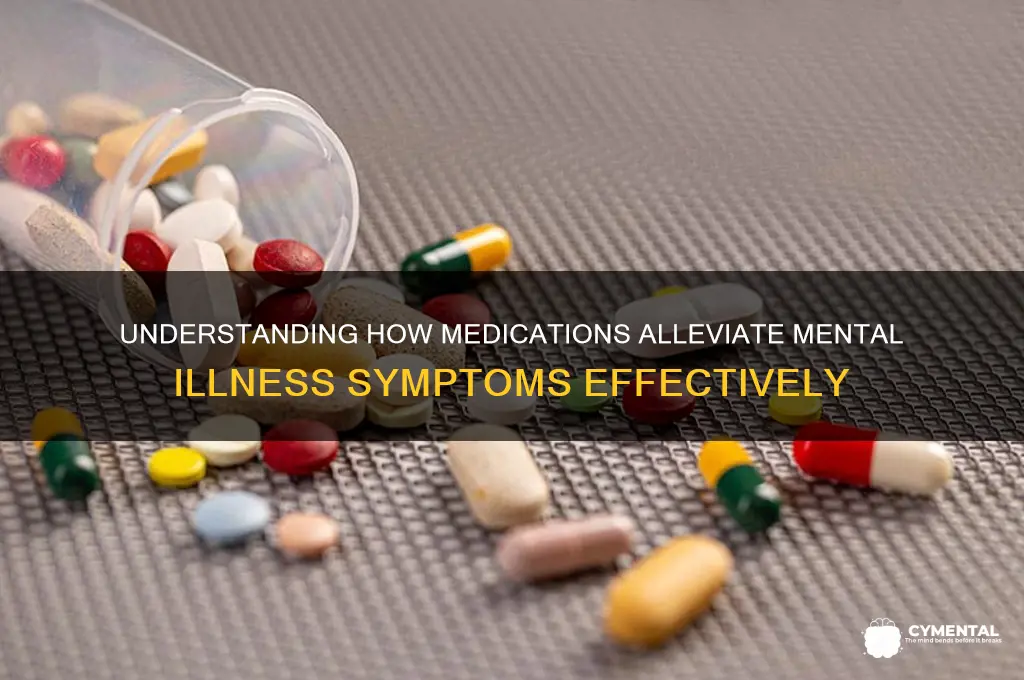
Medications play a crucial role in managing mental illness by targeting the underlying biological imbalances that contribute to symptoms. Many mental health conditions, such as depression, anxiety, and schizophrenia, involve disruptions in brain chemistry, particularly in neurotransmitters like serotonin, dopamine, and norepinephrine. Medications, such as antidepressants, antipsychotics, and mood stabilizers, work by modulating these neurotransmitters, restoring balance, and alleviating symptoms. While they do not cure mental illness, they can significantly improve quality of life, reduce distress, and enhance the effectiveness of therapies like counseling or cognitive-behavioral therapy. By addressing the biological aspects of mental health, medications provide a foundation for individuals to engage in other treatments and work toward long-term recovery.
| Characteristics | Values |
|---|---|
| Neurotransmitter Regulation | Medications like SSRIs (e.g., fluoxetine) and SNRIs (e.g., venlafaxine) modulate neurotransmitters (e.g., serotonin, norepinephrine) to restore chemical imbalances associated with depression and anxiety. |
| Brain Structure and Function | Antipsychotics (e.g., olanzapine) and mood stabilizers (e.g., lithium) help normalize brain activity in regions like the prefrontal cortex and amygdala, reducing symptoms of schizophrenia and bipolar disorder. |
| Symptom Management | Medications provide relief from acute symptoms (e.g., hallucinations, severe mood swings) and improve daily functioning, enabling individuals to engage in therapy and other treatments. |
| Long-Term Brain Plasticity | Some medications promote neuroplasticity, encouraging the growth of new neural connections and potentially reversing damage caused by chronic mental illness. |
| Reduction of Inflammation | Emerging research suggests that medications like antidepressants may reduce neuroinflammation, a factor linked to depression and other mental health conditions. |
| Genetic and Biological Factors | Medications target specific genetic and biological pathways (e.g., COMT gene in schizophrenia) to address underlying causes of mental illness. |
| Combination with Therapy | Medications often enhance the effectiveness of psychotherapy (e.g., cognitive-behavioral therapy) by stabilizing mood and cognition, making therapy more productive. |
| Prevention of Relapse | Maintenance medications (e.g., antipsychotics for schizophrenia) reduce the risk of symptom recurrence and hospitalization, improving long-term outcomes. |
| Individualized Treatment | Medications are tailored to individual needs based on factors like genetics, symptom severity, and side effect profiles, optimizing efficacy. |
| Evidence-Based Efficacy | Clinical trials and meta-analyses consistently demonstrate the effectiveness of medications in treating conditions like major depression, schizophrenia, and anxiety disorders. |
Explore related products


What You'll Learn
- Neurotransmitter Regulation: Medications balance brain chemicals like serotonin and dopamine, easing symptoms of depression and anxiety
- Symptom Management: Drugs reduce severe symptoms, such as hallucinations in schizophrenia or mood swings in bipolar disorder
- Brain Structure Changes: Some medications promote neuroplasticity, helping the brain adapt and heal over time
- Preventing Relapse: Consistent use of medication can prevent the recurrence of mental health episodes
- Enhancing Therapy: Medications often work alongside therapy, making psychological treatments more effective

Neurotransmitter Regulation: Medications balance brain chemicals like serotonin and dopamine, easing symptoms of depression and anxiety
Mental health medications often target neurotransmitters, the brain's chemical messengers, to alleviate symptoms of disorders like depression and anxiety. These conditions frequently involve imbalances in key neurotransmitters such as serotonin and dopamine. Serotonin regulates mood, sleep, and appetite, while dopamine influences motivation, pleasure, and reward. Medications like selective serotonin reuptake inhibitors (SSRIs) increase serotonin levels by preventing its reabsorption in the brain. For instance, fluoxetine (Prozac), a commonly prescribed SSRI, is often started at 20 mg daily for adults, with adjustments based on response and tolerance. This precise modulation of neurotransmitters helps restore emotional equilibrium, reducing symptoms like persistent sadness or excessive worry.
Consider the mechanism of action: SSRIs and serotonin-norepinephrine reuptake inhibitors (SNRIs) work by prolonging the presence of neurotransmitters in the synaptic cleft, enhancing their signaling. Dopamine-focused medications, such as bupropion (Wellbutrin), act differently by inhibiting dopamine reuptake, boosting motivation and energy levels. These drugs are not one-size-fits-all; their effectiveness depends on the individual’s specific neurotransmitter profile and the severity of their symptoms. For example, SNRIs like venlafaxine (Effexor) may be more suitable for patients with both depression and chronic pain due to their dual action on serotonin and norepinephrine. Understanding these mechanisms allows clinicians to tailor treatments, improving outcomes for patients.
A critical aspect of neurotransmitter regulation is the time it takes for medications to take effect. Unlike pain relievers, which provide immediate relief, antidepressants and anti-anxiety drugs often require 4–6 weeks to demonstrate noticeable benefits. This delay occurs because the brain needs time to adapt to the altered neurotransmitter levels and rebuild neural pathways. Patients must adhere to their prescribed regimen during this period, even if they don’t feel immediate improvement. For adolescents and young adults, close monitoring is essential, as medications like SSRIs carry a rare risk of increased suicidal thoughts during the initial weeks of treatment.
Practical tips can enhance the effectiveness of these medications. Pairing medication with therapy, such as cognitive-behavioral therapy (CBT), often yields better results than medication alone. Lifestyle changes, including regular exercise, a balanced diet, and adequate sleep, can also support neurotransmitter regulation. For instance, aerobic exercise increases serotonin and dopamine production naturally, complementing the effects of medication. Patients should avoid alcohol and recreational drugs, as these can interfere with neurotransmitter function and diminish the drugs’ efficacy. Open communication with healthcare providers about side effects and progress is crucial for optimizing treatment.
In conclusion, neurotransmitter regulation is a cornerstone of pharmacological treatment for mental illness. By targeting serotonin, dopamine, and other key chemicals, medications like SSRIs and SNRIs address the root causes of symptoms rather than merely masking them. While these drugs require patience and consistency, their ability to restore balance in the brain offers hope for millions. Combining medication with therapy and lifestyle adjustments maximizes their potential, paving the way for sustained mental health improvement.
Building Mental Resilience: Empowering Young Athletes for Sports Success
You may want to see also
Explore related products


Symptom Management: Drugs reduce severe symptoms, such as hallucinations in schizophrenia or mood swings in bipolar disorder
Severe symptoms of mental illness can be debilitating, disrupting daily life and relationships. Medications often serve as a critical tool in symptom management, targeting specific neurotransmitter imbalances or brain functions to restore stability. For instance, antipsychotics like olanzapine or risperidone are prescribed to individuals with schizophrenia to block dopamine receptors, effectively reducing hallucinations and delusions. Similarly, mood stabilizers such as lithium or valproate help those with bipolar disorder by modulating neurotransmitters like serotonin and norepinephrine, smoothing out extreme mood swings. These drugs act as biochemical regulators, providing a foundation for therapeutic interventions and improved functioning.
Consider the practical application of these medications. For schizophrenia, antipsychotics are typically started at low doses (e.g., 5–10 mg of risperidone daily) and titrated upward based on symptom response and side effects. Patients must be monitored for metabolic changes, such as weight gain or elevated blood sugar, common with these drugs. In bipolar disorder, lithium dosing is carefully calibrated to maintain therapeutic blood levels (0.8–1.0 mEq/L), requiring regular lab tests. Adherence is crucial; abrupt discontinuation can trigger rebound symptoms or withdrawal effects. Pairing medication with psychoeducation and lifestyle adjustments—like maintaining a consistent sleep schedule—enhances efficacy.
The comparative benefits of symptom management through medication are evident when contrasting untreated and treated states. Without antipsychotics, individuals with schizophrenia may experience persistent auditory hallucinations, leading to social withdrawal or self-harm. With treatment, many achieve symptom remission, enabling engagement in work or education. For bipolar disorder, unmedicated manic episodes can result in risky behaviors or financial recklessness, while depressive phases may lead to suicidal ideation. Medication stabilizes these extremes, allowing individuals to lead predictable, manageable lives. This transformation underscores the role of drugs as a protective barrier against the most disruptive aspects of mental illness.
A persuasive argument for medication lies in its ability to create a platform for recovery. By alleviating severe symptoms, drugs enable individuals to participate in psychotherapy, build coping skills, and rebuild social connections. For example, a person with schizophrenia who no longer hears commanding voices can focus on cognitive-behavioral therapy to challenge residual paranoia. Similarly, a bipolar patient freed from rapid cycling moods can engage in family therapy to repair strained relationships. Medication is not a cure but a tool that buys time and clarity, turning chaos into a manageable condition. Its value lies in restoring agency, not just suppressing symptoms.
Finally, a descriptive lens reveals the human impact of symptom management. Imagine a 32-year-old artist with schizophrenia who, after starting quetiapine, reports the silence of voices that once dictated her actions. She resumes painting, her work now reflecting calm rather than turmoil. Or a 45-year-old teacher with bipolar disorder who, stabilized on lamotrigine, returns to the classroom without fear of manic episodes undermining her authority. These narratives illustrate how medications transform lives by lifting the weight of severe symptoms, allowing individuals to reclaim their identities and aspirations. In this way, drugs are not just chemical compounds but keys to unlocking potential.
Supporting Loved Ones: How to Get Mental Health Help Through Mail
You may want to see also
Explore related products

$9.99


Brain Structure Changes: Some medications promote neuroplasticity, helping the brain adapt and heal over time
The brain is not static; it’s a dynamic organ capable of rewiring itself in response to experience, injury, or intervention. This ability, known as neuroplasticity, is at the heart of how certain medications alleviate mental illness. For instance, selective serotonin reuptake inhibitors (SSRIs), commonly prescribed for depression and anxiety, increase serotonin levels in the synaptic cleft, which over time promotes the growth of new neural connections in regions like the hippocampus and prefrontal cortex. Studies show that consistent SSRI use (typically 10–20 mg/day for adults) can lead to measurable increases in hippocampal volume within 6–8 weeks, a structural change linked to improved mood regulation.
Consider the analogy of a forest after a fire: just as new growth emerges from the ashes, the brain can rebuild itself with the right conditions. Medications like lithium, used for bipolar disorder, not only stabilize mood but also enhance neuroplasticity by increasing gray matter density in the prefrontal cortex. This process is particularly critical in adolescents and young adults, whose brains are still developing and more receptive to structural changes. For optimal results, lithium dosages are carefully titrated (typically 900–1,200 mg/day for adults) to balance therapeutic benefits with minimal side effects, ensuring the brain can heal without disruption.
However, neuroplasticity is a double-edged sword. Chronic stress or untreated mental illness can lead to maladaptive changes, such as reduced synaptic connections or atrophy in key brain regions. Medications act as a corrective force, steering the brain toward healthier patterns. For example, antipsychotics like aripiprazole (5–15 mg/day for adults) modulate dopamine and serotonin receptors, not only alleviating symptoms like hallucinations but also fostering neural reorganization in the striatum and cortex. This dual action underscores why medication adherence is crucial—it’s not just about symptom management but about actively reshaping the brain’s architecture.
Practical tips for maximizing neuroplasticity alongside medication include combining pharmacotherapy with cognitive-behavioral therapy (CBT), which reinforces new neural pathways through behavioral change. Regular physical exercise, particularly aerobic activities, boosts brain-derived neurotrophic factor (BDNF), a protein essential for neuroplasticity. Patients should also prioritize sleep, as restorative sleep cycles are critical for synaptic pruning and consolidation of new connections. Together, these strategies amplify the brain’s capacity to heal, turning medication from a temporary fix into a catalyst for lasting change.
Boost Your Mental Health: Simple Strategies for Well-Being and Resilience
You may want to see also
Explore related products


Preventing Relapse: Consistent use of medication can prevent the recurrence of mental health episodes
Mental health episodes, such as severe depression or manic phases in bipolar disorder, can be devastating, disrupting lives and relationships. Consistent medication use acts as a firewall against these episodes, reducing the likelihood of relapse by stabilizing brain chemistry. For instance, lithium, a mood stabilizer, has been shown to decrease relapse rates in bipolar disorder by up to 40% when taken consistently. This isn’t just about managing symptoms—it’s about preventing the cascade of events that can lead to hospitalization or long-term impairment. Skipping doses or discontinuing medication prematurely can leave the brain vulnerable, making relapse nearly inevitable for many individuals.
Consider the analogy of a chronic condition like diabetes. Just as insulin regulates blood sugar, psychiatric medications regulate neurotransmitters like serotonin or dopamine. For someone with schizophrenia, antipsychotics such as olanzapine or risperidone must be taken daily, often at specific doses (e.g., 10–20 mg for olanzapine) to maintain efficacy. Stopping abruptly can trigger psychotic symptoms within weeks, even if the person has been stable for years. Adherence tools, like pill organizers or smartphone reminders, can help, but the key is understanding that medication isn’t a temporary fix—it’s a long-term commitment to brain health.
Critics often argue that medication merely masks symptoms rather than addressing root causes. However, this view oversimplifies the complex interplay between biology and environment in mental illness. For example, selective serotonin reuptake inhibitors (SSRIs) like fluoxetine (20–60 mg daily) not only alleviate depression symptoms but also promote neuroplasticity, helping the brain build resilience against future episodes. Studies show that patients who continue SSRIs for at least 6–12 months post-recovery are 70% less likely to relapse compared to those who stop early. This isn’t masking—it’s fortification.
Practical tips for maintaining consistency include pairing medication with daily routines (e.g., taking it with breakfast) and involving a trusted person to monitor adherence. For younger adults or adolescents, whose brains are still developing, consistent medication use can be particularly critical. For example, teens with ADHD who adhere to stimulant medications like methylphenidate (10–60 mg daily) are less likely to develop comorbid conditions like anxiety or substance abuse later in life. Relapse prevention isn’t just about avoiding crises—it’s about safeguarding the potential for a stable, fulfilling life.
Ultimately, preventing relapse through consistent medication use requires a shift in perspective. It’s not about dependency but about empowerment. Just as someone with asthma relies on an inhaler to breathe freely, individuals with mental illness rely on medication to maintain emotional and cognitive equilibrium. The goal isn’t to eliminate the need for medication but to use it as a tool for sustained recovery. In this light, every dose taken is a step toward resilience, not a reminder of vulnerability.
Boost Your Mood: Top Supplements for Mental Health Support
You may want to see also
Explore related products


Enhancing Therapy: Medications often work alongside therapy, making psychological treatments more effective
Medications and therapy often form a symbiotic relationship in mental health treatment, each amplifying the other's effectiveness. For instance, selective serotonin reuptake inhibitors (SSRIs) like fluoxetine (Prozac) can reduce symptoms of depression by increasing serotonin levels, making patients more receptive to cognitive-behavioral therapy (CBT). This combination allows individuals to engage more actively in therapy sessions, addressing underlying thought patterns and behaviors with greater clarity. Studies show that patients on SSRIs alongside CBT experience a 50-60% improvement in symptoms compared to those on medication or therapy alone.
Consider the case of generalized anxiety disorder (GAD), where benzodiazepines like alprazolam (Xanax) are sometimes prescribed for short-term relief. While these medications provide immediate symptom reduction, they are not a long-term solution due to dependency risks. When paired with therapy, such as mindfulness-based stress reduction (MBSR), patients learn coping mechanisms to manage anxiety without relying solely on medication. Therapists often recommend starting with a low dose (e.g., 0.25 mg of Xanax) and gradually tapering off as therapeutic skills improve, ensuring a balanced approach.
For children and adolescents, the combination of medication and therapy is particularly nuanced. Stimulants like methylphenidate (Ritalin) are commonly prescribed for ADHD, but their effectiveness is significantly enhanced when paired with behavioral therapy. Parents and educators can work with therapists to implement structured routines and reward systems, while medication helps improve focus during therapy sessions. For example, a 10-year-old on a 10 mg dose of Ritalin may show better engagement in school-based behavioral interventions, leading to improved academic and social outcomes.
A persuasive argument for this combined approach lies in its ability to address both the biological and psychological roots of mental illness. Medications often target neurotransmitter imbalances, while therapy tackles maladaptive thought patterns and behaviors. For instance, antipsychotics like aripiprazole (Abilify) can stabilize dopamine and serotonin levels in schizophrenia, reducing hallucinations and delusions. This stabilization allows patients to fully participate in therapies like dialectical behavior therapy (DBT), which teaches emotional regulation and interpersonal skills. Without medication, many patients struggle to engage in therapy due to overwhelming symptoms.
In practice, integrating medication and therapy requires careful coordination. Psychiatrists and therapists must collaborate to monitor progress, adjust dosages, and tailor therapeutic strategies. For example, a patient on sertraline (Zoloft) for major depressive disorder might start with a 50 mg dose, which can be increased to 100 mg if symptoms persist after 4-6 weeks. Concurrently, the therapist might introduce problem-solving techniques in therapy, leveraging the patient’s improved mood and motivation from the medication. This dual approach not only accelerates recovery but also equips individuals with tools for long-term mental health management.
Organized Mind, Healthy Life: Boosting Mental Health Through Structure
You may want to see also
Frequently asked questions
Medications help with mental illness by balancing chemicals in the brain called neurotransmitters, which regulate mood, emotions, and behavior. Many mental illnesses are linked to imbalances in these chemicals, and medications can restore equilibrium, reducing symptoms.
Antidepressants work by increasing the levels of neurotransmitters like serotonin, norepinephrine, and dopamine in the brain. These chemicals play a key role in mood regulation, and boosting their availability can alleviate symptoms of depression and anxiety.
Medications primarily manage symptoms of mental illness rather than cure the underlying condition. They help individuals feel better and function more effectively, but ongoing treatment, therapy, or lifestyle changes are often needed for long-term management.
The need for medication varies based on the severity of the mental illness, individual brain chemistry, and personal response to treatment. Some conditions, like severe depression or schizophrenia, may require medication for symptom control, while others may respond well to therapy or a combination of both.